By Karen Miller
There are many ways of contributing to a city. Some people begin with politics; others arrive there by way of community work, environmental activism, education or simply the conviction that they can make a difference.
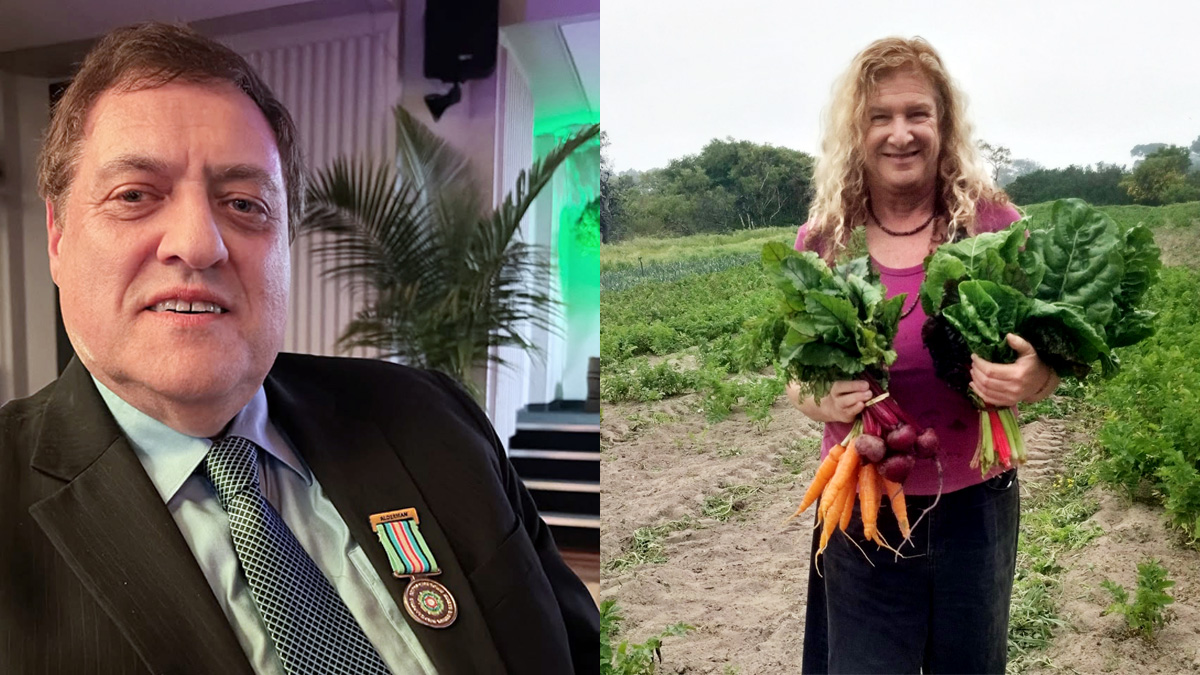
For Errol Anstey and Danielle Klaff, the routes have been very different. Yet both have ended up doing something increasingly unusual: putting time, energy and practical experience into the civic life of Cape Town.
Anstey was recently awarded the title of Alderman after 16 years as a City of Cape Town councillor. For him, local government was the culmination of a political involvement that began when he was still at school. In 1974, at 14, as he was walking home from Sea Point Boys’ High, he walked into the Progressive Party campaign office and started helping with the posters which became a daily habit after school. It was an unlikely introduction to what would become a lifelong involvement in politics. He worked with many well-known community members in the Atlantic seaboard, was Colin Eglin’s campaign manager and branch chair, and in 2011, took the opportunity to be elected on the party lists and became involved in local government.
Since then, he has worked in every national and municipal election and by-election, as well as two referendums. When he finally became a city councillor in 2011, it was partly because there was a feeling that more people from the business world should be involved in local government. Allocated to Gugulethu area, Errol moved freely within that community, building DA structures in the townships.
His contribution has been particularly practical. Much of his council work has focused on the often unglamorous work of making the city administration easier for residents and businesses to access, by improving systems, reducing delays and finding more efficient ways of doing things. Online appointments for driving and vehicle licences, faster processing of some permits, and improvements to reporting systems were among some of his initiatives. He also chaired a task team aimed at improving the collection of traffic fines: over roughly a decade, the collection rate quadrupled.
The roots of Anstey’s civic involvement go beyond party politics. His years in many roles in Habonim, including leadership and outreach projects, exposed him to township education initiatives and the Treatment Action Campaign, experiences that helped shape his desire to contribute to South Africa and, later, to Cape Town.
The award of the title of Alderman is a formal recognition of his long service. It comes with a medal which can be worn on state occasions, although the title and medal are less important to him than what he managed to accomplish during those years. More importantly, he hopes his years in public life will encourage others to become involved, particularly by voting and recognising that participation can make a difference.
Danielle Klaff has taken a different route into civic life. She grew up in Johannesburg, studied art at Michaelis and, in the 1980s, visited an organic farm in France. That experience sparked an enduring interest in sustainability and self-sufficiency.
She went on to establish South Africa’s first green magazine, Kagenna (named after the praying mantis in San). Later, living off-grid in Wilderness, she taught art and gardening. She wanted, however, to do more, and moved to Hout Bay, where she lived on the mountain above Imizamo Yethu. Her environmental work continued through her running of Envirochild, an NGO providing environmental education in schools, water-saving schemes and vegetable gardens. Their flagship event was the Hout Bay Green Faire, South Africa’s first off-the-grid, zero-waste event. Ten years ago, she joined Mensch, an organisation she describes as extraordinarily supportive and upskilling.
Community involvement eventually led to formal civic politics. During Covid in 2020, she and another community member raised money to feed vulnerable people, work for which they received civic recognition. She subsequently joined the DA, became secretary of the local branch and took on community projects. For ten years she has served on the Hout Bay Ward Committee, representing the environmental sector, and has recently received an Appreciation Award from the City of Cape Town recognising that service.
Now a candidate on the City’s proportional representation list, Klaff is bringing environmental concerns directly into the political arena. Her portfolio interests include water issues, such as sewage and E. coli in the sea, wetlands, green buildings, and climate change and its implications for food security. For her, political ambition is inseparable from the principle of Tikkun Olam, repairing and improving the planet.
There is a pleasing symmetry between Errol and Danielle. Both have their own businesses and both have spent years working in the community before, or alongside, formal political structures. Their paths began with a sense that something needed doing, whether that meant improving a bureaucratic system, feeding vulnerable people, educating children about the environment or giving local residents a stronger voice. And Danielle is quick to remark how Errol has been generous with advice and encouragement to her since her move into local politics.
Both of them share a concern about voter apathy and the importance of participation. For Anstey, it remains important to encourage people to vote and to understand that they can influence what happens around them. Klaff, too, sees disengagement and apathy as a problem.
Cape Town is a city of extraordinary complexity, and its civic machinery can sometimes seem remote from everyday life; but it is shaped by people like Anstey and Klaff, who are prepared to turn up, serve on committees, tackle unglamorous problems and keep going.
Anstey’s 16 years on council have now earned him the title of Alderman. Klaff is looking ahead, hoping to use formal political office to advance the environmental causes that have occupied much of her life. Different generations, different starting points, and very
different journeys, but ultimately the same idea: that citizenship is not simply about living in a city. It is about contributing to its welfare.
- For the current edition of the Cape Jewish Chronicle, click here.
- Subscribe to the Cape Jewish Chronicle: R450/year, or R38/month via debit order. Simply email us at subscriptions@ctjc.co.za and click here for payment info.
- The Cape Jewish Chronicle reaches over 6 000 readers monthly across print and digital platforms.
- To book advertising space or discuss a custom package contact Adéle Gradner Mobile: 083 321 5222 | Office: 021 464 6736 | Email advertising@ctjc.co.za