Cape Town Holocaust & Genocide Centre tour to Poland
The Cape Jewish Chronicle has published a number of articles in recent months about elements of the tour to Poland, organised by the Cape Town Holocaust & Genocide Centre (CTHGC), which took place in late July.
The tour group was a small one: 15 participants, including the two tour leaders, Kuba Nowakowski, Director of the CTHGC, and his wife, Gosia, a licenced tour guide from Poland. While many of those who joined the group are from Cape Town, we also hosted a few other people: one family from the United States and Canada, an ex-Capetonian who has lived in Chicago for many years, and a woman from London, a former South African with strong ties to Cape Town.
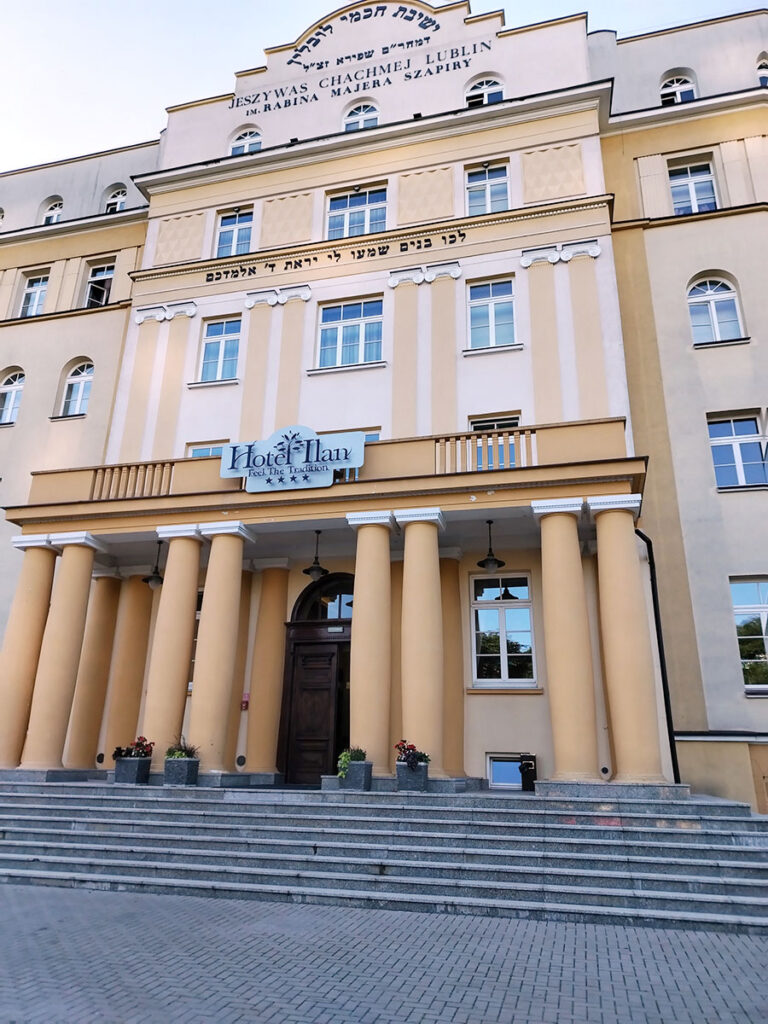
The last day of the tour saw participants visit the Galicia Jewish Museum to view both the permanent and the temporary exhibition on display, as well as to talk through their feelings about the tour and their experiences during an intensive, full week of touring and learning. (The September edition of The Chronicle featured an article about the current temporary exhibition – the story of the amazing survival of Krakow’s Reiss family.)
Here we share some of the comments from the participants:
For Ruth, the experience has been “life-changing”. She explained that both her parents were survivors of the Krakow Ghetto, and that she knew that her father had had a wife and a child, who died during the War. “By coming to Krakow, I feel like I’m paying my respects to all my deceased family members and to the survivors of the Krakow Ghetto whom I got to know over many years in my hometown of New York City.”
When visiting the death camp, Majdanek, the group saw the remains of the gas chambers. The guide at the camp showed a window in one of the walls – a viewing spot to see what was happening inside the gas chamber. “I can’t get out of my mind the vision of a soldier watching people dying in the gas chamber,” commented Kevan. “How did he live with that afterwards?”
Most of the Majdanek camp was destroyed by the Nazis as they prepared to retreat when Russian forces were close by in 1944. Today, the site – situated on the crest of a raised area – is particularly scenic and quiet. A number of the tour participants commented on the quiet and the serenity – in stark contrast to the reality of what took place in this beautiful spot. Today, nearby residents enjoy leisurely walks with their dogs through the green fields, and one wonders whether they know that the strange-looking building at one end of the site contains the ashes of thousands of people burned in the furnaces of Majdanek.
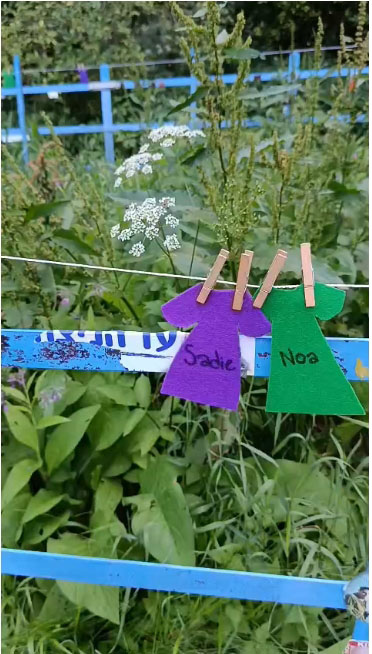
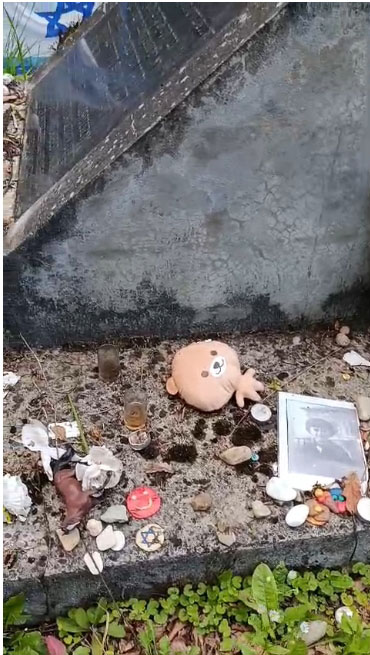
“The overwhelming feeling of sorrow I felt on seeing the site of the murder of 800 orphaned children from the Tarnów Ghetto in the forest outside the town of Zbylitowska Góra has remained with me,” explained one participant. People from around the world have been touched by the horror of this. They bring stuffed toys and cards for the children who were massacred here.
Participant, Mandy, was struck by the comment made by the non-Jewish Poles who have established a Jewish museum in Oświęcim, the town next to Auschwitz: “Stop the hate!”
Talking about the perception that many of us have grown up with – that the Polish nation is among the most antisemitic in the world – Jackie spoke of her realisation that Poland is a particularly tolerant society. “I don’t want the black and white anymore,” she said. “I need to experience the grey.”
For a non-Jewish person on the tour, learning about Jewish culture and history was a complete revelation. As she said, “It’s heartbreaking to see how a culture that was so vibrant and established could be destroyed in one moment. The loss is indescribable.”
”The history has become far more personal for me now, living in the United States,” said one American member of the group. “It feels like it’s all happening again.”
”For me the pre-Holocaust history was by far the most significant, and I was definitely inspired to read and to rekindle my knowledge of the significant personalities and events in Polish Jewish history,” commented Veronica Belling.
Some comments were more positive: “I had no concept before the tour of the richness of Polish Jewish culture.”
Jos Horwitz from Cape Town said that, “Seeing people move forward today gives me hope. There’s an intense will in Poland to keep Jewishness alive.” ●
- For the current edition of the Cape Jewish Chronicle, click here.
- Subscribe to the Cape Jewish Chronicle: R450/year, or R38/month via debit order. Simply email us at subscriptions@ctjc.co.za and click here for payment info.
- The Cape Jewish Chronicle reaches over 6 000 readers monthly across print and digital platforms.
- To book advertising space or discuss a custom package contact Adéle Gradner Mobile: 083 321 5222 | Office: 021 464 6736 | Email advertising@ctjc.co.za