The Cape Jewish Chronicle has carried a number of articles over the past months relating to the tour to Poland organised by the Cape Town Holocaust & Genocide Centre. Pursuing answers to the many questions about the fate of their own families during the Holocaust motivated two non-Cape Town residents to join the tour.
In this edition, we focus on the experiences of the immediate family of Mandy Spiegel, who grew up in Johannesburg and studied at the Michaelis School of Art at the University of Cape Town. She has since lived in London for many years and regularly visits Cape Town.
Our December/January edition will focus on the story of another tour participant, an American woman with significant ties to the city of Krakow in Poland.
Mandy O’Donnell’s (née Spiegel) family’s story is one typical of many Jewish families whose lives were upended by Nazi persecution, yet who rebuilt their lives in faraway lands.
Her grandparents, Herbert and Margarethe Spiegel, and their three sons – Leopold, Rolf Richard, and Klaus – lived a comfortable and assimilated life in Cologne, Germany, before the rise of Hitler changed everything.
Herbert Spiegel, who was born in Dortmund and one of 13 siblings, had been drafted into the German army during WW1, and subsequently was a respected master butcher who owned a thriving butchery named ‘Spiegel’ on Ehrenstrasse, one of Cologne’s busy streets.
Margarethe, (née Frank) was born in Hildesheim, one of four children, with a widowed mother in her early teens. Herbert and Margarethe lived above the butcher’s shop in Cologne with their three sons, a nanny, and domestic help. The family was close-knit and active in Jewish communal life. Margarethe was observant and ensured that her sons regularly attended synagogue.
By the early 1930s, the political climate in Germany had become increasingly dangerous for Jews. The Nazi boycott of Jewish businesses and the atmosphere of intimidation meant that Herbert’s business could no longer survive. In 1935, he was forced to sell the butchery and family property, at a terrible loss, which was a devastating blow.
Their middle son, Richard Spiegel – Mandy’s father – completed school with distinction and enrolled at the University of Cologne to study law and economics. But in 1933, the same year that Hitler came to power, Richard was expelled from the university solely because he was Jewish. His academic ambitions abruptly ended, he found work briefly in the family butchery before being harassed and even detained by Nazi youth members. Recognising the growing danger, he fled Germany in late 1935, aged just 21.
After a few months in Europe, first in Holland and then Belgium, working various poorly paid jobs, Richard sought permanent safety by leaving Europe. By sheer chance, he managed to secure one of the last tickets to sail from Southampton to Cape Town aboard the Dunbar Castle, arriving in January 1936. Richard travelled directly from Cape Town to Johannesburg, where he joined his older brother, Leopold.
Leopold had left Germany in mid-1935, sponsored by his mother’s cousin, Lilo Lindenberg, who lived in Johannesburg. Like many early refugees, Leopold’s departure helped pave the way for his brother to follow.
Richard began rebuilding his life in Johannesburg, mixing with fellow German Jews and working in small trades and as a store clerk. He later became a traveling salesman and eventually owned a successful hardware import business – a testament to his determination to start anew. He retired after selling his business when he was 87.
The youngest brother, Klaus, faced a particularly disrupted childhood. As the Nazis tightened their grip on Jewish life, his schooling was repeatedly interrupted. He was sent from Germany to Belgium, and later to a school in England. Eventually, he rejoined his parents in Brussels in late 1935, where he enrolled in a government school for gardening and architecture.
Herbert and Margarethe left Germany with heavy hearts, after relinquishing their home and hard-built business. They first moved to Antwerp and then to Brussels, where they lived for several years as refugees. In 1939, (aged 58 and 51), as the threat of war loomed, they managed to secure a passage from the U.K., aboard the SS Umtali, bound for Lourenço Marques (now Maputo), Mozambique. Their son Klaus accompanied them.
Their arrival in Portuguese East Africa on tourist visas, in February 1939, offered safety, but little comfort. For seven long years, Herbert and Margarethe remained there as stateless refugees, unable to work freely and uncertain about their future. Their passports, like those of all Jews under Nazi decrees, bore humiliating enforced middle names – ‘Israel’ for Herbert and Klaus, and ‘Sarah’ for Margarethe. Unusually, a couple of years later, Margarethe’s mother, Ella Frank, aged 78, managed to escape Germany and join them in Lourenço Marques before travelling by cargo boat to the USA, where she went to live with her son Edgar, (Margarethe’s brother), in Chicago.
Klaus, aged 19, suffered deeply after arriving in Mozambique. He was legally prevented from finding meaningful employment, also unable to join his brothers in South Africa due to the Aliens Act; he battled depression and despair. Eventually, in 1944, he managed to leave for the British Mandate of Palestine.
Herbert and Margarethe were finally able to join their son Richard in Johannesburg in 1946. Sponsored by him, they became residents of South Africa, where they spent their remaining years surrounded by family and gained stability, which they had lost in Europe.
The wider Spiegel and Frank families were not all as fortunate. Two of Margarethe’s siblings (on the Frank side) managed to travel to Chicago in the USA. Mandy is still searching for answers about the third Frank sibling and his family, who did not leave Germany.
One of Richard’s cousins on the Spiegel side went to the British Mandate of Palestine; one sister also reached the USA; and one of Herbert’s older brothers went to Argentina. Relatives who remained in Germany probably did not survive the Holocaust.Richard did not easily talk about his past, which was not uncommon for his generation and their traumatic experiences growing up in Nazi Germany.
Of Herbert’s many siblings, little is known about their fate and that of their children and possible grandchildren. Their names represent the Spiegel family probably extinguished by Nazi brutality. There is still some investigation to be undertaken to find the truth. ●
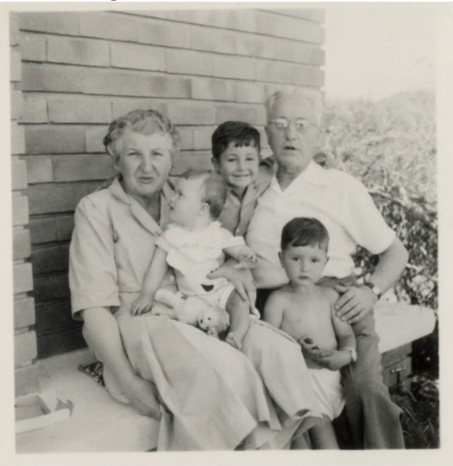
Herbert Spiegel, Margarete Spiegel and grandchildren Mandy, Andrew and Timothy, 1954 Johennesburg
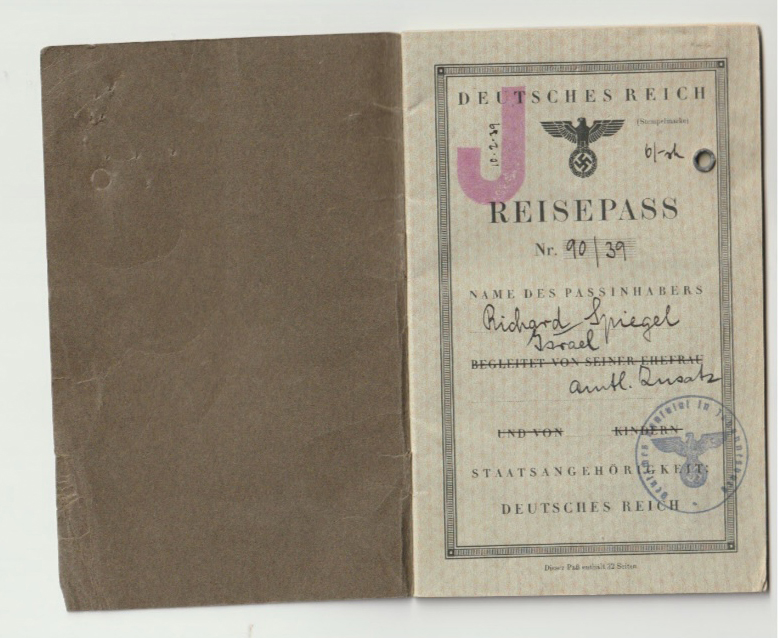
Richard’s passport issued in 1939 in Johannesburg, stamped J, and with the word ‘Israel’ inserted.
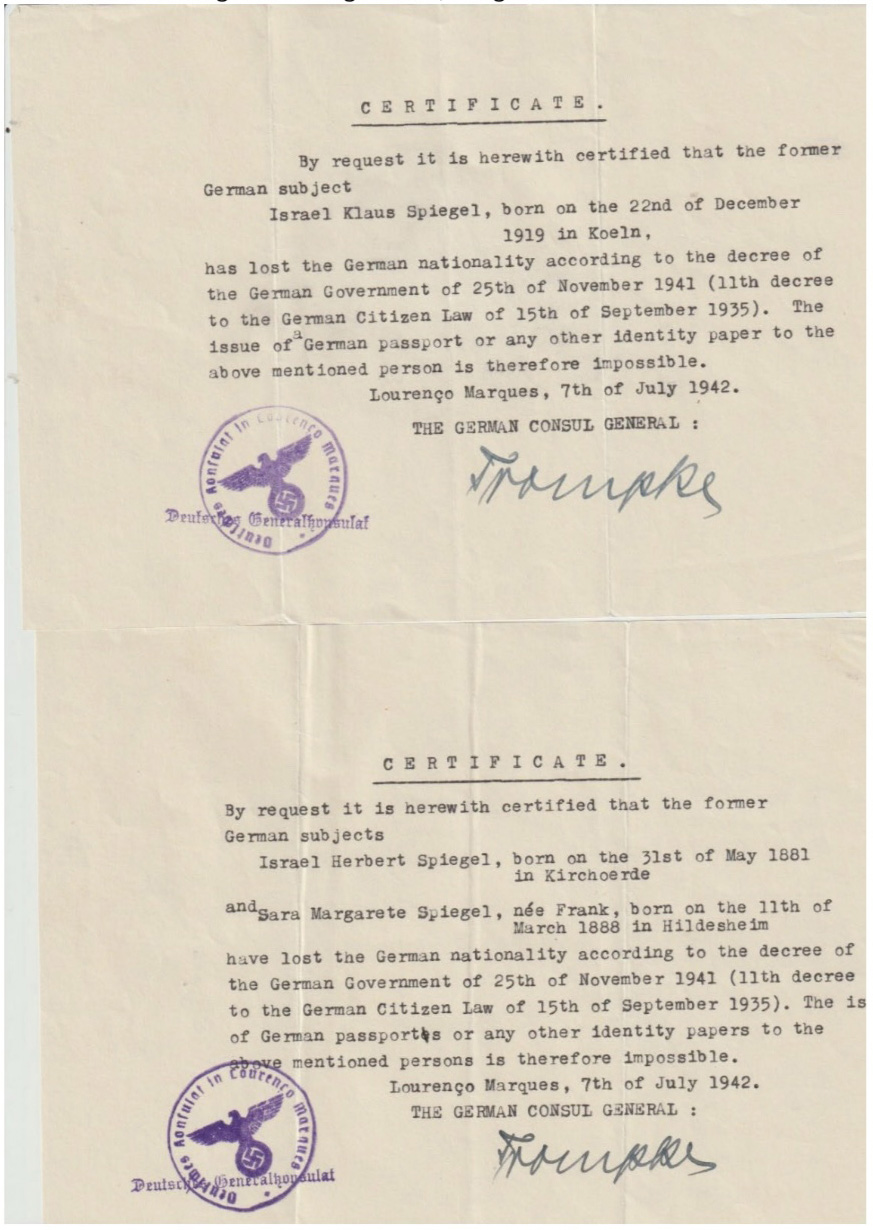
Certificate revoking German citizenship
- For the current edition of the Cape Jewish Chronicle, click here.
- Subscribe to the Cape Jewish Chronicle: R450/year, or R38/month via debit order. Simply email us at subscriptions@ctjc.co.za and click here for payment info.
- The Cape Jewish Chronicle reaches over 6 000 readers monthly across print and digital platforms.
- To book advertising space or discuss a custom package contact Adéle Gradner Mobile: 083 321 5222 | Office: 021 464 6736 | Email advertising@ctjc.co.za