By BIANCA RESNEKOV
Near the tail end of COVID, when the world was slowly emerging from lockdown but still carrying a lot of anxiety, my daughter, India Harris, was 16 and becoming increasingly aware of the growing homeless community in Cape Town. On our daily school commute, she began making sandwiches each week and handing them out through the car window. It was a small act, but one filled with heart.
Around that time, we spoke about how else we might help. I asked India if she would like to connect with Souper Troopers, a non-profit organisation I already supported. Souper Troopers does extraordinary work with people experiencing homelessness, offering everything from counselling and medical care referrals to training, upskilling and support. India agreed.
Soon after, we met with Caryn Gootkin and Kerry Hoffman from Souper Troopers to explore how we could contribute. We shared our love of crafting and creativity, suggesting skills like bracelet weaving and other handmade projects that could be taught and shared. What followed was something none of us could quite have predicted.
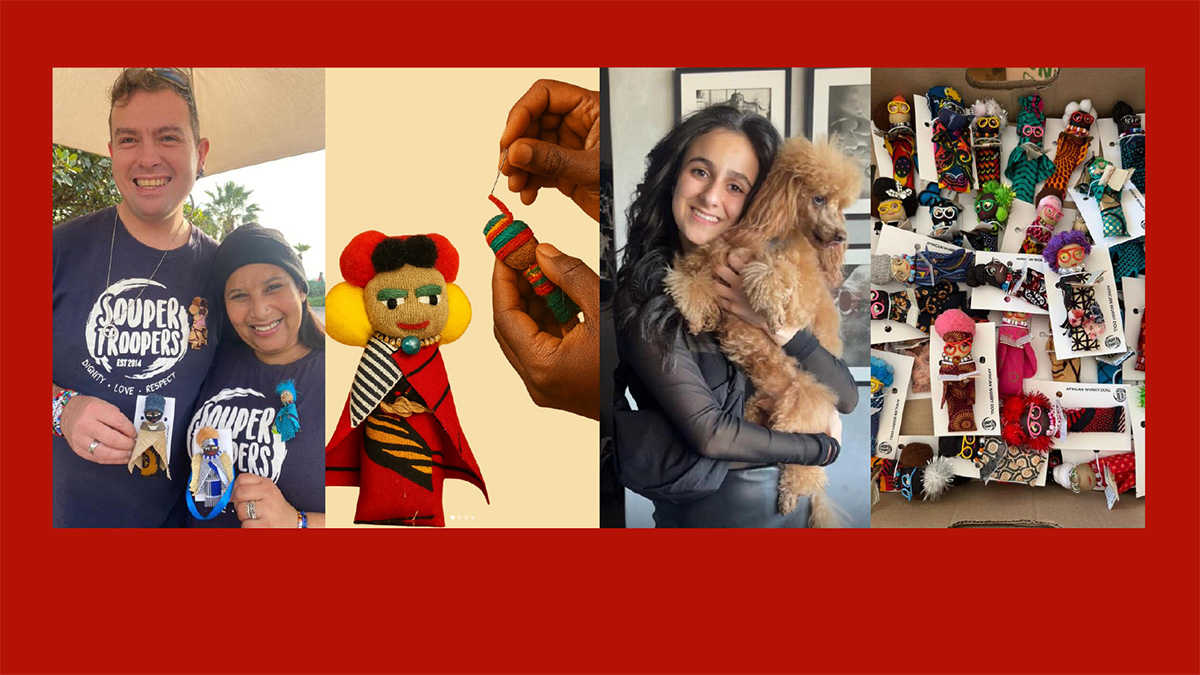
Caryn and Kerry mentioned they had received a suggestion from someone on their mailing list to create an African version of the Guatemalan worry dolls. That sparked an idea – and soon India and I were experimenting at home with recycled cardboard, paper clips, stockings and shweshwe fabric. Out of these humble materials, the very first African Worry Doll was born.
We then went into The Humanity Hub, Souper Troopers base camp, and taught four people how to make the dolls. Something magical happened in that space. The creative process offered a welcome escape – a chance to imagine, design, and play – while gently setting worries aside for a while. And when the dolls began selling, the sense of pride and validation was profound. Creating something of value that brought comfort to others changed everything.
We continued making the dolls and shared them on Instagram, where they quickly captured attention. Post-COVID anxiety was everywhere, and people were drawn to the idea of gifting a small totem of comfort and support as they re-entered the world. Psychologists and counsellors began buying them for their patients and kept coming back for more. Mothers tucked them into school bags. Travellers carried them overseas as meaningful gifts from South Africa.
Most importantly, the Souper Troopers loved making them.
The dolls seemed to tick every box. Today, African Worry Dolls are stocked in gift stores across Cape Town, including AafrikaA at the V&A Waterfront, the Blink Shop in Sea Point, CraftArt Emporium in Simon’s Town, the Oranjezicht City Farm Market, and museum shops around the world – from Paris and Germany to Dubai. They have appeared at the Investec Cape Town Art Fair and the Jewish Literary Festival, quietly spreading their message of care and creativity.
The range has grown too: keyrings, magnets, brooches, Christmas tree angels and elves, and even plus-size doorstop dolls. Each one is handmade with care.
There are now around 30 ‘Troopers’ involved in making the dolls, each with their own specialist skills in the process. Odette Oliver, one of the original four Troopers we taught, now supervises this retail arm of Souper Troopers. The project has become a sustainable source of income for Souper Troopers, helping the organisation grow while drawing interest from international buyers and corporate groups. These groups even come to make dolls themselves, guided by the homeless team as part of team-building experiences – a powerful role reversal that builds dignity and connection.
What started as a teenager handing out sandwiches has grown into a small African miracle – one doll, one story, one worry at a time.
You can find the dolls on Instagram at @africanworrydolls and learn more about the incredible work behind them at @soupertroopers.


- For the current edition of the Cape Jewish Chronicle, click here.
- Subscribe to the Cape Jewish Chronicle: R450/year, or R38/month via debit order. Simply email us at subscriptions@ctjc.co.za and click here for payment info.
- The Cape Jewish Chronicle reaches over 6 000 readers monthly across print and digital platforms.
- To book advertising space or discuss a custom package contact Adéle Gradner Mobile: 083 321 5222 | Office: 021 464 6736 | Email advertising@ctjc.co.za