By KAREN MILLER
Nearly a century after they shared a cramped studio and a fierce belief in their distinctive artistic voices, Wolf Kibel and Lippy Lipshitz have been reunited at the Cape Town Jewish Museum.
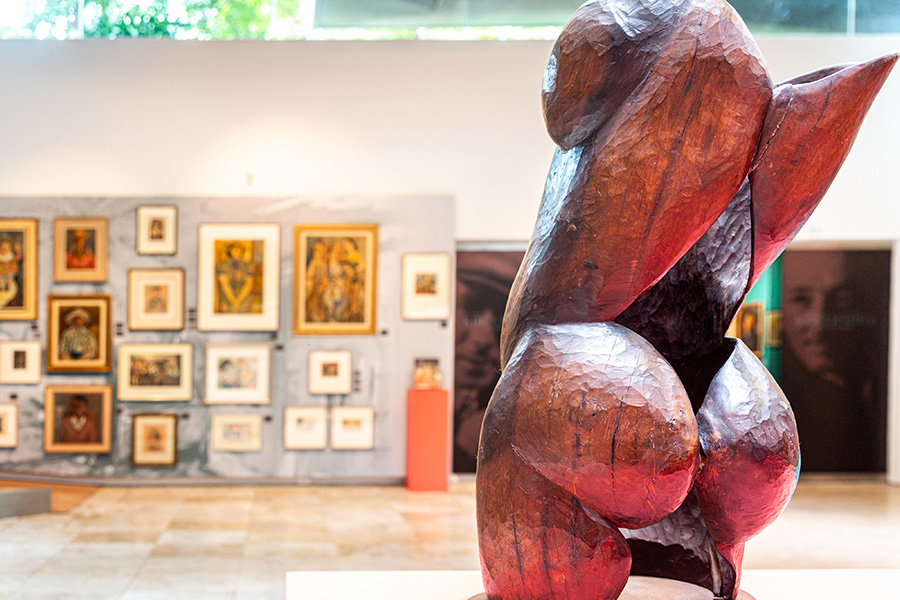
It is the first time in almost fifty years that works by either artist have been exhibited in Cape Town on this scale, and many of the paintings, prints and sculptures on view have never before been shown in public. Their exhibition is less like a retrospective and more an act of recovery; curated by Jay van den Berg, this is, in his words, a “rediscovery,” and a highly significant one.
Bringing together some 300 artworks across all media, the exhibition includes the Palm Studios period of the mid-1930s, when Kibel and Lipshitz worked side by side. It is also, crucially, a reminder of how radical they were in their time and how resistant South Africa’s art establishment initially was to their work.
Van den Berg, Johannesburg-born and who trained at the University of Pretoria, is currently a Museum Research Curator for the Western Cape government, who maintains that, for him, “There is nothing as fascinating as being art detective.” His credentials include serving as associate curator on the 150-year exhibition of the Iziko South African National Gallery, as well as several previous projects with the Cape Town Jewish Museum. This exhibition is the result of months of research, negotiation and tracking down works long hidden in private collections.
When Kibel and Lipshitz set up Palm Studios in 1934, South African art was deeply conservative. The National Gallery, the South African Society of Artists and even the Michaelis School of Fine Art favoured realism, conventional subject matter and technical finish. Modernism, especially the expressive, emotionally-charged modernism practised by Kibel and Lipshitz, was viewed with suspicion, even hostility. Early exhibitions by both artists, and particularly by Kibel, were met with disapproval and largely ignored.
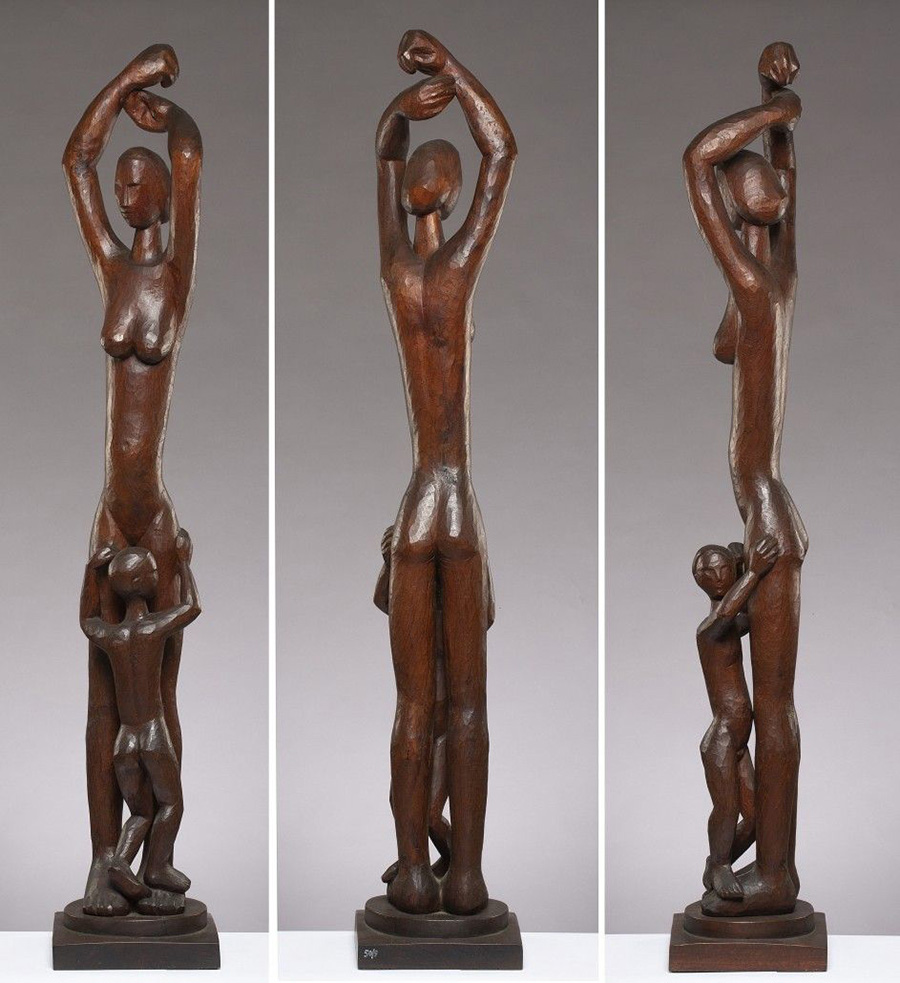
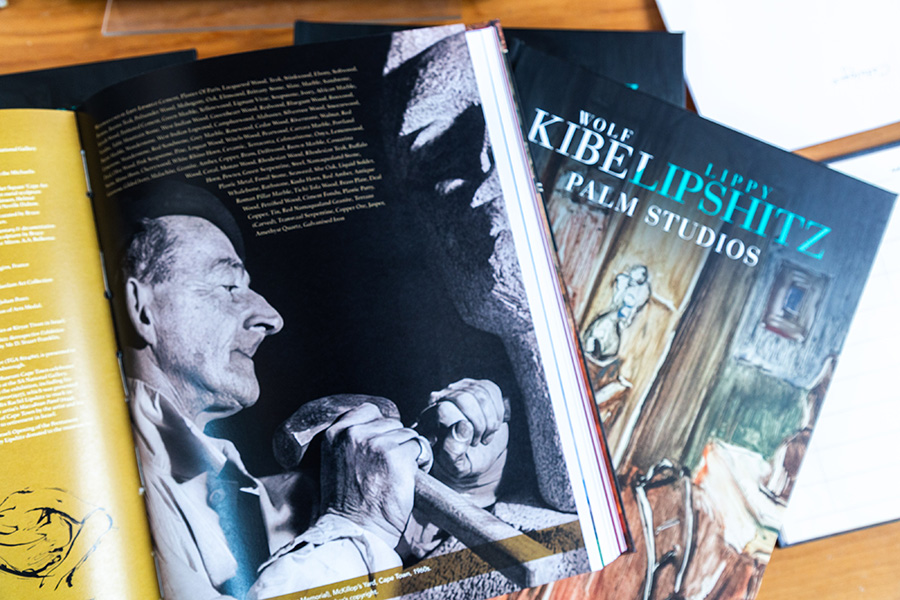
Van den Berg believes that Lippy Lipshitz deserves recognition as “the father of South African modern art” – with Irma Stern as its mother. That assertion is deliberately provocative, but the works themselves make a compelling case. Although Lipshitz is best known as a sculptor, the exhibition demonstrates just how multi-dimensional he was: painter, draughtsman, printmaker and fearless experimenter
with materials.
Born Israel Isaac Lipshitz in 1903 in Plungė, Lithuania, he showed artistic talent from early childhood, encouraged by his grandfather, who had built the local synagogue. The decorative carving and ornamentation of that building left a lasting impression on him. He came to Cape Town as a young man, attended school here, and later spent four formative years in Paris and two in England. He spent the last two years of his life in Israel.
Unlike Kibel, Lipshitz achieved institutional recognition during his lifetime. He was offered a formal post at UCT’s Michaelis School of Fine Art in 1950, exhibited at the Venice Biennale that same year, and was awarded the sculpture medal by the Suid-Afrikaanse Akademie vir Wetenskap en Kuns in 1964. Yet, even so, his legacy has been strangely uneven. The last full-scale exhibition of his work in South Africa was held in 1999 at the Irma Stern Museum and, while there is a large depository of his work in Israel, it remains little acknowledged or studied. Van den Berg notes with some regret that one object has eluded him: Lipshitz’s pipe, a recurring presence in many of his self-portraits, could not be traced although he has managed to display Lipshitz’s actual chisels.
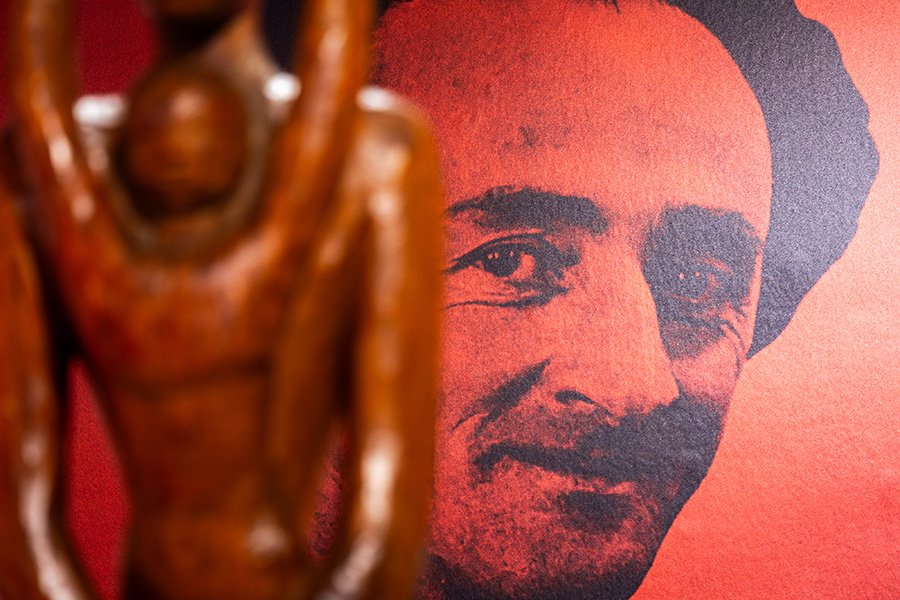
The story of Wolf Kibel is more tragic. Born into poverty in the Polish shtetl of Grodzisk Mazowiecki, he lived a life marked by instability and hardship. In 1920 he walked to Vienna and remained there for three years, later spending time in Palestine, where he contracted malaria. He was homeless for extended periods. An affidavit from his brother Samuel, the cantor of the Gardens Shul, eventually enabled him to settle in Cape Town, though his wife Freda and their children endured long separations and financial insecurity.
His art career was marked by struggle. He experienced failed exhibitions, persistent poverty and the pressure of supporting a growing family. His personality was intransigent: he avoided explaining his work, engaging in sales talk, or even consistently signing and dating his pieces, an attitude that did little to endear him to critics or buyers. Yet artistically he was groundbreaking. He was the first artist to exhibit monotypes in South Africa in significant numbers, notably at the 1936 Empire Exhibition in Johannesburg.
He died tragically young in 1938, aged just 34, after months in a tuberculosis ward at Groote Schuur Hospital. He lived to see almost no recognition of his work. A year after his death, the New Group, pioneers of South African modernism, was formed. It was too late for him, and it fell to Freda to preserve his work and ensure its survival.
That neglect has persisted. Kibel’s last major exhibition was held at the South African National Gallery in 1976, and since then his reputation has faded from public view, even though his work is represented in every major South African collection. In 2025, however, a poignant act of recognition took place far from Cape Town. In Grodzisk Mazowiecki, now a commuter town near Warsaw, a major exhibition titled Wolf Kibel: The Unknown Artist was mounted. Ironically, only reproductions could be shown.
Seeing Kibel and Lipshitz together highlights striking contrasts. Lipshitz’s work radiates energy and outward engagement; Kibel’s is marked by melancholy and inwardness. Yet they shared a rebellious spirit and a commitment to expressive modernism. They argued, inspired one another, and supported each other in the face of a hostile cultural climate, until tensions and circumstances led to their eviction from Palm Studios in 1937.
Van den Berg has described this exhibition as a fight for the artists’ legacy. He has restored the artists’ Jewish identities, which were often downplayed or erased for commercial reasons, for example, ‘Three Rabbis’ becoming ‘Three Figures’ in auction catalogues. The exhibition design, by Paul Carstens, allows the works space to breathe while emphasising dialogue rather than hierarchy.
Van den Berg believes both artists would be deeply proud to see their work shown together in this space, the same museum that housed Marc Chagall’s stained-glass windows two decades ago. Lipshitz and Kibel are embodiments of the South African Jewish experience: born in Eastern European shtetls, shaped by migration, and contributors of lasting significance to their adopted home. There is something profoundly fitting about their reunion here, beside the synagogue where Kibel’s brother once sang, in a museum dedicated to that shared history. ●
The exhibition runs until the end of April, with further walkabouts led by Jay van den Berg on 10, 17 and 24 February.

- For the current edition of the Cape Jewish Chronicle, click here.
- Subscribe to the Cape Jewish Chronicle: R450/year, or R38/month via debit order. Simply email us at subscriptions@ctjc.co.za and click here for payment info.
- The Cape Jewish Chronicle reaches over 6 000 readers monthly across print and digital platforms.
- To book advertising space or discuss a custom package contact Adéle Gradner Mobile: 083 321 5222 | Office: 021 464 6736 | Email advertising@ctjc.co.za