Some random comments and moments in the Tel Aviv Art Museum at the tail end/the middle of a War.
JULIAN RESNICK writes from Israel
Israel is an extraordinary place to live in.
Nothing works in the ways one would expect.
Who mounts art exhibitions during wartime?
We do.
Who goes to visit the Museum?
I do.
Why?
Because this is the Jewish State we are fighting for: open-minded, diverse, inspirational, modern, inclusive, gritty. All of this is my Judaism.
Below are some random moments/thoughts/special and troubling moments from my visit to the Museum at the tail end of the war. (HOPEFULLY – when you read this, you will know whether it was the tail end or the middle of). Some are mine and some are the curators’.
I start off in the major gallery of Contemporary Israeli Art, and this is how the curators tell me what I am going to see: Inflamed Nerve, the third chapter of the Museum’s Israeli art collection exhibition Material Imagination, is launched in the midst of the deepest rift that Israeli society has ever seen. The social, ideological, and religious polarization pounds in the exhibition like the throbbing pulse of the artworks and their evolving interrelations. After three years of display, the exhibition, which features works created here over more than a century, has been supplemented by some 70 new works by leading artists, some well-known, others making their debut.
The space dedicated to the poetics of fire, Blazing Movement, is charged – as before, and to an even greater extent – with a call for action, cementing our place in the East; floating in the Airship space are various manifestations of the disintegration of the private and public body; while the space of Promised Land seethes with a sense of detachment, exile, and nomadism.
No “Am Yisrael Chai”. No “Together we will be victorious”. It is all of those other words I used above, “openminded, diverse, inspirational, modern, inclusive, gritty.”
And then I walk into the photography exhibition by the prize-winning artist, Anne Simin Shitrit. I know this is going to be a challenge. The curator, “The exhibition are portraits of young men from the margins of society, captured on the brink of puberty and just beyond. Their socio-economic background seems self-evident – they share a distinctly local appearance. Their direct gaze into the camera captures a charged and complex moment in which alluring youthful beauty becomes a site of both fascination and unrestrained danger.”
And who are they: Bedouin youth, Hilltop youth and young Moroccans in the Atlas Mountains in Morocco? She is a young visual artist born in 1994 in Jerusalem, now based in Paris. In her own words: “Through my work, I am searching for tenderness amid violence, sameness in unbridgeable difference, and islands of quiet within an immense and insurmountable pain. In my work, I am searching for a sense of home. Born and raised in Jerusalem, I grew up in an enclosed ultra-orthodox and anti-Zionist community to a Moroccan father and an Iranian mother. At 14 I left. Just as the streets were erupting with violence born from the second Intifada. Leaving home, and my religious upbringing put me in a constant state of existence between very different worlds. Now, as an artist, I am actively exploring my reality, researching the seen and unseen borders dictating our lives. A personal journey between West and East Jerusalem, the West Bank, and Morocco, between the present and the memories, my point of view as a woman who was born into a very masculine and violent environment and at the same time the discovery of compassion and passion (in/visible walls) movement between fear of losing and fantasies of being loved by them.”
But before I can see most of it, I am accosted by an elderly man standing in the middle of the room, ruling it like a king on an imagined throne. Does he remind me of King Lear? No, he reminds me of Richard the III. I loved studying the Shakespeare play in the Department of English Literature in UCT in the early 1970s. Some phrases spring in to my mind as I encounter a troubled elderly man, who I soon find out, is still suffering from PTSD from the Yom Kippur War of 1973.
These lines from Shakespeare jump into my mind as he rants on about the Israel he/we live in right now:
“Now is the winter of our discontent:
“My conscience hath a thousand several tongues,
And every tongue brings in a several tale,
And every tale condemns me for a villain.
Perjury, perjury, in the high’st degree;
Murder, stern murder in the dir’st degree,
Throng to the bar, crying all, ‛Guilty!, guilty!”
“But then I sigh, with a piece of Scripture
Tell them that God bids us to do evil for good;
And thus I clothe my naked villainy
With odd old ends stolen out of Holy Writ;
And seem a saint, when most I play the devil.”
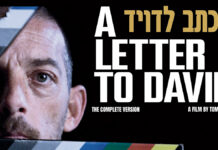
“You must see it, the video art piece,” he shouts at me.
“See what?” I ask him.
“The War Room, Nahal Oz,” he screams.
I go.
It is awful
I want to leave the room.
But they were abandoned once before, on October 7th.
I can’t do it to them again, on April 17th.
My visit to the Tel Aviv Art Museum. At the tail end of a war.
I hope.
So, I stay, metaphorically holding their hands, as they slip away.
We cannot abandon this place and allow it to slip away.
But how do we heal?
Possibly also by visiting musuems.
- For the current edition of the Cape Jewish Chronicle, click here.
- Subscribe to the Cape Jewish Chronicle: R450/year, or R38/month via debit order. Simply email us at subscriptions@ctjc.co.za and click here for payment info.
- The Cape Jewish Chronicle reaches over 6 000 readers monthly across print and digital platforms.
- To book advertising space or discuss a custom package contact Adéle Gradner Mobile: 083 321 5222 | Office: 021 464 6736 | Email advertising@ctjc.co.za