
By Shelly Korn | Care Imagineer / Evercare
When Markus and Angelina Bihler first suggested that I attend something called the Hoffman Process, I politely smiled and quickly changed the subject.
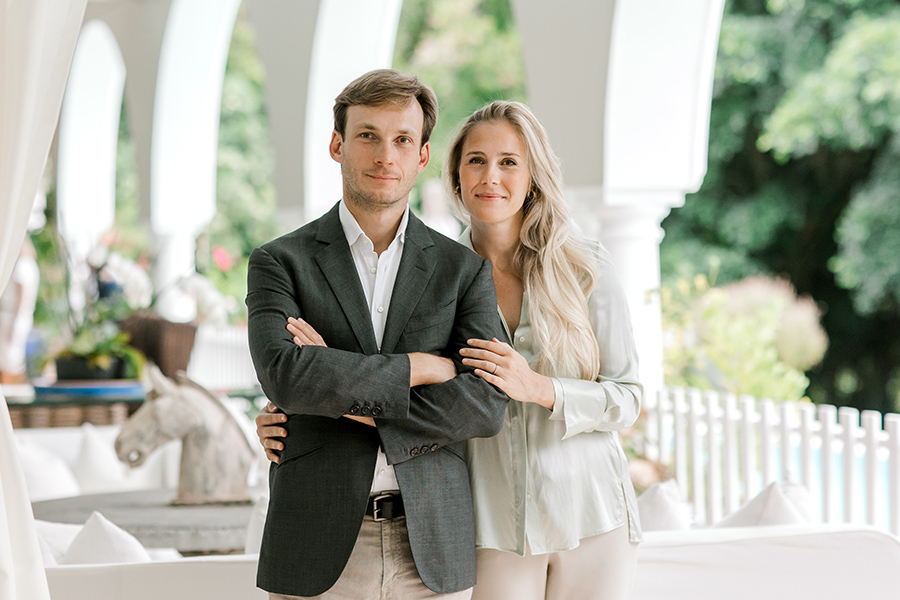
They had recently moved from London to Cape Town, and during a Shabbat dinner together they told me they were helping bring the Hoffman Institute to South Africa. Markus spoke about the experience with the kind of calm conviction that immediately raised my suspicion: life-changing, he said. Transformational. Words that tend to make practical people like me slightly uncomfortable.
But then something interesting started happening. The Hoffman Process kept appearing everywhere I looked. It showed up on my socials and in conversations with friends, colleagues and even casual acquaintances. Some had done it. Others were on the waiting list. The deeper I looked, the more intriguing it became. Apparently, everyone from Silicon Valley entrepreneurs to Hollywood actors, bestselling authors, influencers, clinicians, and leading figures in the personal growth world had been through it – and in the United States the programme carries a waiting list of up to nine months.
At that point I figured there had to be something to it.
A few months later I found myself part of the first South African cohort to complete the Hoffman Process – a week-long residential programme dedicated to something most of us spend our lives avoiding: looking honestly at ourselves.
The premise of the work is both simple and confronting.
Much of the way we think, react and relate to others was shaped in childhood. Hoffman calls these inherited emotional habits “patterns.” They are the coping strategies we learned early in life – ways of protecting ourselves, earning love, avoiding conflict or managing fear.
In Jewish life we have a phrase that captures something similar: L’dor v’dor – from generation to generation. Traditions, values, character traits and behaviours are passed down through families. Often these inheritances are beautiful gifts. But sometimes patterns that once helped us survive quietly follow us into adulthood long after they stop serving us.
The prophet Ezekiel captured this idea centuries ago with the phrase: “The fathers eat sour grapes, and the children’s teeth are set on edge.” The choices and experiences of one generation inevitably ripple into the next.
During the process, I began to see how true this was in my own life. I was raised by a family shaped by the trauma of pogroms and the Holocaust – immigrants who survived hardship, fled to Israel, fought wars and helped build a new country. Only now did I begin to recognise how deeply their survival instincts had quietly shaped my own patterns.
This led me to a simple yet powerful realisation that, while my parents and grandparents focused their lives on surviving, I now have
the opportunity to focus mine on thriving.
In Judaism we are commanded to honour our parents, but honour does not require emotional blindness. Understanding what we inherit allows us to approach our past with compassion – while still being true to ourselves. That final piece – being true to our authentic self – may be the most important lesson of the Hoffman process.
Jewish tradition has long understood this idea. The concept of teshuva is really about returning to our truest selves. It is the belief that we are never permanently defined by yesterday’s behaviour. Change is always possible.
Bob Hoffman was Jewish himself, but the Hoffman Process is not a religious programme. Yet many of its insights resonate deeply with Jewish ideas about personal growth and responsibility. I was pleasantly surprised to discover that the process deepened my own Jewish practice and enhanced my spirituality.
Perhaps this is also linked to another core pillar of the work: bringing the head, heart and soul into alignment. When our thoughts, emotions and deeper values begin working together rather than pulling us in different directions, something remarkable happens – a sense of inner calm and clarity begins to emerge.
In Judaism we speak about Echad – unity. Not only the oneness of G-d, but the aspiration for inner wholeness within ourselves. For me, the week offered a multitude of practical tools for moving closer to that alignment – and the sense of peace that comes with it.
Our tradition teaches that repairing the world begins with repairing ourselves – and that every journey of teshuva begins with a moment of curiosity and the courage to look within.
As it turns out, Markus was right after all. I found the Hoffman Process both life-changing and transformational.
If you are curious about the Hoffman Process and the work now beginning here in South Africa, you are welcome to reach out to Shelly or connect with Markus and Angelina to learn more. Also, take a look at the website: hoffmaninstitute.co.za
- For the current edition of the Cape Jewish Chronicle, click here.
- Subscribe to the Cape Jewish Chronicle: R450/year, or R38/month via debit order. Simply email us at subscriptions@ctjc.co.za and click here for payment info.
- The Cape Jewish Chronicle reaches over 6 000 readers monthly across print and digital platforms.
- To book advertising space or discuss a custom package contact Adéle Gradner Mobile: 083 321 5222 | Office: 021 464 6736 | Email advertising@ctjc.co.za