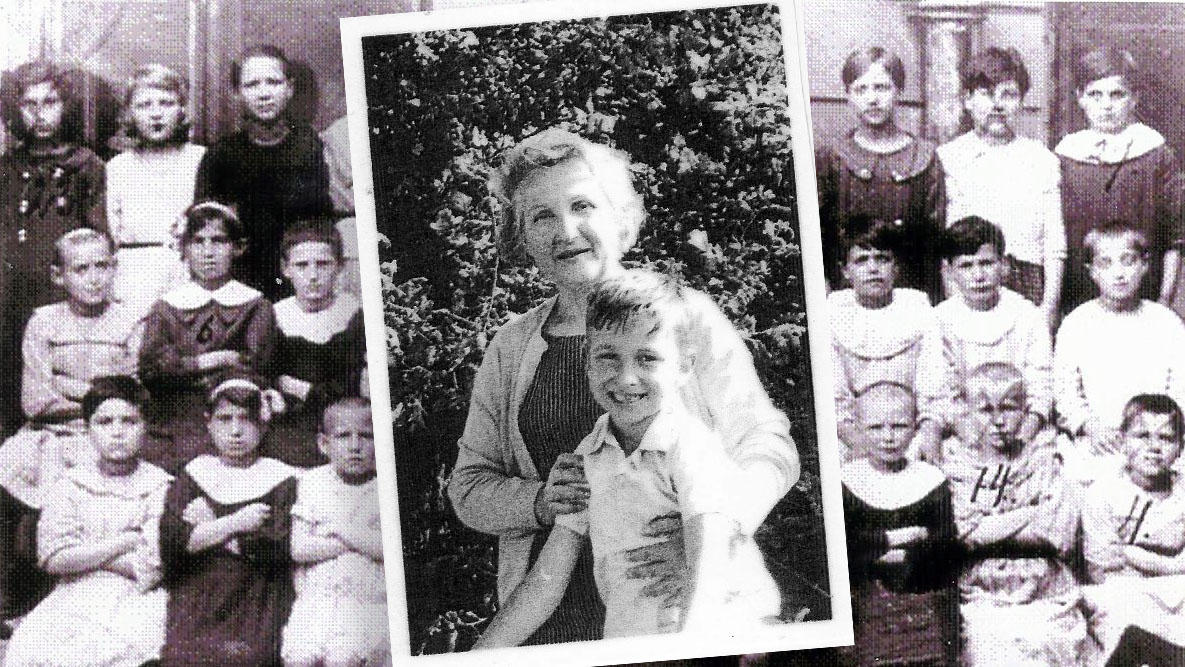
Chronicle reader Charlotte Cohen read the article about the ‘Ochberg Orphans’ in our May edition (read it here!), and shared the recollections of her late mother-in-law, Molly Cohen, who was the last surviving Ochberg Orphan in Cape Town. She passed away in 2013 – 9 days before her 100th birthday.
When Molly Cohen recalled her childhood, one figure stood above all others – Isaac Ochberg, the Cape Town businessman and humanitarian who rescued nearly 200 Jewish orphans from the devastation of post-World War I Eastern Europe.
To the children he saved, he was simply “Daddy Ochberg”.
Born in Ukraine in 1913, Molly – then Molly Schapera – was only seven years old when she arrived in Cape Town in 1921 aboard a ship carrying the children who would later become known as the “Ochberg Orphans”. Her memories of Europe were fragmentary and painful. She remembered being “shunted around”, living with different families and knowing nothing but instability and loss. She barely remembered her parents and only later learned she had three brothers and two sisters.
Then came the journey to South Africa.
Molly remembered being placed on a ship with many other children, the voyage delayed after one child contracted mumps. But what stayed with her most vividly was the man who had made their rescue possible.
“’Daddy Ochberg’ – that’s what we called him,” she said. “That’s what he was to us.” She recalled him translating Yiddish letters into English for the children and reading them aloud. To Molly, he was always present, always caring. She described him as “a man of exceptional kindness and great courage”.
Ochberg himself had emigrated from Ukraine to South Africa as a teenager in the 1890s and later established himself as one of Cape Town’s leading entrepreneurs through timber, shipping and property ventures. Yet business success was only part of his legacy. According to his daughter, Bertha Epstein, he believed that success created a moral obligation to help those less fortunate.
That conviction would define one of the great humanitarian missions in South African Jewish history.
As pogroms, famine and disease ravaged Eastern Europe after World War I, Ochberg became president of the Cape Jewish Orphanage. In 1921, he personally travelled through devastated parts of Poland, Galicia and Ukraine to rescue Jewish children left orphaned and destitute. He moved from village to village collecting children who were starving, traumatised and often homeless. Ultimately, 167 children reached South Africa under his care after an arduous journey through Europe and England.
For Molly, arriving in Cape Town marked the beginning of a completely different life.
She grew up at the Jewish Orphanage in Cape Town, predecessor to Oranjia. Far from remembering deprivation, she spoke warmly of a loving and deeply involved Jewish community. The children attended school in Buitenkant Street, went to cheder after classes and spent weekends playing in the grounds of the Home. On Sundays, members of the community would visit constantly, bringing warmth, companionship and support.
“We were adopted by the whole Cape Town community,” Molly said years later. “We were taken into their homes – and more importantly, into their hearts.”
Although she later experienced loneliness as a teenager, aware that she had no close family to rely on, Molly never forgot the kindness that surrounded her formative years in South Africa. She described those early years as happy ones, shaped by generosity, stability and care.
Molly learned later on that two of her brothers managed to get to Palestine, but she did not have a strong relationship with them, living apart from them in her formative years.
Looking back on her life, Molly believed the rescued children had been given something extraordinary – not only safety, but the chance to build families and futures of their own. Through Isaac Ochberg’s courage and compassion, generations were born who otherwise may never have existed.
- For the current edition of the Cape Jewish Chronicle, click here.
- Subscribe to the Cape Jewish Chronicle: R450/year, or R38/month via debit order. Simply email us at subscriptions@ctjc.co.za and click here for payment info.
- The Cape Jewish Chronicle reaches over 6 000 readers monthly across print and digital platforms.
- To book advertising space or discuss a custom package contact Adéle Gradner Mobile: 083 321 5222 | Office: 021 464 6736 | Email advertising@ctjc.co.za