From courtroom to concert hall, a lifelong devotion finds its fullest expression
KAREN MILLER
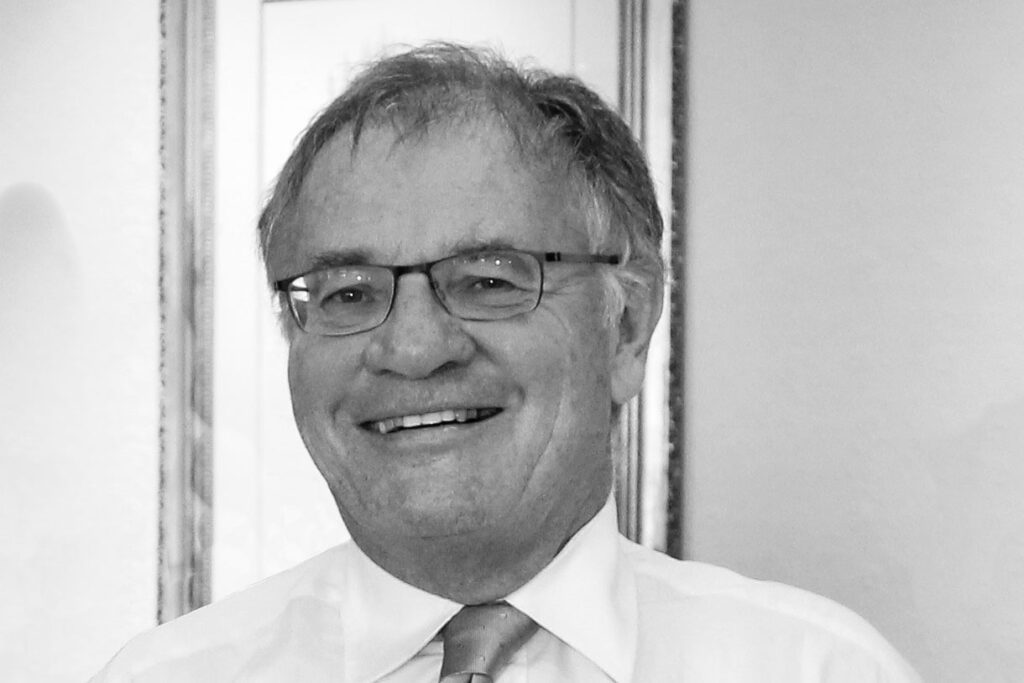
There are public figures whose reputations arrive fully formed: robe, title, and the steady cadence of authority. Dennis Davis is one such figure: a High Court judge, formidable legal mind, law professor at many universities including UCT, Wits, Cambridge, Harvard and NYU, and a familiar television presence from Future Imperfect and You Be the Judge. Yet this well-known profile includes a more private, persistent devotion: a lifelong immersion in music that has now found institutional expression in his appointment as interim chair of the Cape Town Philharmonic Orchestra.
Beginnings in the living room
The roots of that devotion lie not in concert halls but in a family living room. Dennis’s father filled the house with the sound of great cantors, playing recordings of Richard Tucker and Jan Peerce singing Kol Nidrei. This was no incidental soundtrack. It was an early education in emotional expression, in the peculiar intensity of Jewish liturgical music, chazones, that binds history, longing, and faith into a single vocal line. Cape Town itself, in those years, provided formidable live examples: Koussevitsky at Schoonder Street and Philip Badash in Sea Point, voices that, as Davis recalls, sang with both magnitude and feeling.
A love affair begins
Like many enthusiasts, his early practical ambitions did not quite match his enthusiasm. He attempted the piano but describes himself, with characteristic bluntness, as “hopeless”. Music would not be something he produced so much as something he pursued, intellectually and emotionally.
A decisive moment came in 1967 at the Alhambra Theatre, where he encountered opera for the first time in a performance of Carmen. That same year, in a gesture both charming and revealing, he and schoolfriend, Gilad Stern, bought batons and took to conducting along with recordings. It was also the year he heard pianist Hans Richter-Haaser perform Beethoven’s Third and Fifth Piano Concertos at Cape Town City Hall. “I fell in love with classical music,” he recalls, a statement that, in its simplicity, masks a lifetime’s accumulation of listening, learning, and reflection.
The pattern was set. Records borrowed from the municipal library, Sunday evening concerts, and an ever-expanding auditory world. Even singing, despite his professed lack of talent, found its way in: he remains proud to have sung in the choir for Beethoven’s Ninth Symphony, that great choral affirmation.
Along the way, he has heard many of the greats: Daniel Barenboim, Arthur Rubinstein, Pinchas Zuckerman, Itzhak Perlman, and conductors from Solti to Karajan to Rattle. These are not merely names to be dropped but markers of a life attentively lived in music.
Tradition, music, and continuity
Yet it is impossible to disentangle Dennis’s musical life from his Jewish one. From Grade 4 at Herzlia, he learned davening under the late Cantor Immerman. He later ran student services at the Old Shul in Gardens and assisted Rabbi Steinhorn during the High Holy Days in Sea Point. To this day, he continues to play a role in the Egalitarian Shul’s High Holy Day services. The continuity is striking: from childhood liturgy to adult responsibility, from inherited tradition to chosen participation.
Music, for Dennis, is not merely aesthetic. It is reflective. Driving to work, he plays chazones in the car, using it as a space to contemplate “the joys and sorrows of Jewish life and history”. This is not background noise. It is a form of thinking.
Lockdown and a global classroom
His engagement has, in recent years, taken on a more public dimension through Lockdown University, the global online initiative founded by Wendy Fisher during the Covid-19 pandemic. Initially contributing lectures on politics and law, Dennis soon extended his repertoire to music. Inspired by performances he had attended in the United States, most notably at Carnegie Hall, where Leonard Slatkin presented Beethoven’s Ninth with an explanatory first half. This has inspired him to adopt a similar format.
The result has been remarkably prolific: over 130 lectures since 2020, including detailed explorations of Mahler’s symphonies, jazz, and the broader classical canon.
His study at home, he admits is a dense landscape of CDs, as he compares interpretations and refines his understanding. There is an infectious enthusiasm in this work, though he admits to finding the scale of his audience, now numbering in the thousands worldwide, somewhat daunting. The intimacy of early Zoom sessions has given way to a more impersonal, if far-reaching, exchange.
Now, as he approaches his 75th birthday, Davis has chosen a fitting gift for himself. He will travel with his wife, Claudette, to Berlin to hear the Berlin Philharmonic under the baton of the 98-year-old Herbert Blomstedt, conducting Bruckner’s 7th Symphony, one of Davis’s particular favourites. It is hard to imagine a more appropriate celebration: a convergence of longevity, mastery, and emotional depth.
In a world inclined to compartmentalise, to separate the rational from the artistic, the judicial from the lyrical, Dennis Davis offers a more integrated model. The law may be his profession, but music, unmistakably, is a profound source of joy and inspiration. He has served this muse in many ways and he does so now in public contribution to the Cape Town Philharmonic Orchestra.
- For the current edition of the Cape Jewish Chronicle, click here.
- Subscribe to the Cape Jewish Chronicle: R450/year, or R38/month via debit order. Simply email us at subscriptions@ctjc.co.za and click here for payment info.
- The Cape Jewish Chronicle reaches over 6 000 readers monthly across print and digital platforms.
- To book advertising space or discuss a custom package contact Adéle Gradner Mobile: 083 321 5222 | Office: 021 464 6736 | Email advertising@ctjc.co.za