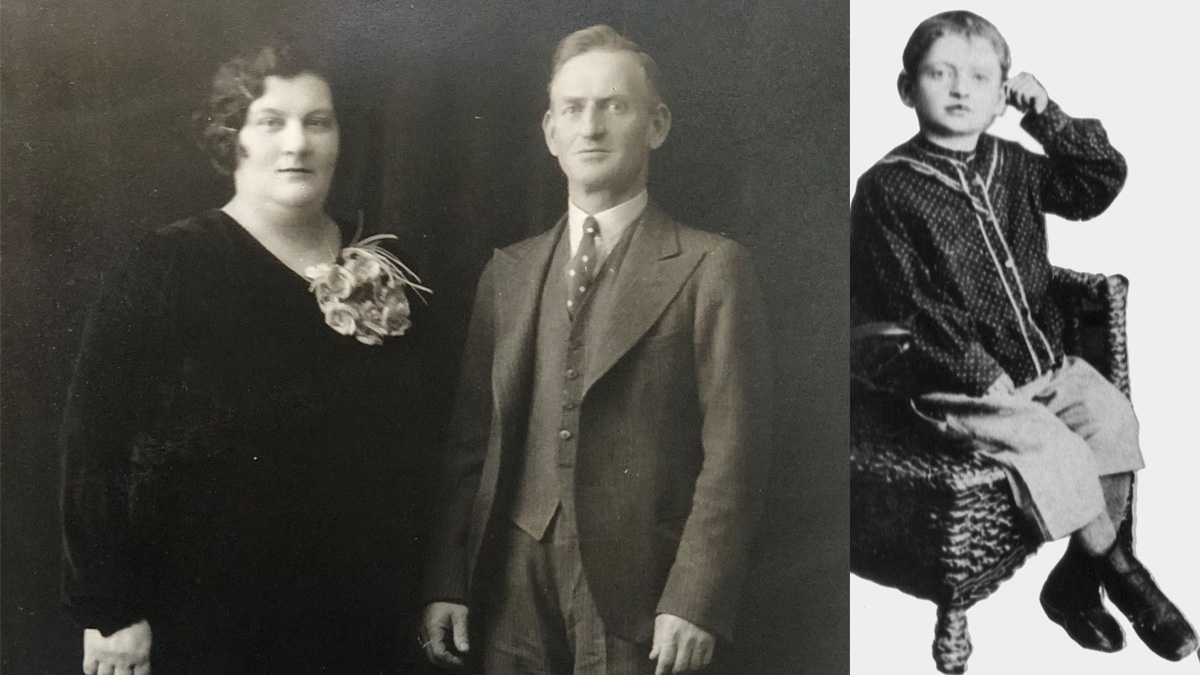
In the previous edition of the Cape Jewish Chronicle, we shared information about The Boy in a Barrel, a novel based on a true story. In this edition, we share more of the true tale, as recalled by Guy Lieberman, a grandson of the main character.
When Guy Lieberman tells the story of his grandfather, Israel ‘Issy’ Lieberman, it sounds almost too extraordinary to be true. Yet it has become one of the defining stories of the Lieberman family – a tale of loss, survival, resilience and an unlikely reunion.
In 1899, Guy’s great-grandfather, Abraham Lieberman, left a town in Eastern Europe in search of a safer future for his family. Pogroms were spreading through the region, and South Africa, with its gold rush and economic opportunities, seemed to offer hope.
His wife, Rachel, pregnant at the time, encouraged him to take one of their children, seven-year-old Issy, along. “He’s the naughtiest,” she reportedly joked.
Father and son eventually arrived in Cape Town after a long journey by road, rail and sea. But shortly after landing, disaster struck.
Abraham left Issy guarding their luggage while he searched for accommodation. “Don’t move from this place until I return,” he instructed the boy.
He never came back.
Unknown to Abraham, British soldiers, suspicious during the Anglo-Boer War, arrested the large, red-bearded immigrant, mistaking him for a Boer rebel. Unable to communicate in English, he spent three days in custody before being released.
By the time he returned to the harbour, Issy had vanished.
“Abraham searched Cape Town for three months,” Guy says. “Eventually he concluded there was no way the child could have survived.”
He wrote to Rachel back home in Eastern Europe, informing her that their son was dead.
Meanwhile, Issy was very much alive.
Alone, hungry and unable to speak English, the seven-year-old survived by scavenging for food and sleeping in a discarded barrel. He learned to fend for himself, stole bottles of milk from doorsteps – and befriended a stray puppy.
Eventually, a group of Coloured street children took him under their wing. Later, a Coloured family, recognising that something terrible had happened to the young immigrant, welcomed him into their home, despite their own poverty.
“Even after losing his father in a foreign land and being absorbed into a completely different culture, Issy never forgot who he was,” says Guy. “He always remembered his name – Israel Lieberman.”
Five years later, Abraham had earned enough to bring the rest of the family to Johannesburg. Rachel never accepted that her son had died. Armed with the only photograph she had of him, she began placing advertisements in the Rand Daily Mail.
“Israel Lieberman, your family is looking for you. Come to this address.”
She continued for years.
Abraham thought it was hopeless.
“‘Issy is dead,’ he insisted. But Rachel never stopped believing.”
Eleven years after father and son had become separated, fate intervened.
Now 18, Issy was working on a diamond diggings site when a friend showed him a newspaper carrying one of Rachel’s advertisements.
“There is a family looking for someone with your name,” the friend told him.
Issy immediately set off for Johannesburg.
After a series of mishaps – including getting off at the wrong train station and walking for hours to Braamfontein – he finally arrived at the family home after dark. Nervous and curious, he peered through a window to look at the people searching for him.
One of the older brothers spotted him outside and, assuming he was a thief, crept around the house and struck him on the head with a plank.
When the unconscious stranger was carried into the kitchen, Rachel took one look at him and froze.
“That’s Issy.”
The reunion was emotional and overwhelming. Rachel immediately recognised the son she had never stopped searching for. The rest of the family welcomed him home.
Only Abraham struggled to accept it.
“‘This man is an impostor,’ he insisted,” Guy recounts. “He simply could not believe that a seven-year-old child could have survived alone for so long.”
For Rachel and the rest of the family, however, there was no doubt. The boy they had lost had finally come home.
Issy went on to build a successful life in Johannesburg, marrying and raising a family of his own. Yet he never forgot those who had helped him survive, maintaining a lifelong affection and gratitude towards the Coloured community that had cared for him as a child.
For the Lieberman family, the story remains a reminder of both human vulnerability and remarkable resilience.
“How Issy survived as a lost seven-year-old and then thrived is a staggering combination of will, resilience and sheer luck,” says Guy. “For us, it has become Lieberman lore.”
- For the current edition of the Cape Jewish Chronicle, click here.
- Subscribe to the Cape Jewish Chronicle: R450/year, or R38/month via debit order. Simply email us at subscriptions@ctjc.co.za and click here for payment info.
- The Cape Jewish Chronicle reaches over 6 000 readers monthly across print and digital platforms.
- To book advertising space or discuss a custom package contact Adéle Gradner Mobile: 083 321 5222 | Office: 021 464 6736 | Email advertising@ctjc.co.za