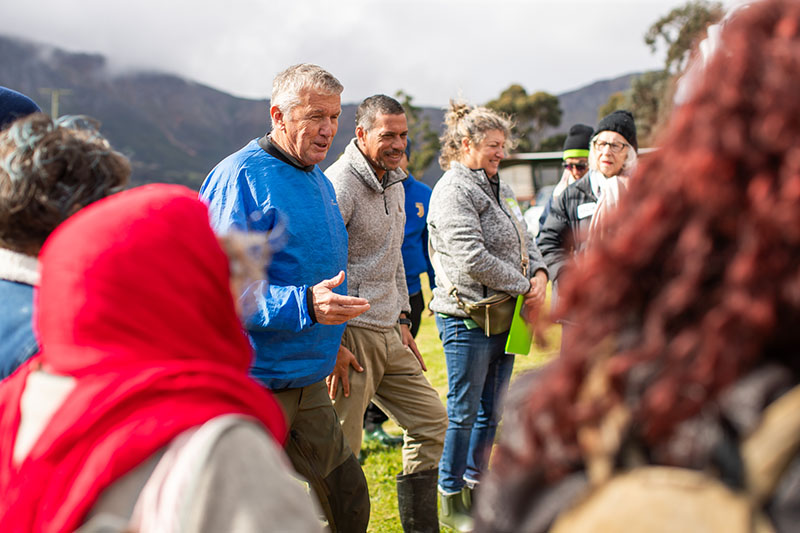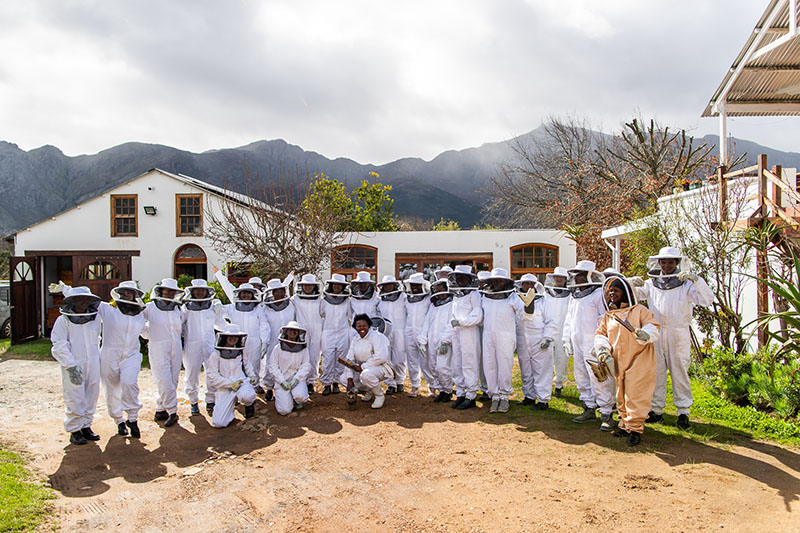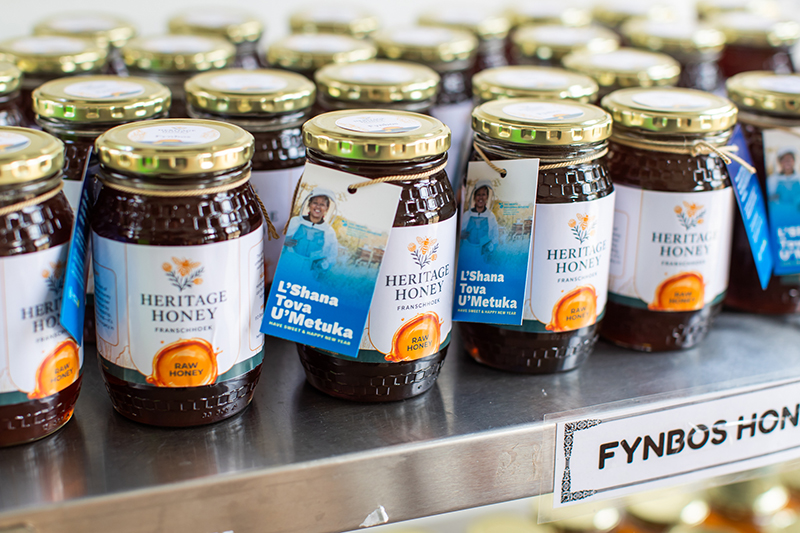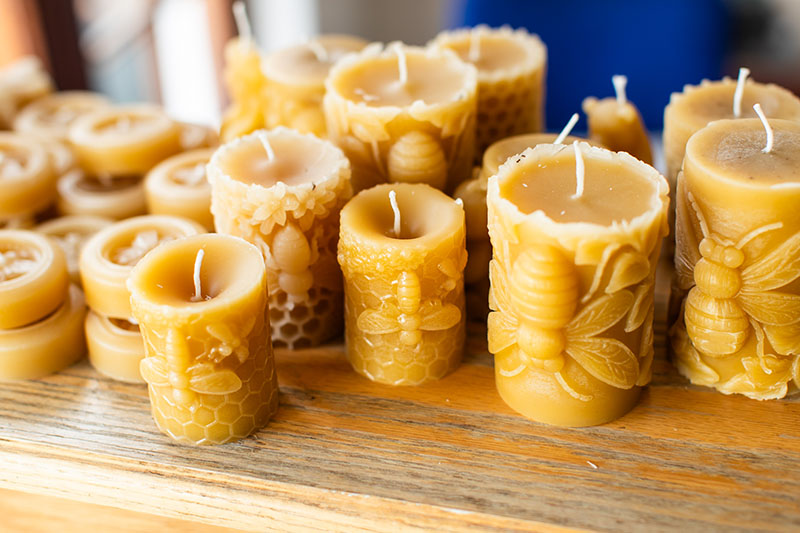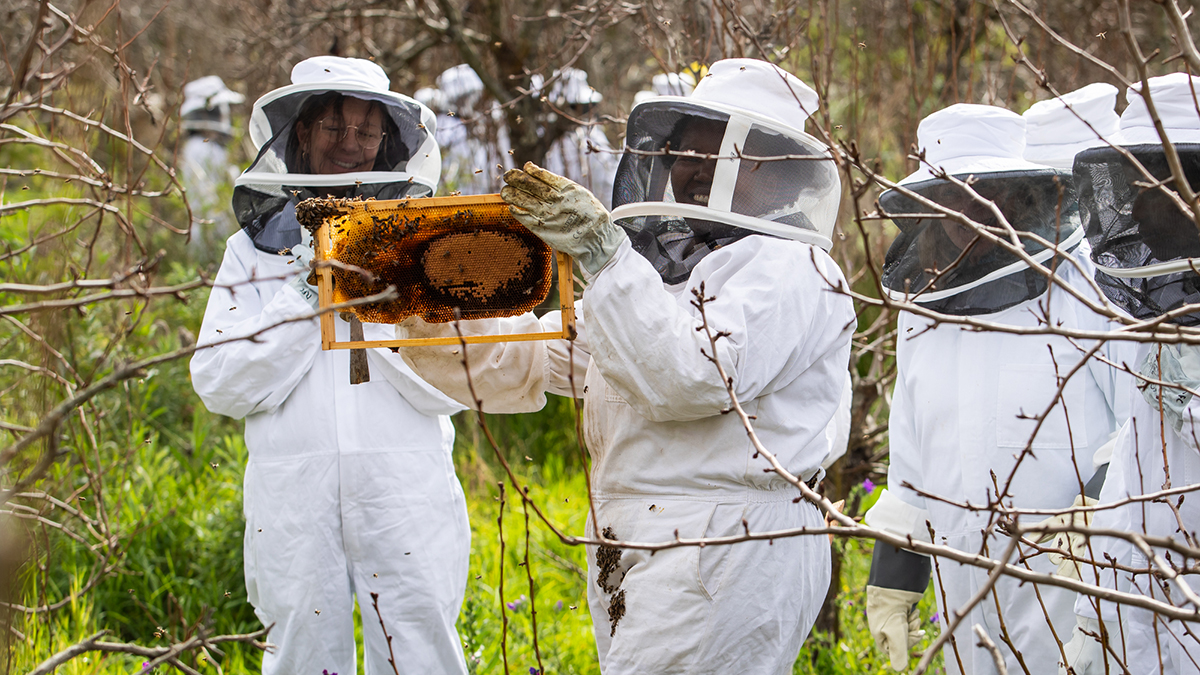
It felt like an early Rosh Hashanah for a group of Cape Town women – and two men – when they dipped apple in honey during a Women’s Day event in Franschhoek. Organised by Mensch, the event showcased an exciting JDC beekeeping project and included a honey and wine pairing – hence the early Rosh Hashanah celebration.
Through the contacts and networking that epitomise Mensch, the American Joint Distribution Committee (JDC) has expanded its reach beyond its traditional focus on Jewish communities worldwide. Today, the JDC provides a range of support initiatives in throughout the world, including South Africa. Joining forces with Mensch, it has initiated the Ubuntu Beekeeping Project. The implementing partner for the project is Ripples for Change.
The JDC explains that the project is part of “the JDC Imagine More initiative with local Jewish community partners and the NPO Ripples for Change that trains South African women in beekeeping and how to launch and manage their own honey production businesses. Bees are key to their economic empowerment.”
The Ubuntu Project currently has nine sites throughout South Africa, with two in the Western Cape, including one in Franschhoek. Located in the Cape Winelands Biosphere Reserve (CWBR), the site is in a particularly beautiful part of the country – and one rich in food for bees.
As Mark Heistein, CEO of the CWBR, explained to the group, “Franschhoek has a plethora of food sources for bees: the fynbos on the mountains, the many eucalyptus tree forests, and the residential gardens. Residents of Franschhoek take great pride in their gardens, and so we have plenty of flowers throughout the year. All these factors make this a perfect spot for beekeeping and honey production.”
Ripples for Change, led by Director Galit Cohen, is the on-the-ground partner. “The support from the JDC comes in the form of beekeeping equipment and training. The training covers a range of elements: from beekeeping itself, to managing a business, to knowledge about plants and the role of bees in the natural ecology.”
Women with entrepreneurial skills are identified and become mentors, recruiting other suitable women to join the project. “The seasoned mentor not only imparts essential beekeeping skills but also shares insights from their successful honey-production business. Going beyond mere provision, our programme emphasises hands-on learning through tailored training and mentorship,” Galit says.
Becoming involved in beekeeping has been a sea change for many of the women. Those at the Franschhoek event spoke of their previous fear of bees – insects they knew largely for their sting – and how they have come to love them and understand the positive role they play in our world. Local mentor Brenda Mgxilwa explained that her knowledge of bees had previously been restricted to their role in a Xhosa cultural practice. In Xhosa culture, honeybees are deeply revered as spiritual messengers from deceased ancestors. “But I did not know that one can use bees to make honey, or that one can earn income from bees,” she said.
While the Franschhoek project is still relatively young – having started in 2024 – its prospects look good. It is already producing honey for sale and expects increased harvests as it grows.
“Through our involvement with the Ubuntu Beekeeping Project, Mensch has undertaken to boost the sales of the Franschhoek initiative by offering Rosh Hashanah honey this year for sale to Cape Town’s Jewish community and anyone else interested in buying it,” says Gina Flash, Director of Mensch. “The honey is Kosher, and carries the Beth Din stamp.”
Thus far, the women involved – all of whom have other jobs and participate in the project part-time – have not taken home any of the profits. “We have reinvested our profits so that we can grow the project,” one beekeeper explained. “But we do foresee a future in which we will be able to earn a living from our beekeeping, and in which some of us will be able to work full-time as beekeepers.”
The women also spoke of the therapeutic value of the project in their lives. Coming together regularly as a group of women to tend their bees gives them the chance to forget about their usual concerns – for a time at least – and to enjoy the warmth of the group members.
The support offered by organisations within the Jewish community to people who need a leg up is heartwarming. May the beekeepers continue to prosper and realise their dreams.
Tips about honey
- Honey will last for a long period if kept in a tightly-sealed container
- Honey loses its health benefits if put into hot water above 45 °C. Use warm, not hot, water
- There has been little research done on the health benefits of fynbos honey but it is anticipated that research will reveal significant health benefits.