For Rabbi Doron Perez, the devastating loss of his son has deepened his understanding of a central idea in Jewish thought: that life inevitably holds both simcha (joy) and brokenness. It is this apparent contradiction, he believes, that strengthens the Jewish commitment to love, resilience and the sanctification of life.
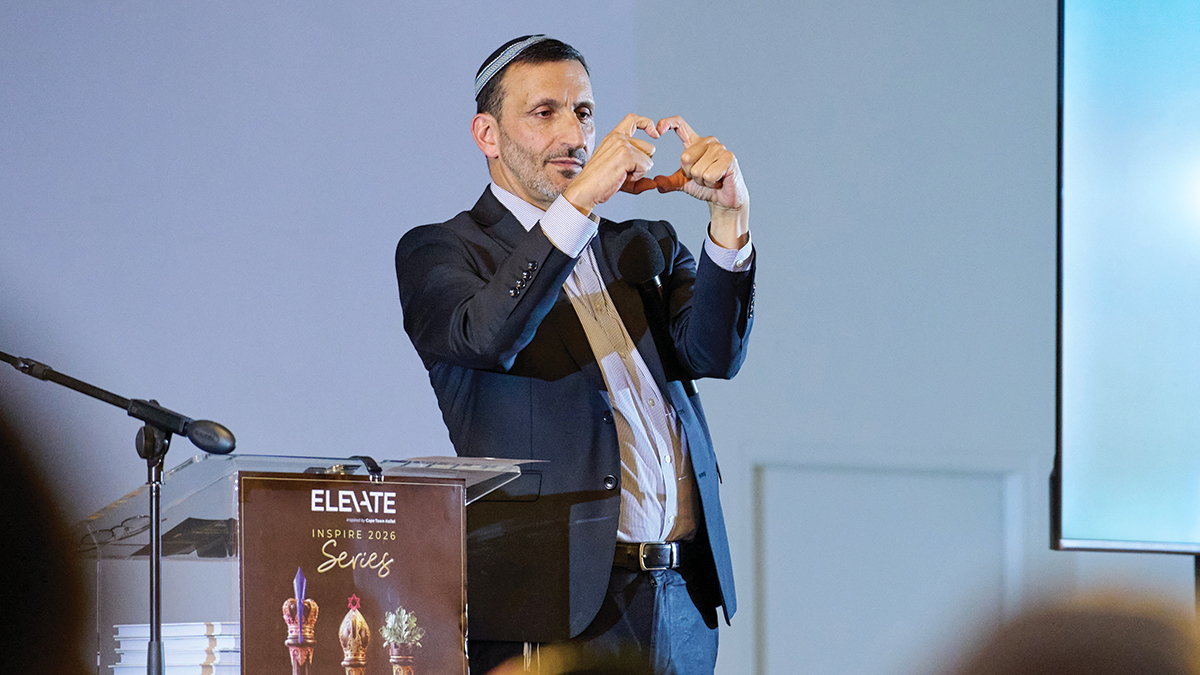
Speaking at the inaugural event of the ELEVATE Inspire 2026 Series, Rabbi Perez reflected on the different ways he and his wife, Shelley, have coped with the trauma they have endured since 7 October 2023, when their younger son, Daniel, was taken from them.
A young tank commander stationed at the Nahal Oz base on Israel’s border with Gaza, Daniel was captured by Hamas during the attacks. For 163 days, the Perez family believed he was alive and being held hostage.
Rabbi Perez, Executive Chairman of the World Mizrachi movement and President of the World Zionist Organisation, described that period as living as a “hostage family”. Shelley was consumed by anxiety, constantly wondering whether Daniel was being tortured or receiving enough food. He, by contrast, immersed himself in activity.
“I made a conscious effort to disconnect from Daniel emotionally during this period,” he said.
Their contrasting responses, he explained, reflected two different ways of coping with overwhelming trauma.
After 163 days, the family learned that Daniel had been killed, although his body was returned only some time later.
“The first 163 days were like a torture chamber for Shelley,” Rabbi Perez said. “She felt a sense of relief when we were
told that he had died.”
For him, however, the news marked the beginning of a far more difficult period. “Before that, I had occupied my time with all sorts of things, including being a hostage parent. But when we got the news, I did not know what to do. There wasn’t anything for me to do anymore. And so, for me, the past 10 months have been really difficult.”
When Daniel’s body was finally returned to Israel, the family became, in his words, a “bereaved family”.
“I now feel the brokenness at all times. And I know that I will live with that brokenness forever. But that is also an important realisation: one has to learn to live with the brokenness, and not allow it to prevent one from living.”
That experience has transformed the way Rabbi Perez understands both suffering and Jewish tradition. He now identifies brokenness everywhere, yet believes it must always exist alongside a wholehearted embrace of life.
“That is the contradiction I see all the time,” he said. “And it’s in our Torah and other texts, too. Judaism teaches us to live with this contradictory state all the time.”
He pointed to Jewish texts and practices that embody this idea. Key to Pesach, for example, is matzah, which symbolises both redemption and affliction.
Ultimately, Rabbi Perez believes that, “Jewish thought teaches us that life is a package deal: there is simcha, and there is brokenness.”
ELEVATE INSPIRE 2026: The ELEVATE INSPIRE 2026 Series is organised into three categories: Changemakers, Jewish Thought, and Wellbeing.
- For the current edition of the Cape Jewish Chronicle, click here.
- Subscribe to the Cape Jewish Chronicle: R450/year, or R38/month via debit order. Simply email us at subscriptions@ctjc.co.za and click here for payment info.
- The Cape Jewish Chronicle reaches over 6 000 readers monthly across print and digital platforms.
- To book advertising space or discuss a custom package contact Adéle Gradner Mobile: 083 321 5222 | Office: 021 464 6736 | Email advertising@ctjc.co.za