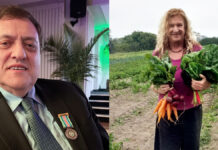
A fascinating talk at Limmud this year by Sarah Bunin Benor, Professor of Contemporary Jewish Studies and Linguistics at Hebrew University College, focused on the fate of Jewish languages throughout the world.
While most of the languages are under severe threat or have actually disappeared, traces of some languages survive because they are used in new ways.
Benor explained how, over the past two centuries, migration and major historical events have reshaped the languages spoken by Jewish communities around the world. She also referred to the decision of the newly-created Jewish state of Israel to choose Hebrew as the official language of the country, so marginalising Yiddish and preventing the continuity of the language among Jewish citizens of the country.
Although lost to many of the descendants of East European speakers, Yiddish continues to thrive in Hasidic communities. Other longstanding Jewish languages are increasingly endangered, with Ladino, Judeo-Arabic, Jewish Neo-Aramaic from Iraq and Iran, and Jewish Malayalam from southern India now spoken mainly by older generations – a fact which raises deep concerns about the future of these languages.
Yet these languages are not simply disappearing. Jewish communities are finding new ways to connect with their linguistic heritage through music, food and other cultural traditions, even when the languages themselves are no longer part of daily conversation.
At the same time, Jewish language continues to evolve. New varieties are emerging as Jewish communities adapt the languages of the countries in which they live, including Jewish English, Jewish Latin American Spanish and Jewish Russian. Many young Jewish people are creating a new language that they speak at Jewish youth camps which incorporates Hebrew and Yiddish words.
Together, these shifts tell a broader story of Jewish migration, adaptation and identity – and of the ways language continues to reflect the changing experience of Jewish communities across the world.
Editor’s comment
Purely coincidentally, just a few days after I heard Sarah Bunin Benor’s talk at Limmud, I came across a very interesting podcast that highlights the issues she spoke about. The podcast relates to an acclaimed book called Chopping Onions on my Heart: On Losing and Preserving Culture (also published under the title, Always Carry Salt: A memoir of preserving language and culture) by British Jewish author, Samantha Ellis. The writer talks about the loss of Iraqi Judeo-Arabic; how culture is preserved through food; identity issues for a 2nd generation émigré; and the horrific laws in Iraq today that prevent any Iraqi Jews from returning to the country. Listen to the podcast here.