Home Blog Page 33

Empowering independence

The Suite of Services for Cape Town’s Jewish Seniors

Aging doesn’t mean giving up independence.  The Suite of Services, offered by Care Services in partnership with the Cape Jewish Seniors Association (CJSA), is here to ensure seniors in the Cape Town Jewish community can live safely and comfortably in their own homes.

Here’s why this initiative is a game-changer.

Who benefits? 
Seniors living independently who need help with daily tasks, health monitoring, or companionship. Families seeking reliable, professional care for their loved ones. 

Why choose the Suite of Services? 
Stay in the comfort of your own home. Maintain independence with tailored care that adapts to your needs. Receive support from a trusted team grounded in community values. 

Care Packages

Bronze Package: 4 hours per week, including bathing assistance, light meal prep, medication monitoring, health screenings, and companionship.

Silver Package: 6 hours twice a week, with added errands and transport to appointments. 

Both packages are customisable to suit individual needs.  

Key Features

  • Services delivered by trained professionals. 
  • Focus on care, safety, and wellness – not housekeeping.
  • Flexible packages that can be adjusted as needs change. 
  • Initial assessment ensures personalised care plans.

Contact Details for assessments and package costs!
Phone: (021) 434 9691 
Email: sos@careservices.org.za 
Hours: Mon-Thurs, 08:30am – 4:30pm; Fri, 08:30am – 1:00pm 

The Suite of Services is more than care – it’s about empowering seniors to live with dignity, safety, and independence.  

Let’s start the conversation as soon as possible!  

Care Services info@careservices.org.za


  • For the current edition of the Cape Jewish Chronicle, click here.
  • Subscribe to the Cape Jewish Chronicle: R450/year, or R38/month via debit order. Simply email us at subscriptions@ctjc.co.za and click here for payment info.
  • The Cape Jewish Chronicle reaches over 6 000 readers monthly across print and digital platforms.
  • To book advertising space or discuss a custom package contact Adéle Gradner Mobile: 083 321 5222 | Office: 021 464 6736 | Email advertising@ctjc.co.za

Your path to personalised care starts here

Compassionate. Professional. Tailored Support.

Care Services info@careservices.org.za


  • For the current edition of the Cape Jewish Chronicle, click here.
  • Subscribe to the Cape Jewish Chronicle: R450/year, or R38/month via debit order. Simply email us at subscriptions@ctjc.co.za and click here for payment info.
  • The Cape Jewish Chronicle reaches over 6 000 readers monthly across print and digital platforms.
  • To book advertising space or discuss a custom package contact Adéle Gradner Mobile: 083 321 5222 | Office: 021 464 6736 | Email advertising@ctjc.co.za

Prepare your bursary application for 2026

Apply between 1 September and 31 October 2025.

Cape SA Jewish Board of Deputies | http://www.capesajbd.org | Instagram | Facebook


  • For the current edition of the Cape Jewish Chronicle, click here.
  • Subscribe to the Cape Jewish Chronicle: R450/year, or R38/month via debit order. Simply email us at subscriptions@ctjc.co.za and click here for payment info.
  • The Cape Jewish Chronicle reaches over 6 000 readers monthly across print and digital platforms.
  • To book advertising space or discuss a custom package contact Adéle Gradner Mobile: 083 321 5222 | Office: 021 464 6736 | Email advertising@ctjc.co.za

The Power of Community

Chief Rabbi’s Rosh Hashanah message

A recent survey by the American Psychiatric Association found that one in three people experience loneliness at least once a week, with 30% of younger people reporting feeling lonely at least several times a week.

Ironically, when asked how they dealt with their feelings of loneliness, half the respondents said they sought solace in some kind of distraction, like TV or social media, which obviously exacerbates the problem.

In modern Western culture, loneliness is increasingly described by social scientists as an epidemic – affecting not only mental health, but physical wellbeing. A world that promises more connectivity offers, instead, connections that are virtual rather than
real, digital rather than human, on screens rather than in person.

We have a deep craving for human connection. But loneliness is not alleviated simply by being around other people. The antidote to loneliness touches on something more existential – being part of something greater, a sense of belonging.

Judaism has offered us this solution for thousands of years: community. And it is expressed most powerfully through our shuls, which have long been the heart of Jewish community life, hubs of connection for generations. Being part of a shul and coming regularly is about more than seeing familiar faces. It offers something far deeper: a sense of community, the ultimate antidote to loneliness. 

Community means belonging to a group with a shared identity – a circle of people who can support and hold you, a place where you belong.

This is the beauty of shul. The founders of our community instinctively understood this. Arriving on these shores from Eastern Europe to escape persecution and poverty, one of their first priorities was to establish shuls – beginning with the first in Cape Town more than 180 years ago, and then spreading across the country and dotting the countryside. Even as demographics shifted from rural areas to the big cities – and within Johannesburg and Cape Town, from one suburb to another – shuls have remained the lifeblood of the South African Jewish community. Shuls are islands of connectivity, love, and real human connection – places where we feel part of something greater than ourselves.  

This Rosh Hashanah and Yom Kippur, let us all resolve to deepen our connection to community, taking an active role in making our shuls thrive.

In doing so, we will emerge a stronger, more unified community, enriched as families, inspired by shared purpose, with the resilience, strength and confidence to meet the future.

I wish our special Cape Town Jewish community a gmar chatima tova, and  a sweet new year!  


  • For the current edition of the Cape Jewish Chronicle, click here.
  • Subscribe to the Cape Jewish Chronicle: R450/year, or R38/month via debit order. Simply email us at subscriptions@ctjc.co.za and click here for payment info.
  • The Cape Jewish Chronicle reaches over 6 000 readers monthly across print and digital platforms.
  • To book advertising space or discuss a custom package contact Adéle Gradner Mobile: 083 321 5222 | Office: 021 464 6736 | Email advertising@ctjc.co.za

An unexpected treasure trove

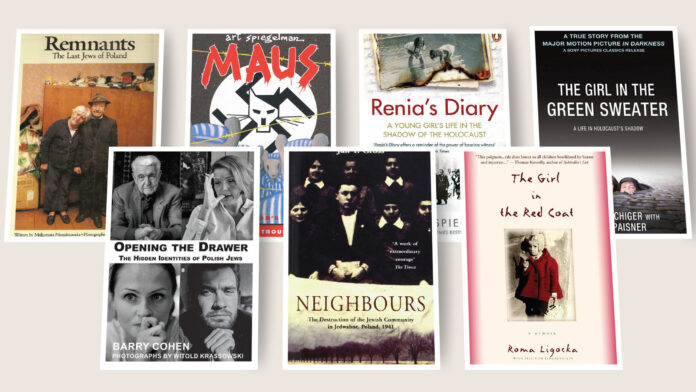
The Jacob Gitlin Library’s collection of books on Poland

In line with our reporting about the tour to Poland organised by the Cape Town Holocaust & Genocide Centre, The Chronicle visited the Gitlin Library to find out what resources are available there for those with an interest in Jewish Poland. 

We discovered that the Library has a well-stocked section on Polish Jewish history, including numerous biographical accounts of survival during the German and the Soviet occupations of the country.

We roped in the Centre’s Director, Jakub (Kuba) Nowakowski, who is a Pole himself, Kuba shared his knowledge about the literary treasure trove, and here we highlight some of his comments, recommendations and points of guidance. 

“When reading about contemporary Polish-Jewish relations and the attitudes among Poles towards Jews, it’s important to give consideration to the time period when a particular book was written,” he says. “To get an accurate picture of present-day attitudes, you should read books written in the last 20 years or so. These books will capture contemporary views on Poland’s Jewish past and on the attitudes towards Jewish people that we see in today’s Poland. In many respects, it is considerably different from how things were seen 40 or 50 years ago, when Poland was a Communist country.”

Kuba points out that a great deal of the antisemitism for which Poland was notorious in previous eras has diminished. An important factor in this was the role of Pope John Paul II – ‘the Polish Pope’, who is greatly revered throughout Poland – who condemned antisemitism as a sin, something that no previous Pope had done. The Chief Rabbi of Poland, Michael Shudrich, has praised the Pope for this action, believing that it furthered Christian-Jewish dialogue significantly.

Another consideration that impacted attitudes is the fact that the ‘wall of silence’ about the War came crashing down after the fall of Communism. A new generation of Poles learned about things that happened on their soil – things not known previously.

Testimony, Diaries and Memoirs 

The Girl in the Green Sweater: A life in Holocaust’s Shadow 
Krystyna Chiger with Daniel Paisner 
964.302 CHI  
How the young Chiger survived the Holocaust hiding in the sewers of Lvov and the story of their unlikely saviour, Leopold Socha. In 2013, based on this book, the film In Darkness was made, directed by one of Poland’s most important filmmakers, Agnieszka Holland. 

Justyna’s Narrative 
Gusta Davidson Draenger (Transl. Roslyn & David H. Hirsch) 
964.31438 DRA
“An extraordinary memoir of the Kraków Jewish resistance, written on toilet paper and other scraps by its author, Gusta Davidson Draenger, while imprisoned by the Germans in 1943 a truly unique historical document.” 

Who are you, Mr Grymek? 
Natan Gross (Transl. William R. Brand) 
964.31438 GRO
“A survivor’s story during and after the war” 

The Girl in the Red Coat 
Roma Ligocka (Transl. Margor Bettauer Dembo) 
964.302 LIG 
How Ligocka, a ‘hidden child’ confronted her past through seeing herself portrayed in her red coat in the movie of Schindler’s List 

Memoirs of a Ghetto Fighter: the past within me 
Simha Rotem (Kazik) (Trans. Barbara Harshav) 
964.31438 ROT 
An important memoir by a hero of the Warsaw Ghetto uprising 

The Diary of David Sierakowiak: Five Notebooks from the Lodz Ghetto 
Alan Adelson Ed Kamil Turowski Trans.
964.31438 SIE 
A teenage author who dies of starvation in the Lodz Ghetto, whose notebooks were found stacked on a stove 

Renia’s Diary: A Young Girl’s Life in the Shadow of the Holocaust 
Renia Spiegel (Transl. Anna Blasiak & Marta Dziurosz)  
964.302 SPI 
“The wartime diary of a teenage girl in Eastern Europe – a story very different from that of Anne Frank, whose life unfolded in Western Europe. She was just 18 years old when she was shot.” 

History of Poland 

Jewish Autonomy in Poland and Lithuania until 1648 (5408) 
Shmuel A. Arthur Cygielman 
9648.38 CYG 
Golden Age of Polish &Lithuanian Jews in 16th & 17th Centuries 

Holocaust History  

Belzec, Sobibor, Treblinka: The Operation Reinhard Death Camps 
Yitzhak Arad 
964.31438 ARA 
A history of the 3 death camps from their construction in 1941 to their destruction to in 1943. Written in 1987 by the then Chairman of Yad Vashem 

Isaacs Army: A Story of Courage and Survival In Nazi-Occupied Poland 
Matthew Brzezinski 
964.31438 BRZ 
Jewish resistance in wartime Poland 

Relations between Jews & Poles During the Holocaust: The Jewish Perspective 
Havi Dreifuss (Ben-Sasson) (Transl. Ora Cummings) 
964.31438 DRE 
“A must read” How Polish Jews viewed their milieu and relationships with the country and its people during the Holocaust 

Neighbours: The Destruction of the Jewish Community in Jedwabne, Poland GRO 
Jan T. Gross 
964.31438 
A landmark book on a critical moment when the villagers of Jedwabne burnt their neighbours to death in 1941. When it was published in 2000, it made a profound impact in Poland, reshaping the way Polish–Jewish relations during the war were understood. One of the most important books published in Poland in the last 30 years. 

Anatomy of the Auschwitz Death Camp 
Yisrael Gutman & Michael Berenbaum 
964.31438 GUT 
“New research on Auschwitz” 

Shtetl: The History of a Small Town and an Extinguished World 
Eva Hoffman 
9648.38 HOF 
The story of Bransk in Poland as a basis for looking at the lost world of East European Jewry.  

Fighting for Dignity: Jewish Resistance in Krakow 
Exhibition catalogue 
Galicia Jewish Museum (Curator Jakub Nowakowski) 
964.31438 NOW 
“The catalogue of a unique exhibition I curated, delving into the extraordinary courage and resilience of the Jewish resistance in Kraków.” 

Warsaw Ghetto Police: The Jewish Order Service during the Nazi Occupation 
Katarzyna Person (Transl. Zygmunt Nowak-Solinski) 
964.31438 PER 
The complex and difficult story of the Jewish policemen and their roles in the destruction of the Warsaw Jewish community. 

The Auschwitz Volunteer: Beyond Bravery 
Captain Witold Pilecki (Transl. Jarek Garlinski) 
964.31438 PIL 
“Amazing story of the man who volunteered to be imprisoned in Auschwitz in order to bring out the story of what was happening there.” 
 
Auschwitz: The Nazis & the Final Solution (see DVD below)
Laurence Rees 
964.31438 REE 
“One of the fundamental Holocaust works. Supplies the context to Nazi Policy in Poland”  

Polish Witnesses to the Shoah 
M.Turski (conceived) 
964.31438 TUR 
“A nuanced description “…testimonies of witnesses and recollections of scenes half a century after the war.  

Post-war Poland 

Opening the Drawer: the Hidden Identities of Polish Jews 
Barry Cohen (Photographs Witold Krassowski) 
964.38 COH 
The book uncovers the personal stories of individuals who grew up unaware of their Jewish roots, only to discover them later in life. Through moving testimonies and careful historical context, the book explores the silence, secrecy, and resilience that shaped these hidden identities in post-war Poland. 

Three Minutes in Poland: Discovering a Lost World in a 1938 Family Film 
Glenn Kurtz 
964.38 KUR 

Who Will Say Kaddish? A Search for Jewish Identity in Contemporary Poland 
Larry N> Mayer (Photographs Gary Gelb) 
964.38 MAY 

Graphic Novels 

Yossel April 19 1943 
John Kubert 
741.5 KUB 

The Property 
Rutu Modan (transl. Jessica Cohen) 
741.5  MOD 
The plot follows a granddaughter and her grandmother on a journey from Israel to Poland to reclaim a family home lost during the Holocaust. Blending humour, tenderness, and family secrets, it offers a fresh and human perspective on memory, inheritance, and the complexities of the past. 

Maus: A Survivor’s Tale and here my Troubles began 
Art Spiegelman  
964.302 SPI 

Photographic Books: Pre-war and contemporary pictures 

The Jerusalem of the Kingdom of Poland 
The Story of the Jewish Lublin 
Leszek Dulik, Waldemar Golec Text: Konrad Zielinski (Transl. Wieslaw Horabik) 
964.38 DUL 

Remnants: The Last Jews of Poland 
Malgorzata Niezabitowska (Photos Tomasz Tomaszewski) (Transl. William Brand & Hanna Dobosiewicz) 
“Published in the 1980s, created as a tribute to the generation that was believed to become the last. Things have changed since the end of Communism though.” 

Journey to Poland: In Search of a Vanished Jewish World 
Ruth Porter, Nili Kadari Eds. 
964.38 POR 

Memory Unearthed: The Lodz Ghetto Photographs of Henryk Ross 
Maia-Mari Sutnik Ed.  
964. 314383 SUT 
Absolutely unique visual documentation of life in the Lodz ghetto.  

DVDs 

Echoes that Remain 
Narrated by Martin Landau & Miriam Margolyes 
DVD 1396 
A poignant study of shtetl life before the Holocaust, shot at sites of former Jewish communities in Poland, Hungary, Romania and Czechoslovakia 

Genocide 
Narrated by Elizabeth Taylor & Orson Welles 
DVD 1397 
Academy Award winner Best Documentary feature 1981. The evolution of the Holocaust with individual stories of suffering and heroism. 

Auschwitz: The Nazis & the Final Solution 
Laurence Rees (See book above) 
DVD12 
The definitive screen history of the evolution of Auschwitz and how it fitted into the Nazis’ plan for the conquest of Europe. 

Shimon’s Returns 
Dir. Slawomir Grunberg 
DVD 1127 
The documentary tells the story of Shimon Redlich, a Holocaust survivor who return to sites and hiding places from his childhood 


  • For the current edition of the Cape Jewish Chronicle, click here.
  • Subscribe to the Cape Jewish Chronicle: R450/year, or R38/month via debit order. Simply email us at subscriptions@ctjc.co.za and click here for payment info.
  • The Cape Jewish Chronicle reaches over 6 000 readers monthly across print and digital platforms.
  • To book advertising space or discuss a custom package contact Adéle Gradner Mobile: 083 321 5222 | Office: 021 464 6736 | Email advertising@ctjc.co.za

Comfort Care Chronicles: Navigating life’s transitions

Let this be the Year of Care

An expert’s guide to care planning for the New Year. Over the years, I’ve seen time and again how even the most devoted families can falter in the absence of a plan. When care is reactive, decisions are rushed, caregivers burn out, and patients suffer.

Families who plan ahead, however, transform crisis into confidence. Studies show that proactive care planning can reduce hospitalisations by up to 30%, ease trauma, reduce family stress, and ensure every decision honours the individual’s values.

As the saying goes: This Rosh Hashanah, it’s time to flip that script. Make care planning your New Year’s resolution – not because you expect the worst, but because you want to protect and honour the best in those you love.

This guide will show you how to build a living, flexible care plan – one that brings clarity in uncertainty and dignity at every step.

1. Embrace care planning as a strategic resolution
A care plan is more than a list of medications or appointments – it’s a dynamic, evolving strategy that integrates daily routines, medical needs, emotional well-being, personal values, and spiritual guidance. Action Steps:

Assemble your care team: 
Identify key players – family, clinicians, spiritual advisors – and open channels of communication.

Document core values: 
In one page, list what matters most – comfort priorities, religious practices, and daily joys.

Define triggers and responses: 
Specify what calms or upsets your loved one, and when to escalate care, call the doctor, or initiate comfort measures.

2. Create weekly check-in rituals
Intentional care requires consistent attention. A 15-minute weekly check-in – whether over dinner or a video call – can flag concerns early, track changes, and prevent small issues from becoming emergencies.

3. Build a resilient ‘Circle of Care’
Care is never a solo act. At Evercare, we help formalise your ‘Circle of Care’ – your core group of family, professionals, and supporters – and equip it with shared tools:

Shared calendar:
Use Google/Outlook Calendar or a wall chart to co-ordinate appointments, script refills, and respite care.

Digital safe:
Store key documents (care plan, advance directive, living will, Power of Attorney) in a shared cloud folder

WhatsApp Group:

Set up a real-time messaging group for updates, alerts, and team check-ins.

4. Support the caregivers, too
Behind every successful care journey is someone holding it all together. Without support, even the strongest caregivers can burn out. As a resolution, commit to:

Scheduled respite:
Reserve two hours weekly for personal recharge – non-negotiable.

Professional support:
Even a single hour a month with a nurse, carer, or counsellor makes a difference.

Emotional debriefing:
Ensure caregivers have safe spaces to check-in, process and release.

5. Build a system, not a patchwork plan
Ad hoc care creates gaps – and gaps can be dangerous. Sustainable care demands structure.

Assign a care co-ordinator:
This person ensures follow-ups happen, records are up to date, and clinicians are informed. If no one can lead, divide the role among the family – one for finance, one for medical, one for logistics.

Quarterly care plan audits:
Every three months, revisit the care plan. Update it for changing needs, new preferences, or emerging treatments.

To care is to plan
This Rosh Hashanah, let your care be an act of intention – not reaction. Build systems that hold, rituals that anchor, and plans that speak when you cannot.

Because when we plan with love, we care with confidence. There is no greater mitzvah than showing up for the people we love – with presence, with purpose, and with a plan.  

Wishing you all a Happy, Healthy and Intentional New Year.


  • For the current edition of the Cape Jewish Chronicle, click here.
  • Subscribe to the Cape Jewish Chronicle: R450/year, or R38/month via debit order. Simply email us at subscriptions@ctjc.co.za and click here for payment info.
  • The Cape Jewish Chronicle reaches over 6 000 readers monthly across print and digital platforms.
  • To book advertising space or discuss a custom package contact Adéle Gradner Mobile: 083 321 5222 | Office: 021 464 6736 | Email advertising@ctjc.co.za

Denise’s Delights – a hidden gem still in Sea Point

Founded by Denise Lidsky in 1989 and known for its home-style cakes, nostalgic treats, a wide range of sweet and savoury items, cinnamon buns, biscuits, and traditional treats like kichel.

Tucked away above Posticino Italian Restaurant at 4 Albany Mews, Sea Point (opposite the Engen Garage), Denise’s Delights has been a delicious constant in a suburb that has seen many changes.

Denise’s journey began with a simple request from a friend: knowing how delicious her biscuits were, she asked her to supply a cheesecake for a market in Hout Bay. A passionate home baker, Denise took on the challenge with enthusiasm, baking in her home kitchen with the help of her mother-in-law. The market stall proved a hit, and soon Denise found herself supplying several Cape Town markets with her handmade cakes and biscuits. As demand increased, she took over a small home industry shop in Sea Point, transforming what had started as a hobby into a business. It was the first of several moves prompted not by choice, but by Sea Point’s ever-changing property landscape. Over the past three decades, she has relocated four times, primarily to accommodate new construction projects.

Now settled in Albany Mews, Denise’s Delights continues to serve as a bakery producing a wide range of sweet and savoury items, including specialised birthday cakes and cupcakes. They also cater for small events, supplying platters and meals for Friday night suppers and informal gatherings. In addition, Denise offers a wide range of items for Yomtov meals: kichel, chopped herring and liver, chicken soup, and perogen.

While the Sea Point food scene has seen increasing commercialisation and chain-store expansion, Denise has maintained a more personal approach. Her business relies heavily on repeat customers, many of whom have followed her through the years from one address to the next.

Though its current location is tucked away, Denise’s Delights remains a well-known name among long-time residents. Its longevity reflects not only a taste for the familiar and the quality of its products but also the resilience of small, owner-run businesses in a changing urban environment.


  • For the current edition of the Cape Jewish Chronicle, click here.
  • Subscribe to the Cape Jewish Chronicle: R450/year, or R38/month via debit order. Simply email us at subscriptions@ctjc.co.za and click here for payment info.
  • The Cape Jewish Chronicle reaches over 6 000 readers monthly across print and digital platforms.
  • To book advertising space or discuss a custom package contact Adéle Gradner Mobile: 083 321 5222 | Office: 021 464 6736 | Email advertising@ctjc.co.za

The power of forgiveness

The biblical designation of Rosh Hashanah as Yom Teru’ah, ‘the Day of Sounding the Shofar’, defines the festival as the annual coronation of God as ‘Sovereign of the Universe’. 

Since ancient, and indeed medieval kings and queens acted as judge and jury, it was a natural progression to view Rosh Hashanah as the beginning of a period of judgement during which God the King judges our actions during the year that has just passed. 

But, unlike mortal kings, God is also a merciful Ruler, a ‘Parent’ who forgives and pardons. Hence the quintessential prayer of the High Holy Day liturgy, Avinu Malkeinu, ‘our Father our King’.

This prayer allows us to relate to the metaphor of God the Judge and the Merciful. Our tradition teaches us that we must emulate God in our actions and our words. 

While we are always ready to judge others and ourselves, we are, unfortunately, reluctant to forgive. This unwillingness to forgive led our sages to stipulate that the person who refuses to pardon a wrongdoer who asks for forgiveness is culpable of transgression (Tanhuma Hukkat 19), is cruel, and is not of the seed of Abraham (Beitzah 32b)

This unfortunate fact was cynically expressed by the American journalist Franklin P. Adams (1881 – 1960): “To err is human; to forgive, infrequent”.

Rabbi Gamaliel Beribbi taught that a person who is merciful towards their fellow creatures will be treated mercifully by heaven and, conversely, one who is not compassionate towards others will not be treated compassionately by Heaven (Shabbat 151b). Just as God is haRahaman, ‘the Merciful One’, so we, God’s creatures, should be merciful.

May the year 5786 be a year of spiritual growth for all of us, a year in which we learn to forgive ourselves and others for the mistakes we invariably make. 

May the metaphor of God the Ruler inspire us to control our inclination to bear grudges, and the metaphor of God the Parent motivate us to temper our judgement with compassion, patience and understanding.  

As we enter the year 5786 let the words of Mahatma Gandhi (1869 -1948) be ever present in our minds: “The weak can never forgive. Forgiveness is the attribute of the strong.”  

Wishing you a Shana Tova U-Metukah, a good and sweet year filled with health, happiness, spiritual growth and forgiveness. 

May the year  5786 be a year of spiritual growth for all of us.

Temple Israel http://www.templeisrael.co.za


  • For the current edition of the Cape Jewish Chronicle, click here.
  • Subscribe to the Cape Jewish Chronicle: R450/year, or R38/month via debit order. Simply email us at subscriptions@ctjc.co.za and click here for payment info.
  • The Cape Jewish Chronicle reaches over 6 000 readers monthly across print and digital platforms.
  • To book advertising space or discuss a custom package contact Adéle Gradner Mobile: 083 321 5222 | Office: 021 464 6736 | Email advertising@ctjc.co.za

Rosh Hashanah message from Highlands House

Highlands House http://www.highlandshouse.co.za | Tel: +27 21 461 1100 | info@highlandshouse.co.za


  • For the current edition of the Cape Jewish Chronicle, click here.
  • Subscribe to the Cape Jewish Chronicle: R450/year, or R38/month via debit order. Simply email us at subscriptions@ctjc.co.za and click here for payment info.
  • The Cape Jewish Chronicle reaches over 6 000 readers monthly across print and digital platforms.
  • To book advertising space or discuss a custom package contact Adéle Gradner Mobile: 083 321 5222 | Office: 021 464 6736 | Email advertising@ctjc.co.za
Remembering with fondness ‘der blinde chazan’ 

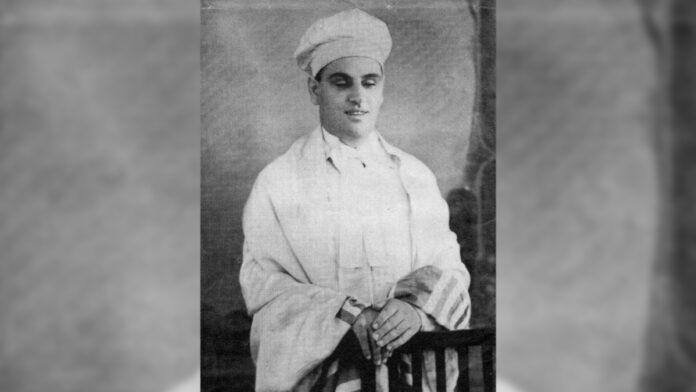
In the August edition of the Cape Jewish Chronicle, we asked our readers to share their recollections of “der blinde chazan”, Cantor Abraham (Abe) Immerman, whom our columnist, Professor Philip Lanzkowsky remembered with admiration.

One reader, Freda Tucker, told us:
“I remember well his favourite saying when asked about his birthday. He said, ‘I came forth on the fourth of the fourth.’” Freda always remembers this because she also celebrates her birthday on 4 April. 

Reader Malcolm Lee recalled:
In the early 2000s we attended a Simchat Torah Shachreis Service/Barmitzvah at the Green & Sea Point Shul. Cantor Immerman was not only conducting the service, but also read the Torah portion. Despite his disability, he was
able to give the Art Scroll pagination before the commencement of each section of both the Shachreis and subsequent Musaf services.

We were guests of the Barmitzvah family and, at the subsequent Brocha, found ourselves sitting at the same table as the worthy Cantor. We introduced ourselves to our fellow table guests, and the moment that Cantor heard our surname, replied asking if I was related to the Late Dr Harold Lee. When I indicated that this is so, Cantor immediately told me the exact date of my parents‛ wedding in 1929 and that he had done the Cantorial duty at the wedding in the old Roeland Street Synagogue. What a memory! But this was not all. He went on to tell me that the bridal couple had driven on the then Garden Route for their honeymoon before settling into married life in Beaufort West. A fantastic man, with a wonderful memory!

Avron Buirski remembers:
I have such fond memories of Cantor Immerman. Coming to Herzlia School from the country, the little Hebrew I learned was from Cantor Immerman.

He taught both my brother and me our Barmitzvah portions. My brother and I could be near him and, as soon as he heard one of our voices, he would say, “Buirski – which one?” He had a wonderful memory.

Another reader recalled this amusing incident: 
“My uncle would often give Cantor Immerman a lift home after the shul service. On one occasion, they arrived home in the dark. My uncle took the Cantor to his door, said goodbye and returned to his vehicle. He waited outside, checking to see that the lights were turned on and that the Cantor was thus safely settled inside. But no lights came on, and so, after a while, my uncle went back to the front door, rang the bell, and asked the Cantor if all was okay at home. 

But, as he spoke, he realised his mistake: being blind, Cantor Immerman did not need to turn the lights on at night!”

Cape Town’s Lisa Chait released the only film made about Cantor Immerman, Legacy of Light – A film about Light and Darkness. Click here to watch it on YouTube.


  • For the current edition of the Cape Jewish Chronicle, click here.
  • Subscribe to the Cape Jewish Chronicle: R450/year, or R38/month via debit order. Simply email us at subscriptions@ctjc.co.za and click here for payment info.
  • The Cape Jewish Chronicle reaches over 6 000 readers monthly across print and digital platforms.
  • To book advertising space or discuss a custom package contact Adéle Gradner Mobile: 083 321 5222 | Office: 021 464 6736 | Email advertising@ctjc.co.za

SIGN UP TO RECEIVE THE CAPE JEWISH CHRONICLE