Home Blog

September 2026

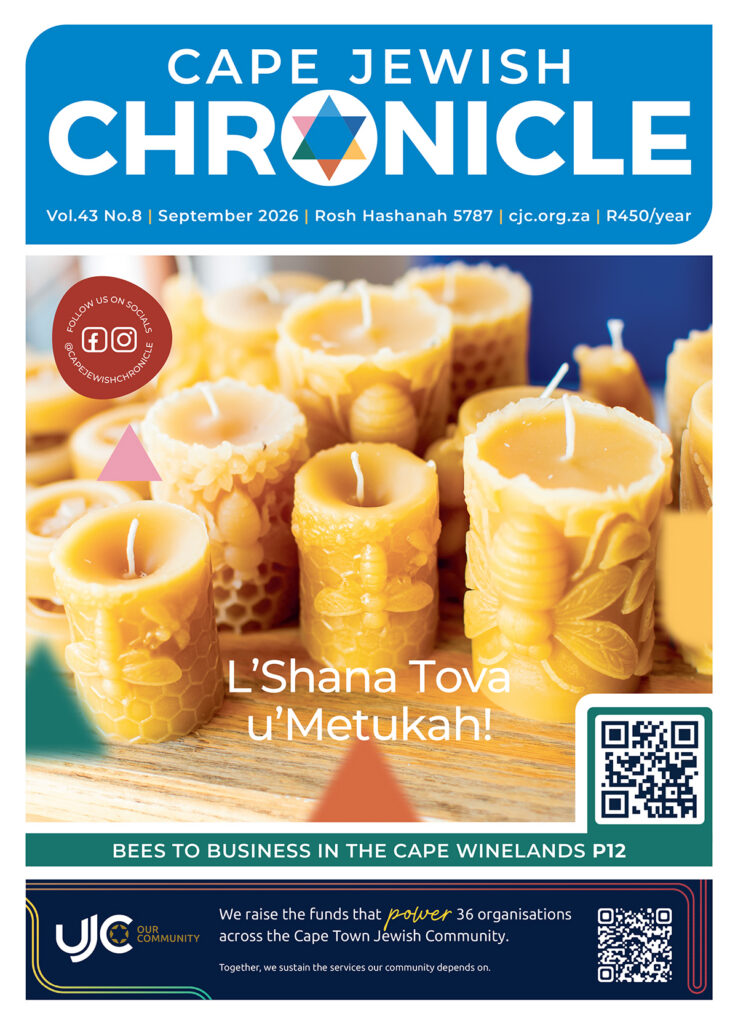
Inside our September edition: Rosh Hashanah greetings, the revival of Jewish life in Paarl and Stellenbosch, a new chapter for the Cape Town Holocaust & Genocide Centre, and one family’s remarkable journey across continents. Read more inside.

Choose your favourite format below:

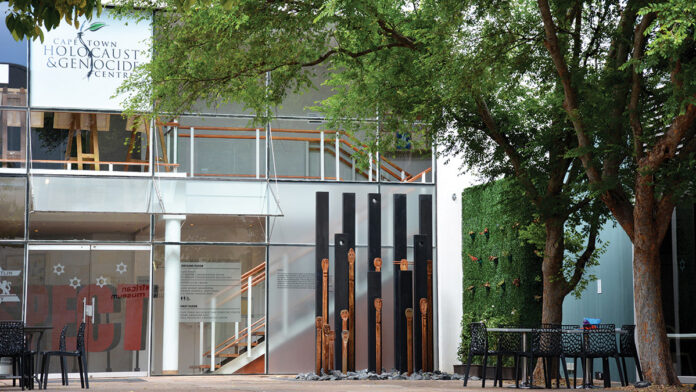
A new chapter for the Cape Town Holocaust & Genocide Centre

By Jakub Nowakowski, CTHGC Director

Twenty-five years after the Cape Town Holocaust & Genocide Centre (CTHGC) pioneered Holocaust education in SA, its permanent exhibition is set for a significant transformation. Director Jakub Nowakowski tells us more.

Why does the Centre need a new core exhibition?

Our current exhibition was created when the Centre was established 25 years ago and was updated in 2016. It was groundbreaking – the first permanent Holocaust exhibition in South Africa – and helped pave the way for Holocaust education to become part of the national curriculum, as well as for the establishment of centres in Durban and Johannesburg.

But scholarship, technology and the way we teach difficult histories have changed considerably. Our exhibition also does not deal with other genocides as extensively as our sister centres do, particularly the Genocide against the Tutsi in Rwanda. We need an exhibition that reflects current research and responds to the educational challenges of today. 

Does this mean the Holocaust will have a reduced role?

The Holocaust will remain the central narrative. What will change is the way we place it in conversation with other histories.

Traditionally, museums have tended to present different genocides in separate spaces. Our approach will instead create ‘bridges’ between them.

Alongside the Holocaust, we will explore the genocide against the Herero and Nama in present-day Namibia and the Genocide against the Tutsi in Rwanda.

The intention is not to equate these events, but to examine both their similarities and their differences, and understand the processes that can make mass violence possible. 

Why is this comparative approach important?

I have been influenced by the concept of ‘multidirectional memory’, coined by scholar and author Michael Rothberg: the idea that remembering one history does not diminish another. Different histories of suffering can be brought into dialogue without creating false equivalences.

This can actually deepen understanding of the specificity of the Shoah. At the same time, visitors can recognise recurring patterns – prejudice, propaganda, dehumanisation, discriminatory laws, exclusion and, ultimately, violence. 

How will visitors experience that approach?

Rather than simply moving chronologically through three separate histories, visitors will encounter themes and processes. The proposed exhibition begins by introducing three histories through three objects, before exploring the origins of hate, stereotypes, ideologies of elimination, organised exclusion, the unleashing of violence, and mechanisms of destruction.

It will also examine acts of defiance, the aftermath of genocide, justice and recon-ciliation, before considering apartheid and the broader question of how we understand genocide. 

Will the exhibition look and feel very different?

But technology should never overshadow the human story. There will also be tactile and analogue elements that encourage visitors – particularly young people accustomed to experiencing the world through screens – to slow down and engage more personally with history.

Yes. We want to combine new technology with the power of physical objects, photographs, documents and testimony. Digital elements such as interactive maps, large screens and technology will enable visitors to engage with recorded survivor testimony.

What place will survivors and their descendants have in the new exhibition?

A proposed Gallery of Survivors will foreground survivor voices, while the Repository of Living Memory will take remembrance into the second, third and fourth generations.

Through testimonies, personal objects and memoirs, we want to show not only what was destroyed, but what endured. Jewish life continued. Families rebuilt themselves, identities were reclaimed, and memory was passed on. It is a story of loss, but also of dignity, continuity and resilience. 

Who is the new exhibition primarily for?

One of our most important audiences is the thousands of Grade 9 and 11 learners who come here through their school curriculum. Most are not Jewish, and for many this may be their only opportunity to engage deeply with Holocaust and genocide history.

The Jewish community is equally fundamental to the CTHGC. The exhibition must remain a place of remembrance and mourning, but also one of learning, healing, resilience and hope – and a place where younger generations can take ownership of this legacy. 

What do you ultimately hope the renewed Centre will achieve?

We want people to leave understanding that genocide does not begin with mass killing. It develops through processes: through language, prejudice, propaganda, exclusion, laws and institutions.

The Centre should give visitors the knowledge and critical tools to recognise dangerous patterns in the present. 

The renewed exhibition will build on what the Centre has achieved over 25 years, while ensuring that its work remains relevant to the generations who will walk through its doors in the decades ahead.  


See this video produced by the CTHGC that explains more here.

Lunch with Danny

By KAREN MILLER

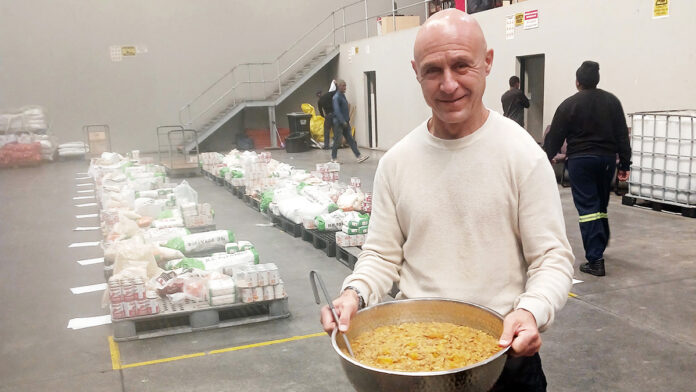
I arrived at Ladles of Love’s warehouse in Epping Industria expecting to interview the founder of one of South Africa’s most remarkable hunger-relief organisations. Instead, I found Danny Diliberto standing over a stove.

It was a Monday, and Mondays have their own ritual at Ladles of Love. Everyone – warehouse staff, packers, sorters, administrators and Danny himself – sits down to lunch together. The meal is cooked on a rotating basis by a member of the team. That day it was Danny’s turn.

I was invited to join them. The menu was simple: curried beans and vegetables with rice, made from the very ingredients distributed to Ladles of Love’s beneficiaries. It was delicious, but more than that, it felt symbolic. There was no separate table for the founder. No executive dining room. Everyone ate together.

The vast warehouse itself surprised me. Warehouses are often noisy, frenetic places. This one radiated order, calm and purpose. Those qualities, I soon realised, reflect the man at its centre.

Most readers will know what Ladles of Love does. Its websitetells the story well enough: nutritious meals for preschool children through Early Childhood Development Centres; the Dignity Kitchen in Roeland Street serving people facing hunger every day; thousands of volunteers, partnerships with farmers, and an organisation, driven as much by data as by compassion. In just the first six months of 2026, more than 13 000 children received nutritious meals through 165 Early Childhood Development Centres, over 51 000 meals were served at the Dignity Kitchen, more than 15 000 volunteers gave their time, R3.8 million supported local farmers, and 330 tonnes of food
were diverted from landfill.

Statistics, however, don’t explain Danny Diliberto.

The day before our meeting, Cape Town had been bracing for an anti-foreign-national march. Friends had collected money to provide food for people who might have to flee violence. I asked Danny whether Ladles of Love could use the donation. He politely declined. The money, he said, should go directly to the organisation co-ordinating relief, and he referred me to the Mensch Network instead. It was a small moment – but it revealed something important. For Danny, partnership matters more than ownership. Helping is not about receiving the credit. His philosophy surfaced repeatedly over lunch.

He talks about creating partners rather than beneficiaries; about relationships rather than transactions. Donors, volunteers, staff and those receiving meals all become part of the same ecosystem. Again and again he returned to the importance of keeping ego in check. As he puts it, things happen “through me, not because of me.”

Danny was born in Zimbabwe. His father came from an Italian background, while his mother is Sephardi, born in the Congo before the family eventually settled in Zimbabwe and later South Africa. His childhood memories are filled with tables groaning under abundant food. Food was associated with generosity and joy. His lunchbox was famously overfilled, and he remembers happily sharing it with classmates.

At eleven he was sent to King David High School in Johannesburg, boarding in the hostel. It was a difficult transition, but one that taught him independence. He remembers one teacher in particular, a Mr Garb, whose consistency and calm left a lasting impression. Those same qualities still underpin the way he leads today.

After school he knew that academia was not his calling. At eighteen he left home, shared a flat with friends and entered the hospitality industry, where food remained at the centre of his life.

Today, his daily routine reflects the discipline that is woven through everything he does. Meditation is non-negotiable. So is exercise, whether running, hiking or going to the gym. Inner peace, he believes, has to be cultivated deliberately. He speaks candidly about letting go of emotions from a turbulent childhood and becoming “comfortable in your discomfort”. Growth, he believes, often comes through challenge.

Underlying his outlook is the Eastern concept of seva – selfless service – which resonates strongly with the Jewish idea of tikkun olam – repairing the world. They come from different traditions, but both insist that spirituality is measured less by belief than by action. A bowl of soup offered with dignity can embody both.

Perhaps nothing illustrates Danny’s intuitive nature more than the early days of the COVID pandemic. Just three days into lockdown, sensing the food crisis that was coming, he posted a simple appeal on social media asking for support. Donations poured in almost immediately. Opportunities seemed to arrive when they were needed, including the warehouse that eventually became Ladles of Love’s home after its temporary base during Covid at Grand West Casino.

The real story of Ladles of Love is not simply about millions of meals. It is about the quiet power of consistency, humility and service. Danny Diliberto has built an organisation that feeds thousands every day, but perhaps his greatest achievement is creating a culture in which dignity is served alongside every meal.


  • For the current edition of the Cape Jewish Chronicle, click here.
  • Subscribe to the Cape Jewish Chronicle: R450/year, or R38/month via debit order. Simply email us at subscriptions@ctjc.co.za and click here for payment info.
  • The Cape Jewish Chronicle reaches over 6 000 readers monthly across print and digital platforms.
  • To book advertising space or discuss a custom package contact Adéle Gradner Mobile: 083 321 5222 | Office: 021 464 6736 | Email advertising@ctjc.co.za

One email, one people, one heart 

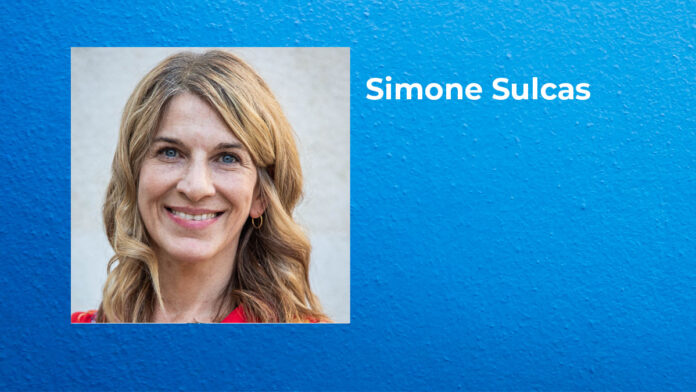
By SIMONE SULCAS, Chairperson Cape SAJBD

This Rosh Hashanah again feels different in our house.For the past four years, my younger son has been studying in the United States, so every Rosh Hashanah came with a little ache. There was always an empty chair at the table. This year, he is home.

But family life refuses to stand still. Just as one child returns, another prepares to leave. My older son will shortly be heading to Europe to begin his master’s degree. So once again, there will be an empty chair at our Rosh Hashanah table. Different son; same feeling.

Naturally, my mind went straight to the usual questions. Will he settle in? Will he thrive? And, very importantly, will he find his people? And then something notable happened.

One email. That was all it took.

He contacted the local shul in the city where he will be studying. Within a day, he had been connected to a Jewish student group. There were invitations for a Shabbaton, plans for Rosh Hashanah and a WhatsApp group. Before he has even boarded the plane, people he had never met had already made space for him.

I was amazed. My son was not.

To him, this was not extraordinary. It was exactly what he expected would happen. Of course, the local Jewish community would help. Of course, there would be students to connect with. Of course, someone would make sure he had somewhere to go for Shabbat and Rosh Hashanah. What felt remarkable to me felt completely normal to him. That, I think, says something deeply beautiful about Jewish belonging. 

We often speak about Jewish identity in big terms: history, continuity, responsibility and shared destiny. All of that is true. But sometimes Jewish identity is much simpler. It is a quick reply to an email. A name passed on. A WhatsApp group. A seat at a Shabbat table. A practical, no-fuss welcome that says: you are one of us, so come in.

In a world that can feel fractured and uncertain, there is something comforting about that instinct. Jews may disagree about almost everything, usually with impressive enthusiasm, but here remains a thread that binds us. We look out for one another. We recognise one another. We make room. Long before WhatsApp groups, Jewish communities understood hospitality. Someone far from home could arrive in an unfamiliar place and find a shul, a meal, a familiar calendar. Technology has changed the way we find one another. The impulse remains the same.

This Rosh Hashanah, our family will be in different places and time zones. There will be messages, photos, video calls, and probably a moment when I look at the empty chair and wish that my son was sitting in it. But there will also be appreciation: that a community I have never visited is already looking out for him; that strangers have welcomed him; that he will hear familiar songs thousands of kilometres from Cape Town; and that he will begin building his own Jewish memories.

As parents, we worry about whether our children will feel at home when they are far away. This experience reminded me that Jewish children carry a remarkable gift with them wherever they go. They carry belonging.

The fact that I find that extraordinary is one thing. The fact that my son finds it completely ordinary may be the most reassuring thing of all. Our children may travel far from home. But wherever they go, our people have a remarkable way of helping them find it again.

One people. One heart. Many homes.

Shanah Tovah.

Cape SA Jewish Board of Deputies | http://www.capesajbd.org | Instagram | Facebook


  • For the current edition of the Cape Jewish Chronicle, click here.
  • Subscribe to the Cape Jewish Chronicle: R450/year, or R38/month via debit order. Simply email us at subscriptions@ctjc.co.za and click here for payment info.
  • The Cape Jewish Chronicle reaches over 6 000 readers monthly across print and digital platforms.
  • To book advertising space or discuss a custom package contact Adéle Gradner Mobile: 083 321 5222 | Office: 021 464 6736 | Email advertising@ctjc.co.za

Save me a seat!

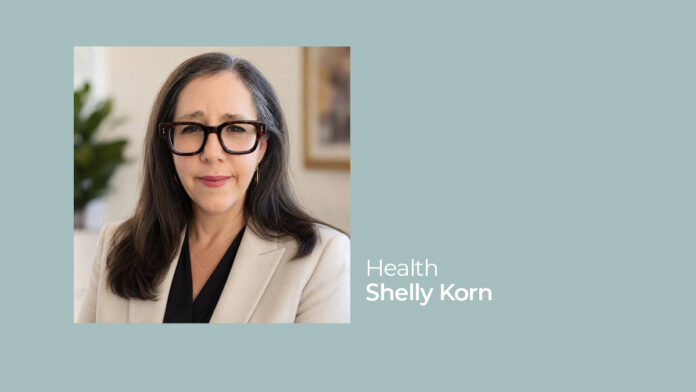
By Shelly Korn | Founder, Sunset Care

Last Rosh Hashanah, for the first time, my father-in-law was unable to join our celebration. His care needs made it impossible for us to bring him home or take him to shul. His place at the table was empty. His seat in shul remained unoccupied.

I knew he was safe and cared for. I understood why he could not be there. But none of that made his absence less painful. Throughout the Chag, I carried a deep anguish and a growing sense of guilt that I had somehow failed him – and failed our family. Perhaps the empty seat was so painful because it offered a glimpse of a future I was not ready to face. He was still alive, yet our family was already experiencing his absence.

Serious illness, ageing and dementia can bring many losses before death. A person may lose their independence, their familiar role in the family, their place in the community, and their ability to participate in traditions they once helped create. Gradually, they become less involved, less visible and easier to leave out. And so, the first loss is not always death. Sometimes it is the moment a person stops being expected. Usually, nobody intends for this to happen. Their disappearance is hidden inside reasonable concerns:

It may be too tiring for her. He won’t cope with the journey. She becomes unsettled around so many people. It is simply easier if he stays where he is.

Sometimes these concerns are entirely valid. Inclusion should never mean forcing a frail person through an occasion they can no longer tolerate. But it should make us pause and ask: What would help them feel that they still have a seat at the table? Perhaps they come only for Kiddush or leave after the soup. Perhaps someone sits beside them in shul or brings them home before the service ends. Perhaps the shofar, apples and honey, family stories and warmth of the celebration are taken to them. These gestures may be small, but their message is profound: You are still part of us. There is still a place for you here.

On Rosh Hashanah, we pray, Zochreinu l’chaim – “Remember us for life.” Perhaps, while asking G-d to remember us, we must also ask ourselves: Whom among the living have we forgotten?

The High Holy Days call us to return – not only to G-d, but to one another, especially those who may have quietly slipped beyond the circle of family and community life.

One day, when they are truly gone, we may honour them by preparing their favourite recipes. While they are still here, let us bring them a taste.One day, we may retell their stories. While they are still here, let us ask them to tell us one more. One day, their seats will be empty in the final sense. Until then, let us not empty them too soon.

Last Rosh Hashanah, I feared it might be our last Chag with my father-in-law. Thank G-d, he is still with us, living in a nursing home. This year, we have been given more time – time to prepare, and to find a way for the Chag to reach him. It is never simple or perfect, and the ache does not grow smaller – for him or for us. Still, we bring what we can: a familiar taste, a favourite Niggun, a family story, our presence. Small pieces of the Chag, carried with love. Perhaps, in each one, he hears the promise beneath them all: Your place in our family remains. 

Wherever we gather, we have saved you a seat. 

A life across continents: from Asia to Europe to Africa

By RABBI NAFTALI Y. SILVER, Rabbi, Sephardi Hebrew Congregation

Some books preserve history. The finest ones remind us that history is meant to shape the way we live.

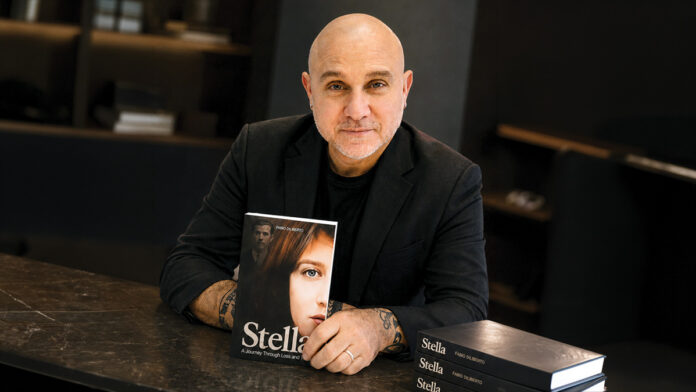
While this book – Stella: A Journey Through Loss and Time by Fabio Diliberto – follows the extraordinary journey of one woman, Stella, I found myself drawn beyond any single individual. What captivated me was the world that emerges through these pages – a world of faith, family, courage, resilience, and unwavering Jewish identity. Through Stella’s story, Fabio has done far more than recount the life of his beloved grandmother. He has opened a window into the lived experience of an entire generation.

As Rabbi of the Sephardi Hebrew Congregation of Cape Town, I have had the privilege of serving many of the descendants of the families whose lives fill these pages. Although I never had the opportunity to know Stella or so many of those whose stories are told here, through their children and grandchildren, their traditions, and now through Fabio’s remarkable storytelling, I feel I have come to know them. More importantly, I have come to appreciate that the true measure of a generation is not simply what it achieved, but what it successfully passed on.

One of Fabio’s greatest achievements is that he does not simply recount history. He allows us to experience it. As readers, we find ourselves walking the streets of Rhodes, crossing unfamiliar seas, entering homes filled with warmth and uncertainty, and sharing in moments of joy, heartbreak, courage, and hope. For those fortunate enough to know these families, the pages seem almost to breathe. History no longer feels distant; it becomes deeply personal.

This is not merely one family’s story. It is, in many ways, the story of countless Jewish Sephardi families whose journeys began in Rhodes, Turkey, and across the Balkans, before carrying them to new homes throughout Africa and beyond. While every family’s path was unique, they shared the same determination to preserve their faith, their traditions, their language, their communities, and one another.

This book reminds us that Judaism has never been preserved by monuments alone, but by ordinary Jews who chose, day after day, to live Jewish lives – speaking its language, praying its prayers, celebrating its festivals, raising Jewish families, and carrying one another through both joy and sorrow. Their actions became their legacy.

As I read these pages, I found myself asking a difficult question. If a generation that endured exile, uncertainty, loss, and unimaginable hardship could preserve its faith and identity with such devotion, what might our generation achieve with the blessings we have been given? We live in a world of unprecedented comfort and opportunity, yet many of the traditions that sustained our grandparents now struggle to find their place in our daily lives. The challenge before us is no longer merely survival – it is continuity.

Perhaps that is the greatest lesson this book offers. It does not ask us simply to admire the past; it asks us to continue it. Jewish memory is never an end in itself. We remember in order to live differently. We honour those who came before us not merely by telling their stories, but by carrying forward the values that shaped their lives. The generation portrayed in these pages did not preserve Judaism because life was easy. They preserved it because they understood it was essential. Our generation must make that same choice. Not out of necessity, but out of conviction.

Fabio has given his grandmother a beautiful tribute. In doing so, he has also honoured an entire generation whose quiet courage and steadfast faith continue to echo through the lives of their descendants. He has preserved not only their history, but their spirit. The greatest gift of this book is not what it preserves, but what it awakens within its readers. May we close these pages inspired not simply to remember those who came before us, but to become worthy ancestors for those who will come after us.  

The book is available for purchase directly from Fabio or from the Sephardi Shul, and for borrowing from the Jacob Gitlin Library.

Apples, honey and a mighty sting

Daniel Bloch

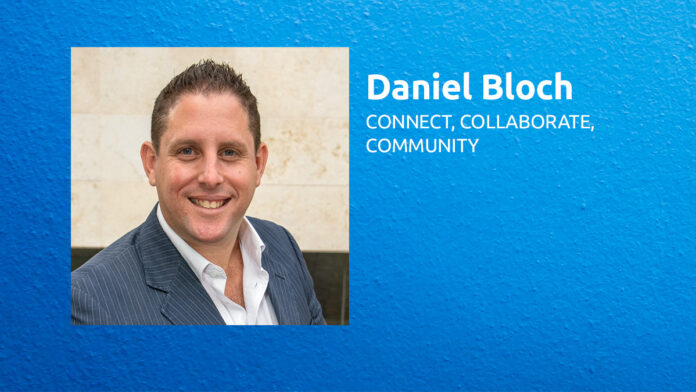
By DANIEL BLOCH, Exec. Director Cape SAJBD

Can you believe it’s already time for apples dipped in honey? Where has this year gone? 

By the time you read this article, we will be just a week-and-a-half away from celebrating Rosh Hashanah – the Jewish New Year. 

Dipping apples in honey on Rosh Hashanah symbolises our prayer and hope for a good and sweet new year, invoking divine blessing, abundance and the spiritual sweetness of the Garden of Eden. There are also deeper interpretations, including the connection to the bee – a symbolic reminder that something sweet can come from a creature that also has a sting, representing life’s challenges ultimately turning into positive outcomes.

Now, I’m not going to get too philosophical or spiritual on you, but I would like to focus on the symbolism of the bee and how it connects to what we do at the Cape SAJBD.

I have mentioned in previous articles that the Cape Board will be ‘dominating’ the Equality Court over the next several months as we tackle antisemitism and hatred head-on. In fact, by the time you read this article, we will have been in court for our second of several cases, which takes place on 25 August 2026.

So why do I compare the Cape SAJBD to a bee?

Sure, we may have a bit of yellow and black in our logo colours. But, like the bee, we represent a minority community (small in size) in comparison to many others – yet we punch well above our weight. Some may even say we pack a mean sting. (I know it should be ‘punch’, but I’m trying to keep the mighty bee analogy going!)

There are those who seem to think they can get away with spewing hatred online, targeting members of our community, attempting to boycott Jewish businesses, or trying to silence and repress our Jewish identity.

But they consistently underestimate the resilience, determination and strength of our community.

The Cape SAJBD is sending a clear message: we will not tolerate hatred directed at our community, and we will stand up and fight back when necessary. And, yes, we will deliver a mighty sting to those who attack us.

Our legal approach to combating antisemitism is often our last resort – what some might call the tip of the blade; the point designed for piercing. Our preference is always to focus on restorative justice, education, engagement and dialogue. But sometimes a more assertive approach is required when dealing with individuals who persist in spreading hate.

And just like the tip of a blade, the bee’s stinger is designed to pierce through and serve as a reminder that actions have consequences.

For the record, only honeybees die after stinging, while other bees, such as bumblebees and carpenter bees, can sting multiple times. The Cape SAJBD is a very different kind of bee: we possess multiple stingers, and we will continue to use them wherever hatred rears its ugly head.

But enough about stinging. What about those apples dipped in honey?

This Rosh Hashanah, we must all celebrate the Chag with our family and friends. Go to shul. Sing along with the choir and chazan. Stay awake during the Rabbi’s drosha. Eat as much brisket and tzimmes as possible. And, of course, take a large slice of apple and dip it generously into the honey – making sure you get a fair chunk of that sweet goodness!

And as you say the brocha, take a moment to think about our amazing community. Think about how vibrant and thriving our Jewish way of life remains. Think about our resilience, our strength and the way our community continues to stand together.

And pray for another sweet, healthy and prosperous year for us all.

Wishing everyone a Shana Tova Umetuka!

Cape SA Jewish Board of Deputies | http://www.capesajbd.org | Instagram | Facebook


  • For the current edition of the Cape Jewish Chronicle, click here.
  • Subscribe to the Cape Jewish Chronicle: R450/year, or R38/month via debit order. Simply email us at subscriptions@ctjc.co.za and click here for payment info.
  • The Cape Jewish Chronicle reaches over 6 000 readers monthly across print and digital platforms.
  • To book advertising space or discuss a custom package contact Adéle Gradner Mobile: 083 321 5222 | Office: 021 464 6736 | Email advertising@ctjc.co.za

A new season, a new beginning

WIZO South Africa

By Shelley Trope-Friedman, President, WIZO SA 

How is it Rosh Hashanah already? There is something about this time of year that makes us wonder where the months have gone. Somehow, here we are at Rosh Hashanah again. It feels as though the year has flown by, with all the highs, lows, surprises and ordinary moments that make up our lives.

Rosh Hashanah gives us an opportunity to slow down and reconsider our actions.

The Jewish calendar is built around cycles: the year, the changing seasons, the rhythm of work and rest, beginnings and endings. Yet every cycle brings us back to a familiar place, while giving us the opportunity to begin again. A new year is not simply about turning the page. It is about deciding what we wish to carry forward and what we are ready to leave behind.

As we enter 5787, I find myself thinking about what it means to usher in a new season. What do we want to cultivate? Where do we want to grow? What kind of community do we want to build? Most importantly, how can we turn our hopes for the year ahead into action?

This is also a good time to think about our own purpose. We need to consider what it means to be a blessing to the world around us and how we can be a little kinder, more generous and more present. We need to consider what we would like people to experience because we were part of their lives. And what does that look like in practice, in our families, communities, workplaces and the wider world? We don’t need grand answers, but we do need to answer these for ourselves.

All of this sits at the heart of what WIZO does. For more than a century, WIZO has created opportunities for people to turn their values into action, to build, support, educate and strengthen communities. It is a reminder that purpose does not always have to be something we find; sometimes it is something we create through what we choose to give. Each new season is an invitation to participate. Rosh Hashanah reminds us that a new beginning doesn’t simply happen because the calendar says so. 

It asks us to look at the year behind us and be honest about what we’ve learnt. If we want the year ahead to look different, what are we prepared to do differently? We can choose where we put our energy, who we make time for and what we contribute. So, as we gather together, hear the shofar and wish one another Shanah Tovah, I hope we will all ask ourselves how to do things differently this year.

May 5787 be a year of renewal, purpose and possibility for us all. With love and purpose, may we have the courage to help make it so.

Shanah Tovah u’Metukah. With love and warmth, Shelley Trope-Friedman 

Website: WIZO South Africa


  • For the current edition of the Cape Jewish Chronicle, click here.
  • Subscribe to the Cape Jewish Chronicle: R450/year, or R38/month via debit order. Simply email us at subscriptions@ctjc.co.za and click here for payment info.
  • The Cape Jewish Chronicle reaches over 6 000 readers monthly across print and digital platforms.
  • To book advertising space or discuss a custom package contact Adéle Gradner Mobile: 083 321 5222 | Office: 021 464 6736 | Email advertising@ctjc.co.za

Rosh Hashanah Greetings

May 5787 bring hope, strength and unity to us all, and may we be inscribed and sealed for a good year.

Wishing our family, friends and the entire community a healthy and peaceful New Year. May 5787 bring hope, happiness and blessings.
Shanah Tova u’Metukah
With love, Joel, Beverley, Leah and Rafael Wynne


Rosh Hashanah greetings to all our friends.
From Anita and Melvyn Greenstein


Shanah Tova u’Metukah
From Keith and Brenda Getz and family


Shanah Tova u’Metukah
Wishing our family, friends and community a sweet, healthy and peaceful New Year
Love, Richard, Adele, Adam and Jason Gradner


The other side of repentance

Growing up, Rosh Hashanah meant the warmth of family. Aunts and uncles, cousins and the occasional friend would gather around the table for a meal that always felt special – my mother’s brisket and tzimmes, followed by the heavenly pareve chocolate pudding reserved for special occasions.

Shul on Rosh Hashanah and Yom Kippur felt different. There was a certain heaviness to those days. We understood that this was a time for introspection – for reflecting on the year that had passed, acknowledging our sins and asking forgiveness.

As a young child, I remember wondering what sins my parents could possibly have committed. They were law-abiding, family-focused and honest. What could they have done that required forgiveness?

Looking back, I realise there was something missing from my childhood understanding of the High Holy Days. I thought largely in terms of wrongdoing: What have I done wrong, and how can I be forgiven? What I have come to understand is that this is only part of the reckoning. We should also be asking: What good have I done – and what more could I do?

Repentance matters, but so does positive action. Providing for those in need, treating others with dignity and kindness, and making ethical choices in our everyday lives are also expressions of our values. How we choose to live should matter at least as much as asking forgiveness for the times we have fallen short.

This comes to mind when I encounter people who make much of their religious observance. Someone may be scrupulous about never eating treif, for example, and that is entirely their choice. But religious observance surely carries greater meaning when it is accompanied by decency, compassion and respect for others.

Recent events have provided painful reminders of the opportunities we have to put those values into practice. The devastating fire in a Sea Point apartment block and the disturbing aggression directed towards foreigners living in South Africa have confronted us with people facing circumstances largely beyond their control. They have also given us opportunities to respond with humanity – something we have seen from many within Cape Town’s Jewish community.

Perhaps that is one of the challenges worth carrying into the High Holy Days this year. Alongside asking where we have gone wrong, we can ask where we have done right – and where we could do more.

Because living ethically is not simply about avoiding wrongdoing. It is also about noticing the people around us, recognising when they need us and choosing, wherever we can, to make their lives a little better. 


  • For the current edition of the Cape Jewish Chronicle, click here.
  • Subscribe to the Cape Jewish Chronicle: R450/year, or R38/month via debit order. Simply email us at subscriptions@ctjc.co.za and click here for payment info.
  • The Cape Jewish Chronicle reaches over 6 000 readers monthly across print and digital platforms.
  • To book advertising space or discuss a custom package contact Adéle Gradner Mobile: 083 321 5222 | Office: 021 464 6736 | Email advertising@ctjc.co.za

SIGN UP TO RECEIVE THE CAPE JEWISH CHRONICLE