Home Blog Page 3

The teacup moment 

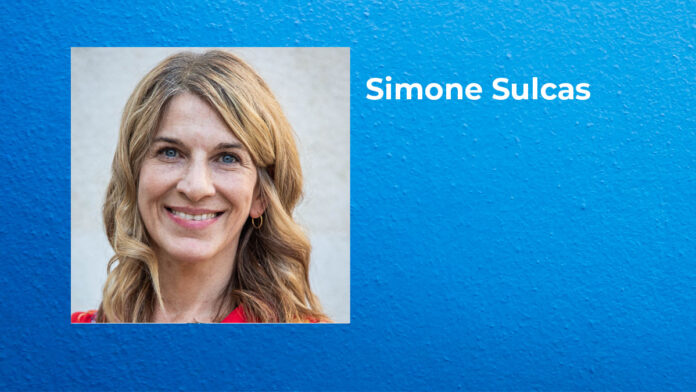
By SIMONE SULCAS 

An objectively minor incident occurred in the first week following my admission as an attorney.  Subjectively, it was profound. I was brimming with the enthusiasm of a young green lawyer – low on experience, but high on passion for the law. The meeting room was brimming with advocates, attorneys and a couple of unhappy looking clients. My quick scan of the room underscored two things: first, that I was the only woman in the room; and second, that I had noticed it. The consultation progressed slowly, with the clients’ frustration growing in direct proportion to the billable hours being clocked.  Relief arrived on a tray: teacups, biscuits, and the sudden expectation that I would serve them. Almost in unison, every face in the room turned to me. After a few awkward seconds, senior counsel ‘rescued’ me by jovially taking charge of the teacups.  I replayed the moment afterwards, wondering why I had not stood up for myself, and frustrated that the incident had been enough to silence me when I had a good strategic point to make. 

A few days later, by chance, I bumped into my ‘rescuer’ at court. We discussed the case, and I took the opportunity to make the point I had not raised during the consultation. He said it was important and would add it to the papers. Then he asked whether I had failed to raise it at the time because I had felt disempowered by being cast, however silently, into the stereotype of a woman expected to serve rather than speak. I sheepishly nodded. He looked at me and said, “Next time, remember that your seat at the table is not ornamental. You earned it as well. Use it.”  

On the 9th of this month, we celebrate Women’s Day. I always pause on this day to remember that room, that table, and the moment I allowed a stereotype to quieten me. It took time to realise that I was not bound by the role others had silently assigned to me. I could define for myself the kind of woman I chose to be: one who speaks, contributes, leads, and models that courage for the young men she raised. Because, ultimately, equality is not about being offered a seat at the table. It is about using it. And as representative of the Cape South African Jewish Board of Deputies, I am trying to use mine in service of our community: to advocate with courage, to confront Jew-hate, and to support a community that is strong, proud and connected. 

Changing the future of maternal mental health

By EDITOR

For more than two decades, Associate Professor Simone Honikman has dedicated her career to helping women and their families navigate the mental health challenges that can accompany pregnancy and early motherhood. 

As Founder and Director of the Perinatal Mental Health Project (PMHP), she has worked to improve the lives of thousands of women in South Africa while helping to shape maternal mental healthcare across the African continent.

A graduate of the University of Cape Town’s medical school, Simone’s passion for social justice began long before she entered the medical profession. Growing up in a middle-class family during apartheid, she was encouraged by her parents to question authority and challenge injustice. Witnessing the resilience of disadvantaged women sparked a lifelong commitment to improving their lives.

By the age of 12, she had decided she wanted to become a doctor and work in underserved communities. While studying medicine at the University of Cape Town, she recognised the emotional toll medical training was taking on fellow students and established a student advice and support centre that offered counselling and psychological support to students in distress.

After qualifying, she worked in the public health sector in obstetrics, paediatrics, internal medicine and psychiatry before managing the Khayelitsha Cervical Cancer Screening Project.

It was during this time that her life’s work came into focus. Research showing that one in three women in Khayelitsha experienced postnatal depression, together with the devastating suicide of a colleague eight months after giving birth, highlighted the urgent need for accessible maternal mental healthcare.

In response, Simone, and a team of midwives and volunteers, founded the PMHP at Mowbray Maternity Hospital in the early 2000s, pioneering an integrated model of maternal mental healthcare within the public health system.

Today, the PMHP is a nationally recognised organisation. Although based at the University of Cape Town as a founding partner of the Centre for Public Mental Health, it raises its own funding and continues to expand its work so that more women across South Africa can access essential mental health support. Simone comments: “PMHP’s achievements can be attributed to many extraordinary people – our small team, our long-standing volunteers and consultants, and the collaboration with funding partners and thought leaders from all over the country and the globe.”

According to Simone, South Africa has one of the highest rates of perinatal mental health conditions in the world. “Worldwide, about 10% of pregnant women and 13% of women in the year after giving birth experience a mental health condition, primarily depression and or anxiety,” she explains. “In South Africa this is even higher. We estimate that one in three women is affected by these conditions during or after childbirth.”

Pregnancy and the first year after birth can be a particularly challenging time, as many women face multiple pressures at once. Financial hardship, conflicts in relationships, the demands of caring for a new baby and others in the family, as well as other life stresses, can all affect a mother’s mental health and how she is able to manage her life. Without appropriate support, these conditions can have profound consequences not only for mothers but also for their babies and families.

“The importance of mental health is unfortunately often overlooked,” says Simone. “Mental wellbeing is crucial for the woman who is pregnant or has just given birth. When women experience depression, anxiety or other mental health challenges without the support they need, it can affect their own physical health and wellbeing, as well as their ability to fully enjoy and navigate early parenthood and manage stressors in their environment. Because the period from conception to two years is such an important time in a child’s development, ensuring that women have access to timely mental health care benefits mothers, babies and families alike.”

To address these challenges, the PMHP integrates quality maternal mental healthcare into existing maternal and child health services, particularly in low- and middle-income communities. The organisation supports pregnant women, strengthens public health services, partners with NGOs, and trains healthcare and social development professionals so that maternal mental health becomes part of routine care.

Its influence extends beyond South Africa. Through training, research and collaboration in advocacy work, the PMHP has shared its expertise with health professionals and organisations in countries including Lesotho, The Gambia, Ghana, Kenya, Nigeria, Malawi, Zimbabwe, Ethiopia and Botswana.

“Our mission has driven us to share our expertise and learnings with others working with mothers across Africa,” she explains, “and we have benefitted hugely from innovative work being done across the continent and in other world regions.”

Simone’s pioneering work has earned international recognition. In 2014, she was elected to the prestigious Ashoka Fellowship, which recognises leading social entrepreneurs creating innovative solutions to society’s most pressing challenges.

More recently, she was granted a visiting fellowship at the University of Oxford, as part of the AfOx programme, which enables Africa-based researchers to collaborate with Oxford scholars and further strengthen research and innovation in their fields.

“This recognition has given me access to extraordinary, dynamic and innovative people, working across sectors, working on the African continent and elsewhere, to better the development of their countries,” Simone comments. 

From a childhood desire to make a difference to leading one of South Africa’s foremost maternal mental health organisations, Simone’s work continues to ensure that thousands of women receive the care and support they need at one of the most important moments of their lives.  

 Celebrating the women of Habonim Dror Southern Africa

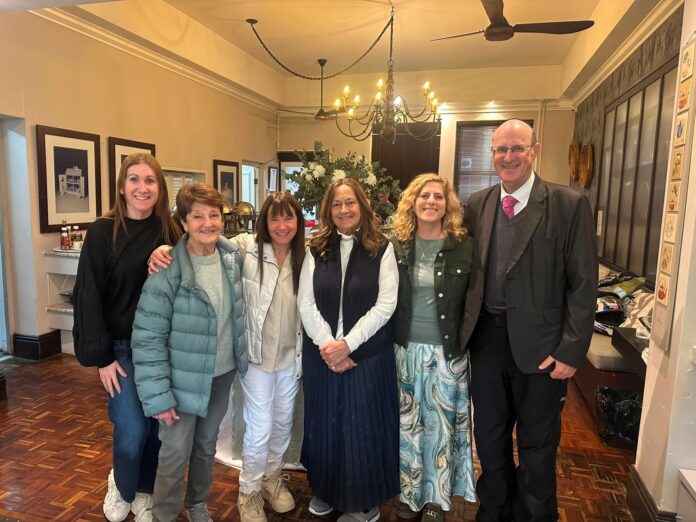
From left to right: Abigail Smith, Gabi Altamirano, Leah Benjamin, Mila Nathan

This Women’s Month, Habonim Dror Southern Africa is proud to celebrate the incredible women who make our movement stronger every day. Through four inspiring individuals, we showcase the journey of women across every stage of Habonim. Together, they reflect the leadership, dedication and spirit that define Habonim Dror Southern Africa.

Former chaver and now a parent: Abigail Smith

Habonim was part of my story long before I was born, and some of my earliest memories growing up in Habonim were that we were encouraged to think deeply, question respectfully, and care for one another and the world around us. It gave me an unshakable pride in my Jewish identity and the confidence to ask difficult questions, challenge ideas, and find my own voice. The movement’s deeply egalitarian culture taught me from an early age that leadership, responsibility, and opportunity were never defined by gender, shaping my belief that I could do anything my male peers could do. Those lessons became the foundation of how I lead, work, parent, and build community today. Above all, Habonim taught me to meet every person with dignity, compassion, and humanity – a gift that has shaped every part of my life.

Long-standing Habonim supporter: Gabi Altamirano

Habonim Dror didn’t just prepare me for the real world – it made me believe I belonged in it. Long before I had a career, I was trusted to lead, make difficult decisions, organise large-scale projects, and use my voice with confidence and respect. It taught me resilience, critical thinking, and that leadership isn’t about having all the answers, but having the courage to step forward. Every young woman deserves a space that believes in her before she has to prove herself. Habonim was that space for me.

Current madricha and leader: Leah Benjamin

Just weeks ago, I served as one of the roshim of Habonim Dror’s winter camp, an experience that taught me resilience and confidence, and showed me the power I have, as a woman in leadership, to shape future generations. Habonim is a uniquely pluralistic space, and over the years it has taught me that compassion and love are just as important as strength and intelligence. This is the kind of leader I hope to be, and a small part of the legacy I hope to leave for the girls who will one day stand where I stand.

Current chanicha: Mila Nathan

Within a fiercely supportive community, I not only discovered my voice but also myself. This year at Winter Camp, I was the only girl in my age group. Rather than being discouraged, it made me step up as a leader, unlocking one of my greatest qualities. Now, I step into the real world ready to occupy spaces where women are missing and pull others up with me.

Building a Maccabiah legacy

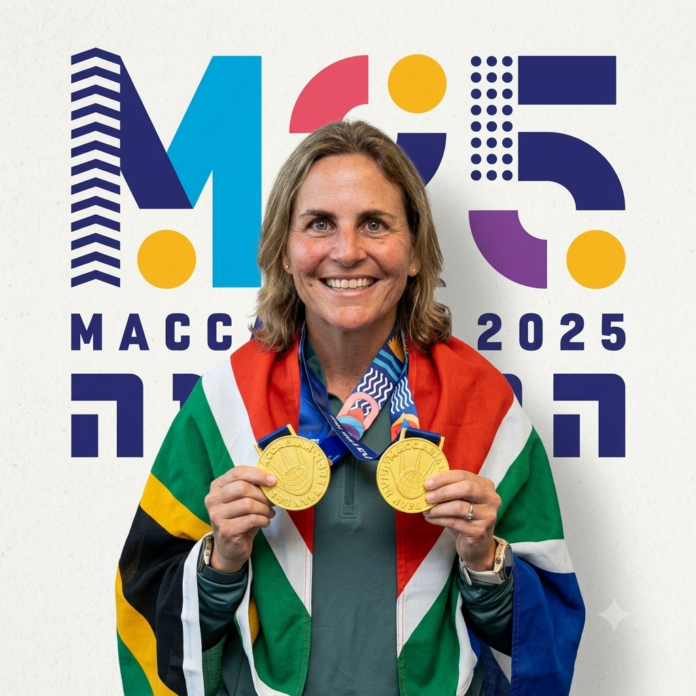
For Jacqui Boyd, representing South Africa at the Maccabiah Games has become a lifelong journey spanning more than three decades. This year, at the event held after its postponement in 2025, she once again demonstrated why she is one of South African Jewish sport’s most accomplished tennis players, adding two more gold medals to an extraordinary collection.

Jacqui claimed the Women’s Masters Singles title for the third consecutive Games, having previously won the event in 2017 and 2022. She also successfully defended her Mixed Doubles crown alongside her Argentinian partner, a title they first won together in 2022. Remarkably, it was her fifth consecutive Mixed Doubles gold medal, following victories in 2005, 2013, 2017, 2022 and now 2026. She did not compete at the 2009 Games.

The latest triumphs bring her overall Maccabiah tally to an impressive 11 medals – nine gold and two bronze.

Reflecting on the achievement, Jacqui says it is difficult to believe how far the journey has taken her.

“This was my sixth Maccabiah. I first competed in 1993 as a 14-year-old and was the youngest member of the South African delegation that year. To still be competing and winning more than 30 years later is incredibly special.”

She faced a familiar opponent in the Women’s Masters Singles final, defeating the same Russian-Israeli player she overcame to win the title in 2022.

Jacqui previously represented South Africa in the Open category before moving into the Masters division from 2017 onwards.

Tennis has long held a special place in South Africa’s Maccabiah history. It remains the only sport in which South Africa has competed at every Maccabiah Games since 1935 and has delivered more medals for the country than any other sporting code.

This year’s Games carried particular emotional significance. Postponed from last year until 2026, they became the largest gathering of Jewish athletes in Israel since October 7, 2023, under the theme, More Than Ever.

“These Games were even more meaningful because of everything that Israel and Jewish communities around the world have been through,” says Jacqui. “It was amazing how many of the Israelis we competed against thanked us simply for coming and being part of the Games.”

She says the experience extended far beyond the tennis court.

“Israel really put on an incredible Maccabiah. I’m so grateful to have been there, competing as a proud Jew and a proud South African.”

The Travelling Rabbi’s journey continues

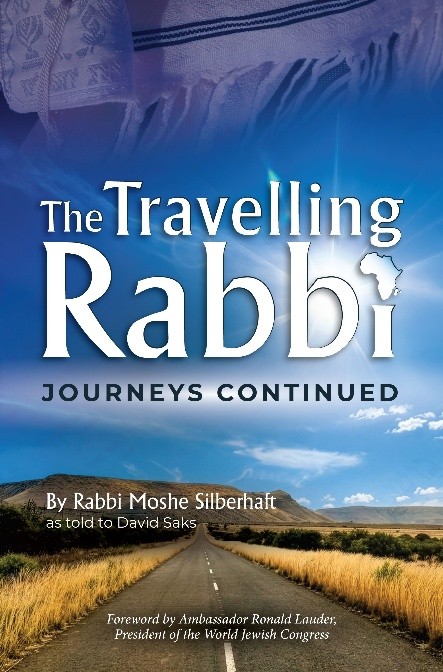
For over 30 years, as CEO and Spiritual Leader of the Small Jewish Communities Association of South Africa – and formerly as the country communities Rabbi of the SAJBD – and of the African Jewish Congress, Rabbi Moshe Silberhaft has travelled thousands of kilometres to serve some of southern Africa’s smallest and most isolated Jewish communities. Now, those remarkable experiences have been brought together in a new book, The Travelling Rabbi: Journeys Continued.

Written by Rabbi Silberhaft, as told to David Saks, the book continues the story first shared in The Travelling Rabbi – My African Tribe. While the earlier volume chronicled his first 18 years on the road, the new publication picks up where that story ended, following his travels and encounters through to the present day.

Rabbi Silberhaft’s journeys have taken him to almost every corner of South Africa – from Musina in the far north to Mossel Bay on the southern Cape coast, from Springbok in the west to Mbombela on the country’s eastern border. Along the way, he has ministered to Jewish communities that, although often small and widely dispersed, have maintained a lasting connection to Jewish life and tradition.

For many Jews living far from the major urban centres, Rabbi Silberhaft has become far more than a visiting rabbi. He has served as a spiritual guide, mentor and friend, providing a vital link between isolated communities and the broader Jewish world.

The book offers a rich collection of stories gathered over decades of travel, documenting the people he has met, the places he has visited and the enduring legacy of communities that once flourished and, in many cases, continue to maintain a Jewish presence today. It is both a personal memoir and a valuable record of an often-overlooked chapter in southern African Jewish life.

The Travelling Rabbi: Journeys Continued is both a celebration of those communities and a testament to one rabbi’s unwavering commitment to ensuring that no Jew, however remote, feels forgotten.

The book was launched to a large crowd at an event organised by the SA Jewish Museum and the Jacob Gitlin Library during July at which Rabbi Silberhaft was in conversation with Emeritus Associate Professor Richard Mendelsohn, sharing stories and reflections from his continued journeys serving Jewish communities across Southern Africa. It is available for purchase from the SA Jewish Museum shop and for lending from the Jacob Gitlin Library.

A mother’s love, a son’s enduring legacy

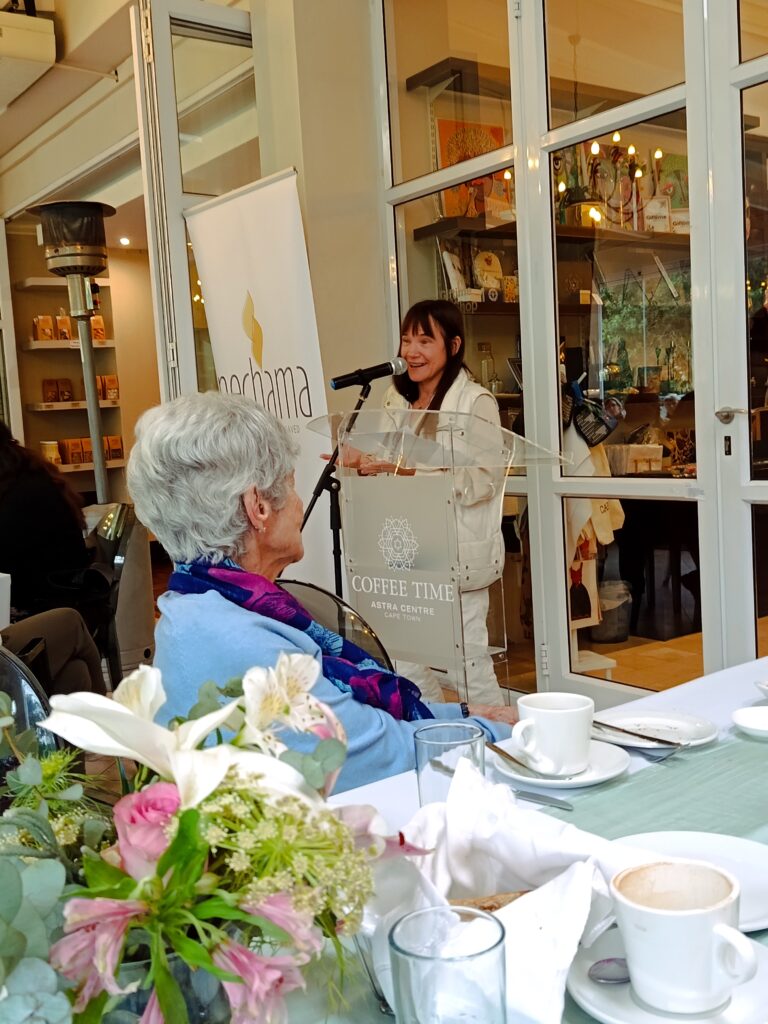
There were few dry eyes in the room as former Capetonian Martine Ben Harush (née Gordon) shared the story at a recent Nechama breakfast event of losing her 20-year-old son, Shoam. With remarkable honesty and courage, she spoke not only about unimaginable grief, but also about the enduring love, kindness and humanity that continue to define her son’s legacy.

Shoam, the second youngest of Martine and her husband’s six children, was critically injured during the October 7 attacks and died three weeks later.

“When you lose a child, your sense of time changes,” Martine told the audience. “My life changed 968 days ago, when we finally had to say goodbye to Shoam.”

Although nearly two years have passed, the pain remains ever present.

“Grief of this magnitude is paralysing,” she said. “I can’t just shake it off and pretend that everything is okay.”

Throughout her talk, Martine spoke candidly about the loneliness that often accompanies bereavement. Many adults, she explained, simply do not know what to say and, as a result, avoid the conversation altogether. Yet it has been human connection – particularly through the children she teaches – that has helped her find the strength to keep moving forward.

A high school English teacher who treasures the school environment, Martine said she has found it easiest to speak about Shoam with her students.

“Children are just more honest and real,” she reflected. Their compassion, willingness to listen and genuine concern have brought her immense comfort during the darkest period of her life.

Amid the heartbreak, there have also been moments that have deepened her understanding of the son she lost.

“I learned things about Shoam after his death that I didn’t know beforehand,” she said.

Among those discoveries was a letter Shoam had written before the outbreak of the war, which she read only after his passing. In it, he expressed a profound appreciation for life and gratitude for all that the world had given him.

During the family’s shiva, friends and acquaintances shared stories of Shoam’s quiet acts of kindness and his sensitivity towards people who were struggling – qualities that continued to emerge long after his death.

One story that particularly moved Martine concerned a young boy with special needs who now visits Shoam’s grave every Friday. The boy had first met Shoam when Shoam visited the boy’s family because his brother had served alongside him before October 7. Shoam had formed a special bond with the boy, engaging with him in a way few others could.

Perhaps the most profound expression of Shoam’s compassion was a wish he had shared before his death – that his organs should be donated if anything ever happened to him. Despite their overwhelming grief, Martine and her husband honoured that request.

“As a result,” Martine told the audience, “five other people are alive because of Shoam.”

As the breakfast drew to a close, those present were left not only with the weight of a mother’s loss, but also with the extraordinary legacy of a young man whose generosity continues to touch lives. In sharing her family’s story, Martine reminded everyone present that, while grief may never disappear, love, kindness and human connection have the power to endure long after a life has ended.

More about Nechama

Established over 30 years ago, Nechama provides specific Jewish bereavement and palliative care counselling to the Cape Town Jewish community. In addition to trained psychologists and social workers, the organisation offers support through its 25 volunteer counsellors, all of whom have been trained, selected and supervised by Nechama to serve in this role. Through compassionate one-on-one support, and telephone outreach to newly bereaved families, Nechama helps individuals and families navigate grief and adjust to life after loss. These support services are available to anyone no matter their location, with counselling being done online all over the world.

The organisation also strengthens community wellbeing through mental health workshops, public lectures, counselling skills training, and outreach programmes that extend beyond the Jewish community.

The organisation falls under the leadership of Director Avigail Popack, Psychological Services Co-ordinator Sarit Swisa and Admin Manager Shana Isserow. 

The Nechama website offers numerous valuable resources. Click here to visit the website.

Valerie Mizrahi: A life in Science 

By KAREN MILLER

Valerie (Val) Mizrahi is busier than ever, even though she was required by university regulations to retire at 65.

She is now Professor Emerita at UCT; a Senior Scholar at the Institute of Infectious Diseases and Molecular Medicine, the major postgraduate research institute she once led at UCT; and remains deeply involved in research development, both here and internationally.

Her latest honour is election as an international member of the United States National Academy of Sciences, one of the world’s most prestigious scientific institutions. It joins election as a Fellow of the Royal Society of the UK in 2023 and membership of the American Academy of Arts and Sciences in 2025. They are remarkable distinctions, although one suspects Val Mizrahi herself is more interested in the next scientific question than the last honour.

Science is her driving force: she was the chemistry student inspired by an exceptional teacher who developed into the chemist who has spent more than three decades pursuing tuberculosis (TB), and the internationally acclaimed researcher flying around the world building scientific networks.

For more than thirty years tuberculosis has been the great scientific question of her life. In South Africa, where TB remains one of our leading causes of death, her research has helped transform our understanding of the bacterium that causes this disease and contributed to the development of new approaches to treatment. She has been instrumental in advancing our understanding of drug-resistant tuberculosis, one of the most pressing public health challenges of our time.

After working in the United States, Val returned to South Africa in 1989, excited by the groundbreaking work being done in HIV/AIDS and infectious diseases and by the opportunities opening up in tuberculosis research. Given the freedom to follow her scientific curiosity, she worked at the SA Institute of Medical Research and built a world-class TB research programme at Wits University and the National Health Laboratory Service before moving to UCT in 2011 to lead the Institute of Infectious Diseases and Molecular Medicine. 

Science, for Val Mizrahi, has never been a solitary pursuit. It is about individual curiosity, certainly, but it is equally about collaboration. She speaks often of “social capital”, the networks of relationships that make good science possible. Scientific excellence, she believes, depends upon bringing talented people together, building capacity and creating opportunities for younger scientists to flourish.

Colleagues at Wits affectionately gave her the nickname, ’the Rottweiler’. This perfectly captures both her determination and her refusal to let go of scientific problems. She cheerfully admits to being hyper-competitive and that she cannot switch off completely from her work. Retirement, therefore, was probably doomed from the outset.

She proudly proclaims that her background is “100% Sephardi”. Three of her grandparents came from the island of Rhodes and one from Izmir in Turkey. Economic circumstances brought them to Rhodesia in the 1920s to begin their lives again, while other members of the family who remained behind were murdered in Auschwitz in 1944. Her admiration of their courage and tenacity to persevere against the odds is behind her own drive to face the insurmountable health issues that South Africa faces. 

She grew up with the privilege of knowing all four grandparents, listening to them speaking Ladino, and having remarkable parents, who taught her the importance of family and community. Today there is a heartfelt regret that she didn’t ask more questions about her family’s history and lived experiences. “I wish I had found out more,” she says. Curiosity, she reflects, has shaped both her personal and scientific life.

She speaks warmly of the mentors who have guided her, particularly Professors Solly Benatar and Siamon Gordon. Her greatest mentor, however, is her mother, whose own battle with tuberculosis proved a defining moment for the family. It is therefore no surprise that mentorship occupies such an important place in Val’s own life. Helping younger scientists build the networks and collaborations that will sustain their careers matters deeply to her. 

She is also a passionate advocate for women in science. Although she describes herself as “an aberration in my time”, she never saw herself primarily as a woman scientist, simply as a scientist. Family, she insists, comes first. When her two daughters were young, she left work early in the afternoons to be with them and has enabled younger women in her group to do likewise.

Although she is not a medical doctor and does not treat patients herself, her work extends far beyond the laboratory. She mentors young scientists, and promotes organisations such as the Khayelitsha-based Eh!woza, which brings together biomedical researchers and young people from communities affected by HIV and tuberculosis. “The bacterium does not carry a passport,” she says. Science and health, for her, transcend borders and ideology.

She reads “voraciously”, treasures quiet time alone and walks to recharge. She draws inspiration from Rabbi Jonathan Sacks: “There is a difference between optimism and hope. Optimism is the belief that things will get better. Hope is the belief that if we work hard enough together we can make things better.” It is difficult to imagine a motivation more perfectly aligned with both her science and her worldview. 

Asked what legacy she hopes to leave, Val Mizrahi’s answer is immediate. It is “not science but people”. For someone newly elected to one of the world’s most distinguished scientific academies, that may be the most revealing answer of all.  

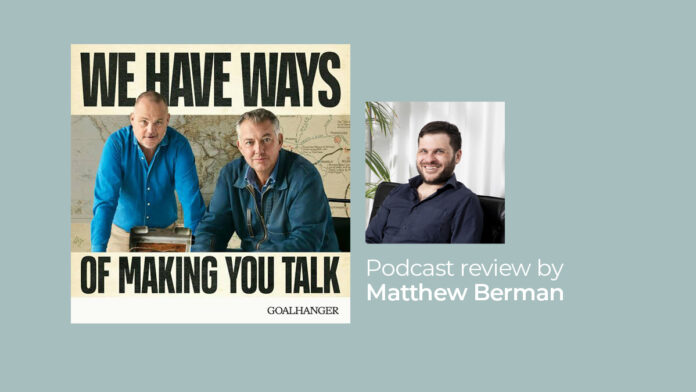
Podcast review: Episode 310. DAVID BADDIEL

Recommended by Matthew Berman, a World War II history enthusiast

British Jewish writer and comedian David Baddiel has explored Jewish identity extensively in his work. His best-known book, Jews Don’t Count, was later adapted into a television documentary.

In this entertaining episode of the WW2 Pod: We Have Ways of Making You Talk series, Baddiel shares his family’s experiences during World War II. His mother was only five months old when her parents fled Germany in 1939 for the relative safety of Britain. Although she was too young to remember the move, the trauma of her family’s sudden departure left emotional scars that stayed with her throughout her life. Britain brought further hardship when her father was interned on the Isle of Man as an enemy alien soon after arriving.

Baddiel’s account of his grandfather’s internment offers a refreshing and humorous perspective on what is usually viewed as a dark chapter in Britain’s wartime history.

Other topics of particular interest to Jewish listeners include contemporary antisemitism, the dilemma of qualifying for a German passport while feeling reluctant to associate with the country that devastated your family’s lives a generation earlier, and more.

I am thoroughly enjoying the entire series, but especially recommend the David Baddiel episode. Cape Jewish Chronicle readers are likely to find themselves laughing about subjects that are usually treated with great seriousness.

The Jacob Gitlin Library has David Baddiel’s autobiographical book My Family, in which he tells the family history.  

NOTE: The views expressed in these recommendations do not necessarily reflect the views of the Cape Jewish Chronicle.

Paige Nick: South Africa’s ultimate Book Person

By KAREN MILLER

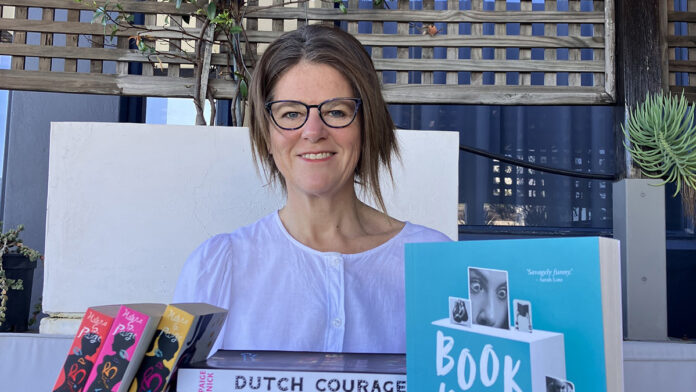
If there is such a thing as a ‘Book Person’, then Paige Nick may well be the gold standard.

Novelist, columnist, book influencer, festival curator, radio reviewer, public speaker and founder of one of South Africa’s most active online book clubs, she has spent much of her life encouraging people to read, talk about books and, above all, enjoy them. In a literary world that can sometimes take itself rather seriously, Paige brings something refreshing: enthusiasm, humour and a genuine love of stories.

Her own story begins in Camps Bay, where she grew up as the youngest of six children. Books were woven into family life from the start. Every Saturday, the family would pile into two cars and head off to the Camps Bay Public Library to stock up on reading material for the week ahead. It was the sort of ritual that quietly shapes a life.

One of her fondest memories is, as a little girl, reading to her grandpa, when her grandparents, Jess and Syd Icklow, visited from Australia. Long before she became a published author, she was already sharing stories with others.

Another formative influence was Netzer, the Jewish youth movement where she spent much of her youth. The movement’s camps encouraged in Paige qualities of leadership, creativity and performance. Through skits, plays and group activities, she developed skills that would later find expression in both her writing and public life.

These days, while many people unwind in front of television or with music playing in the background, Paige prefers something else entirely. She reads. It is not merely part of her work; it is her favourite pastime. She starts most mornings with exercise, either swimming or running, before returning to the world of words.

Like many writers, she has a practical day job. Paige built her career in advertising and continues to work as a copywriter, now freelancing after years with major agencies. She speaks warmly about having “grown up” in advertising alongside colleagues and remains fascinated by the business of communication. While social media has transformed the industry, she believes the fundamental principles remain rooted in understanding people and finding what she calls “human truth”.

Her writing career has flourished alongside her advertising work. Since publishing her first novel, A Million Miles from Normal, in 2010, she has written ten books: seven novels and three erotic adventures. Her latest novel, Book People, published in 2025, centres on a Facebook book club, a setting she knows particularly well.

Paige’s fiction is marked by sharp observation, satire and a light touch. She writes books that make readers laugh while holding up a mirror to modern life. Real experiences often spark her stories, which are then transformed through imagination and humour.

Jewish readers may recognise another familiar feature of her novels: characters with distinctly Jewish names such as Rachel Marcus, Ruth Burstein and Myra Berelowitz. She has often spoken about her affection for Jewish humour and her delight in finding the funny side of everyday Jewish life.

One of her most memorable novels, Death by Carbs, published in 2015, opens with the murder of the real-life Professor Tim Noakes, the No Carbs doctor, on the very first page. Before publishing it, she sought Noakes’s permission to use him as a character. He not only approved but later attended the book’s launch, demonstrating a sense of humour equal to the premise.

Writing, she says, begins long before the first words appear on the page. Research, thinking and planning occupy much of the process. Then comes a concentrated period of writing, usually around three months, when momentum takes over.

Like every writer, she has also experienced disappointment. One manuscript that she believed would be her biggest success never reached publication after another author, Liane Moriarty, released a book built around a remarkably similar premise. It was one of those cruel twists familiar to writers everywhere. Yet rather than dwelling on what might have been, she simply moved on to the next project.

Paige’s impact on reading culture extends far beyond her own books. The Good Book Appreciation Society, the Facebook book club she founded, now has more than 24 000 members. It has become a vibrant community of readers sharing recommendations, opinions and literary discoveries. She is endlessly fascinated by how people behave online and works hard to keep discussions constructive. Describing herself as an “equal opportunity deleter”, she is determined that the group should remain free of nastiness and political point-scoring.

She has also become a familiar voice on Fine Music Radio, where twice each month she hosts a show of book reviews and author interviews. More recently, she curated the literary programme at the Hermanus FynArts Festival, bringing together 11 almost sold-out book events. For anyone concerned about the future of reading, that level of enthusiasm is encouraging.

Asked about her favourite book, her answer is telling. It is always the one she has just written.

For someone who spends her life surrounded by books, that response makes perfect sense. Reading may be a big love, but creating stories and connecting readers with one another is what has made Paige Nick one of South Africa’s most important champions of the contemporary literary scene.  

Rebecca Gore: asking the hard questions

By KAREN MILLER

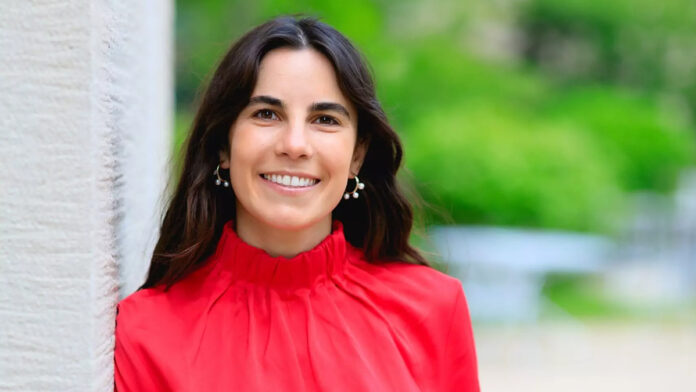
Hard questions are what occupy much of Rebecca Gore’s search for solutions to humanity’s pressing predicaments. 

They are questions about prisons and rehabilitation, about women whose lives have been shaped by violence and poverty, and about what happens when societies stop seeing the humanity of the people on the margins. These questions have found expression in the recently launched Behind Prison Walls: Unlocking a Safer South Africa, the book she co-authored with Justice Edwin Cameron and Sohela Surajpal. They have appeared as well as in her academic writing on subjects ranging from abortion rights in prison, and women who kill their abusers, to the menstruation needs of women behind bars. They have also set her on the path to becoming an advocate: she was admitted to the Cape Bar earlier this year.

“Chutzpah” is the word she uses when speaking about these hard questions and “not being comfortable with the status quo”, especially when it deprives people of human dignity. For her it is one of the values Judaism has given her: not simply audacity, but the willingness to challenge accepted assumptions. It is also a phrase that captures much of the work she has chosen to do.

Rebecca considers this particularly Jewish quality as central to who she is and the values she follows. She speaks of being inspired by strong Jewish women throughout history and of being raised with the importance of making a positive impact in the world. Her grandparents have been a strong influence, especially her paternal grandmother, whose commitment to lifelong learning, embracing eccentricities and taking ownership of one’s life continues to inspire her.

Law itself was not however Rebecca’s first choice. She began by studying Politics, Philosophy and Economics at UCT, and being interested in social impact and justice long before she contemplated a legal career. An internship at the Legal Resources Centre and studying Transitional Justice drew her increasingly towards the law and the possibilities it offered. Her arrival as an advocate is the culmination of years of public interest work and academic research, including a Master of Laws from Harvard Law School. 

Her greatest inspiration in the law is Justice Edwin Cameron, who has consistently taken on seemingly insurmountable social challenges. Rebecca had the opportunity to clerk for Justice Cameron at the Constitutional Court and then was his legal researcher at the Judicial Inspectorate for Correctional Services (JICS), the national prison oversight body.

Working in prison oversight during the height of the Covid pandemic took Rebecca into both men’s and women’s prisons throughout South Africa. Here she encountered overcrowded cells built for thirty, accommodating sixty inmates; inmates in prolonged solitary confinement, unsanitary conditions and neglect. She continued to reflect on the humanity and context of the range of people she encountered.

One memory has remained particularly vivid. Observing long queues of dejected people waiting to be processed before entering prison, dressed in their everyday clothes, she was reminded of the dehumanisation Jews have suffered over a long arc of history. She acknowledges the markedly different context, but the power of the image remains significant for her. It raises questions about how societies treat collective groups of people and what oppressive actions become possible when people are labelled and treated as less than human.

Her work has increasingly focused on women in prison. “What women experience in prison is a microcosm of what they experience in life”. Women inmates have lives shaped by violence, poverty and abuse. Some have engaged in sex work; some have acted as drug mules; and others have stolen food for their children. Women’s prisons have too often been designed around men’s experiences and fail to recognise women’s particular needs. A prison nurse once told her that women simply “become numb” with incarceration.

Alongside these stories are others that resist easy categorisation. She recalls meeting a thoughtful and ambitious woman imprisoned for murdering her abuser who was studying law through Unisa while serving her sentence. Women’s rights remain at the forefront of much of her thinking about prison reform.

The law that attracts Rebecca is not confined to the courtroom though she is drawn to the role of the advocate, to argumentation, the challenge of difficult cases and the necessary research that follows. She is equally committed to creating spaces in which difficult issues can be discussed openly. While many more women are entering the profession, she believes obstacles remain and that mentorship remains key. 

Rebecca enjoys long-distance running and, as a personal challenge, takes part in a marathon each year. Running is an opportunity to switch off, to explore her surroundings, and to think about perplexing issues. She loves books and films and describes herself, in a family of ‘numbers’ people, as the ‘word’ person. There is something wonderfully apt about that description. Words matter to lawyers, but so too do the questions that sit behind them.

Perhaps that is what most distinguishes this young advocate. In a profession often associated with certainty, Rebecca Gore remains interested in uncertainty, in asking the hard questions and accepting the ambivalence of many of the answers. She reminds us that justice is not merely about winning arguments or applying legal principles. It is about willingness to see the essential humanity in all people.  

Rebecca Gore’s papers and articles:

SIGN UP TO RECEIVE THE CAPE JEWISH CHRONICLE