Home Blog Page 4

Julian Resnick asks, “What do dead Jews think?”

Julian Resnick

In the July edition of the Cape Jewish Chronicle, our regular columnist Julian Resnick posed a question regarding whether a Jewish state is necessary, and he then quoted the responses to the question from “five significant Jews, all long gone”. If you read the article – or if you’d still like to read it, you can do so by clicking here – you are probably interested to find out who each of the responses is attributed to.

So, here is the list:

Baruch Spinoza (1632–1677), a groundbreaking Dutch-Jewish philosopher, who was a leading figure of the Enlightenment. He is best known for his radically naturalistic views on God and nature, and his pioneering work in biblical criticism and political philosophy. 

Albert Einstein (1879–1955): a German-born theoretical physicist widely regarded as the most influential scientist of the 20th century. He revolutionised our understanding of the universe by developing the general and special theories of relativity and is globally famous for his mass-energy equivalence formula E=mc². 

Sigmund Freud (1856–1939), an Austrian neurologist who founded psychoanalysis, a revolutionary method for treating mental disorders by investigating the interaction of conscious and unconscious elements in the mind. He fundamentally shaped modern psychology and popular culture by highlighting the profound impact of hidden, irrational drives on human behaviour.

Rabbi Akiva (c. 50–135 CE), one of the most influential sages in Jewish history. Starting his life as an uneducated shepherd, he began studying the Torah as an adult. He went on to become a chief architect of rabbinic Judaism, shaping the Mishnah and Midrash.

Theodor Herzl (1860 –1904). He was a Hungarian Jewish journalist and lawyer who was the father of modern political Zionism. Herzl established the Zionist Organisation, promoting Jewish immigration to Ottoman-controlled Palestine in order to form a Jewish state.  He is officially referred to as ‘the spiritual father of the Jewish State’.

Crafting a Cannes winner the human way

By EDITOR

In an era when artificial intelligence is rapidly transforming the creative industries, one of advertising’s most prestigious awards has gone to a commercial that achieved its remarkable visual effects the old-fashioned way – through human ingenuity, craftsmanship and meticulous filmmaking.

For Cape Town’s Bev Wynne, founder and Executive Producer of Gatehouse Commercials, being part of the team behind the Cannes Lions Grand Prix-winning Your Way Out for Coinbase represents the pinnacle of a 40-year career.

The commercial won top honours: the Grand Prix for Film Craft at this year’s Cannes Lions International Festival of Creativity. It’s also received a Primetime Emmy nomination, a rare achievement for an advertisement.

“Cannes Lions is the biggest stage in our industry globally,” says Bev. “It’s where the best advertising work from every country is judged against each other. Winning a Grand Prix, which is awarded to only one entry in each category, is genuinely considered a career high point.

“Our film won the Grand Prix for Film Craft, which is particularly meaningful because that category judges the actual filmmaking – direction, camera work and execution – rather than just the concept.”

Gatehouse Commercials, which celebrates its 25th anniversary this year, provided the production services that enabled the ambitious international shoot in Southern Africa.

“My role is as a service producer: I’m not developing the creative idea itself, but making it physically and financially possible to shoot here,” she explains. “Most of the work I do is facilitating productions that come in from overseas and turning their vision into a shoot that actually happens on the ground.”

That means overseeing budgets and schedules, sourcing local crew, arranging locations and permits, co-ordinating casting, and solving countless logistical challenges on set.

What distinguished Your Way Out from many other productions in today’s environment was its commitment to practical filmmaking.

At first glance, the commercial appears to have been created almost entirely using computer-generated imagery. It resembles a pixelated retro video game. In reality, however, almost everything viewers see was physically built and filmed.

“The agency gave us a strong no-AI mandate from the outset,” says Bev. “Even though the finished film looks like a pixelated video game, none of that was done digitally afterwards. It was all built and shot for real.”

Bringing that vision to life required remarkable planning and craftsmanship, including constructing two 80-metre sets, building and shooting miniatures, and filming on location in Cape Town – all physically crafted to create that video-game aesthetic in camera, rather than adding it afterwards.

The result is a film that demonstrates how practical effects can still surprise audiences in an age increasingly dominated by digital technology.

“It’s an enormous logistical and technical undertaking to pull off practically what most people would assume is done on a computer,” Bev says. “I think that’s exactly why it stood out to the Cannes jury in the Film Craft category, which rewards that kind of filmmaking craft and ingenuity.”

For Bev, the award is also recognition of South Africa’s world-class film industry and the highly skilled technicians and craftspeople who have helped establish Cape Town as a leading international production destination. “The crew base here has grown up alongside decades of international productions, so you’ve got camera, grip, lighting and production crews who work to the same standard as anywhere in London or Los Angeles,” Bev comments.

“Cape Town has become one of the most sought-after production hubs in the world for international advertising,” she says. “The light and landscape diversity is extraordinary. Close by you’ve got ocean, mountains, desert-like terrain and city, so a director can get several completely different looks without leaving the region.”

Bev’s own career began more than 40 years ago when she answered a newspaper advertisement for a ‘Girl Friday’ at a production company. After starting in feature films, she found her niche in commercial advertising, where shorter production cycles offered a better balance while still delivering the creative challenges she loved.

Looking back on Your Way Out, she is immensely proud of the achievement.

“I’m incredibly proud of what everyone accomplished,” she says. “This project proved that, even in an age where AI is transforming the industry, extraordinary results can still come from people building, crafting and solving problems together. That’s something worth celebrating.”

At a time when so much creative work is being generated digitally, Your Way Out stood apart by demonstrating that human imagination, technical skill and collaboration remain capable of producing work that not only captivates audiences but also earns the advertising industry’s highest honours.  

Watch the award-winning advert by clicking here.

And, to see how the advert was made, click here.

Are Jews terrible at world domination? 

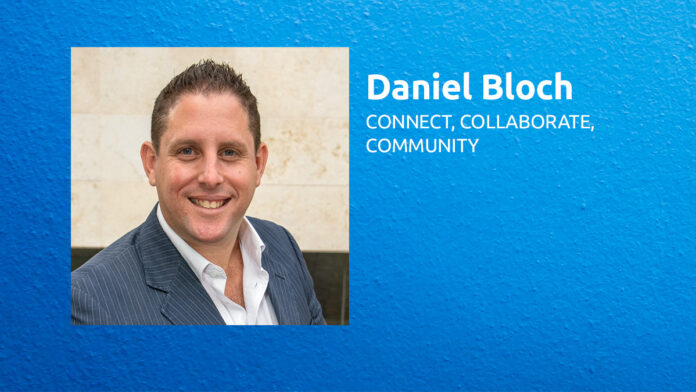
Daniel Bloch

By DANIEL BLOCH 

For as long as any of us can remember, Jews have been accused of dominating the world. We supposedly control the banks, the media, the weather and now, even sport. These days it is no longer just “the Jews” supposedly pulling the strings – it is Israelis and Zionists too. 

If any of that were true, then we are clearly terrible at world domination and should seriously start re-evaluating our life choices. 

During the FIFA World Cup, Argentina came from 2–0 down to beat Egypt in a controversial match. As is often the case in football, many supporters blamed the referee for their team’s defeat. That, in itself, is hardly unusual. Egypt had just lost to the reigning world champions, led by one of the greatest footballers ever to play the game, Lionel Messi. Perhaps Argentina were simply the better side when it mattered most? 

But the blame did not stop with the referee. Israel, Jews and Zionists were also dragged into the conspiracy. Social media posts and media reports claimed that Israel had somehow influenced the outcome. Egyptian commentator Mohammed Nour even remarked: “We played like heroes, but Israel – meaning FIFA and the referees -had something to say about it, and we couldn’t overcome these circumstances.” 

If Jews really controlled the World Cup, surely we would at least have managed to get Israel into the tournament. Israel did not even qualify. In fact, reports suggested that United States goalkeeper Matt Turner was the only known Jewish player at the 2026 FIFA World Cup, with perhaps only a handful of other players having some Jewish ancestry. If Jews control world football, why couldn’t we get more Jewish players onto the pitch? We could at least have arranged for a brisket stand inside the stadium serving hot beef on rye. 

The conspiracy theories do not end with football. 

A few years ago, a United States senator suggested that Jews control the weather. If that were true, why do so many Cape Town Jews escape the city’s cold, wet winters for warmer destinations such as Greece, Europe or Plettenberg Bay? 

Then there is the claim that Jews control the banks and are all fabulously wealthy. If only. Apparently, every Jew is supposed to own a mansion, a holiday home, a yacht in Monaco, and perhaps even a sports franchise. Meanwhile, I cannot afford Springbok rugby tickets, let alone buy a professional sports team. My bank account certainly contains plenty of zeros – they just all happen to be on the right-hand side of the decimal point. 

Humour aside, these conspiracy theories have serious consequences. 

Many of the individuals and organisations who claim to champion justice and human rights are often the very same people who casually blame Jews, Zionists and Israelis for problems entirely unrelated to them. Even here in South Africa some sought to blame Israel and Zionists for recent outbreaks of xenophobic violence. 

These accusations are not political criticism. They recycle classic antisemitic tropes that have existed for centuries, simply replacing old language with new labels. Increasingly, even the word ‘Zionist’ is no longer enough – the word ‘Jew’ is once again being used openly. 

That should concern everyone. 

The Cape South African Jewish Board of Deputies will continue calling out antisemitism wherever it appears and will continue challenging it both online and in the courts. 

Last year we secured the first of several successful hate speech cases. In August, another respondent will appear before the Equality Court, and we expect further matters to follow. We have already served papers on two additional individuals and are in the process of serving others. 

We will not stand by while members of our community are targeted because they are Jewish. Protecting the rights and dignity of Jews in the Western Cape remains at the heart of our mandate. 

No, we certainly do not dominate the world. 

But over the coming months, we do intend to spend a fair amount of time dominating the courtroom. 

Building a Maccabiah legacy

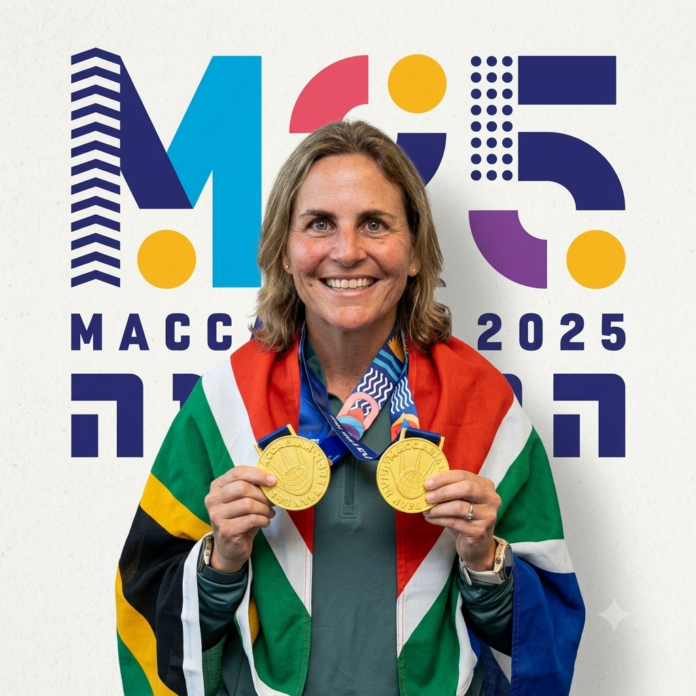
For Jacqui Boyd, representing South Africa at the Maccabiah Games has become a lifelong journey spanning more than three decades. This year, at the event held after its postponement in 2025, she once again demonstrated why she is one of South African Jewish sport’s most accomplished tennis players, adding two more gold medals to an extraordinary collection.

Jacqui claimed the Women’s Masters Singles title for the third consecutive Games, having previously won the event in 2017 and 2022. She also successfully defended her Mixed Doubles crown alongside her Argentinian partner, a title they first won together in 2022. Remarkably, it was her fifth consecutive Mixed Doubles gold medal, following victories in 2005, 2013, 2017, 2022 and now 2026. She did not compete at the 2009 Games.

The latest triumphs bring her overall Maccabiah tally to an impressive 11 medals – nine gold and two bronze.

Reflecting on the achievement, Jacqui says it is difficult to believe how far the journey has taken her.

“This was my sixth Maccabiah. I first competed in 1993 as a 14-year-old and was the youngest member of the South African delegation that year. To still be competing and winning more than 30 years later is incredibly special.”

She faced a familiar opponent in the Women’s Masters Singles final, defeating the same Russian-Israeli player she overcame to win the title in 2022.

Jacqui previously represented South Africa in the Open category before moving into the Masters division from 2017 onwards.

Tennis has long held a special place in South Africa’s Maccabiah history. It remains the only sport in which South Africa has competed at every Maccabiah Games since 1935 and has delivered more medals for the country than any other sporting code.

This year’s Games carried particular emotional significance. Postponed from last year until 2026, they became the largest gathering of Jewish athletes in Israel since October 7, 2023, under the theme, More Than Ever.

“These Games were even more meaningful because of everything that Israel and Jewish communities around the world have been through,” says Jacqui. “It was amazing how many of the Israelis we competed against thanked us simply for coming and being part of the Games.”

She says the experience extended far beyond the tennis court.

“Israel really put on an incredible Maccabiah. I’m so grateful to have been there, competing as a proud Jew and a proud South African.”

Rebecca Gore: asking the hard questions

By KAREN MILLER

Hard questions are what occupy much of Rebecca Gore’s search for solutions to humanity’s pressing predicaments. 

They are questions about prisons and rehabilitation, about women whose lives have been shaped by violence and poverty, and about what happens when societies stop seeing the humanity of the people on the margins. These questions have found expression in the recently launched Behind Prison Walls: Unlocking a Safer South Africa, the book she co-authored with Justice Edwin Cameron and Sohela Surajpal. They have appeared as well as in her academic writing on subjects ranging from abortion rights in prison, and women who kill their abusers, to the menstruation needs of women behind bars. They have also set her on the path to becoming an advocate: she was admitted to the Cape Bar earlier this year.

“Chutzpah” is the word she uses when speaking about these hard questions and “not being comfortable with the status quo”, especially when it deprives people of human dignity. For her it is one of the values Judaism has given her: not simply audacity, but the willingness to challenge accepted assumptions. It is also a phrase that captures much of the work she has chosen to do.

Rebecca considers this particularly Jewish quality as central to who she is and the values she follows. She speaks of being inspired by strong Jewish women throughout history and of being raised with the importance of making a positive impact in the world. Her grandparents have been a strong influence, especially her paternal grandmother, whose commitment to lifelong learning, embracing eccentricities and taking ownership of one’s life continues to inspire her.

Law itself was not however Rebecca’s first choice. She began by studying Politics, Philosophy and Economics at UCT, and being interested in social impact and justice long before she contemplated a legal career. An internship at the Legal Resources Centre and studying Transitional Justice drew her increasingly towards the law and the possibilities it offered. Her arrival as an advocate is the culmination of years of public interest work and academic research, including a Master of Laws from Harvard Law School. 

Her greatest inspiration in the law is Justice Edwin Cameron, who has consistently taken on seemingly insurmountable social challenges. Rebecca had the opportunity to clerk for Justice Cameron at the Constitutional Court and then was his legal researcher at the Judicial Inspectorate for Correctional Services (JICS), the national prison oversight body.

Working in prison oversight during the height of the Covid pandemic took Rebecca into both men’s and women’s prisons throughout South Africa. Here she encountered overcrowded cells built for thirty, accommodating sixty inmates; inmates in prolonged solitary confinement, unsanitary conditions and neglect. She continued to reflect on the humanity and context of the range of people she encountered.

One memory has remained particularly vivid. Observing long queues of dejected people waiting to be processed before entering prison, dressed in their everyday clothes, she was reminded of the dehumanisation Jews have suffered over a long arc of history. She acknowledges the markedly different context, but the power of the image remains significant for her. It raises questions about how societies treat collective groups of people and what oppressive actions become possible when people are labelled and treated as less than human.

Her work has increasingly focused on women in prison. “What women experience in prison is a microcosm of what they experience in life”. Women inmates have lives shaped by violence, poverty and abuse. Some have engaged in sex work; some have acted as drug mules; and others have stolen food for their children. Women’s prisons have too often been designed around men’s experiences and fail to recognise women’s particular needs. A prison nurse once told her that women simply “become numb” with incarceration.

Alongside these stories are others that resist easy categorisation. She recalls meeting a thoughtful and ambitious woman imprisoned for murdering her abuser who was studying law through Unisa while serving her sentence. Women’s rights remain at the forefront of much of her thinking about prison reform.

The law that attracts Rebecca is not confined to the courtroom though she is drawn to the role of the advocate, to argumentation, the challenge of difficult cases and the necessary research that follows. She is equally committed to creating spaces in which difficult issues can be discussed openly. While many more women are entering the profession, she believes obstacles remain and that mentorship remains key. 

Rebecca enjoys long-distance running and, as a personal challenge, takes part in a marathon each year. Running is an opportunity to switch off, to explore her surroundings, and to think about perplexing issues. She loves books and films and describes herself, in a family of ‘numbers’ people, as the ‘word’ person. There is something wonderfully apt about that description. Words matter to lawyers, but so too do the questions that sit behind them.

Perhaps that is what most distinguishes this young advocate. In a profession often associated with certainty, Rebecca Gore remains interested in uncertainty, in asking the hard questions and accepting the ambivalence of many of the answers. She reminds us that justice is not merely about winning arguments or applying legal principles. It is about willingness to see the essential humanity in all people.  

Rebecca Gore’s papers and articles:

 Celebrating the women of Habonim Dror Southern Africa

From left to right: Abigail Smith, Gabi Altamirano, Leah Benjamin, Mila Nathan

This Women’s Month, Habonim Dror Southern Africa is proud to celebrate the incredible women who make our movement stronger every day. Through four inspiring individuals, we showcase the journey of women across every stage of Habonim. Together, they reflect the leadership, dedication and spirit that define Habonim Dror Southern Africa.

Former chaver and now a parent: Abigail Smith

Habonim was part of my story long before I was born, and some of my earliest memories growing up in Habonim were that we were encouraged to think deeply, question respectfully, and care for one another and the world around us. It gave me an unshakable pride in my Jewish identity and the confidence to ask difficult questions, challenge ideas, and find my own voice. The movement’s deeply egalitarian culture taught me from an early age that leadership, responsibility, and opportunity were never defined by gender, shaping my belief that I could do anything my male peers could do. Those lessons became the foundation of how I lead, work, parent, and build community today. Above all, Habonim taught me to meet every person with dignity, compassion, and humanity – a gift that has shaped every part of my life.

Long-standing Habonim supporter: Gabi Altamirano

Habonim Dror didn’t just prepare me for the real world – it made me believe I belonged in it. Long before I had a career, I was trusted to lead, make difficult decisions, organise large-scale projects, and use my voice with confidence and respect. It taught me resilience, critical thinking, and that leadership isn’t about having all the answers, but having the courage to step forward. Every young woman deserves a space that believes in her before she has to prove herself. Habonim was that space for me.

Current madricha and leader: Leah Benjamin

Just weeks ago, I served as one of the roshim of Habonim Dror’s winter camp, an experience that taught me resilience and confidence, and showed me the power I have, as a woman in leadership, to shape future generations. Habonim is a uniquely pluralistic space, and over the years it has taught me that compassion and love are just as important as strength and intelligence. This is the kind of leader I hope to be, and a small part of the legacy I hope to leave for the girls who will one day stand where I stand.

Current chanicha: Mila Nathan

Within a fiercely supportive community, I not only discovered my voice but also myself. This year at Winter Camp, I was the only girl in my age group. Rather than being discouraged, it made me step up as a leader, unlocking one of my greatest qualities. Now, I step into the real world ready to occupy spaces where women are missing and pull others up with me.

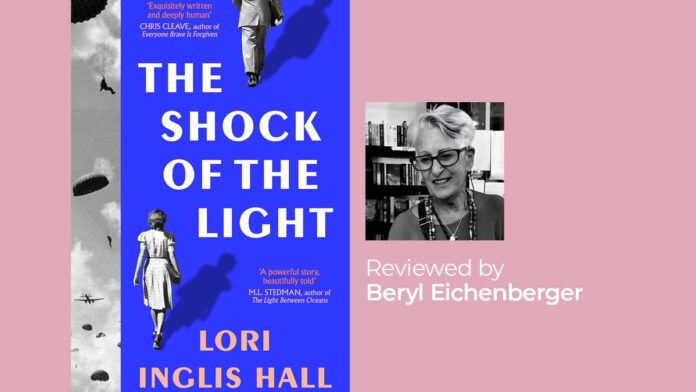
The Shock of the Light

Blue concrete wall textures for background - Vintage Film Filter

Listen to this review:


I was broken by the time I finished reading this book. 

Lori Inglis Hall’s debut novel The Shock of the Light tugs at you, pulls you in and then tosses you about as you navigate the darkness of the Second World War, the role of women sent into occupied France, the lack of acknowledgment by the British government post war, as they strove to hide their mistakes. When the truth is finally revealed, it is as if a piercing light has suddenly come on. 

The Special Operations Executive (SOE) was a secret British World War II organisation formed in July 1940 to conduct sabotage, subversion, and espionage in occupied Europe. Thirty-nine women travelled behind the lines in enemy occupied France – sixteen paid with their lives. Women who adopted new identities; women who took the ultimate risk; brave women. 

This is the fictional story of one of them, loosely inspired from some of the testimonies of counterparts, which now reside at the Imperial War Museum in London. As Inglis Hall says, “I have liberally plundered real events”. And these real events are another stain on the harbingers of war. 

Twins: there is a bond, one that can sometimes be unreadable to other siblings. Theo and Tessa Armstrong share that bond – inseparable as children, so close it is if the light cannot penetrate between the two bodies. Until Tessa opts to study at the Sorbonne while Theo is at Cambridge. When she returns that summer, she has changed, their former closeness has shifted. Theo enlists in the RAF and, unknown to her family, Tessa joins the SOE to go back to her beloved France. Both suffer the trauma of war and separation, but two years later only one returns.

Chilling, heart breaking, I can use so many superlatives to describe this book, but its depth and empathy sit with you. There is humour, love and daring escapes – it is well rounded as Inglis Hall lives her characters. Delving into the mire of false identities, loyalty and trust, this debut novel has an important place in WWII historical fiction.  


Lori Inglis Hall has an MA (research) in history from Goldsmiths College, University of London, and works as a researcher and rights manager for the estate of the photographer Lee Miller. Previously, she spent a decade working in politics at the House of Commons. The Shock of the Light is Hall’s first novel.

A mother’s love, a son’s enduring legacy

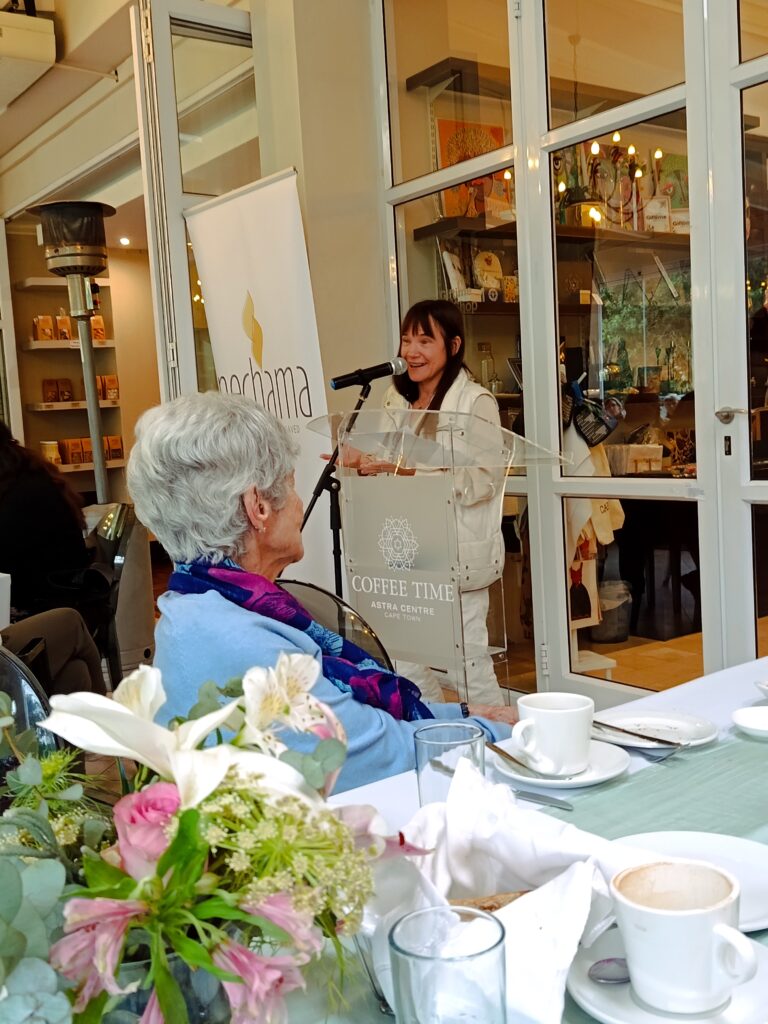
There were few dry eyes in the room as former Capetonian Martine Ben Harush (née Gordon) shared the story at a recent Nechama breakfast event of losing her 20-year-old son, Shoam. With remarkable honesty and courage, she spoke not only about unimaginable grief, but also about the enduring love, kindness and humanity that continue to define her son’s legacy.

Shoam, the second youngest of Martine and her husband’s six children, was critically injured during the October 7 attacks and died three weeks later.

“When you lose a child, your sense of time changes,” Martine told the audience. “My life changed 968 days ago, when we finally had to say goodbye to Shoam.”

Although nearly two years have passed, the pain remains ever present.

“Grief of this magnitude is paralysing,” she said. “I can’t just shake it off and pretend that everything is okay.”

Throughout her talk, Martine spoke candidly about the loneliness that often accompanies bereavement. Many adults, she explained, simply do not know what to say and, as a result, avoid the conversation altogether. Yet it has been human connection – particularly through the children she teaches – that has helped her find the strength to keep moving forward.

A high school English teacher who treasures the school environment, Martine said she has found it easiest to speak about Shoam with her students.

“Children are just more honest and real,” she reflected. Their compassion, willingness to listen and genuine concern have brought her immense comfort during the darkest period of her life.

Amid the heartbreak, there have also been moments that have deepened her understanding of the son she lost.

“I learned things about Shoam after his death that I didn’t know beforehand,” she said.

Among those discoveries was a letter Shoam had written before the outbreak of the war, which she read only after his passing. In it, he expressed a profound appreciation for life and gratitude for all that the world had given him.

During the family’s shiva, friends and acquaintances shared stories of Shoam’s quiet acts of kindness and his sensitivity towards people who were struggling – qualities that continued to emerge long after his death.

One story that particularly moved Martine concerned a young boy with special needs who now visits Shoam’s grave every Friday. The boy had first met Shoam when Shoam visited the boy’s family because his brother had served alongside him before October 7. Shoam had formed a special bond with the boy, engaging with him in a way few others could.

Perhaps the most profound expression of Shoam’s compassion was a wish he had shared before his death – that his organs should be donated if anything ever happened to him. Despite their overwhelming grief, Martine and her husband honoured that request.

“As a result,” Martine told the audience, “five other people are alive because of Shoam.”

As the breakfast drew to a close, those present were left not only with the weight of a mother’s loss, but also with the extraordinary legacy of a young man whose generosity continues to touch lives. In sharing her family’s story, Martine reminded everyone present that, while grief may never disappear, love, kindness and human connection have the power to endure long after a life has ended.

More about Nechama

Established over 30 years ago, Nechama provides specific Jewish bereavement and palliative care counselling to the Cape Town Jewish community. In addition to trained psychologists and social workers, the organisation offers support through its 25 volunteer counsellors, all of whom have been trained, selected and supervised by Nechama to serve in this role. Through compassionate one-on-one support, and telephone outreach to newly bereaved families, Nechama helps individuals and families navigate grief and adjust to life after loss. These support services are available to anyone no matter their location, with counselling being done online all over the world.

The organisation also strengthens community wellbeing through mental health workshops, public lectures, counselling skills training, and outreach programmes that extend beyond the Jewish community.

The organisation falls under the leadership of Director Avigail Popack, Psychological Services Co-ordinator Sarit Swisa and Admin Manager Shana Isserow. 

The Nechama website offers numerous valuable resources. Click here to visit the website.

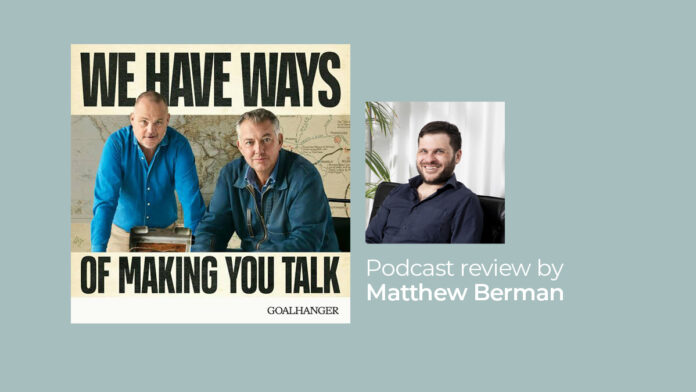
Podcast review: Episode 310. DAVID BADDIEL

Recommended by Matthew Berman, a World War II history enthusiast

British Jewish writer and comedian David Baddiel has explored Jewish identity extensively in his work. His best-known book, Jews Don’t Count, was later adapted into a television documentary.

In this entertaining episode of the WW2 Pod: We Have Ways of Making You Talk series, Baddiel shares his family’s experiences during World War II. His mother was only five months old when her parents fled Germany in 1939 for the relative safety of Britain. Although she was too young to remember the move, the trauma of her family’s sudden departure left emotional scars that stayed with her throughout her life. Britain brought further hardship when her father was interned on the Isle of Man as an enemy alien soon after arriving.

Baddiel’s account of his grandfather’s internment offers a refreshing and humorous perspective on what is usually viewed as a dark chapter in Britain’s wartime history.

Other topics of particular interest to Jewish listeners include contemporary antisemitism, the dilemma of qualifying for a German passport while feeling reluctant to associate with the country that devastated your family’s lives a generation earlier, and more.

I am thoroughly enjoying the entire series, but especially recommend the David Baddiel episode. Cape Jewish Chronicle readers are likely to find themselves laughing about subjects that are usually treated with great seriousness.

The Jacob Gitlin Library has David Baddiel’s autobiographical book My Family, in which he tells the family history.  

NOTE: The views expressed in these recommendations do not necessarily reflect the views of the Cape Jewish Chronicle.

Changing the future of maternal mental health

By EDITOR

For more than two decades, Associate Professor Simone Honikman has dedicated her career to helping women and their families navigate the mental health challenges that can accompany pregnancy and early motherhood. 

As Founder and Director of the Perinatal Mental Health Project (PMHP), she has worked to improve the lives of thousands of women in South Africa while helping to shape maternal mental healthcare across the African continent.

A graduate of the University of Cape Town’s medical school, Simone’s passion for social justice began long before she entered the medical profession. Growing up in a middle-class family during apartheid, she was encouraged by her parents to question authority and challenge injustice. Witnessing the resilience of disadvantaged women sparked a lifelong commitment to improving their lives.

By the age of 12, she had decided she wanted to become a doctor and work in underserved communities. While studying medicine at the University of Cape Town, she recognised the emotional toll medical training was taking on fellow students and established a student advice and support centre that offered counselling and psychological support to students in distress.

After qualifying, she worked in the public health sector in obstetrics, paediatrics, internal medicine and psychiatry before managing the Khayelitsha Cervical Cancer Screening Project.

It was during this time that her life’s work came into focus. Research showing that one in three women in Khayelitsha experienced postnatal depression, together with the devastating suicide of a colleague eight months after giving birth, highlighted the urgent need for accessible maternal mental healthcare.

In response, Simone, and a team of midwives and volunteers, founded the PMHP at Mowbray Maternity Hospital in the early 2000s, pioneering an integrated model of maternal mental healthcare within the public health system.

Today, the PMHP is a nationally recognised organisation. Although based at the University of Cape Town as a founding partner of the Centre for Public Mental Health, it raises its own funding and continues to expand its work so that more women across South Africa can access essential mental health support. Simone comments: “PMHP’s achievements can be attributed to many extraordinary people – our small team, our long-standing volunteers and consultants, and the collaboration with funding partners and thought leaders from all over the country and the globe.”

According to Simone, South Africa has one of the highest rates of perinatal mental health conditions in the world. “Worldwide, about 10% of pregnant women and 13% of women in the year after giving birth experience a mental health condition, primarily depression and or anxiety,” she explains. “In South Africa this is even higher. We estimate that one in three women is affected by these conditions during or after childbirth.”

Pregnancy and the first year after birth can be a particularly challenging time, as many women face multiple pressures at once. Financial hardship, conflicts in relationships, the demands of caring for a new baby and others in the family, as well as other life stresses, can all affect a mother’s mental health and how she is able to manage her life. Without appropriate support, these conditions can have profound consequences not only for mothers but also for their babies and families.

“The importance of mental health is unfortunately often overlooked,” says Simone. “Mental wellbeing is crucial for the woman who is pregnant or has just given birth. When women experience depression, anxiety or other mental health challenges without the support they need, it can affect their own physical health and wellbeing, as well as their ability to fully enjoy and navigate early parenthood and manage stressors in their environment. Because the period from conception to two years is such an important time in a child’s development, ensuring that women have access to timely mental health care benefits mothers, babies and families alike.”

To address these challenges, the PMHP integrates quality maternal mental healthcare into existing maternal and child health services, particularly in low- and middle-income communities. The organisation supports pregnant women, strengthens public health services, partners with NGOs, and trains healthcare and social development professionals so that maternal mental health becomes part of routine care.

Its influence extends beyond South Africa. Through training, research and collaboration in advocacy work, the PMHP has shared its expertise with health professionals and organisations in countries including Lesotho, The Gambia, Ghana, Kenya, Nigeria, Malawi, Zimbabwe, Ethiopia and Botswana.

“Our mission has driven us to share our expertise and learnings with others working with mothers across Africa,” she explains, “and we have benefitted hugely from innovative work being done across the continent and in other world regions.”

Simone’s pioneering work has earned international recognition. In 2014, she was elected to the prestigious Ashoka Fellowship, which recognises leading social entrepreneurs creating innovative solutions to society’s most pressing challenges.

More recently, she was granted a visiting fellowship at the University of Oxford, as part of the AfOx programme, which enables Africa-based researchers to collaborate with Oxford scholars and further strengthen research and innovation in their fields.

“This recognition has given me access to extraordinary, dynamic and innovative people, working across sectors, working on the African continent and elsewhere, to better the development of their countries,” Simone comments. 

From a childhood desire to make a difference to leading one of South Africa’s foremost maternal mental health organisations, Simone’s work continues to ensure that thousands of women receive the care and support they need at one of the most important moments of their lives.  

SIGN UP TO RECEIVE THE CAPE JEWISH CHRONICLE