By Jakub Nowakowski, CTHGC Director
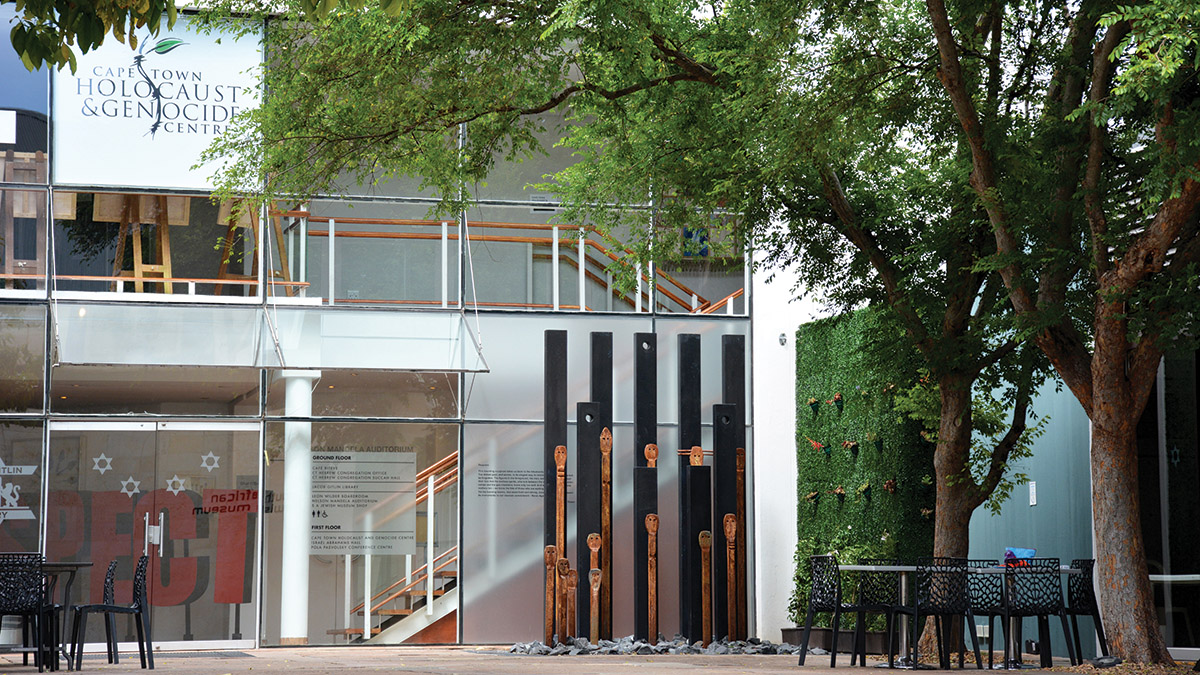
Twenty-five years after the Cape Town Holocaust & Genocide Centre (CTHGC) pioneered Holocaust education in SA, its permanent exhibition is set for a significant transformation. Director Jakub Nowakowski tells us more.
Why does the Centre need a new core exhibition?
Our current exhibition was created when the Centre was established 25 years ago and was updated in 2016. It was groundbreaking – the first permanent Holocaust exhibition in South Africa – and helped pave the way for Holocaust education to become part of the national curriculum, as well as for the establishment of centres in Durban and Johannesburg.
But scholarship, technology and the way we teach difficult histories have changed considerably. Our exhibition also does not deal with other genocides as extensively as our sister centres do, particularly the Genocide against the Tutsi in Rwanda. We need an exhibition that reflects current research and responds to the educational challenges of today.
Does this mean the Holocaust will have a reduced role?
The Holocaust will remain the central narrative. What will change is the way we place it in conversation with other histories.
Traditionally, museums have tended to present different genocides in separate spaces. Our approach will instead create ‘bridges’ between them.
Alongside the Holocaust, we will explore the genocide against the Herero and Nama in present-day Namibia and the Genocide against the Tutsi in Rwanda.
The intention is not to equate these events, but to examine both their similarities and their differences, and understand the processes that can make mass violence possible.
Why is this comparative approach important?
I have been influenced by the concept of ‘multidirectional memory’, coined by scholar and author Michael Rothberg: the idea that remembering one history does not diminish another. Different histories of suffering can be brought into dialogue without creating false equivalences.
This can actually deepen understanding of the specificity of the Shoah. At the same time, visitors can recognise recurring patterns – prejudice, propaganda, dehumanisation, discriminatory laws, exclusion and, ultimately, violence.
How will visitors experience that approach?
Rather than simply moving chronologically through three separate histories, visitors will encounter themes and processes. The proposed exhibition begins by introducing three histories through three objects, before exploring the origins of hate, stereotypes, ideologies of elimination, organised exclusion, the unleashing of violence, and mechanisms of destruction.
It will also examine acts of defiance, the aftermath of genocide, justice and recon-ciliation, before considering apartheid and the broader question of how we understand genocide.
Will the exhibition look and feel very different?
But technology should never overshadow the human story. There will also be tactile and analogue elements that encourage visitors – particularly young people accustomed to experiencing the world through screens – to slow down and engage more personally with history.
Yes. We want to combine new technology with the power of physical objects, photographs, documents and testimony. Digital elements such as interactive maps, large screens and technology will enable visitors to engage with recorded survivor testimony.
What place will survivors and their descendants have in the new exhibition?
A proposed Gallery of Survivors will foreground survivor voices, while the Repository of Living Memory will take remembrance into the second, third and fourth generations.
Through testimonies, personal objects and memoirs, we want to show not only what was destroyed, but what endured. Jewish life continued. Families rebuilt themselves, identities were reclaimed, and memory was passed on. It is a story of loss, but also of dignity, continuity and resilience.
Who is the new exhibition primarily for?
One of our most important audiences is the thousands of Grade 9 and 11 learners who come here through their school curriculum. Most are not Jewish, and for many this may be their only opportunity to engage deeply with Holocaust and genocide history.
The Jewish community is equally fundamental to the CTHGC. The exhibition must remain a place of remembrance and mourning, but also one of learning, healing, resilience and hope – and a place where younger generations can take ownership of this legacy.
What do you ultimately hope the renewed Centre will achieve?
We want people to leave understanding that genocide does not begin with mass killing. It develops through processes: through language, prejudice, propaganda, exclusion, laws and institutions.
The Centre should give visitors the knowledge and critical tools to recognise dangerous patterns in the present.
The renewed exhibition will build on what the Centre has achieved over 25 years, while ensuring that its work remains relevant to the generations who will walk through its doors in the decades ahead.
See this video produced by the CTHGC that explains more here.