Home Blog Page 2

New Vintage: The surprising revival of Paarl and Stellenbosch Jewry


By Julia Coscia

Decades after congregations dwindled across the rural Western Cape, Jewish life in Paarl and Stellenbosch is experiencing a rebirth.

For years, South Africa’s small-town Jewish communities seemed destined to fade into memory. By the 1980s, many in the Western Cape had declined significantly, and synagogues from Worcester to Caledon stood locked and empty.

But today, the silence is gone. Defying demographic trends across the country, Paarl and Stellenbosch are experiencing a modern-day renewal of Jewish life, though it wears two different faces.

Old roots, new vintage

Stellenbosch’s close-knit Jewish community dates back to the early 1890s, and in 1923 it established the Stellenbosch Synagogue on Ryneveld Street. Although the congregation contracted from 85 families in the 1960s to around 20 by 1980, it retains its Jewish pulse thanks to the leadership of Ian and Gabi (née Zetler) Katzeff, ensuring continuity even during university breaks. This enduring foundation now supports an interesting new chapter.

Over the past three years, the number of Jewish students at Stellenbosch University has more than tripled to about 150. Drawn by a welcoming, less polarised campus atmosphere, these students are turning this Cape Winelands town into a lively centre of next-gen Jewish pride.

Leading the way is SAUJS, which assists new students in adjusting to campus life and facilitates connection with one another through social events and their shared Jewish identity. Gemma Cohn, secretary of SAUJS Stellenbosch, notes that the group works alongside Ohrsom Student to promote the well-attended monthly First Friday Shabbat service at the Stellenbosch Synagogue. “The evening starts with pre-drinks, followed by a Kabbalat Shabbat service and dinner at the shul. Other initiatives include the Minyanettes, which aims to involve more female students in shul life,” she says.

SAUJS also maintains close ties to Chabad on Campus, which in 2024 established a permanent home under the leadership of Stellenbosch graduate Rabbi Chananyah Duthie and his wife, Rebbetzin Eliana. Operating from a dedicated Chabad House near university residences, Rabbi Duthie reflects: “Many more Jewish students are looking for Jewish community when they arrive, and I’m struck by the resilience of these students and their dedication to their studies while remembering their yiddishkeit.” 

Transplanted

While Stellenbosch thrives on seasonal, youthful energy, in Paarl, 30 minutes away, the renewal has a more permanent, family-focused face.

This growth is the latest chapter in a story that began over a century ago. In his book The Light of Israel, Charles Press describes the trajectory of one of South Africa’s most historic rural Jewish communities, tracing its roots back to the late 19th century, with the arrival of Germans, Dutch, and, later, immigrants from Lithuanian Russia. These Litvaks were mostly from the provinces of Kovno and Northern Suwalki, and the majority of the community appears to have come from the historic Jewish shtetls of Plungė and Biržai. By 1893, the community had formally established the Paarl Hebrew Congregation and built the Paarl Synagogue (also known as the Ohr Yisrael Synagogue) on Breda Street, officially opening its doors in 1904.

By balancing a life of Torah and mitzvot with civic loyalty and respect for local law, Jewish life flourished along the banks of the Berg River. At its mid-century peak, the congregation was a dynamic hub complete with a Jewish school, active Zionist youth movements, and a packed shul every Shabbat. Deeply Zionist, the community hosted visits from luminaries such as Chaim Weizmann and Menachem Begin.

However, like many rural towns in South Africa, Paarl experienced a demographic decline by the late 1970s and 1980s. “Like in most rural towns in South Africa, Paarl’s older generation was comprised of shopkeepers, farmers, and small business owners,” explains Charles Press. “The younger generation was more educated than their parents; many qualified as doctors, architects, and lawyers, and either moved to the city or abroad for better career opportunities, or made aliyah.”

Despite this, a devoted remnant has sustained Jewish life in Paarl. Ida Jacobson (née Borochowitz) remains one of the living bridges between the community’s past and its resilient present. Born and raised in the shadow of the Drakenstein mountains, Ida is the unofficial balabuste of the Paarl Jewish community. From preparing weekly shul brochas to keeping an eye on shul affairs, Ida, alongside her fellow committee members, is a steadfast guardian of local heritage, and Paarl Shul remains the only synagogue in the region outside Cape Town to have maintained a regular weekly Friday night minyan for decades. 

Paarl has experienced an influx of new families over the past six years, driven by shifting lifestyle choices and the rise of remote/hybrid work setups following the COVID-19 pandemic. Drawn by secure lifestyle estates, top-tier schooling options such as Paarl Boys’ High and Bridgehouse, and easy access to Cape Town, new residents are laying down deep roots.

Tanya Glazer, who moved to Paarl from Muldersdrift 30 years ago and serves on the shul committee, has witnessed this evolution firsthand. “I love living here,’ says Tanya. ‘It’s quiet, peaceful, and close enough to Cape Town. There’s a small, caring Jewish community, and, over the 30 years, it has grown a lot.”

In late 2019, Rabbi Bryan and Rebbetzin Chana Opert took up the part-time rabbinic position at the Paarl Shul to serve the then-community of around 20 souls. The couple came to understand early on that in a small outlying congregation, spiritual connection often manifests through identity rather than strict ritual observance. The Orthodox Jewish community infrastructure of Cape Town, such as its kosher establishments, day schools, learning opportunities and vibrant volunteer organisations, did not exist in Paarl. “What the local Paarl families possessed was a fierce, deep-seated connection to their roots,” says Rabbi Opert. “They honoured the memory of their grandparents who built the shul and recognised the irreplaceable role the congregation played in the regional tapestry. For them, coming to shul was an act of identity.”

Rather than demanding halachic shifts, the Operts focused on creating warm, accessible entry points. The couple introduced communal Friday night dinners and two-night Pesach Seders, making it explicit that attendance at formal services was never a prerequisite for joining the meal. Recognising that the minyan was the beating heart of the community, Rabbi Opert proposed establishing Shacharit services on Yom Tovim. “Many of the men had not attended a Shacharit service in decades. Yet, once the commitment was made, the community’s loyalty shone through. Week after week, without fail, the quorum has been met.”

About three years into the Operts’ tenure, new resident Selwyn Chatz joined the committee as Chairman and proposed creating the Paarl Power Shabbos to connect families moving into surrounding estates. “It took me some time to start going to shul, but when I noticed new Jewish families moving into the area, I thought it would be great to come together so people wouldn’t have to drive all the way to Cape Town for services,” says Selwyn. “The committee gave its buy-in, and before long, people started coming and brought their kids with them. It is a huge blessing to see 70-80 people of all ages coming together on Friday nights, as well as great attendance for morning services during Yom Tov.”

Held every six to eight weeks, the Paarl Power Shabbos draws families from across outlying areas, even as far as Strand and Somerset West. To engage the youngest members, Rebbetzin Chana instituted a 25-minute Children’s Service right before  Kabbalat Shabbat to teach Torah values and holiday traditions. The response was immediate, spurring a wave of community gatherings, including a Sukkot celebration at Babylonstoren, an inaugural challah bake, and a Purim party. This renewed energy has revitalised the congregation, leading to Paarl’s first Bar and Bat Mitzvahs in nearly 30 years and its first shul baby-naming in four decades.

Growth, however, meant meeting congregants where they actually were, notes Rabbi Opert. “In small communities, interfaith marriages are a reality. We observed families who supported the shul deeply but maybe felt spiritually sidelined because the non-Jewish spouse lacked a formal place within traditional structures. Guided by compassion and halakha, we sought a meaningful solution.”

That solution is the Abraham Membership, which allows non-Jewish spouses and interfaith families to become official ‘identity’ members of the Paarl congregation. While strict halakhic boundaries remain – such as not being included in the numbers for a minyan, receiving aliyahs, or voting at the AGM – these families receive full communal recognition. Their birthdays and Yahrzeits are honoured, their support is celebrated, and their children belong. Today, around 10 families participate in this membership, helping to expand the overall congregation membership by an astonishing 50%, including country members across South Africa and abroad.

“Our approach offers a gentle model for small congregations worldwide: people do not need to be pressured into compliance to feel the warmth of their heritage,” says Rabbi Opert. “And when a community leads with unconditional love, clear boundaries, and accessible entry points, connection naturally flourishes, and Paarl Shul is an enduring testament to the power of Jewish identity and belonging.”

Calling former Cape ‘Winelanders’!

Calling all former Paarl and Wellington residents! A special reunion is being planned for later this year – a chance to reconnect with old friends, reminisce and catch up after all these years. For more information, contact Ethne Skop Abramowitz on 083 787 4581.


  • For the current edition of the Cape Jewish Chronicle, click here.
  • Subscribe to the Cape Jewish Chronicle: R450/year, or R38/month via debit order. Simply email us at subscriptions@ctjc.co.za and click here for payment info.
  • The Cape Jewish Chronicle reaches over 6 000 readers monthly across print and digital platforms.
  • To book advertising space or discuss a custom package contact Adéle Gradner Mobile: 083 321 5222 | Office: 021 464 6736 | Email advertising@ctjc.co.za

A new season, a new beginning

WIZO South Africa

By Shelley Trope-Friedman, President, WIZO SA 

How is it Rosh Hashanah already? There is something about this time of year that makes us wonder where the months have gone. Somehow, here we are at Rosh Hashanah again. It feels as though the year has flown by, with all the highs, lows, surprises and ordinary moments that make up our lives.

Rosh Hashanah gives us an opportunity to slow down and reconsider our actions.

The Jewish calendar is built around cycles: the year, the changing seasons, the rhythm of work and rest, beginnings and endings. Yet every cycle brings us back to a familiar place, while giving us the opportunity to begin again. A new year is not simply about turning the page. It is about deciding what we wish to carry forward and what we are ready to leave behind.

As we enter 5787, I find myself thinking about what it means to usher in a new season. What do we want to cultivate? Where do we want to grow? What kind of community do we want to build? Most importantly, how can we turn our hopes for the year ahead into action?

This is also a good time to think about our own purpose. We need to consider what it means to be a blessing to the world around us and how we can be a little kinder, more generous and more present. We need to consider what we would like people to experience because we were part of their lives. And what does that look like in practice, in our families, communities, workplaces and the wider world? We don’t need grand answers, but we do need to answer these for ourselves.

All of this sits at the heart of what WIZO does. For more than a century, WIZO has created opportunities for people to turn their values into action, to build, support, educate and strengthen communities. It is a reminder that purpose does not always have to be something we find; sometimes it is something we create through what we choose to give. Each new season is an invitation to participate. Rosh Hashanah reminds us that a new beginning doesn’t simply happen because the calendar says so. 

It asks us to look at the year behind us and be honest about what we’ve learnt. If we want the year ahead to look different, what are we prepared to do differently? We can choose where we put our energy, who we make time for and what we contribute. So, as we gather together, hear the shofar and wish one another Shanah Tovah, I hope we will all ask ourselves how to do things differently this year.

May 5787 be a year of renewal, purpose and possibility for us all. With love and purpose, may we have the courage to help make it so.

Shanah Tovah u’Metukah. With love and warmth, Shelley Trope-Friedman 

Website: WIZO South Africa


  • For the current edition of the Cape Jewish Chronicle, click here.
  • Subscribe to the Cape Jewish Chronicle: R450/year, or R38/month via debit order. Simply email us at subscriptions@ctjc.co.za and click here for payment info.
  • The Cape Jewish Chronicle reaches over 6 000 readers monthly across print and digital platforms.
  • To book advertising space or discuss a custom package contact Adéle Gradner Mobile: 083 321 5222 | Office: 021 464 6736 | Email advertising@ctjc.co.za
A life across continents: from Asia to Europe to Africa

By RABBI NAFTALI Y. SILVER, Rabbi, Sephardi Hebrew Congregation

Some books preserve history. The finest ones remind us that history is meant to shape the way we live.

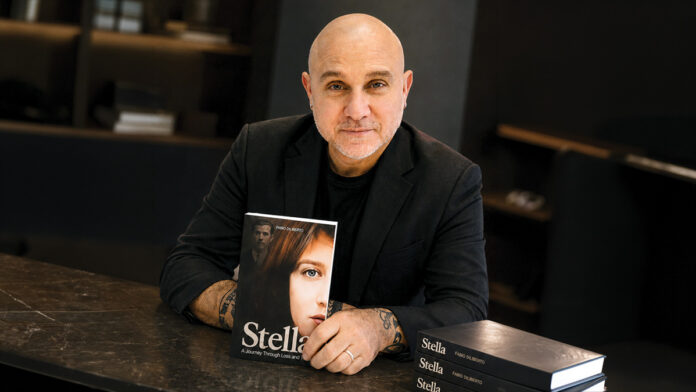
While this book – Stella: A Journey Through Loss and Time by Fabio Diliberto – follows the extraordinary journey of one woman, Stella, I found myself drawn beyond any single individual. What captivated me was the world that emerges through these pages – a world of faith, family, courage, resilience, and unwavering Jewish identity. Through Stella’s story, Fabio has done far more than recount the life of his beloved grandmother. He has opened a window into the lived experience of an entire generation.

As Rabbi of the Sephardi Hebrew Congregation of Cape Town, I have had the privilege of serving many of the descendants of the families whose lives fill these pages. Although I never had the opportunity to know Stella or so many of those whose stories are told here, through their children and grandchildren, their traditions, and now through Fabio’s remarkable storytelling, I feel I have come to know them. More importantly, I have come to appreciate that the true measure of a generation is not simply what it achieved, but what it successfully passed on.

One of Fabio’s greatest achievements is that he does not simply recount history. He allows us to experience it. As readers, we find ourselves walking the streets of Rhodes, crossing unfamiliar seas, entering homes filled with warmth and uncertainty, and sharing in moments of joy, heartbreak, courage, and hope. For those fortunate enough to know these families, the pages seem almost to breathe. History no longer feels distant; it becomes deeply personal.

This is not merely one family’s story. It is, in many ways, the story of countless Jewish Sephardi families whose journeys began in Rhodes, Turkey, and across the Balkans, before carrying them to new homes throughout Africa and beyond. While every family’s path was unique, they shared the same determination to preserve their faith, their traditions, their language, their communities, and one another.

This book reminds us that Judaism has never been preserved by monuments alone, but by ordinary Jews who chose, day after day, to live Jewish lives – speaking its language, praying its prayers, celebrating its festivals, raising Jewish families, and carrying one another through both joy and sorrow. Their actions became their legacy.

As I read these pages, I found myself asking a difficult question. If a generation that endured exile, uncertainty, loss, and unimaginable hardship could preserve its faith and identity with such devotion, what might our generation achieve with the blessings we have been given? We live in a world of unprecedented comfort and opportunity, yet many of the traditions that sustained our grandparents now struggle to find their place in our daily lives. The challenge before us is no longer merely survival – it is continuity.

Perhaps that is the greatest lesson this book offers. It does not ask us simply to admire the past; it asks us to continue it. Jewish memory is never an end in itself. We remember in order to live differently. We honour those who came before us not merely by telling their stories, but by carrying forward the values that shaped their lives. The generation portrayed in these pages did not preserve Judaism because life was easy. They preserved it because they understood it was essential. Our generation must make that same choice. Not out of necessity, but out of conviction.

Fabio has given his grandmother a beautiful tribute. In doing so, he has also honoured an entire generation whose quiet courage and steadfast faith continue to echo through the lives of their descendants. He has preserved not only their history, but their spirit. The greatest gift of this book is not what it preserves, but what it awakens within its readers. May we close these pages inspired not simply to remember those who came before us, but to become worthy ancestors for those who will come after us.  

The book is available for purchase directly from Fabio or from the Sephardi Shul, and for borrowing from the Jacob Gitlin Library.

Rabbi Doron Perez: living with joy and brokenness

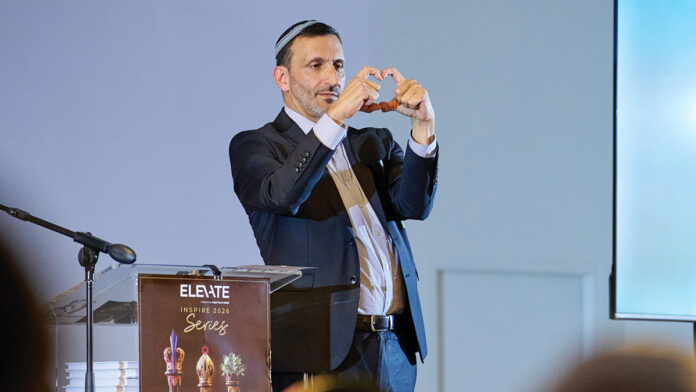
For Rabbi Doron Perez, the devastating loss of his son has deepened his understanding of a central idea in Jewish thought: that life inevitably holds both simcha (joy) and brokenness. It is this apparent contradiction, he believes, that strengthens the Jewish commitment to love, resilience and the sanctification of life.

Speaking at the inaugural event of the ELEVATE Inspire 2026 Series, Rabbi Perez reflected on the different ways he and his wife, Shelley, have coped with the trauma they have endured since 7 October 2023, when their younger son, Daniel, was taken from them.

A young tank commander stationed at the Nahal Oz base on Israel’s border with Gaza, Daniel was captured by Hamas during the attacks. For 163 days, the Perez family believed he was alive and being held hostage.

Rabbi Perez, Executive Chairman of the World Mizrachi movement and President of the World Zionist Organisation, described that period as living as a “hostage family”. Shelley was consumed by anxiety, constantly wondering whether Daniel was being tortured or receiving enough food. He, by contrast, immersed himself in activity.

“I made a conscious effort to disconnect from Daniel emotionally during this period,” he said.

Their contrasting responses, he explained, reflected two different ways of coping with overwhelming trauma.

After 163 days, the family learned that Daniel had been killed, although his body was returned only some time later.

“The first 163 days were like a torture chamber for Shelley,” Rabbi Perez said. “She felt a sense of relief when we were
told that he had died.”

For him, however, the news marked the beginning of a far more difficult period. “Before that, I had occupied my time with all sorts of things, including being a hostage parent. But when we got the news, I did not know what to do. There wasn’t anything for me to do anymore. And so, for me, the past 10 months have been really difficult.”

When Daniel’s body was finally returned to Israel, the family became, in his words, a “bereaved family”.

“I now feel the brokenness at all times. And I know that I will live with that brokenness forever. But that is also an important realisation: one has to learn to live with the brokenness, and not allow it to prevent one from living.”

That experience has transformed the way Rabbi Perez understands both suffering and Jewish tradition. He now identifies brokenness everywhere, yet believes it must always exist alongside a wholehearted embrace of life.

“That is the contradiction I see all the time,” he said. “And it’s in our Torah and other texts, too. Judaism teaches us to live with this contradictory state all the time.”

He pointed to Jewish texts and practices that embody this idea. Key to Pesach, for example, is matzah, which symbolises both redemption and affliction.

Ultimately, Rabbi Perez believes that, “Jewish thought teaches us that life is a package deal: there is simcha, and there is brokenness.”


  • For the current edition of the Cape Jewish Chronicle, click here.
  • Subscribe to the Cape Jewish Chronicle: R450/year, or R38/month via debit order. Simply email us at subscriptions@ctjc.co.za and click here for payment info.
  • The Cape Jewish Chronicle reaches over 6 000 readers monthly across print and digital platforms.
  • To book advertising space or discuss a custom package contact Adéle Gradner Mobile: 083 321 5222 | Office: 021 464 6736 | Email advertising@ctjc.co.za
One email, one people, one heart 

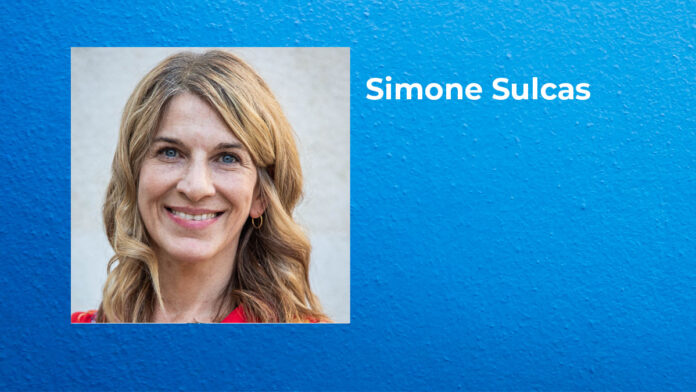
By SIMONE SULCAS, Chairperson Cape SAJBD

This Rosh Hashanah again feels different in our house.For the past four years, my younger son has been studying in the United States, so every Rosh Hashanah came with a little ache. There was always an empty chair at the table. This year, he is home.

But family life refuses to stand still. Just as one child returns, another prepares to leave. My older son will shortly be heading to Europe to begin his master’s degree. So once again, there will be an empty chair at our Rosh Hashanah table. Different son; same feeling.

Naturally, my mind went straight to the usual questions. Will he settle in? Will he thrive? And, very importantly, will he find his people? And then something notable happened.

One email. That was all it took.

He contacted the local shul in the city where he will be studying. Within a day, he had been connected to a Jewish student group. There were invitations for a Shabbaton, plans for Rosh Hashanah and a WhatsApp group. Before he has even boarded the plane, people he had never met had already made space for him.

I was amazed. My son was not.

To him, this was not extraordinary. It was exactly what he expected would happen. Of course, the local Jewish community would help. Of course, there would be students to connect with. Of course, someone would make sure he had somewhere to go for Shabbat and Rosh Hashanah. What felt remarkable to me felt completely normal to him. That, I think, says something deeply beautiful about Jewish belonging. 

We often speak about Jewish identity in big terms: history, continuity, responsibility and shared destiny. All of that is true. But sometimes Jewish identity is much simpler. It is a quick reply to an email. A name passed on. A WhatsApp group. A seat at a Shabbat table. A practical, no-fuss welcome that says: you are one of us, so come in.

In a world that can feel fractured and uncertain, there is something comforting about that instinct. Jews may disagree about almost everything, usually with impressive enthusiasm, but here remains a thread that binds us. We look out for one another. We recognise one another. We make room. Long before WhatsApp groups, Jewish communities understood hospitality. Someone far from home could arrive in an unfamiliar place and find a shul, a meal, a familiar calendar. Technology has changed the way we find one another. The impulse remains the same.

This Rosh Hashanah, our family will be in different places and time zones. There will be messages, photos, video calls, and probably a moment when I look at the empty chair and wish that my son was sitting in it. But there will also be appreciation: that a community I have never visited is already looking out for him; that strangers have welcomed him; that he will hear familiar songs thousands of kilometres from Cape Town; and that he will begin building his own Jewish memories.

As parents, we worry about whether our children will feel at home when they are far away. This experience reminded me that Jewish children carry a remarkable gift with them wherever they go. They carry belonging.

The fact that I find that extraordinary is one thing. The fact that my son finds it completely ordinary may be the most reassuring thing of all. Our children may travel far from home. But wherever they go, our people have a remarkable way of helping them find it again.

One people. One heart. Many homes.

Shanah Tovah.

Cape SA Jewish Board of Deputies | http://www.capesajbd.org | Instagram | Facebook


  • For the current edition of the Cape Jewish Chronicle, click here.
  • Subscribe to the Cape Jewish Chronicle: R450/year, or R38/month via debit order. Simply email us at subscriptions@ctjc.co.za and click here for payment info.
  • The Cape Jewish Chronicle reaches over 6 000 readers monthly across print and digital platforms.
  • To book advertising space or discuss a custom package contact Adéle Gradner Mobile: 083 321 5222 | Office: 021 464 6736 | Email advertising@ctjc.co.za
From bees to business: an empowering project takes flight

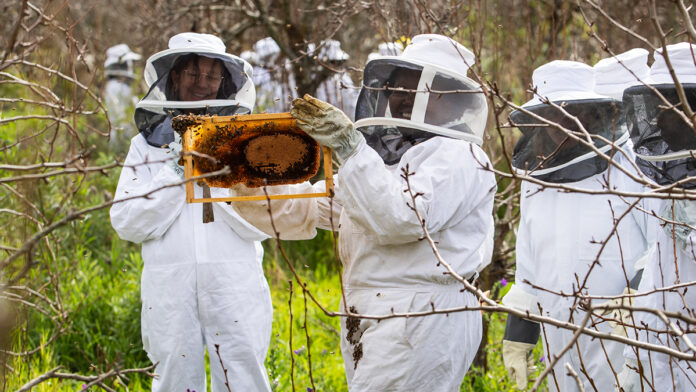
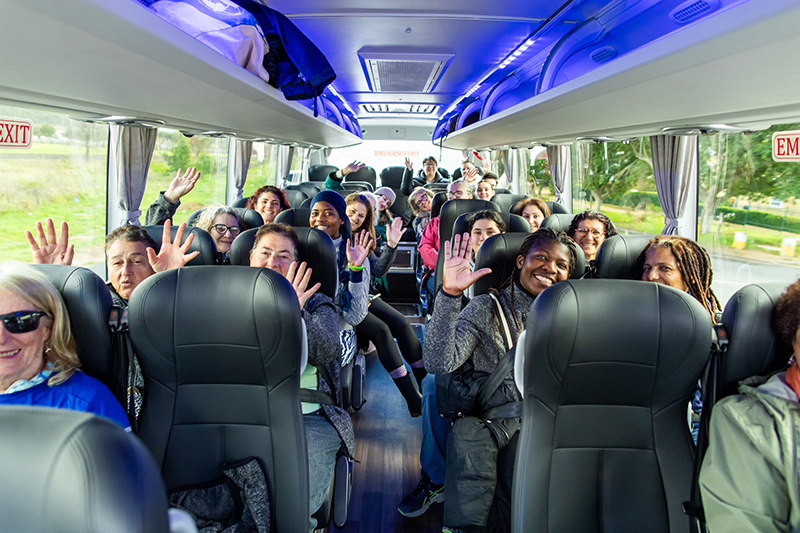
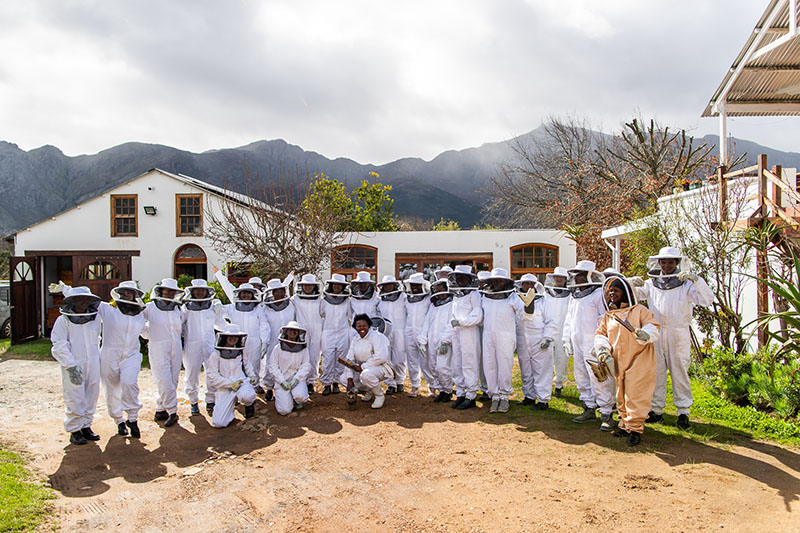
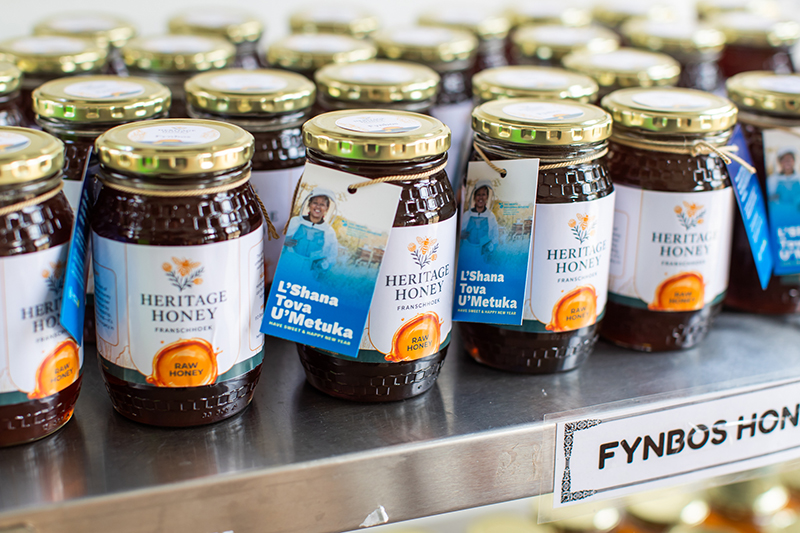
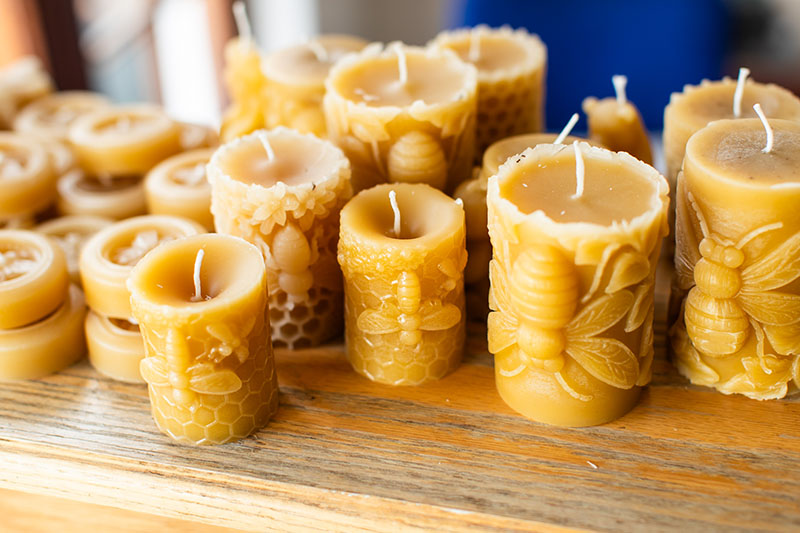
It felt like an early Rosh Hashanah for a group of Cape Town women – and two men – when they dipped apple in honey during a Women’s Day event in Franschhoek. Organised by Mensch, the event showcased an exciting JDC beekeeping project and included a honey and wine pairing – hence the early Rosh Hashanah celebration.

Through the contacts and networking that epitomise Mensch, the American Joint Distribution Committee (JDC) has expanded its reach beyond its traditional focus on Jewish communities worldwide. Today, the JDC provides a range of support initiatives in throughout the world, including South Africa. Joining forces with Mensch, it has initiated the Ubuntu Beekeeping Project. The implementing partner for the project is Ripples for Change.

The JDC explains that the project is part of “the JDC Imagine More initiative with local Jewish community partners and the NPO Ripples for Change that trains South African women in beekeeping and how to launch and manage their own honey production businesses. Bees are key to their economic empowerment.”

The Ubuntu Project currently has nine sites throughout South Africa, with two in the Western Cape, including one in Franschhoek. Located in the Cape Winelands Biosphere Reserve (CWBR), the site is in a particularly beautiful part of the country – and one rich in food for bees.

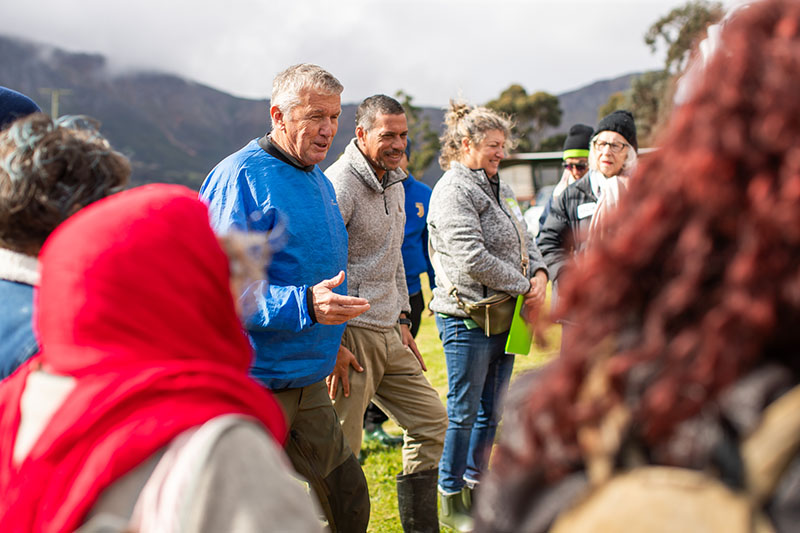
As Mark Heistein, CEO of the CWBR, explained to the group, “Franschhoek has a plethora of food sources for bees: the fynbos on the mountains, the many eucalyptus tree forests, and the residential gardens. Residents of Franschhoek take great pride in their gardens, and so we have plenty of flowers throughout the year. All these factors make this a perfect spot for beekeeping and honey production.”

Ripples for Change, led by Director Galit Cohen, is the on-the-ground partner. “The support from the JDC comes in the form of beekeeping equipment and training. The training covers a range of elements: from beekeeping itself, to managing a business, to knowledge about plants and the role of bees in the natural ecology.”

Women with entrepreneurial skills are identified and become mentors, recruiting other suitable women to join the project. “The seasoned mentor not only imparts essential beekeeping skills but also shares insights from their successful honey-production business. Going beyond mere provision, our programme emphasises hands-on learning through tailored training and mentorship,” Galit says.

Becoming involved in beekeeping has been a sea change for many of the women. Those at the Franschhoek event spoke of their previous fear of bees – insects they knew largely for their sting – and how they have come to love them and understand the positive role they play in our world. Local mentor Brenda Mgxilwa explained that her knowledge of bees had previously been restricted to their role in a Xhosa cultural practice. In Xhosa culture, honeybees are deeply revered as spiritual messengers from deceased ancestors.  “But I did not know that one can use bees to make honey, or that one can earn income from bees,” she said.

While the Franschhoek project is still relatively young – having started in 2024 – its prospects look good. It is already producing honey for sale and expects increased harvests as it grows.

“Through our involvement with the Ubuntu Beekeeping Project, Mensch has undertaken to boost the sales of the Franschhoek initiative by offering Rosh Hashanah honey this year for sale to Cape Town’s Jewish community and anyone else interested in buying it,” says Gina Flash, Director of Mensch. “The honey is Kosher, and carries the Beth Din stamp.”

Thus far, the women involved – all of whom have other jobs and participate in the project part-time – have not taken home any of the profits. “We have reinvested our profits so that we can grow the project,” one beekeeper explained. “But we do foresee a future in which we will be able to earn a living from our beekeeping, and in which some of us will be able to work full-time as beekeepers.”

The women also spoke of the therapeutic value of the project in their lives. Coming together regularly as a group of women to tend their bees gives them the chance to forget about their usual concerns – for a time at least – and to enjoy the warmth of the group members.

The support offered by organisations within the Jewish community to people who need a leg up is heartwarming. May the beekeepers continue to prosper and realise their dreams.

Tips about honey

  • Honey will last for a long period if kept in a tightly-sealed container
  • Honey loses its health benefits if put into hot water above 45 °C. Use warm, not hot, water
  • There has been little research done on the health benefits of fynbos honey but it is anticipated that research will reveal significant health benefits.

Youth Movement Updates

Diller Teen Fellows reunite in Israel for transformative International Summer Seminar

JESSICA CARROL

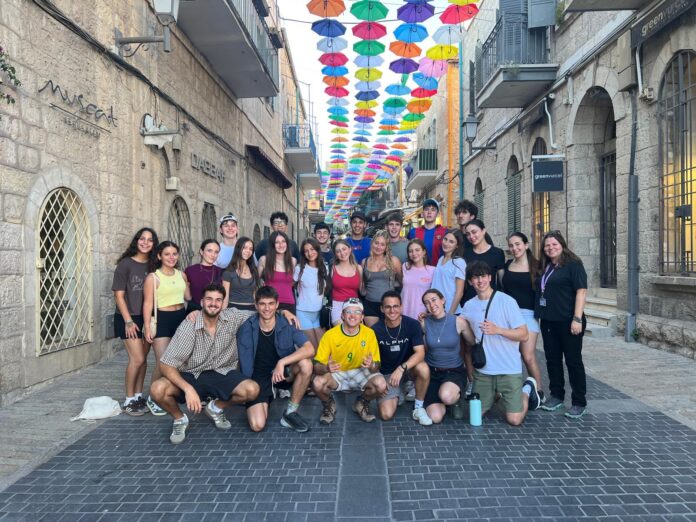
For the first time since 2023, more than 600 Jewish teenagers representing all 32 Diller Teen Fellows communities from across the globe gathered in Israel for the International Summer Seminar (ISS), a three-week journey of learning, connection, leadership and discovery.

Among them was the Cape Town Diller cohort, who experienced Israel through a rich and diverse programme designed to deepen their understanding of the country’s people, culture and history. From visiting Bedouin communities in the Negev to exploring Tel Aviv’s vibrant street art on a guided graffiti tour, each experience offered a unique perspective on the many facets of Israeli society.

A highlight of the Seminar was the week in which all 32 cohorts came together. Through thought-provoking discussions, collaborative workshops and shared experiences, fellows engaged in meaningful conversations in open and supportive spaces. These exchanges encouraged participants to reflect on their identities, explore different perspectives and strengthen their connection to the global Jewish community.

The Seminar also placed a strong emphasis on Tikkun Olam, the Jewish value of repairing the world. Through community outreach initiatives and leadership activities, fellows were inspired to consider how they can create positive change within their own communities once they return home.

Perhaps the greatest impact of the programme was the friendships formed across continents. Through storytelling, dialogue and shared experiences, teens built meaningful relationships that transcend borders.

Under the Israeli summer sun, ISS provided far more than an educational journey. It offered a space to celebrate Jewish identity, embrace diversity, develop as young leaders and create memories and connections that will last a lifetime.

Habonim Dror Winter Camp

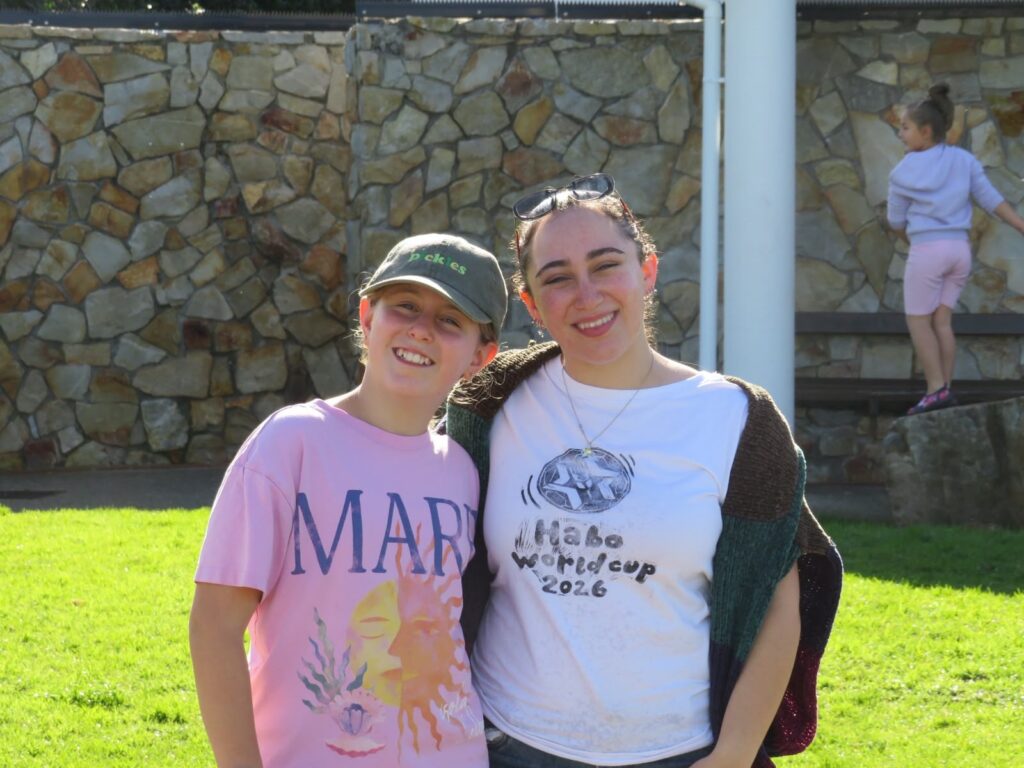
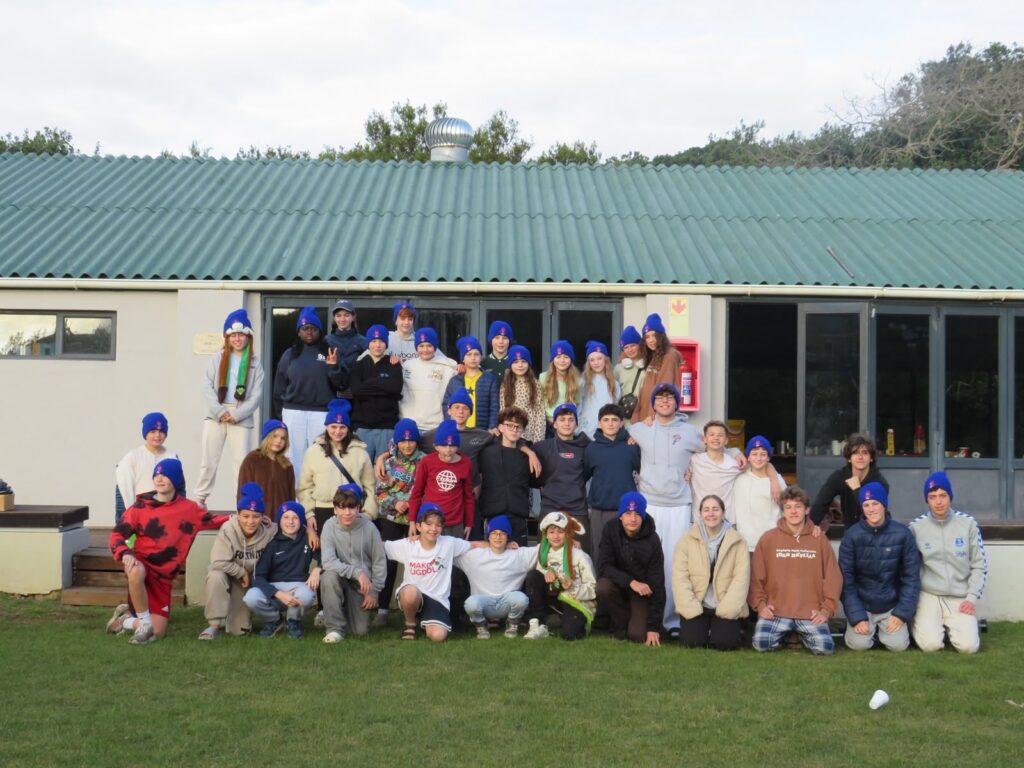
 As another unforgettable Habonim Dror Winter Camp comes to an end, we’re left with full hearts, tired feet and memories that will last a lifetime.

Over the past week, our chanichim and madrichim embraced every moment from exciting peulot and meaningful discussions to singing around the campfire, late-night laughs, sports, dancing, and countless moments of friendship and growth.

Winter Camp is so much more than just a week away. It’s a place where confidence is built, leadership is developed, lifelong friendships are formed, and our Habonim values come to life.

As we return home, we take with us new memories, stronger friendships and even more excitement for everything that lies ahead.

Until next time…

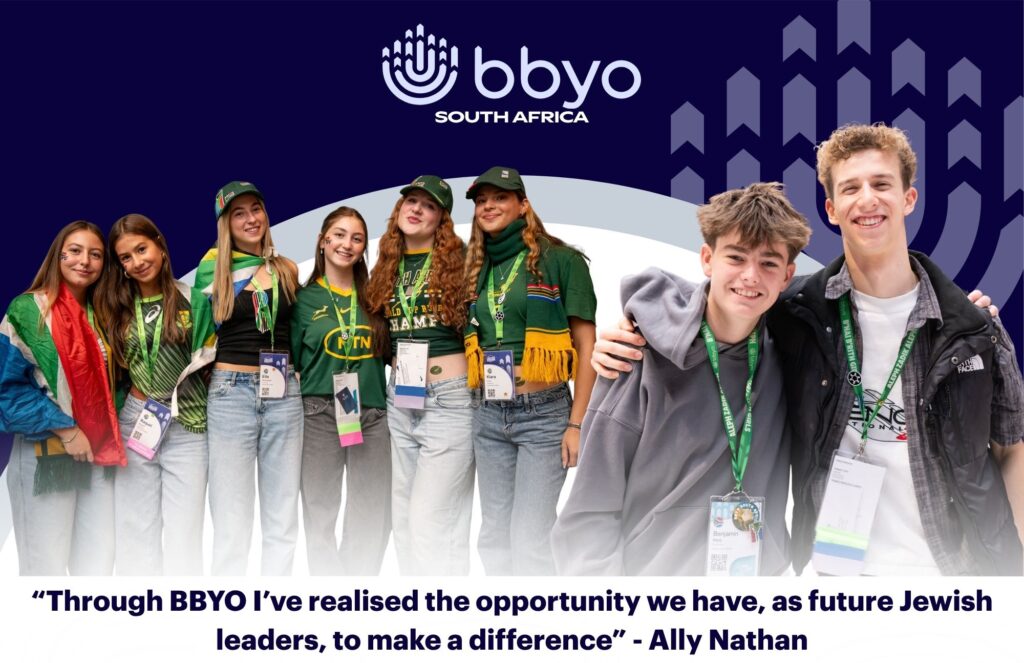
BBYO: A global movement of Jewish teens building a better world

BBYO believes that every Jewish teen has the potential to lead and make a difference. Through meaningful friendships, mentorship, and real-life leadership opportunities, we empower young people to grow in confidence and responsibility while developing a lifelong connection to the Jewish community. 

BBYO offers local chapter events, social action projects, teen-led programming, American summer camp experiences, leadership development, and international conventions that inspire teens to lead with purpose and make a meaningful impact. Whether you’re looking to meet new friends, develop leadership skills, give back to your community, or connect with Jewish teens from over 60 countries around the world, there’s a place for you in BBYO. 

To learn more or get involved please visit http://www.bbyo.org, or contact our Regional Director, Martine Kawalsky Katz, at martinekatz@bbyo.org

Bnei Akiva

August 2026


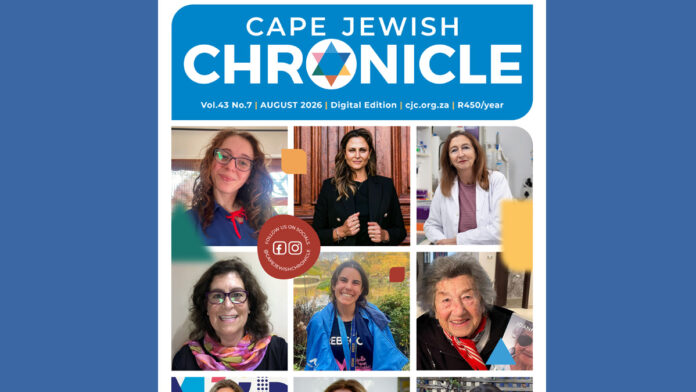
In our Women’s Month edition, we focus on local women doing extraordinary things – in the medical field, as authors, in filmmaking and in the law. See more on pages 6-11.

Choose your favourite format below:

Women’s Month 2026

The month of August in the South African calendar provides an encouragement for us to turn our attention to the position of women in our country. While the 9th of August was chosen as the date for a public holiday – in commemoration of the 1956 women’s march against the pass laws that regulated the lives of women of colour in apartheid South Africa – there is a great deal more that deserves attention in terms of the place of women in our country.

In some senses, it seems odd that we still need this kind of focus: in so many parts of the world, women have been able to take their places as equal partners to men in their societies, enjoying significant levels of equality. 

But this is, unfortunately, not the case in our country, where extensive systemic disparities continue, notwithstanding the equality that our Constitution promises. We face one of the highest rates of Gender-based violence and femicide globally. In addition, women in our society suffer an unequal burden in terms of health issues; are more likely to be unemployed than men; less likely to enter the labour market and earn a living; and consistently face a significant wage gap. 

And so, when we hear of women who are leaders in their fields, we should acknowledge their achievements even more – if for no other reason than to show that it’s possible to break these barriers. It’s with this in mind that this month, the Cape Jewish Chronicle shares some inspirational stories of women from our community who are truly doing great things: pushing the boundaries in fields women are not traditionally part of; initiating meaningful interventions to improve the lives of others; and achieving at the highest levels in their fields.

Why Golda Meir Still Matters on Women’s Day

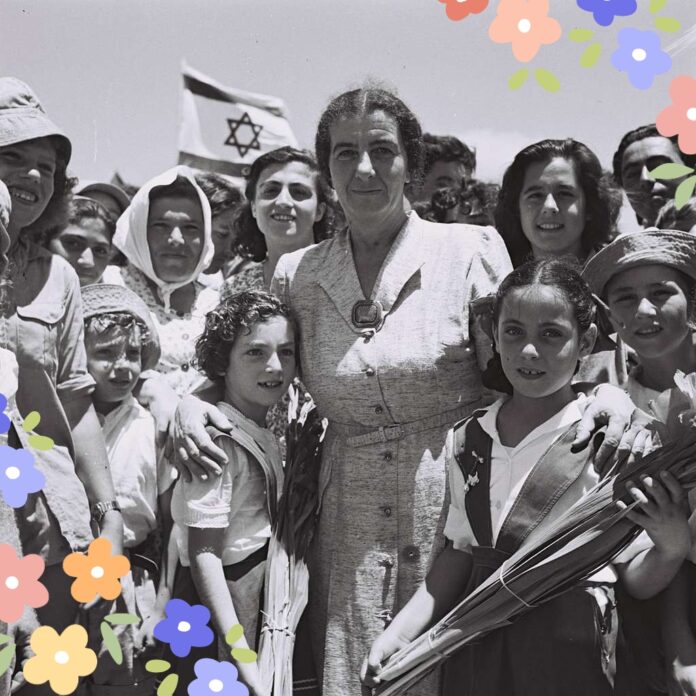
GOLDA MEIR POSES FOR A PICTURE WITH THE CHILDREN OF KIBBUTZ SHEFAIM. 24/07/1950 Source: Israel Government Press Office

By HAYLEY COHEN

Golda Meir’s tenure as Prime Minister of Israel (1969–1974) came just before a pivotal moment for women worldwide. Less than a year after she stepped down, the United Nations officially began observing International Women’s Day on 8th  March 1975, recognising the global movement for women’s rights and equality.

Golda Meir never sought to be known as a feminist. Instead, she insisted on being regarded simply as Prime Minister rather than as a “female prime minister.” Yet her career demonstrated precisely what the world was beginning to celebrate: that women could lead nations, shape history, and govern with strength, wisdom, and conviction. Although she never publicly commented on the United Nations’ first official International Women’s Day in 1975, her life had already become a powerful example of its ideals. She believed women should simply be given the opportunity to lead—and then be judged by the same standards as everyone else.

Golda Meir’s example reminds us that the advancement of women is not only about breaking barriers at the highest levels of leadership, but also about recognising the countless ways women strengthen their communities through courage, service, and commitment every day.

While International Women’s Day celebrates the global advancement of women’s rights and achievements, South Africa’s National Women’s Day commemorates the courage of the more than 20,000 women who marched to the Union Buildings on 9th August 1956 in protest against apartheid pass laws. Though separated by geography and history, these occasions share a common message: women possess the courage and determination to shape the future.

Those same qualities continue to shape communities today—not only in government and public life, but also through the often unseen work of women who lead, volunteer, advocate, and inspire others.

At the South African Zionist Federation Cape Council, our women continue that tradition every day. Whether serving in leadership roles, advocating outside the High Court, standing on the Sea Point Promenade in solidarity with Israel, volunteering their time, or quietly strengthening our community behind the scenes, they lead with courage, conviction, and purpose.

Tamara Davidson captured the spirit of Women’s Day when she said, “Investing in women—from young to old—is one of the most powerful ways to strengthen our entire society.”

One respondent reflected, “I believe women often bring a nurturing and compassionate perspective to advocacy and community work,” choosing to lead by listening, showing empathy, and building understanding.

Yvette Rosenberg highlighted another quality that many women bring to community life: “Women are generally do-ers! We roll up our sleeves and get the job done.”

Golda Meir’s legacy reminds us that leadership is not defined by gender but by character, courage, and a willingness to serve. This Women’s Day we celebrate the remarkable women in our own community who continue to strengthen Jewish life, stand proudly with Israel, and inspire the generations that follow.

Thoughts on Women’s Day from local Jewish women

TAMARA: “My involvement in community building stems from being a mother specifically, more so than just being a woman. I want my children, my daughter in particular, to see that participation and service with integrity and vision in life is key -we need to show up for one another – and break some barriers in order to leave a world and a community that is stronger and better for our having played a small part in it.”

JESSICA: “I believe women often bring a nurturing and compassionate perspective to advocacy and community work. I try to be a listener, a mediator and someone who leads with empathy. I believe that even the smallest contributions can make a difference.”

SIGN UP TO RECEIVE THE CAPE JEWISH CHRONICLE