Home Blog Page 35

Rosh Hashanah message from Highlands House

Highlands House http://www.highlandshouse.co.za | Tel: +27 21 461 1100 | info@highlandshouse.co.za


  • For the current edition of the Cape Jewish Chronicle, click here.
  • Subscribe to the Cape Jewish Chronicle: R450/year, or R38/month via debit order. Simply email us at subscriptions@ctjc.co.za and click here for payment info.
  • The Cape Jewish Chronicle reaches over 6 000 readers monthly across print and digital platforms.
  • To book advertising space or discuss a custom package contact Adéle Gradner Mobile: 083 321 5222 | Office: 021 464 6736 | Email advertising@ctjc.co.za

Rosh Hashanah: Community greeting services

Wishing you a happy Rosh Hashanah. We hope our CJC greeting services are a helpful & enjoyable addition to your holiday. Please share the support of these wonderful community initiatives featured here. 

Astra Jewish Sheltered Employment karen@jsec.org.za
Oranjia Jewish Child & Youth Centre info@oranjia.com
Glendale home office@glendalehome.co.za

Astra Jewish Sheltered Employment
20 Breda Street, Gardens | 021 461 8414 | Email: coffeetime@jsec.org.za | https://astrajse.com/shop/

Oranjia Jewish Child & Youth Centre http://www.oranjia.org

Glendale home website, email, phone: +27 (0)21 712 0270


  • For the current edition of the Cape Jewish Chronicle, click here.
  • Subscribe to the Cape Jewish Chronicle: R450/year, or R38/month via debit order. Simply email us at subscriptions@ctjc.co.za and click here for payment info.
  • The Cape Jewish Chronicle reaches over 6 000 readers monthly across print and digital platforms.
  • To book advertising space or discuss a custom package contact Adéle Gradner Mobile: 083 321 5222 | Office: 021 464 6736 | Email advertising@ctjc.co.za

The Power of Community

Chief Rabbi’s Rosh Hashanah message

A recent survey by the American Psychiatric Association found that one in three people experience loneliness at least once a week, with 30% of younger people reporting feeling lonely at least several times a week.

Ironically, when asked how they dealt with their feelings of loneliness, half the respondents said they sought solace in some kind of distraction, like TV or social media, which obviously exacerbates the problem.

In modern Western culture, loneliness is increasingly described by social scientists as an epidemic – affecting not only mental health, but physical wellbeing. A world that promises more connectivity offers, instead, connections that are virtual rather than
real, digital rather than human, on screens rather than in person.

We have a deep craving for human connection. But loneliness is not alleviated simply by being around other people. The antidote to loneliness touches on something more existential – being part of something greater, a sense of belonging.

Judaism has offered us this solution for thousands of years: community. And it is expressed most powerfully through our shuls, which have long been the heart of Jewish community life, hubs of connection for generations. Being part of a shul and coming regularly is about more than seeing familiar faces. It offers something far deeper: a sense of community, the ultimate antidote to loneliness. 

Community means belonging to a group with a shared identity – a circle of people who can support and hold you, a place where you belong.

This is the beauty of shul. The founders of our community instinctively understood this. Arriving on these shores from Eastern Europe to escape persecution and poverty, one of their first priorities was to establish shuls – beginning with the first in Cape Town more than 180 years ago, and then spreading across the country and dotting the countryside. Even as demographics shifted from rural areas to the big cities – and within Johannesburg and Cape Town, from one suburb to another – shuls have remained the lifeblood of the South African Jewish community. Shuls are islands of connectivity, love, and real human connection – places where we feel part of something greater than ourselves.  

This Rosh Hashanah and Yom Kippur, let us all resolve to deepen our connection to community, taking an active role in making our shuls thrive.

In doing so, we will emerge a stronger, more unified community, enriched as families, inspired by shared purpose, with the resilience, strength and confidence to meet the future.

I wish our special Cape Town Jewish community a gmar chatima tova, and  a sweet new year!  


  • For the current edition of the Cape Jewish Chronicle, click here.
  • Subscribe to the Cape Jewish Chronicle: R450/year, or R38/month via debit order. Simply email us at subscriptions@ctjc.co.za and click here for payment info.
  • The Cape Jewish Chronicle reaches over 6 000 readers monthly across print and digital platforms.
  • To book advertising space or discuss a custom package contact Adéle Gradner Mobile: 083 321 5222 | Office: 021 464 6736 | Email advertising@ctjc.co.za

UJW Cape Town – 2025 overview

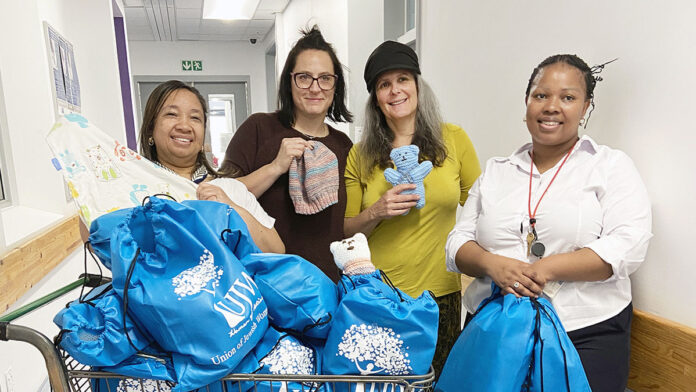
Baby Bag handover

MAY – MOMENTUM & MILESTONES

  • Mama Flo ambassadors inspired young women in Khayelitsha with a menstrual health workshop and distributed pads.
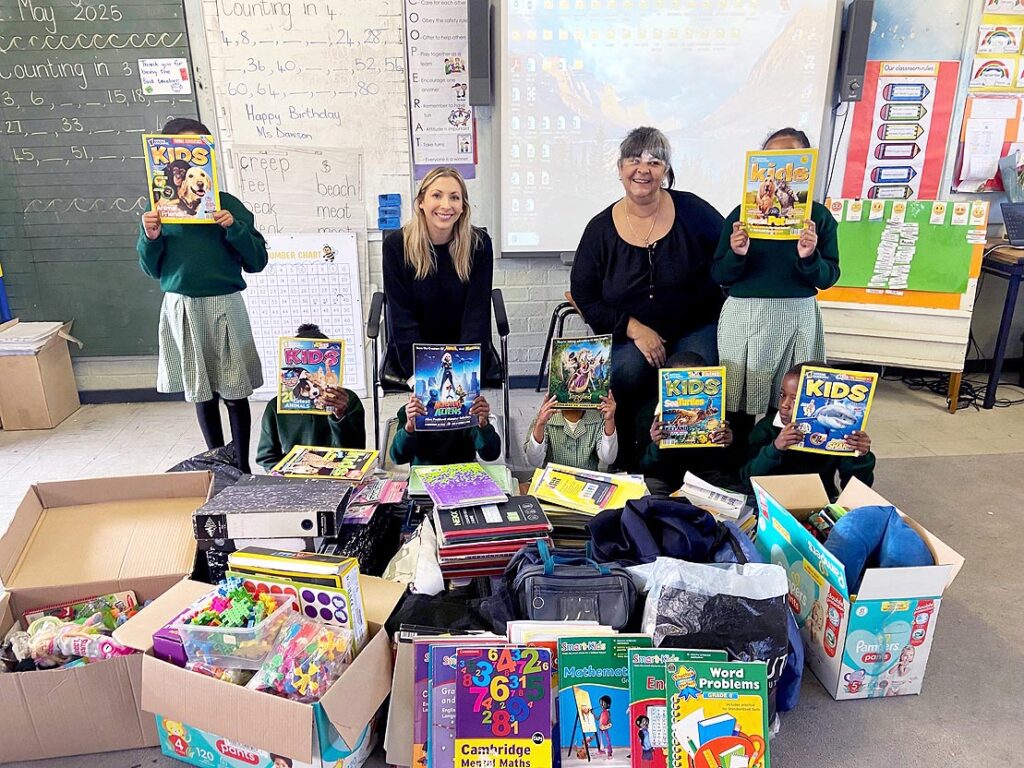
  • The Giving Bag brought joy to Westlake Primary School with books and stationery for eager young learners.
  • 60-Minute Talk: ‘Ozempic – a magical pill?’ broadened our health knowledge.
  • AGM celebrated achievements, honoured award winners, and featured an inspiring keynote from Vanessa Raphaely. 
  • Continued monthly food deliveries to ECDs via The Horwitz Trust and Mensch.

JUNE – JOYFUL GIVING & CONNECTION 

  • Mama Flo marked its 5th anniversary on Youth Day, honouring founders who empower young women to lead change. 
  • Chai Kitchen volunteers prepared comforting soups and biscuits for JCS. 
  • Youth Day brought spirited sports matches between Noluntu Soup Kitchen, WP Maccabi, and Herzlia. 
  • Winter Jumble Sale raised funds for ECD mattresses. 
  • Simcha Group hosted a lively Cards & Games Afternoon fundraiser. 
  • Teddy Trust UK & Rotary International gifted teddy bears to Kensington ECD children.
  • Knitted beanies from the Somerset West/Stellenbosch/Paarl group warmed young heads in need.

JULY – MANDELA’S LEGACY 

  • Mama Flo called on the community to sponsor youth to attend menstrual health workshops. 
  • Chai Kitchen buzzed with volunteers making soup and brownies for JCS.
  • Somerset West/Stellenbosch Branch delivered food to the Somerset West Family Shelter.
  • Kensington ECD hosted a breakfast for seniors with performances, scarves, beanies & cupcakes.
  • Hammies Bulldogs rugby team wore pink socks to raise awareness of period poverty.
  • Together with the Cape SA Jewish Board of Deputies, UJW iced cupcakes for ECD centres & children’s wards.
  • Beanies warmed seniors in Khayelitsha, raincapes kept Good Hope Junior School learners dry, and monthly food deliveries to ECDs continued.
  • 60-Minute Cutting Edge Talk on Microdosing informed and inspired. 
  • AI Workshop with EOLI broadened our tech understanding.

AUGUST – WOMENS’ MONTH 

  • Generous book donations to schools across the Western Cape. 
  • The launch of our online art auction.
  • Baby bag handover to moms at Groote Schuur Maternity Centre.  

Visit the Union of Jewish Women website, and follow UJW on Facebook


  • For the current edition of the Cape Jewish Chronicle, click here.
  • Subscribe to the Cape Jewish Chronicle: R450/year, or R38/month via debit order. Simply email us at subscriptions@ctjc.co.za and click here for payment info.
  • The Cape Jewish Chronicle reaches over 6 000 readers monthly across print and digital platforms.
  • To book advertising space or discuss a custom package contact Adéle Gradner Mobile: 083 321 5222 | Office: 021 464 6736 | Email advertising@ctjc.co.za

August 2025

Enjoy the August, Women’s Month, Digital Edition as a flipbook below, or click here to open the PDF in a new browser window.


PDF version


  • For the current edition of the Cape Jewish Chronicle, click here.
  • Subscribe to the Cape Jewish Chronicle: R450/year, or R38/month via debit order. Simply email us at subscriptions@ctjc.co.za and click here for payment info.
  • The Cape Jewish Chronicle reaches over 6 000 readers monthly across print and digital platforms.
  • To book advertising space or discuss a custom package contact Adéle Gradner Mobile: 083 321 5222 | Office: 021 464 6736 | Email advertising@ctjc.co.za

From employee to employer: 5 lessons they don’t teach you about entrepreneurship

MARLON SHEVELEW – brought to you by ORT JET

ORT JET provides a series of articles aimed at entrepreneurs From employee to employer: 5 lessons they don’t teach you about entrepreneurship

By MARLON SHEVELEW – brought to you by ORT JET

When I left a secure legal career to start on my own, I didn’t imagine I’d end up employing a team of attorneys, founding three legal-tech startups, and directing multiple firms – but that’s what entrepreneurship does: it reshapes your life.

Here are five truths they don’t teach you in law school – or any school, for that matter:

1. Stability is a myth – bet on yourself.

No job is truly ‘safe’. The sooner I accepted that, the more confidently I built. Entrepreneurship isn’t about avoiding risk – it’s about managing it on your own terms.

2. Mindset is everything.

The move from employee to employer isn’t just a structural change. It’s a mental shift. You carry not just your own future, but the livelihoods and ambitions of your team. It’s heavier but more meaningful.

3. Your pain points can become your business model.

Frustrated by how inaccessible rental property legal advice was, I created Rental Retainer Club, RentDoc, and RentLaw platforms that now help property practitioners streamline legal compliance, access documentation, and get expert guidance affordably. Solve your own problem, and you’ll likely solve it for others too.

4. Grow deliberately, not desperately.

I’ve seen scale destroy more businesses than stagnation. Growth for its own sake is vanity. Prioritise systems, people, and values – and let growth follow clarity.

5. Know your law and your numbers.

Legal and financial literacy aren’t optional. Whether you’re in construction, consulting, or tech – get across your contracts, compliance obligations, and cash flow realities. Get good advisors but never outsource understanding. This journey is not linear, not easy, and not for everyone. But for those who are building something real, the reward isn’t just money. It’s meaning. ●

Marlon Shevelew is a senior attorney and legal entrepreneur with over 25 years of experience in property, commercial, contractual and compliance law. He is the director of Marlon Shevelew and Associates Inc. and JKS Attorneys Inc., a Level 2 B-BBEE law firm. He is also the founder of three legal-tech startups: Rental Retainer Club, RentDoc, and RentLaw. Marlon is a frequent expert guest on CapeTalk 567 and a recognised leader in South African rental law. Email: marlon@marlonshevelew.co.za


  • For the current edition of the Cape Jewish Chronicle, click here.
  • Subscribe to the Cape Jewish Chronicle: R450/year, or R38/month via debit order. Simply email us at subscriptions@ctjc.co.za and click here for payment info.
  • The Cape Jewish Chronicle reaches over 6 000 readers monthly across print and digital platforms.
  • To book advertising space or discuss a custom package contact Adéle Gradner Mobile: 083 321 5222 | Office: 021 464 6736 | Email advertising@ctjc.co.za

Leading with strength 

In the aftermath of October 7, Israeli women are at the forefront of rebuilding and renewal – driving resilience, innovation, and hope across the nation.

Rebuilding with Purpose

Kylie Eisman Lifschitz is an Israeli social entrepreneur who, in the wake of the October 7 attacks, founded She Rise and the KUMI programme to help women in Israel’s Western Negev rebuild shattered lives and communities through economic empowerment. Recognising that women are often the backbone of recovery in times of crisis, she’s mobilised over 1.5 million NIS in funding to support women-led businesses, local producers and grassroots initiatives in towns and kibbutzim devastated by the attacks.

Through She Rise and KUMI, Kylie connects women entrepreneurs to mentors, seed funding, and training – helping them launch or revive small businesses that sustain families and restore hope. Her vision is to turn tragedy into renewal by putting economic resilience and women’s leadership at the heart of the Negev’s recovery.

A taste of healing for October 7 survivors and displaced families

After tragically losing her ex-husband, chocolatier Dvir Karp, in the Hamas massacre on October 7th, Reut Karp transformed her grief into action by launching Café Otef, a growing chain of community cafés honouring his memory and supporting survivors like her. The cafés employ displaced residents from devastated kibbutzim near the Gaza border, offering them meaningful work and a place to rebuild lives uprooted by terror.

Sourcing fresh produce, cheeses, honey, and chocolates directly from the affected kibbutzim, Café Otef keeps local farms and small businesses alive while expanding branches in Tel Aviv, Rehovot, Sderot and beyond. For Reut, each cup of coffee and pastry served is an act of resilience – a way to nourish her community, sustain her late husband’s legacy, and remind Israelis that hope, solidarity and life endure even after the darkest day.

The women behind the Dinah Report

A pioneering all-female team of legal and gender experts – led by Prof. Ruth Halperin-Kaddari, retired judge Nava Ben-Or, and former military prosecutor Col. Sharon Zagagi-Pinhas (pictured left, from top) – has just published a landmark report under the Dinah Project. Titled ‘A Quest for Justice: October 7 and Beyond,’ the 84-page study documents at least 15 cases of sexual violence during Hamas’s October 7, 2023 attacks, based on survivor testimony, witness accounts, first-responder interviews, and forensic evidence.

Presented to First Lady Michal Herzog on July 8, 2025, the report not only confirms that sexual violence was widespread and systematic – employed as a tactical weapon of war – but also offers a new legal framework to pursue accountability under international law. 

Historic first

For the first time in Israel Air Force history, a female pilot and female navigator flew a fighter jet together during Operation Rising Lion, the IAF announced recently. Though unplanned, the milestone highlights the IAF’s growing gender equality, with more women taking on front-line combat and leadership roles than ever before. ●

SA Zionist Federation – Cape Council – Facebook | Twitter | Instagram


  • For the current edition of the Cape Jewish Chronicle, click here.
  • Subscribe to the Cape Jewish Chronicle: R450/year, or R38/month via debit order. Simply email us at subscriptions@ctjc.co.za and click here for payment info.
  • The Cape Jewish Chronicle reaches over 6 000 readers monthly across print and digital platforms.
  • To book advertising space or discuss a custom package contact Adéle Gradner Mobile: 083 321 5222 | Office: 021 464 6736 | Email advertising@ctjc.co.za

Honouring women’s bravery – then and now

August is a time to honour South African women’s role in dismantling apartheid

On 9 August 1956, over 20 000 women of all races marched to the Union Buildings in Pretoria, protesting the oppressive pass laws. This powerful act of defiance became a turning point in the fight for justice – not just against apartheid, but for women’s broader emancipation.

In times of hardship, it is often women who find the strength to rise and resist. One such woman, whose story deserves far more recognition, is Claude Cahun – born Lucy Schwob – a French Jewish artist and fierce non-conformist. I heard about her recently, and thought I should share the tale with you.

Cahun lived a radical life, challenging gender norms and beauty ideals and, in all likelihood, maintaining a same-sex relationship with lifelong partner Marcel Moore. At a time when such relationships were taboo, simply living authentically was an act of courage.

But her bravery reached extraordinary heights during World War II. In 1937, she and Moore moved to Jersey in the Channel Islands. When the Nazis occupied the island in 1940, the two middle-aged women launched a covert resistance campaign. Disguising their identities, they distributed anti-Nazi leaflets, banners and notes – many appearing to come from German soldiers – urging residents not to give in to Fascist rule.

One of their most provocative messages, displayed in a church, read: “Jesus is great, but Hitler is greater because Jesus died for people, but people die for Hitler.”

In 1944, they were arrested, tried, and sentenced – Cahun to death plus two six-month prison terms. When told her sentence, she reportedly asked defiantly in which order they would be carried out. In a similar rebellious vein, right up to the end, she told the German judge she should be shot twice – once as a resistor, once as a Jew.

Though the war ended before the sentence was enforced, Cahun’s health was permanently damaged by her imprisonment. She died in the 1950s, aged just 60.

This Women’s Month, let’s remember not only those who marched on South African soil, but also women like Claude Cahun – brave, defiant, and largely forgotten. Their stories remind us that resistance takes many forms, and that courage often comes in quiet, uncelebrated ways.

Recent years have seen greater interest in the Cahun-Moore story, and stolpersteine (concrete cubes carrying brass plates inscribed with the name and life dates of victims of Nazi extermination or persecution). have now been put in place on the pavement outside their house in Jersey. Their tombstone stands out for being marked as the grave(s) of two Jewish people, although Moore was not Jewish by birth or conversion.


  • For the current edition of the Cape Jewish Chronicle, click here.
  • Subscribe to the Cape Jewish Chronicle: R450/year, or R38/month via debit order. Simply email us at subscriptions@ctjc.co.za and click here for payment info.
  • The Cape Jewish Chronicle reaches over 6 000 readers monthly across print and digital platforms.
  • To book advertising space or discuss a custom package contact Adéle Gradner Mobile: 083 321 5222 | Office: 021 464 6736 | Email advertising@ctjc.co.za

Local author recounts a tale of apartheid’s cruelty

Blue concrete wall textures for background - Vintage Film Filter

Listen to this review! Click the play button below to listen to this book review read by Beryl Eichenberger


There are many novels about the South African apartheid era. The politics, the tragedies, terror attacks, losses, the fear, the loves, the absurdity of the laws of separation. 

Laws and lifestyles that, 30 years later, we are still paying for and living with.  The classification by colour also led to families being split. If one person had a lighter skin, they could be re-classified and live a privileged white life, sometimes secretly visiting their families, often never having contact with them again. Cruel, heartbreaking. Love across the colour line was strictly forbidden, pursued and vilified, the punishments meted out by police in horrific ways. Freedom is hard won, as we so well know. So, do we need another story?

My personal opinion is – yes. Space Between the Stars by Angela Miller-Rothbart has a definite place on the shelves of memory. To take a phrase that underlines the Holocaust stories, ‘Lest we forget’ – in healing, the stories need to be told. And a ‘Born Free’ generation needs to understand the cost of freedom. By continuing to tell those stories we hold that history, and are able to look to a future that is free from discrimination. 

Rothbart’s personal background was of growing up in Paarl, sheltered and privileged. She knew the stories of certain families on their farm and acknowledges the heroines of those stories, poignantly closing with “In memory of Margie Fortuin”. She has crafted this novel around the people she knew. 

When the struggle was at its zenith, in the turbulent years of the 70s and 80s, we meet Miemie and Karel Apollos. Workers on the wine farm Tweefontein,  they are good, hardworking people. Passively accepting of the apartheid laws, Miemie works at the main house and Karel as foreman on the farm. They have a special relationship with the farm owners. But their daughter Elizabeth is feisty, curious, restless, as so many of the younger Coloured community were. Determined to fight the oppressive apartheid laws, when she meets the British-born activist Robert Booth at a protest march, they fall into a ‘forbidden love ‘across the colour line’. Marked by the Secret Police, fleeing South Africa, they leave behind their child, Emmy. The child with blue eyes and blond hair, the child who looks different from the other kids on the farm, lives with her grandparents in a farmworkers’ cottage, goes to a ‘white’ school, and is protected by owners Freda and Dirk. The ‘witkind’ – an insult in a Coloured community. 

Her grandparents are her all, her mother a vague memory.  The white friends of her mother, ever present in her life, forming strong bonds of respect and love. Emmy’s life straddles two worlds. When Elizabeth finally returns in 1993, Emmy is a teenager – there is turmoil. Questions, memories, a tough story that many children of exiles can relate to – a reminder for the future.  

Rothbart presents a credible story – the Jewish characters, the friends that support the exiled, the subterfuge that confounded the police, the all-too-tragic journey of Robert and Elizabeth. 

At times I found the language a little flowery – I would have preferred a crisper narrative. But it is an easy and authentic read and has a deserved place. ●

This is Angela Miller-Rothbart’s second novel.  Born and raised in Paarl, she is an entrepreneur, businesswoman, advanced Toastmaster and voice-over artist, as well as a writer. She is the mother of two daughters and has a grandson. She lives in Sea Point with her husband Henry and is well known in the Cape Town Jewish community. 


  • For the current edition of the Cape Jewish Chronicle, click here.
  • Subscribe to the Cape Jewish Chronicle: R450/year, or R38/month via debit order. Simply email us at subscriptions@ctjc.co.za and click here for payment info.
  • The Cape Jewish Chronicle reaches over 6 000 readers monthly across print and digital platforms.
  • To book advertising space or discuss a custom package contact Adéle Gradner Mobile: 083 321 5222 | Office: 021 464 6736 | Email advertising@ctjc.co.za

Rising voices: The young Jewish women shaping Cape Town’s communal future

In Jewish communities across the world, leadership is evolving and, in the Western Cape, it is increasingly being shaped by the energy and insight of a new generation of young women. They are stepping forward in bold, thoughtful, and deeply committed ways to shaping the future of their community and country. 

From high school hallways to university campuses, youth movements to communal organisations, emerging leaders are claiming their place, and redefining the future of Jewish life. These young leaders are navigating the intersections of identity, tradition, and transformation in a South Africa still reckoning with its complex past. Whether working in education, activism, the arts, or Jewish communal spaces, they are asking tough questions, building inclusive networks, and challenging the status quo, all while staying rooted in Jewish values.

In acknowledging Women’s Day, we spoke to eight inspiring young women about their journeys, their challenges, their hopes for the future, and what it truly means to lead as a young Jewish woman today.

These are the themes that matter most to them.

1. Jewish Identity as Leadership Foundation
Jewish identity is not an incidental factor; it is at the core of their leadership. For Rachel Segal, Chairperson of SAUJS at UCT, Jewish identity became a choice rather than a given when she moved away from her Johannesburg home. “I had to learn to choose Jewish life every day,” she says. That daily decision gave rise to a deeper commitment: representing Jewish students on a campus where being proudly Jewish can feel like a political act. Her leadership flows directly from her identity, and not despite it.  Martine Kawalsky Katz, Regional Director of BBYO South Africa sees her role “to challenge the idea that leadership only looks one way. It’s about honouring those who came before me, while also pushing boundaries for those still to come. I’ve learned that my voice is valid, and that I carry generations of resilience with me.”

2. Rising to leadership through need, not ego
Sometimes leadership emerges not from ambition, but necessity. Ruby Kurgan, Chairperson of SAUJS at the University of Stellenbosch, did not set out to lead. But arriving at Stellenbosch and seeing a gap in Jewish life compelled her to act. “There wasn’t a space for Jewish students to connect, so we built one,” she says. What began as a personal frustration became the catalyst for establishing a vibrant and growing Jewish student hub on campus.

3. Youth movements as pillars of continuity
In a world where Jewish identity often competes with the noise of modern life, youth movements remain central to community building. Eden Lipshitz, Chairwoman of Bnei Akiva Cape Town, believes these spaces are where pride and resilience are cultivated. “Bnei Akiva isn’t just a movement: it’s how we pass on fire and purpose to the next generation,” she says. Through song, tradition, and mentorship, youth movements are training tomorrow’s leaders today.

4. Reimagining what leadership looks like
Leadership does not necessarily mean titles or standing behind a podium. Sienna Berridge,Head Student of Herzlia High School, sees leadership in small moments, such as at committee meetings, through peer support, and in honest conversations. “Being a woman, however, comes with its challenges. I have often felt underestimated, but I see that as an opportunity to prove people wrong, not out of defiance, but with grace and confidence. I lead not just with words, but with action and, as a woman, that is a very important thing to do. In both the Jewish community and broader South African society, I see myself as a bridge, especially in my role leading youth and within my school.”

5. Responding to antisemitism with pride, not fear
While many of these women have not faced overt antisemitism, most have navigated subtler, insidious forms. Nina Gordin, a Moishe House resident, notes that much of the antisemitism she encounters comes from ignorance. “That’s why education is key,” she says. Her approach combines pride, visibility, and conversation through helping others understand what it means to be Jewish, and why that identity should never be hidden.

6. Bridging Jewish, South African and Universal Identities
In a country so shaped by its past, these young leaders feel a moral imperative to engage with broader South African issues.  As Rachel Segal stated: “I believe it is not only important but essential for the Jewish community to engage meaningfully with broader social justice issues. As Jews, we are no strangers to prejudice, discrimination, and exclusion. We carry with us a deep collective memory of what it means to be targeted, marginalized, and hated simply for who we are. That history gives us not only perspective, but a moral obligation to stand in solidarity with others who have faced and continue to face systemic injustice.”

7. Leading by caring, not just from strategy
For some, leadership is deeply personal. Daniella Beswick of Netzer SA carries the voices of her mother and mentors into every decision. “You don’t lead for recognition, you lead because you care,” she says. Quoting Pirkei Avot, she reminds us: “If I am only for myself, what am I?” This value, care without ego, runs through her work, and through the leadership culture she helps foster in her youth movement.

8. Creating space for diverse Jewish voices
Jewish leadership no longer has a rigid framework for success, which is a principle that Rachael Sara of Temple Israel embodies. As a queer, progressive, interfaith-rooted Jewish leader, she advocates for a broader, more inclusive model of community. “We need spaces where everyone feels like they belong,” she says. Her work focuses on renewing structures that have long felt exclusive, allowing for new expressions of Jewish life to flourish.

These young women are not just responding to issues. They are reframing them. Their leadership is not about titles, but about courage, empathy, and deep commitment to Jewish life in all its complexity. Their collective message is clear: “We are young Jewish women, and are unafraid to lead. We come from a legacy of resistance, justice, and powerful women who refused to be silent. Now it’s our turn to inspire others to challenge inequality, to raise our voices, and to build a future rooted in dignity.“ We are proud to have them as torchbearers in our community. ●


  • For the current edition of the Cape Jewish Chronicle, click here.
  • Subscribe to the Cape Jewish Chronicle: R450/year, or R38/month via debit order. Simply email us at subscriptions@ctjc.co.za and click here for payment info.
  • The Cape Jewish Chronicle reaches over 6 000 readers monthly across print and digital platforms.
  • To book advertising space or discuss a custom package contact Adéle Gradner Mobile: 083 321 5222 | Office: 021 464 6736 | Email advertising@ctjc.co.za

SIGN UP TO RECEIVE THE CAPE JEWISH CHRONICLE