Unlike the other two biblical festivals of Pesach and Sukkot, the Festival of Shavuot has no religious or historical meaning in the Torah.
While Pesach clearly has agricultural roots, being the Spring Festival celebrating the beginning of the barley harvest and the mating season of the herds and flocks, it is depicted by the Torah as the celebration of the Israelites’ liberation from Egyptian bondage. Sukkot is Chag HaAsif (‘the Festival of Ingathering’), a celebration of the harvest, yet the Torah explains the mitzvah of dwelling in booths as a reminder of how God made the Israelites live in sukkot during their sojourn in the wilderness (Leviticus 23:43).
Shavuot however stands out as the only festival that is not accorded an historical or religious meaning by the Torah, except as an acknowledgment of God’s beneficence in gifting the farmer with a successful first crop. The festival’s alternative biblical names – Yom HaBikurim (‘The Day of First Fruits’) and Chag HaKatzir (‘Festival of the Harvest’) – are indicative of the agricultural significance of the festival. Indeed, besides the usual additional sacrifices associated with a festival, the ritual observance of Shavuot entailed the bringing of the first fruits in a basket to the Temple, handing them to the kohen on duty and reciting a declaration acknowledging the origins of the Israelite nation with Abraham, God’s deliverance of the Israelites from slavery and God’s assistance in the conquest of the Land of Israel, the fertility of which is demonstrated by the first fruits being offered (Deuteronomy 26:5-10).
The Torah prescribes the ritual of counting seven weeks from the second day of Pesach until the day before Shavuot (sefirat ha-omer) thereby linking the beginning of the barley harvest and the beginning of the wheat harvest.
The destruction of the Second Temple and the dispersion of the Jews from the Land of Israel made the purely agricultural significance of the biblical festivals redundant. The sages were concerned that the festival of Shavuot would cease to be observed and they endeavoured to attach an historical and religious importance to what was a purely agricultural celebration. They achieved this by using the fact that Shavuot is celebrated seven weeks after Pesach. According to the Torah (Exodus 19:1), the Israelites entered the wilderness of Sinai in the third month after they left Egypt, which would be around the time that Shavuot is celebrated. Therefore, the Talmud (Shabbat 86b) states that the Ten Utterances were given to Moses on Mount Sinai on the sixth of Sivan, the date of Shavuot.
Consequently, the biblical Festival of Weeks was given new relevance to the increasingly non-agrarian Jewish population as the anniversary of the giving of the Ten Utterances at Mount Sinai. The synagogue ritual for Shavuot entails the study of biblical and rabbinic texts throughout the night until the recitation of Shacharit. This Tikkun Leil Shavuot alludes to the fact that the Israelites had to prepare themselves for hearing God’s voice at Mount Sinai. Just as they heard the Ten Utterances, so we listen to them as the chosen text that is leyned from the Torah during the Shavuot morning service. The new rabbinic meaning of Shavuot is explicitly stated in the siddur in which it is referred to as Zeman Matan Torateinu (‘the time of the giving of our Torah’).
Not only does the evolution of Shavuot from Yom haBikurim to Zeman Matan Torateinu ensure the continued observance of the festival, it also changes the understanding of the concept of bikkurim. Instead of the First Fruits of the land that were brought to the Temple by our biblical ancestors, we bring the First Fruits of our ever-renewed engagement with our sacred biblical and rabbinic texts. By turning them over and over we find new meaning and relevance to further our relationship with God, the traditions of our collective past and the world in which we presently live. As we celebrate Shavuot this month let us acknowledge God’s blessings through the first fruits of our hearts, minds and the mitzvot that we perform. ●
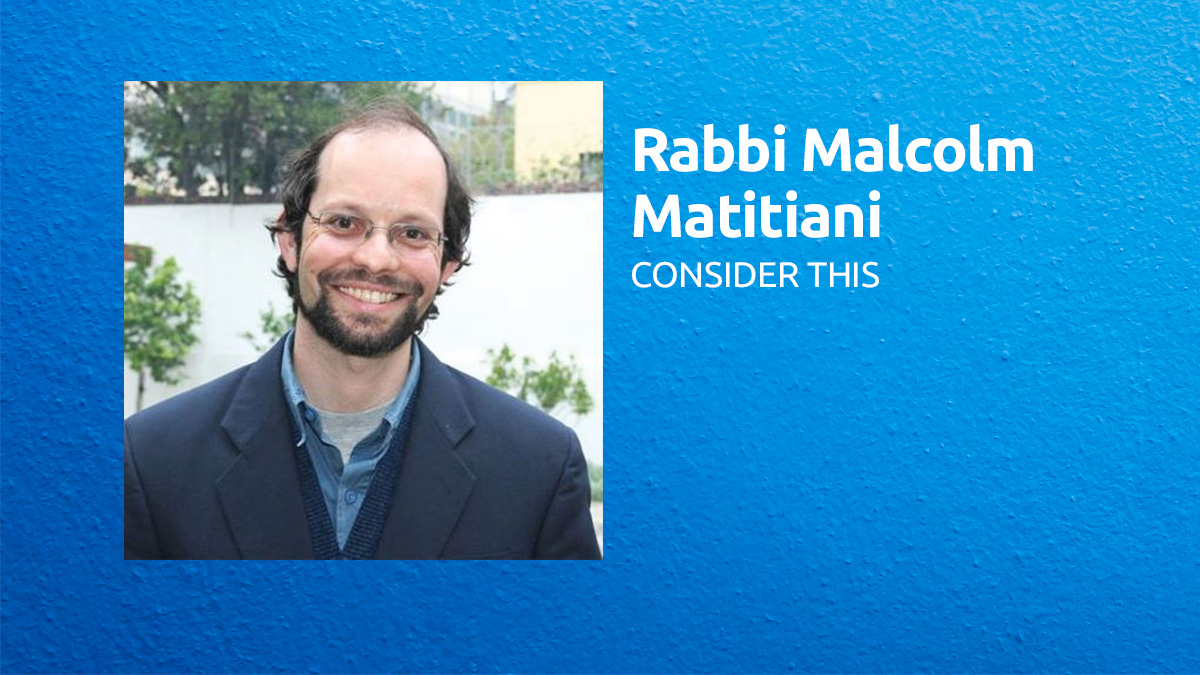
By RABBI MALCOLM MATITIANI

Temple Israel http://www.templeisrael.co.za
- JUNE 2025: Read the June 2025 Digital Edition in your browser as a Flipbook or a PDF.
- SUBSCRIBE: Subscribe to the Cape Jewish Chronicle for just R450/year (or R37.50/month debit order) and you will remain connected. Simply email us at subscriptions@ctjc.co.za and click here for payment info.
- ADVERTISE in the Cape Jewish Chronicle and on this website. Contact Lynette on 021 464 6736 or email advertising@ctjc.co.za.