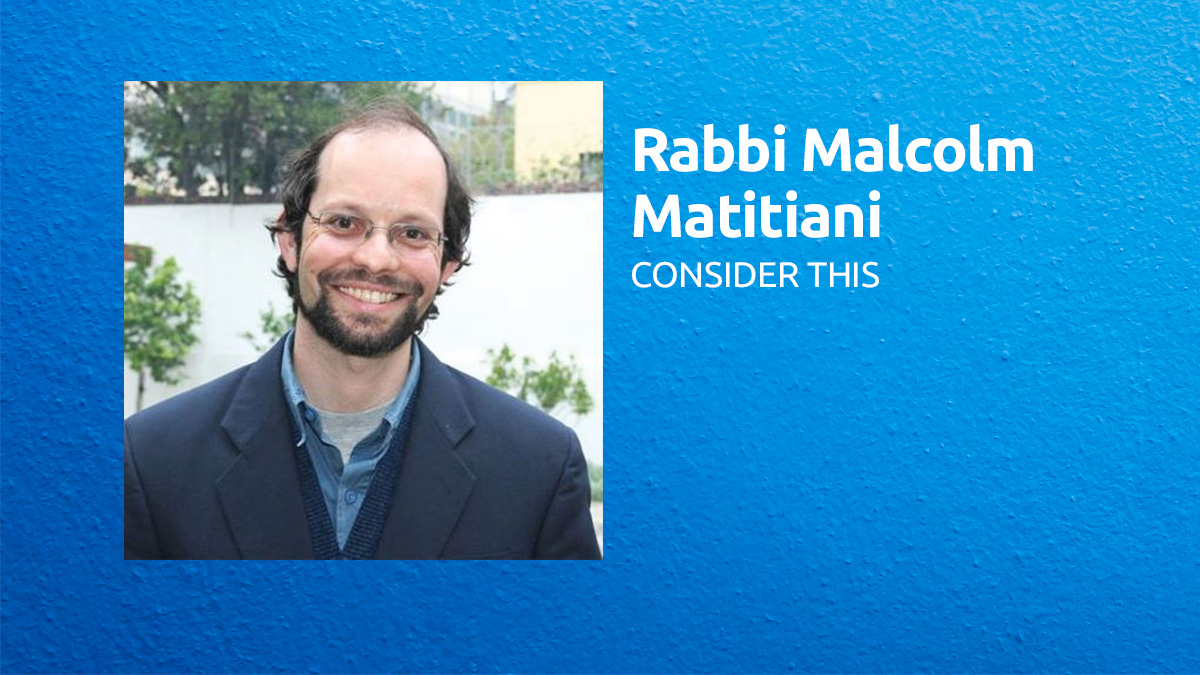
Rabbi Malcolm Matitiani
It once happened that Reb Avigdor Halberstam was invited to spend Shabbat at the home of a man known for his wealth but not his compassion.
He was infamous for treating his servants harshly and firing them for the slightest mistake. In deference to their guest, the cook passed the pot of cholent she had made to Reb Avigdor, who was expected to ladle it out to those around the table. After breathing deeply of its aroma, the rebbe took a spoon and tasted some right from the pot. “How unusual!” he cried and ate some more. “This is the best cholent I have ever tasted!” And as his host and Hasidim watched in amazement, he ate all the cholent in the pot, leaving nothing for the rest of them. The host and his family were stunned. Never had they had a guest behave this way. Yet, in deference to their guest, they said nothing and made do with challah.
After Shabbat, the rabbi and his students thanked the family for their hospitality and left. When they were outside the town, the Hasidim asked the rebbe about his bizarre behaviour. “The cholent smelled of kerosene,” the rebbe said, “I realised that the cook had mistakenly added this to our food rather than vinegar. If our host had tasted the cholent he would have fired the girl on the spot so I ate it all to save her job”.
Rabbi Halberstam’s concern for the welfare of the cook whom he had never met is illustrative of the obligation and responsibility that is inherent in being in partnership with God in the Berit of Torah. Every Jew no matter their social station is a member of this covenant, whether by birth or by conversion. As such we are all responsible for each other and must take care to protect the dignity of our fellow Jews. This notion of “all Israel is responsible for each other” (Shevu’oth 39a) is extended by the Mishnaic to include all human beings: whoever destroys a single soul is guilty of destroying an entire world; and whoever preserves a single soul preserves an entire world (Sanhedrin 4:5). Since we are all part of the world we destroy ourselves when we hurt another by lessening our divine potential and harming our spiritual growth. Rabbi Halberstam was prepared to be perceived as discourteous in order to save the dignity of the cook who would have lost her job because of one mistake.
On Rosh Hashanah and Yom Kippur we recited God’s thirteen attributes thrice before the open ark: “The Eternal! the Eternal! a God compassionate and gracious, slow to anger, abounding in kindness and faithfulness, extending kindness to the thousandth generation, forgiving iniquity, transgression, and sin.” (Exodus 34:6-7)
The recitation of this passage from the Book of Exodus not only reminds us of God’s compassion, grace, patience and kindness, but more importantly it articulates our obligation, as members of the berit to emulate these life-affirming attributes. While we stand before God on Yom Kippur asking for atonement we need to ask ourselves whether we have been as compassionate, patient and kind to others as we would want them and God to be to us.
The directive to imitate God’s attributes of Rachmanut, Chein and Chesed is expressed in the statement of the Rabbi Abba Shaul. “Be like God. Just as God is gracious and merciful, so you must also be gracious and merciful” (Mekhilta, Shirah 3). Thus before we can achieve teshuvah we need to imitate God by showing compassion, kindness and understanding. We need know when it is appropriate to suppress our egos in order to allow others to express themselves and when to sacrifice our dignity so that others might retain theirs. We must endeavour to be gentle and patient, slow to anger and ready to forgive. Let the teaching of the tannaim be a mantra in our hearts as we enter the New Year: “whoever destroys a single soul destroys an entire world.” ●
Temple Israel http://www.templeisrael.co.za
- For the current edition of the Cape Jewish Chronicle, click here.
- Subscribe to the Cape Jewish Chronicle: R450/year, or R38/month via debit order. Simply email us at subscriptions@ctjc.co.za and click here for payment info.
- The Cape Jewish Chronicle reaches over 6 000 readers monthly across print and digital platforms.
- To book advertising space or discuss a custom package contact Adéle Gradner Mobile: 083 321 5222 | Office: 021 464 6736 | Email advertising@ctjc.co.za