From our therapists:
The annual camp buzz begins in mid-November, filling the air with thoughts and questions: Who is going? Which tent? Who will be my bus buddy?
For first-time channies, this anticipation is often mixed with a combination of anxiety and uncertainty. While Mini-mach provides a taste of predictability, a longer summer camp experience is an entirely different adventure.
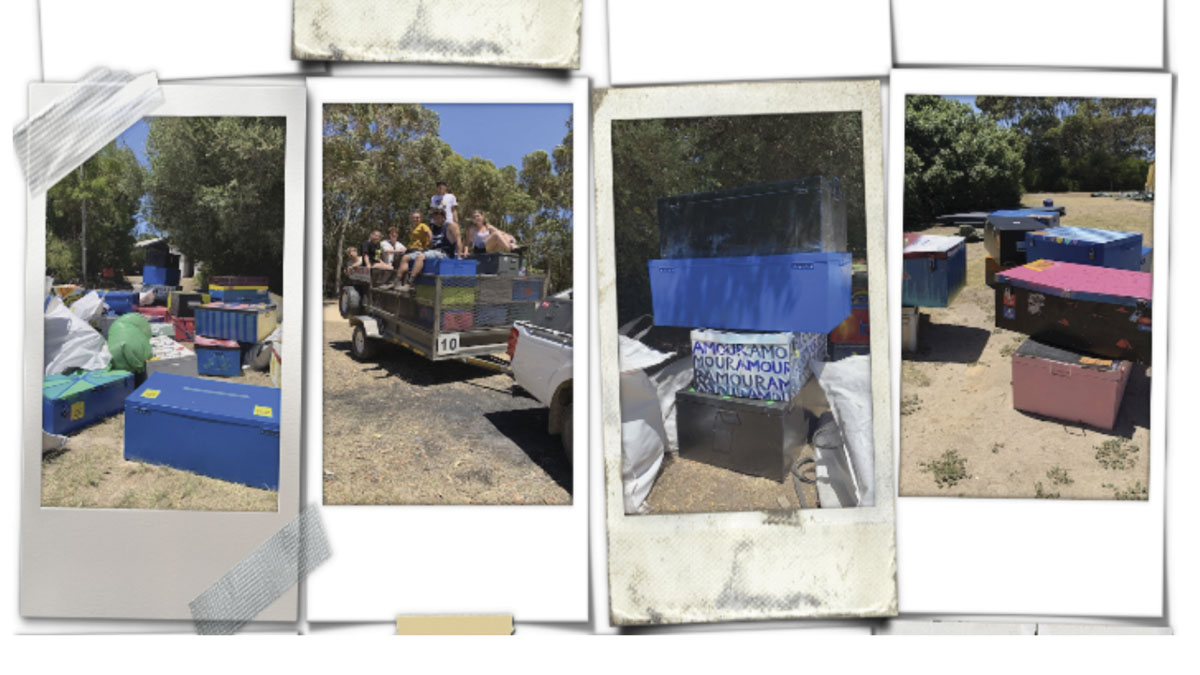
A central element of this preparation—from sourcing and waterproofing to the final pack—is the trommel. This simple piece of gear is laden with symbolic meaning, intimately tied to the emotional landscape of camp.
The Container: Debriefing and Decoration
The trommel is retrieved from its storage place—the back of the garage, or perhaps borrowed from a friend. As the lid creaks open, a few tell-tale bits of sand and crunchy leaves tumble out. This is the moment for reflection and renewal.
Previous Shicvah stickers are scraped off, old names are painted over, and some choose to redecorate entirely. The remnants of old tape, stickers, and crunchy leaves are far more than debris; they hold the layers of experiences, stories, and memories from the previous year:
● The laughter that made you fall off your chair.
● The late night dedicated to “illegal immigration”
● The fleeting moments of homesickness and sadness.
● The unforgettable Friday night hairy chicken!
The trommel serves as a container, holding meaningful, life-changing experiences. Affixing new Shicvah stickers for the upcoming camp is a ritual of transition, welcoming hopeful anticipation while containing the inevitable feelings of anxiety. This preparation—clearing the old and making space for the new—is a vital process of reflection and consolidation that builds essential life skills. The trommel beautifully embodies the entire spirit and magic of Habo.
Unpacking the Magic of Habo
What exactly is the “magic” that keeps generations returning?
It begins with the campsite, a natural masterpiece almost impossible to describe. Tents are nestled among the trees, lining a magnificent coastline with daily access to the sea and lagoon. This beautiful, natural location plays a profound and unique role in the camp experience.
At the heart of the camp are traditions and rituals that have been passed down through the years. Research shows that rituals are increasingly vital to young people, providing a necessary emotional containment. The sense of unity and belonging fostered here is also crucial for personal and social development.
In a world where constant online access often leaves children feeling lost and disengaged, Habo offers an antidote: a place where you belong. You belong to your tent, your Shicvah, and a movement. The mental health benefits are significant. Habo offers an opportunity to reframe and recreate social dynamics—to form new friendships, confront fears, and cultivate internal resilience. In a modern world that often shelters children from developing independent skills and navigating uncomfortable feelings, Habo intentionally provides these necessary challenges.
Internal Resilience
Many alumni (channies) testify that “Habo changed my life,” often adding, “Habo made me realise that I could cope with difficult things. Habo made me believe in myself. I learnt to become a creative thinker.”
Habo provides a safe, contained, and spiritual environment where children can experience and explore the world independently. The maddies offer emotional support, allowing campers to process and overcome the challenges of camp. This experience offers a safe, playful, and natural space for growth and development.
This is what psychologists call a ‘potential space,’ a term with great significance for psychological well-being. This ‘potential space’—initially experienced between the infant and the caregiver—is where we learn to navigate uncomfortable feelings and build internal resilience. Camp provides this opportunity, which is why channies leave with increased self-esteem, confidence, stronger independence, and reduced anxiety, equipped with strategies to navigate the year ahead.
So, when you next open that trommel, filled with stray cereal bars, lost gummies, and dirty laundry, remember that the grains of sand and crunchy leaves carry a deeper meaning. This is where the magic lies.
Frequently asked questions:
1. What do I do when I get the call from my child saying one of the following:
● I’m bored.
● The Wi-Fi is bad, and I’m missing my PlayStation.
● The food is so bad, I just want to come home.
● I felt sick on Shabbat and couldn’t see a Doctor.
● I’m having the worst time and just want to come home.
● My stretcher broke and I can’t sleep properly.
● Someone in my tent is bullying me, and I want to leave.
Acknowledge their emotions and encourage them to speak to their Maddie. Parents can contact Maddies, and the camp office if you do not get a response. Camp exposes channies to a range of different feelings. In this space, they build resilience and are given opportunities to work through these uncomfortable feelings. Maddies and camp therapists are there to support channies in this process. This does not mean fixing the discomfort but supporting them in navigating the challenge and accessing the support they need.
2. What do I do if I leave on visitors’ day and my child is emotional, asking to leave, or if we have a disagreement and I leave an unresolved issue?
Communicate this to tent and Shicvah Maddies before leaving the campsite, or via WhatsApp. Do not hesitate to communicate or check in with Maddies at any time. If a Maddie is not available, then contact the camp office and someone will respond to you as soon as possible. This can be an emotionally unsettling day, and we need to be aware of these situations. Never feel that an issue is not significant enough to make contact with your Maddie or camp office.
3. What do I do if my child says that they don’t feel like packing up the campsite and would like to be fetched a day early? Or if our family are in the area and decides to stop and collect our child early? Or, my friend is leaving two days early, so please pick me up early?
We cannot stress enough the importance of the packing up process. This process provides the opportunity for closure and is a significant aspect of the camp ending. Life is full of endings and goodbyes; some of these are abrupt and cannot be planned. Allowing a child to have an opportunity for a planned ending and goodbye builds the capacity to manage endings in their life. Please do not sabotage the chance for your child to have this experience of closure by picking them up early. We understand that in some instances, leaving early cannot be avoided. Please note that if a child needs to leave early, hold in mind that they have not had this opportunity before, and you will need to facilitate this process with them. The bus ride home is further closure and an essential part of debriefing from their camp experience. Unpacking their trommel is another part of this process, as they reflect on the experience. It is necessary to consider the impact of leaving early on the rest of the tent, as it unsettles and alters the dynamics.
4. What do I do if my child calls to say all their clothes got soaked and they have no clothes to wear?
Encourage them to ask for guidance from their tent Maddie. Parents can also contact their tent Maddie, and communicate the above. Your child will then be supported in sorting their clothes.
5. I am not getting a response from the tent Maddie. Who do I contact?
Maddies are occupied with your children most of the time. If they are not available, then contact the Shicvah Maddie or the camp office.
6. My child struggles with depression and anxiety. I chose not to disclose this on their camp form and am worried they are struggling.
We cannot stress enough the significance of disclosing all medications that Channies are taking at the time. This includes Psychologists, Psychiatrists, and any recent hospital admissions being documented on the form. If there have been any sudden changes in medication, this must be stated on the medical forms. Contact the camp office at any point to communicate information, or speak to a camp doctor or therapist.
7. We have had a significant event in our family, just before the start of camp. Should we share this with the Shicvah maddies?
Yes and we cannot stress enough the importance of this information. This can be school related, loss or sickness in the family, separation or divorce. Confidentiality will be respected and the Maddie will be able to hold in mind what might be going on for a channie during their time at camp.

Keep up to date!
Habonim: website: Habonim Dror SA, Facebook HabonimSA
Netzer: website: Netzer.org.za, Instagram netzer_southafrica
Bnei Akiva: website: Beni Akiva South Africa, Facebook Bnei Akiva Cape Town
SAUJS Western Cape: Facebook @SAUJS, Instagram @saujs_westerncape
Diller Teen Fellows: website: Diller Teen Fellows , Facebook Diller Teen Fellows, Instagram @diller.capetown
BBYO South Africa: Instagram @bbyo.sa, website http://www.bbyo.org
Find the SA Zionist Federation – Cape Council online:
Facebook, Twitter, Instagram, http://www.sazfcape.co.za
- For the current edition of the Cape Jewish Chronicle, click here.
- Subscribe to the Cape Jewish Chronicle: R450/year, or R38/month via debit order. Simply email us at subscriptions@ctjc.co.za and click here for payment info.
- The Cape Jewish Chronicle reaches over 6 000 readers monthly across print and digital platforms.
- To book advertising space or discuss a custom package contact Adéle Gradner Mobile: 083 321 5222 | Office: 021 464 6736 | Email advertising@ctjc.co.za