In the immediate period following the Nazis accession to power in Germany, German Jews began scrambling to get out of the country, fearing for what was to come.
Even prior to the 1938 Kristallnacht pogrom, which made it pertinently clear that Jews would be subjected to violent hatred under Nazi rule, Jews felt the pressure to escape.
Typical of the experience of refugees all over the world and during all periods, German Jews struggled to find countries that would allow them in. Between 1933 and 1939, around six-and-a-half thousand German Jews settled in South Africa – a tiny fragment of those seeking
refuge in a place where they could feel safe.
South Africa saw an upsurge in antisemitism in the 1930s, as various right-wing organisations embraced Nazi ideology. This sentiment made it extremely difficult for Jewish refugees to settle here, a situation made more difficult once the Aliens Act was passed in 1937. Despite this, most of those who managed to get into the country eventually prospered and settled down, although many suffered from the trauma of their experiences and from the discovery later on of the murder of their family members during the Holocaust.
This year’s Yom Hashoah commemoration provided a focus on these survivors of the Holocaust.
The Cape Jewish Chronicle records a few of the stories of the lives of these refugees and of their descendants still living in Cape Town. Follow along below to read about these stories.
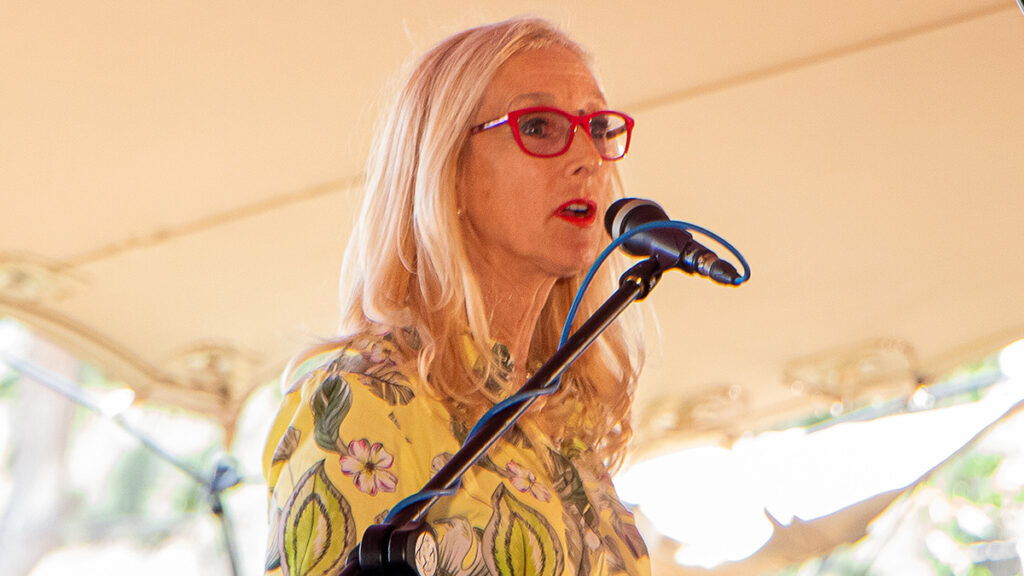

The last ship to safety
In September 1938, a six-year-old girl stood on the deck of a ship arriving in Cape Town – unaware that she had just escaped a fate that would claim millions. Her name was Inge Ruschin, and her story is one of survival, loss and the fragile power of refuge.
Born in Berlin on 17 June 1932, Inge entered a world that would soon turn against her. As the Nazi regime tightened its grip, Jewish families like hers were systematically excluded from public life. “My mother was born in a country that soon began to reject her,” recalls her daughter, Karen Tollman.
Inge’s father, Leo Ruschin, owned a cap manufacturing business that was expropriated by the Nazis. In 1937, urged by his brother Norbert – who had already fled to South Africa – Leo made the difficult decision to leave Germany. He boarded a ship to Cape Town, leaving behind his wife, Martha, and young daughter, hoping to secure a future for them.
Their journey to safety was neither simple nor certain Martha developed cancer in her eye and travelled with Inge to Paris for surgery. They never returned to Berlin. With the help of a Jewish relief agency, they made their way to Marseilles, where they boarded the Duilio in August 1938.
The voyage itself carried moments of both innocence and hardship. On board, young Inge unknowingly dropped and shattered her mother’s glass eye while playing in their cabin. When the ship finally docked in Cape Town, Martha – now wearing a black eye patch – was reunited with her husband.
That arrival would prove historic. The Duilio was the last ship carrying Jewish refugees allowed to dock in Cape Town. Soon after, South Africa closed its doors. Other vessels, filled with desperate families fleeing Nazi Germany, were turned away. Most of those passengers would later be murdered.
“For my mother, refuge meant survival,” says Karen. “For others, the absence of refuge meant death”.
Starting over in Cape Town was not easy. Inge arrived in a strange land, unable to speak the language, with little more than what her family could carry. Her parents rebuilt their lives, running a dry-cleaning business in Simon’s Town, while she grew up largely on her own in their Gardens apartment.
Though she survived, the trauma of her early years never fully left her. Inge rarely spoke about her childhood in Berlin. “She kept it hidden, locked away as if silence could protect her from memory,” Karen explains. She even refused to let her children learn German, the language of her past.
The consequences of that trauma surfaced decades later. At the age of 82, while watching the movie The Book Thief, scenes of Nazi Germany triggered overwhelming distress. “The images broke her heart and brought everything back,” Karen recalls.
Her story is also a reminder of the role Cape Town played in offering sanctuary at a critical moment in history. One decision – to allow a single ship to dock – changed the course of countless lives.
Yet alongside trauma, Inge’s story is also one of resilience and unexpected reconnection. In her forties, she discovered she had an older half-brother, Horst, in Germany – a man she never knew existed. Despite being classified as having ‘Jewish blood’, Horst survived the war and spent decades searching for his father. Eventually, he traced Leo to Cape Town.
In 1975, Inge returned to Germany for the first time since fleeing as a child – this time to meet her brother. The reunion forged a lasting bond between the families, bridging a divide created by war and ideology.
Reflecting on this, Karen says, “It taught us to focus on what we have in common rather than what divides us”.
For those who knew her, Inge was defined not by her suffering but by her character. “What I remember most about my mom was her beauty – both inside and out,” says Karen. “She taught us to always do the right thing, to have compassion, kindness and to act with grace”.
Her story is also a reminder of the role Cape Town played in offering sanctuary at a critical moment in history. One decision – to allow a single ship to dock – changed the course of countless lives.
“Because that ship was allowed in,” Karen reflects, “I stand here today. My daughters exist. Our family continues.”
Inge Ruschin’s journey is a deeply personal story, but it echoes the experiences of many German Jewish refugees who found safety on these shores in the 1930s. It is a testament to courage – the courage to leave, to survive, and to rebuild.
Above all, it is a reminder that refuge is never guaranteed. It depends on choices – by individuals, by communities,
and by nations.
And sometimes, those choices make all the difference.
Survivors who fled Germany just prior to the outbreak of World War II
Mouille Point resident Miriam Herzfeld recently turned 103, her longevity a slap in the face for the Nazis. Miriam arrived in South Africa in 1937 as a young teenager, having fled Europe on board a vessel called the Duilio.
She was recently interviewed by Richard Freedman, Chairman of the Cape Town Holocaust & Genocide Centre.
To watch the interview click here.
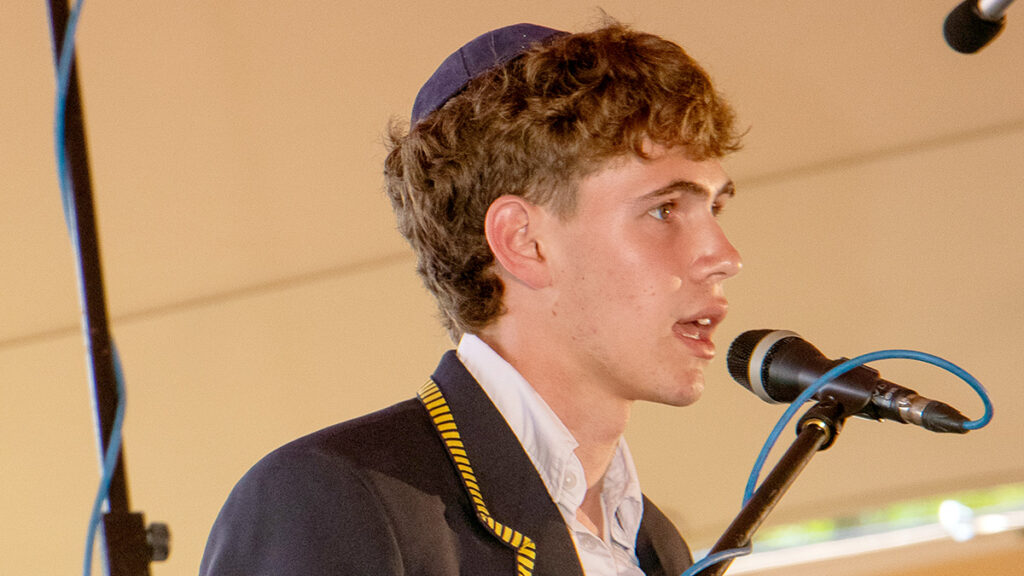
Am Yizkor – May we always remember
At this year’s Yom Hashoah ceremony at the Pinelands Jewish Cemetery, Herzlia Head Student Daniel Gruzd delivered a powerful speech, in which he passed the responsibility of remembrance on to his generation. Here follows a slightly abridged version of the speech.
I stand before you as a student, a young Jew, and a descendant of those who fled Eastern Europe before the Holocaust. I am a product of the history we mark today.
Ninety years ago, a window opened.
This was a window of time – narrow, urgent, and closing fast. A window through which some were able to escape. And through which most were not.
That window is at the heart of what we remember today.
In 1933, Hitler came to power. For many Jews, the danger was immediately clear. For others, it was impossible to believe it would come to what it came to. Surely it would pass. Surely the world would not allow it. The window was open, but most could not yet see what was waiting on the other side.
By 1935, the Nuremberg Laws had stripped Jews of their citizenship. The window began to narrow. In 1936, the Olympics came to Berlin – a curtain drawn across a window so the world outside could not see what was happening within. That same year, the SS Stuttgart docked in Cape Town harbour, carrying families who had made the agonising decision to leave, with little more than a few items in a suitcase and the quiet, devastating hope of a new beginning. By 1937, the Aliens Act had effectively barred further Jewish immigration. The window was narrowing to almost nothing.
And then came the night of the 9th of November, 1938. Kristallnacht. The Night of Broken Glass.
In a single night, the windows of synagogues, Jewish businesses, and Jewish homes across Germany were smashed. But it was not just glass that shattered that night. It was the last desperate hope that they could still survive by staying. The window of escape did not just close on Kristallnacht. It was shattered.
Deliberately. Publicly. Without consequence.
By 1939, war had begun. The window was sealed.
For those who had made it through – who arrived in Cape Town with their suitcases and their grief and their relief – escape was only the beginning. They searched desperately for news of those they’d left behind. For the vast majority who remained in Europe, the Holocaust brought annihilation. The window had closed, and there was no way back through it.
Ninety years is a lifetime. And yet here we are, in Cape Town, still gathering. Still remembering. Still saying their names.
But there is another window I need to speak about – one that is closing now, quietly, and with less drama, but with consequences just as profound.
It is the window of living memory.
The last survivors of the Holocaust are nearly gone. My generation – the young people of this community – we are the last generation that had the chance to sit across from a survivor. To hold their hand. To look into their eyes and hear the words: “I was there. I survived. I persevered”. That window is almost closed. And when it closes, it will never open again.
What remains is us.
We are also the first generation to grow up watching Holocaust denial spread virally across the globe. On the same platforms where we learn and connect with friends, there are people – some of them my age – who look into a camera and tell the world it didn’t happen.
We are the first generation for whom antisemitism arrives not in pamphlets, but in notifications. Not shouted in a street, but cowardly shared, anonymously and algorithmically, to millions.
We stand at a strange and serious window. The last to receive the memory firsthand and the first to have to defend it in a digital world that has no memory of its own.
The window is no longer about escape. It is about remembrance. And it is our responsibility to keep it open. Because time dulls memory. It turns tragedy into history, and history into a footnote. That is precisely why we are standing here today, and why we have stood here for many years, and why we will continue to stand here for many years to come – because this must never be allowed to fade into the background of the world.
Every time we show up to a ceremony like this one, we hold the window open. Every time we push back against a lie we see online, we hold the window open. Every time a young person stands up, as I am standing up now, and says:
“I know this history, and I will carry it forward, L’dor v’dor, from generation to generation” – we hold the window open.
To those who were denied the window – who stayed, who waited, who believed in the very country they called home, who were never given the chance to leave – we remember you. We say your names in this cemetery, and we refuse to let you disappear.
And to my generation: we are not bystanders to history. We are its next guardians. The window of memory is in our hands now. Time will try to close it. Indifference will try to close it. Denial will try to close it. It is our responsibility – yours and mine – to hold it open. Not just in remembrance of what happened, but in commitment that it can never and must never happen again.
The glass shattered in 1938. But we are still here, still gathering. Still remembering. Still holding the pieces.
Am Yizkor! May we always remember.
To listen to Daniel Gruzd’s speech at the cemetery, see the recording of the event on YouTube here. The speech begins at the time 1:30:45.
- For the current edition of the Cape Jewish Chronicle, click here.
- Subscribe to the Cape Jewish Chronicle: R450/year, or R38/month via debit order. Simply email us at subscriptions@ctjc.co.za and click here for payment info.
- The Cape Jewish Chronicle reaches over 6 000 readers monthly across print and digital platforms.
- To book advertising space or discuss a custom package contact Adéle Gradner Mobile: 083 321 5222 | Office: 021 464 6736 | Email advertising@ctjc.co.za