BY KAREN MILLER
The story of Stan and Li Boiskin is a story of a life shared through not only community, and a deep, instinctive engagement with the world around them, but also through beautiful art that lined the walls of their family home.
For decades, the couple were woven into Cape Town’s Jewish and cross-community cultural and philanthropic fabric, their influence extending far beyond the walls on which their paintings once hung.
Married in 1962, Stan and Li spent 64 years together, until Li died in August 2025, most of them in their Sea Point home, where they lived for 57 years. It is a large, 13-room house, gradually filled with artworks that became a visual part of their daily life. By the time their collection came to auction in March this year, those walls had already begun to empty, with only a small group of paintings that their children requested.
When the collection was assembled at the Strauss & Co gallery in Woodstock ahead of the late March sale, it offered a rare opportunity to see the works together, outside the intimacy of a private home. Hung with space and careful attention, each painting stood on its own. For Stan, however, they remained bound to memory and daily living. Seeing them in this new setting brought both pride and a sense of loss:
“My main feeling is one of regret that they’re off my walls.” He had approached the decision with characteristic pragmatism, mindful that his children, living overseas, would otherwise have had to manage the dispersal of the collection.
The auction included 34 works, alongside a number that had already been sold directly. Together, they reflected a deeply personal way of collecting, one shaped not by market considerations but by instinct, historical interest, and emotional response. Stan had begun buying art in earnest between 1995 and 2015, though his first purchase dated back much earlier: a painting by David Allen, bought at a Hermanus market, which sparked a lasting interest. From there, acquisitions followed through auction houses such as Welz and Strauss, as well as more personal encounters, including purchasing a work directly at the flat of local artist, Stanley Hermans.
Despite the presence of major South African modernists – Irma Stern, Maggie Laubser, George Pemba, Pierneef, Cecil Skotnes, Maude Sumner, and Pranas Domsaitis – Stan had always been clear about their motivation. “I didn’t see art as investment but to enjoy the works on the walls.” Each work was chosen for what it conveyed, rather than what it might yield.
The prominence of Irma Stern within the collection proved particularly resonant at the time of the sale. Renewed attention had been focused on her work, with her collection temporarily housed at the Norval Foundation and a series of exhibitions taking place there while her historic home undergoes refurbishment.
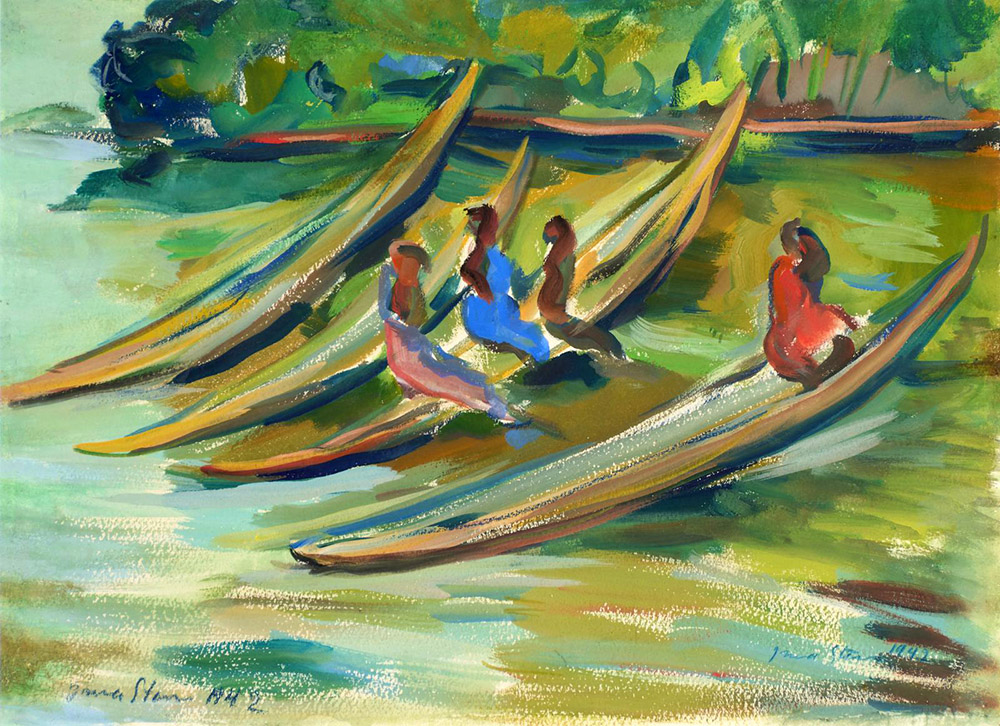
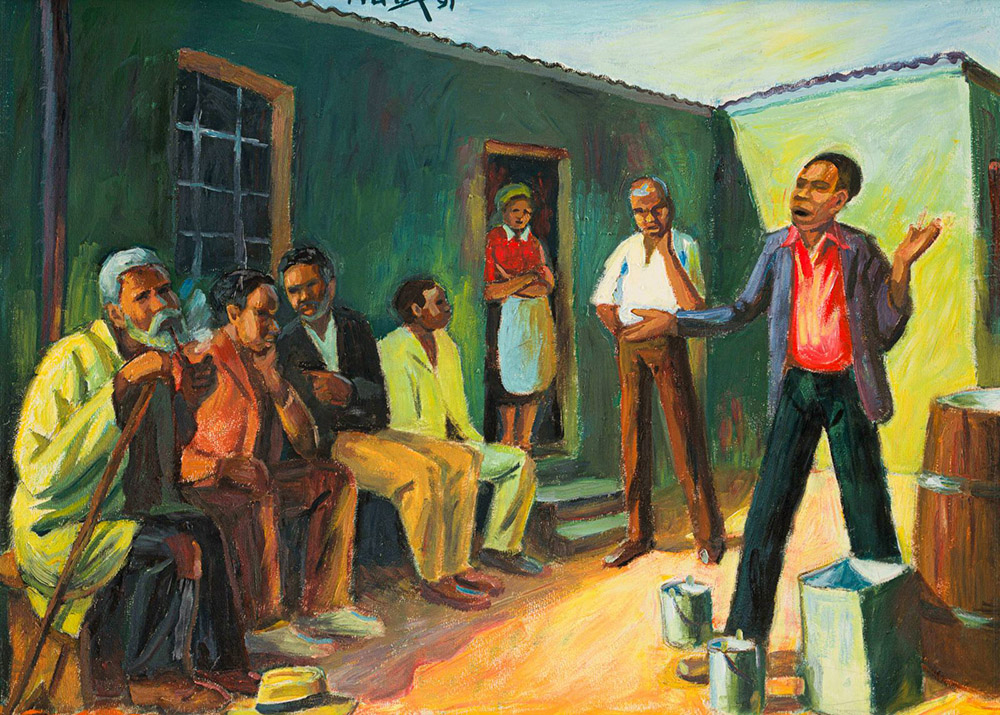
If Stan had been the driving force behind the acquisitions, Li’s presence had been equally vital. She lived with the works, responded to them, and occasionally challenged them, sometimes insisting that a painting be returned. Their shared favourites, including Stern’s works, especially the gouache, Canoes on the Congo River and George Pemba’s Sangoma reflected a mutual sensibility grounded in both aesthetic appreciation and human narrative.
Yet the Boiskins’ legacy extended well beyond their collection. Their patronage had always been closely tied to their values: a commitment to education, remembrance, and social cohesion. They supported Holocaust education initiatives, interfaith programmes, and projects aimed at fostering understanding through historical awareness, alongside broader community welfare efforts. In their lives, art, education, and social responsibility were never separate pursuits, but part of a larger, interconnected whole.
As the collection disperses, it carries with it the imprint of a shared life. These were not simply paintings, but markers of a long partnership, of choices made together, of conversations held in front of canvases, and of a home shaped by what they loved.
- For the current edition of the Cape Jewish Chronicle, click here.
- Subscribe to the Cape Jewish Chronicle: R450/year, or R38/month via debit order. Simply email us at subscriptions@ctjc.co.za and click here for payment info.
- The Cape Jewish Chronicle reaches over 6 000 readers monthly across print and digital platforms.
- To book advertising space or discuss a custom package contact Adéle Gradner Mobile: 083 321 5222 | Office: 021 464 6736 | Email advertising@ctjc.co.za