BY MARC HOBERMAN
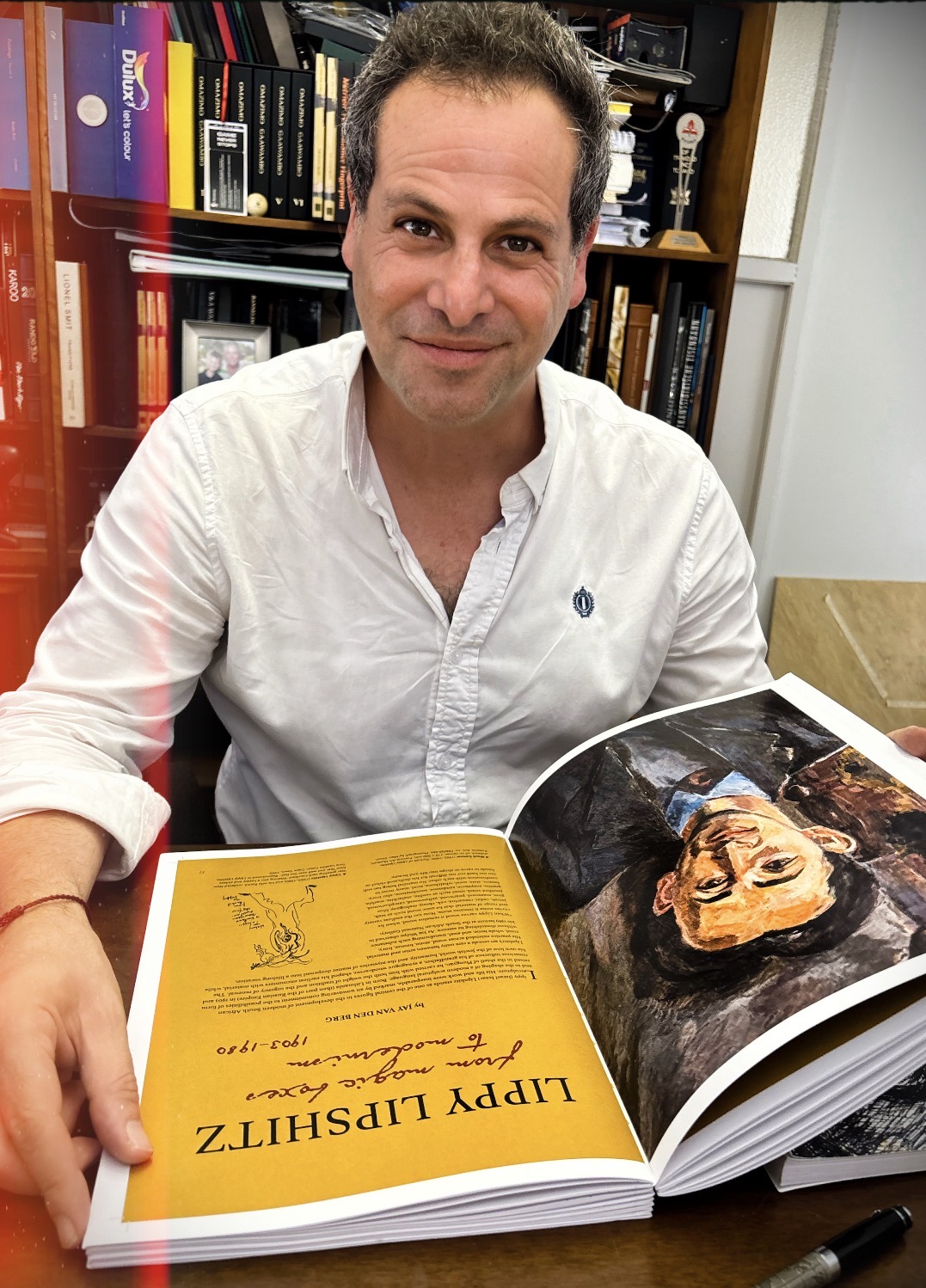
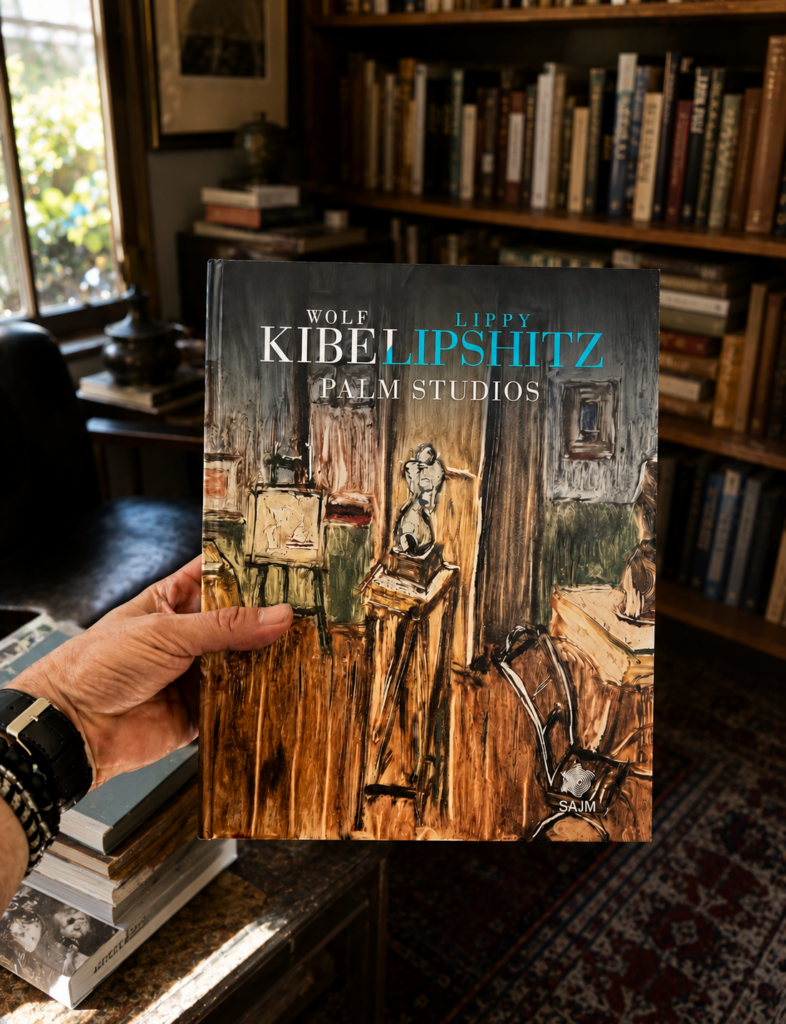
About a year ago, Gavin Morris invited me for one of our favourite coffee catch up rituals at Café Riteve. He had invited me for this specific 2 x coffee to ask if I’d consider being involved as publisher for a milestone exhibition catalogue – to accompany Wolf Kibel Lippy Lipshitz: Palm Studios. Adorably, the brief was 28 pages and a few short essays. However, alas, upon ‘introducing’ me to Wolf and Lippy, my brain did that thing it does where it sprints off without asking permission. Catalogue? No chance. These two deserved a proper book. More than a proper book. A beautiful, tactile, unapologetically substantial book. The sort of book you don’t read once and put away, but keep returning to. They deserved that. By the time my soliloquy ended, our flat whites were rather flat.
Poor Gavin Morris. Cape Town’s beloved mensch and Respected Director of the South African Jewish Museum. He had unwittingly unleashed a HOBERMAN storm of ambition. But, despite the cold coffees and the need for extra funding, he let me lovingly know it was indeed wittingly.
What followed became less an act of publishing than one of custodianship. I spent hundreds of hours with diaries, journals, sketchbooks, letters, photographs and experimental studies, particularly the seven volumes of Lippy’s works on paper donated to UCT. Messy, layered and alive, they became a roadmap to how he thought and saw.
I felt I had to understand the men before I could properly present their art. There is something terrifying about holding the legacy of people who can no longer speak for themselves. One day, every artist’s story rests in the hands of a stranger. Throughout the project, I tried to ‘consult’ Wolf and Lippy: Would this choice honour you? Does it help the reader see what you were trying to show us?
Then something strange happened. The more time I spent with them, the more familiar they became. During the project, my aunt Cecile Elstein – my father Gerald Hoberman’s only sibling – passed away. Cecile grew up in Oranjezicht before becoming a celebrated sculptor and printmaker in Britain. Reading her Guardian obituary, I stopped at the words: “She had studied sculpture with Lippy Lipshitz.” Her daughter confirmed that Cecile had been something of his protégée.
Suddenly I understood what I had been recognising. As a child in Cecile’s Manchester studio, I was fascinated by the drawings, notes and experiments surrounding her sculpture. With Lippy, I felt the same frustration: the sculpture was magnificent, but only the tip of an immense creative iceberg.
Then Phillippa Duncan asked whether I knew an ‘I. Hoberman’, named among Lippy’s early portrait sitters. I certainly did: Izzy Hoberman was my grandfather’s brother. Decades later, a Hoberman had returned – this time as publisher and custodian. It felt wonderfully circular.
Meanwhile, the short essays grew into theses. Jay van den Berg’s years of tireless retrieval gave the book its heart and historical backbone. Hayden Proud and Anna Tietze brought formidable scholarship; Ayala Nir brought family memory; and Phillippa supplied rigorous research, exceptional brainpower and carefully timed cat memes that gave us just enough paws (slichah) during our post-midnight working. Mel Fick visually translated the conversations inside my head into pages that worked. Behind everything stood Gavin, whose faith, guidance and willingness to accommodate our impossible ambitions made the book possible.
Everyone gave more than the brief required. Time did not respond by becoming more generous. Birthdays were missed, weekends disappeared and, after months of working past midnight, seven days a week, we eventually had to reintroduce ourselves to society.
We had chosen catalogue over life.
We took no shortcuts. Nothing was templated; every page was individually composed. I developed a world-first remastering process so the artworks would not be sanitised for print. Torn paper remained torn. Bent corners remained bent. Cracked paint, rough timber, old nails and handwritten masking tape were preserved because these are not imperfections to erase. They are evidence. Another reader may find meaning in a detail I failed to notice.
The modest catalogue became a hefty, oversized book requiring two hands and a respectable amount of table space. At R1 600, it was unlike anything the museum had sold before – and became the first catalogue in its history to sell out.
That felt less like a commercial triumph than the most honest response we could have received: people had noticed. Humans can spot something created with heart. As is the case with our beloved Wolf and Lippy.
The people behind PALM STUDIOS: The Book
Gavin Morris – Director of the South African Jewish Museum and convenor of the Palm Studios exhibition.
Jay van den Berg – Associate Curator at the South African Jewish Museum; curator of the exhibition and Editorial Director of the book.
Hayden Proud – Art historian and curator at the Iziko South African National Gallery.
Anna Tietze – Cultural and art historian; Honorary Research Associate at UCT’s Michaelis School of Fine Art and a research associate of the Iziko South African National Gallery.
Ayala Nir – Granddaughter of Lippy Lipshitz
Phillippa Duncan – Independent art researcher, art adviser and collection manager; Collectors Liaison and author of two essays in the book.
Mellany ‘Mel’ Fick – Designer and former HOBERMAN Art Director, responsible for the book’s design and layout.