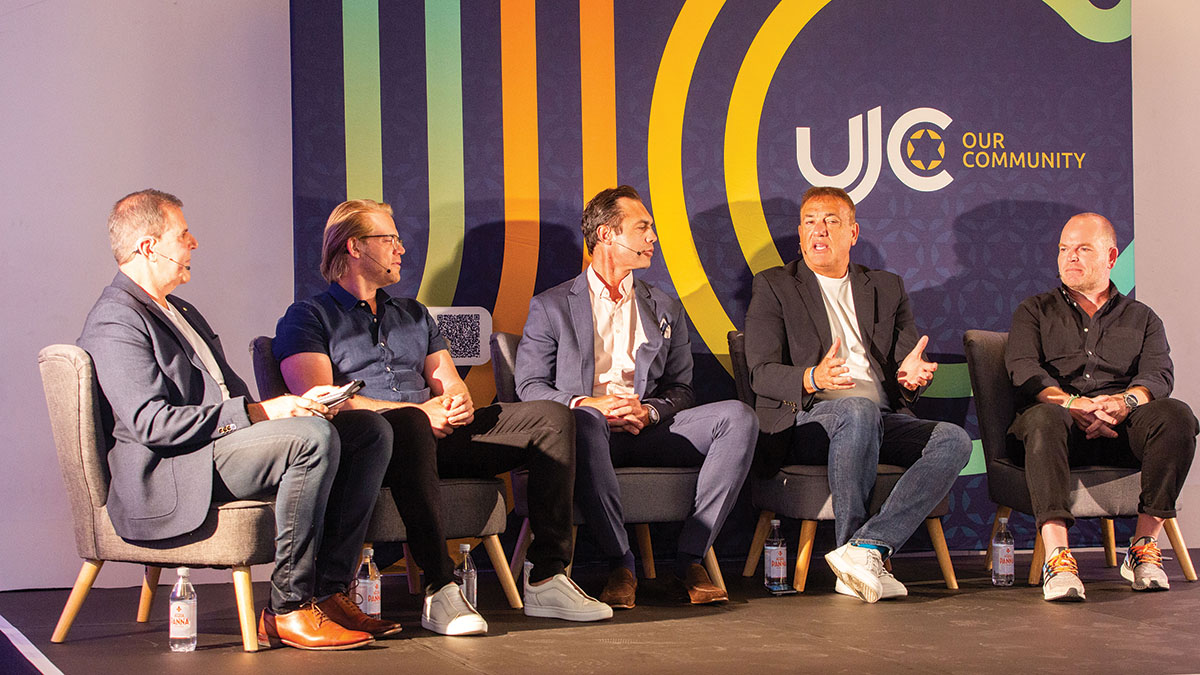
Cape Town’s residential property market has been on a remarkable growth trajectory, with industrial and office spaces also reaping benefits. This was the clear takeaway from a recent United Jewish Campaign (UJC) Business Breakfast event, sponsored by the Seeff Property Group and moderated by Inospace founder and CEO, Rael Levitt.
Yet, alongside the upbeat news, speakers acknowledged the strain this boom is placing on residents – from affordability pressures to mounting traffic congestion. While significant, they agreed these challenges remain solvable with thoughtful planning and continued investment.
A demand-driven market
“Demand for residential properties is completely outstripping supply,” said Jacques Van Embden, founder and CEO of Blok. This imbalance has driven substantial price increases across the metro, with no signs of slowing.
Semigration continues to be the major engine of growth. Van Embden noted that, while hard numbers are difficult to pin down, retail data suggests that roughly 35 000 families moved to Cape Town in the last year, many from Gauteng. “Cape Town has never seen an inflow like this,” he said.
Initially concentrated along the Atlantic Seaboard, demand has now spilled across the city – especially the Southern Suburbs, which had previously experienced slower growth. More affordable outlying areas, including towns like Malmesbury and Durbanville, are seeing heightened activity, too.
Still, rising prices may soon test the limits of affordability for semigrants themselves. With average property values increasing roughly 8% in the past year, Chairperson of the Seeff Property Group, Samuel Seeff, cautioned that, “Cape Town is even becoming expensive for buyers from Johannesburg.”
Tourism and investment fuel the fire
Home purchases aren’t just for relocation. Many buyers – local and international – see Cape Town as a prime investment hub, particularly for rental and tourism-focused accommodation.
“Around 26 000 Airbnb-style units currently operate in Cape Town,” said Rael Phillips, CEO and co-founder of Totalstay. This number swells to over
30 000 during peak season, and Philips expects another 5 000 units to come online within two years. He also noted the growing popularity of aparthotels – a global trend now taking hold locally.
Tourism-driven rentals are sometimes blamed for pushing locals out of the property market. But Seeff argued strongly for embracing the sector. “Tourism is essential for job creation and economic growth,” he said. He pointed out that, while South Africa attracts around eight million tourists annually, countries like Italy receive that number every month. “Our potential is enormous.”
Cape Town’s winter season is even beginning to heat up, with more visitors – especially from the Middle East – seeking to escape extreme heat at home. Many of these tourists not only spend freely but also invest in local property. “It’s very affordable for them,” he added.
Infrastructure and governance: key to sustainability
While the market outlook remains bright, panellists stressed that infrastructure and governance must keep pace.
Quintin Rossi, co-founder and CEO of Spear Reit Limited, praised the Western Cape government for steps like taking over Metrorail’s Central Line – a vital piece of the city’s transport puzzle. But he cautioned that this needs to be just the beginning. Transport investment and mobility planning must accelerate if Cape Town is to manage swelling demand without crippling traffic congestion.
Another sticking point is the slow pace of municipal approvals for new developments. “Developers want to respond to demand by building more units, but delays in approvals hold us back,” Van Embden said. Faster, more efficient planning processes would allow much-needed new housing to come online, easing pressure on prices.
Rossi also raised concerns about municipal rates. He warned that residents in certain areas are being priced out of their homes because property rates have become excessively high. “We must ensure that rates collection doesn’t come at the cost of community stability,” he said.
Looking ahead
The biggest risk to Cape Town’s property trajectory, according to panellists, is supply – or lack thereof. Without accelerated development approvals and infrastructure investment, the market risks losing momentum.
Political stability also plays a role. A future shift in local government priorities – in particular in the event of a change in political control of the Province – could impact tourism strategy and residential construction. Speakers cautioned that policies unsupportive of development and tourism could undermine the city’s progress.
Still, optimism dominated the conversation. Cape Town’s lifestyle appeal, expanding international reputation, and economic momentum continue to set it apart as one of the most attractive regions in South Africa – and increasingly, on the African continent.
The challenge now, the panel concluded, is ensuring the city grows with intention: improving transport systems, streamlining development processes, and planning for inclusive, sustainable neighbourhoods that can support both local residents and new arrivals.
As Cape Town evolves, the message from industry leaders was clear: the boom presents an extraordinary opportunity, but thoughtful, proactive management will determine whether the Mother City remains both a world-class destination and a place its longtime residents can continue to call home. ●
- For the current edition of the Cape Jewish Chronicle, click here.
- Subscribe to the Cape Jewish Chronicle: R450/year, or R38/month via debit order. Simply email us at subscriptions@ctjc.co.za and click here for payment info.
- The Cape Jewish Chronicle reaches over 6 000 readers monthly across print and digital platforms.
- To book advertising space or discuss a custom package contact Adéle Gradner Mobile: 083 321 5222 | Office: 021 464 6736 | Email advertising@ctjc.co.za