The Cape Jewish Chronicle brings you the second article in our series on the Fabian family and the legacy of Kuno Fabian, the first member of the family to settle in Cape Town after fleeing Nazi Germany in the 1930s. (You can read the first article in the series here.)
This piece explores the deep sense of belonging German Jews felt towards Germany, their strong German identity, and the profound shock of its betrayal during the Nazi era.
Kuno’s great-nephew, Ryan Fabian, recently undertook a 1 500km solo cycle journey through France, retracing Kuno’s experiences as a loyal German soldier during the First World War. The journey proved deeply instructive, prompting Ryan to challenge the persistent myth that Jews ‘stabbed Germany in the back’ and were responsible for the country’s defeat in the war.
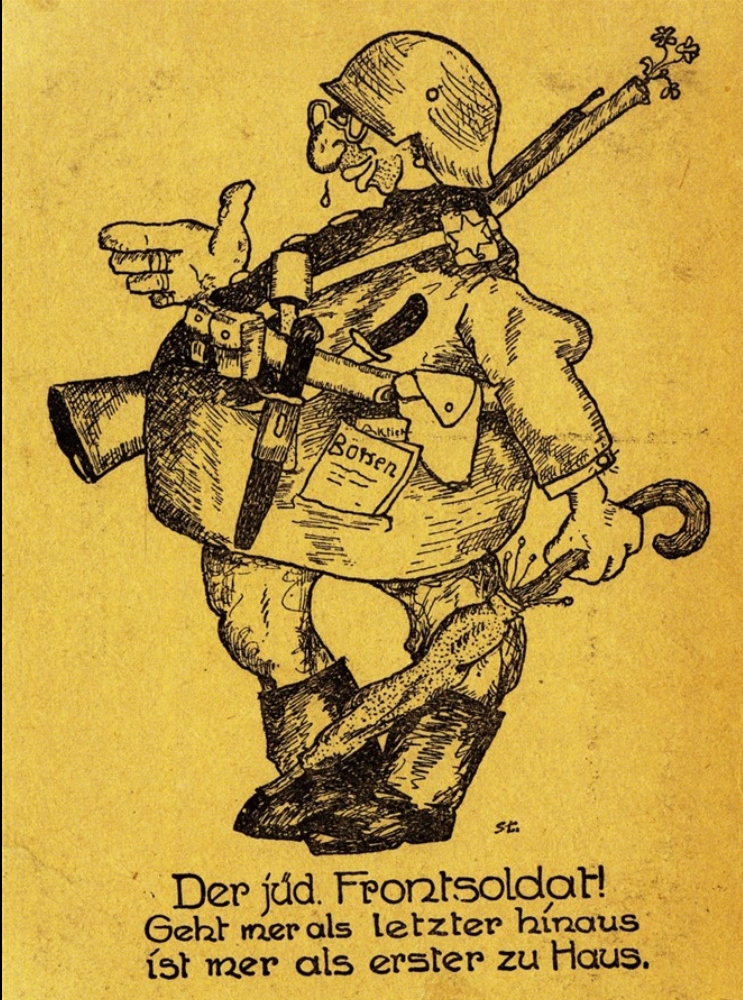
This accusation was not an isolated expression of antisemitism. Ryan points to the Judenzählung (Jewish Census) of 1916 as a particularly stark example. Conducted by the Prussian War Ministry, the survey was prompted by allegations that Jewish soldiers were avoiding frontline combat in favour of safer administrative posts. The results were never published because they directly contradicted the antisemitic claims. In fact, the census revealed that nearly 80% of German Jewish soldiers served on the front lines. While the findings should have put the allegations to rest, their suppression allowed the myth to flourish unchallenged.
“As opposed to this antisemitic narrative, Jewish loyalty to Germany is unmistakable,” Ryan explains. He cites the Will of Lieutenant Josef Zürndorfer, a pilot who died in a crash in 1915: “As a German, I joined the war to defend my Fatherland. But also, as a Jew, to fight for the absolute equality of my co-religionists.”
The evidence is compelling. Around 100 000 Jews served in the German army; many were wounded, and countless others were decorated
for bravery.
This loyalty extended well beyond the First World War. “The Fabian family’s military service dates back to the Franco-Prussian War of the late 19th century,” Ryan notes. “All of Kuno’s brothers served in World War I, including my grandfather. On my grandmother’s side, her father missed the birth of all his children while fighting for the Kaiser on the Eastern Front. My great-great grandfather on my grandmother’s side, Israel Guttman, was also an Imperial German infantryman…the list goes on. Significantly, Kuno had an illustrious military career, and beyond earning a 1st Class Iron Cross among other decorations, the surviving records show that he was wounded at least four times at various major battles in WW1. This reveals remarkable bravery and an intense dedication to a nation that would ultimately betray him.”
Against this backdrop, suggestions that German Jews were anything less than loyal were deeply offensive. “Jewish veterans carried a profound sense of betrayal,” Ryan says, “especially when the truth of the Holocaust finally emerged.”
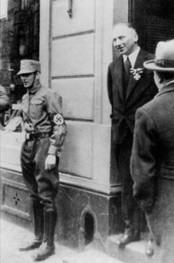
An example of the initial defiance from German Jewish veterans can be seen in the now-famous photograph of Richard Stern, taken on 1 April 1933 (the day the Nazis began boycotting Jewish shops). The photograph shows the Jewish shopkeeper in Cologne leaning out of his shop door with his Iron Cross pinned to his lapel, while a young SA guard stands outside in attempted intimidation.
This comes close to home for the for the Fabian family, as veteran Arthur Winkler – Ryan’s great grandfather – had his pharmacy in Tilsit forcibly confiscated by the Gestapo following a dangerous altercation. This was the final straw for many in the family who now began to flee Germany, resulting in their long journey to Cape Town. ●
- For the current edition of the Cape Jewish Chronicle, click here.
- Subscribe to the Cape Jewish Chronicle: R450/year, or R38/month via debit order. Simply email us at subscriptions@ctjc.co.za and click here for payment info.
- The Cape Jewish Chronicle reaches over 6 000 readers monthly across print and digital platforms.
- To book advertising space or discuss a custom package contact Adéle Gradner Mobile: 083 321 5222 | Office: 021 464 6736 | Email advertising@ctjc.co.za