Home Blog Page 11

Cape Town’s ‘Daddy Ochberg’ legacy

By Michel Levine, Human Rights Historian

In the early 1920s, thousands of Jewish children across Eastern Europe were left orphaned – victims of war, pogroms, and violent upheaval following the Russian Revolution. As civil war raged between rival armies, Jewish communities became easy targets. 

More than 100 000 Jews were killed, hundreds of thousands were injured or displaced, and an estimated 150 000 children were left without parents – many traumatised, starving, and alone. 

These children had witnessed unimaginable horrors – the murder of family members, widespread disease, and desperate hunger. Some survived by hiding in forests or begging for scraps; others clung to small personal items or religious rituals as a way to hold onto a sense of identity and stability in a world that had collapsed around them. 

Into this crisis stepped Isaac Ochberg – a Cape Town-based entrepreneur originally from what is now Ukraine. Having emigrated to South Africa as a teenager, Ochberg had built a successful business career and become deeply involved in Jewish communal life, including helping to establish and lead the Cape Jewish orphanage.

Moved by reports of the suffering in Eastern Europe, he proposed an ambitious plan in 1920: to travel there himself, identify orphaned children, and bring them to South Africa to start new lives. It was a daunting idea – logistically complex, politically sensitive, and emotionally fraught – but one he felt compelled to pursue.

Why South Africa – and Cape Town?

Cape Town played a central role in making the mission possible. By the early 20th century, it had a well-established Jewish community with the infrastructure to absorb and care for vulnerable children. Ochberg believed the city could offer something rare at the time – safety, stability, and the possibility of a future.

With support from the South African government, led by Jan Smuts, permission was granted for approximately 200 orphans to immigrate. This was no small concession – immigration was tightly controlled, and strict conditions were imposed. The children had to be under 16, in reasonable health, and genuine orphans, and siblings were not to be separated. 

The South African Jewish community took on much of the financial burden, raising funds to cover travel, care, and accommodation. There were even debates within the community – some worried about the risks of such a journey or the reaction from wider society – but, ultimately, support prevailed.

The rescue mission

In 1921, Ochberg set out on what would become a months-long journey through war-scarred regions of Poland and beyond. Travelling between cities such as Warsaw, Pinsk, and Brest-Litovsk, he visited overcrowded orphanages and met children who had endured profound trauma.

Despite their suffering, many still behaved like children – curious, playful, and hopeful. Ochberg connected with them easily, earning their trust so completely that they began calling him “Daddy Ochberg,” a name that would endure for generations. 

Selecting which children could go was one of the most difficult aspects of the mission. With limited places available, Ochberg had to make heartbreaking choices. In some cases, he bent the rules – including children who were not strictly orphans or who were slightly older than allowed – determined to save as many as possible.

The journey out of Europe was itself extraordinary. The children travelled by train across the continent, often greeted at stations by local Jewish communities offering food and encouragement. From Poland they sailed to England, where they underwent medical checks before boarding a ship bound for South Africa.

Arrival in Cape Town

After a long sea voyage, the children finally arrived in Cape Town in 1921. What awaited them was a moment of profound emotion. Crowds gathered at the docks, waving banners and flowers, welcoming them with songs and tears.

For many of the children, it was their first experience of safety in years. One later recalled never forgetting the sight of Table Mountain emerging through the mist, or the overwhelming warmth of the reception they received. 

Building new lives

The children – who became known as the “Ochberg orphans” – were placed in local institutions such as Arcadia and Oranjia, as well as in foster homes. Many were eventually adopted into families, where they were given the stability and care they had long been denied.

From these beginnings, they went on to build full lives in South Africa. They entered professions, started businesses, and raised families of their own. Cape Town, in particular, became deeply intertwined with their story – not just as a place of refuge, but as a place of renewal.

A lasting Cape Town legacy

Today, the legacy of the Ochberg orphans is still strongly felt. Their descendants number in the thousands, forming a significant part of South Africa’s Jewish community.

The story is often retold at commemorations and family gatherings, where the memory of “Daddy Ochberg” lives on – not only as a rescuer, but as a symbol of compassion and action in a time of crisis.

More than a century later, his mission remains one of Cape Town’s most remarkable humanitarian stories – a reminder that even in the darkest times, a single act of courage can shape generations to come.


  • For the current edition of the Cape Jewish Chronicle, click here.
  • Subscribe to the Cape Jewish Chronicle: R450/year, or R38/month via debit order. Simply email us at subscriptions@ctjc.co.za and click here for payment info.
  • The Cape Jewish Chronicle reaches over 6 000 readers monthly across print and digital platforms.
  • To book advertising space or discuss a custom package contact Adéle Gradner Mobile: 083 321 5222 | Office: 021 464 6736 | Email advertising@ctjc.co.za

Teshuva of the heart: A Jewish reflection on the Hoffman Process

By Shelly Korn | Care Imagineer / Evercare

When Markus and Angelina Bihler first suggested that I attend something called the Hoffman Process, I politely smiled and quickly changed the subject.

They had recently moved from London to Cape Town, and during a Shabbat dinner together they told me they were helping bring the Hoffman Institute to South Africa. Markus spoke about the experience with the kind of calm conviction that immediately raised my suspicion: life-changing, he said. Transformational. Words that tend to make practical people like me slightly uncomfortable.

But then something interesting started happening. The Hoffman Process kept appearing everywhere I looked. It showed up on my socials and in conversations with friends, colleagues and even casual acquaintances. Some had done it. Others were on the waiting list. The deeper I looked, the more intriguing it became. Apparently, everyone from Silicon Valley entrepreneurs to Hollywood actors, bestselling authors, influencers, clinicians, and leading figures in the personal growth world had been through it – and in the United States the programme carries a waiting list of up to nine months.

At that point I figured there had to be something to it.

A few months later I found myself part of the first South African cohort to complete the Hoffman Process – a week-long residential programme dedicated to something most of us spend our lives avoiding: looking honestly at ourselves.

The premise of the work is both simple and confronting. 

Much of the way we think, react and relate to others was shaped in childhood. Hoffman calls these inherited emotional habits “patterns.” They are the coping strategies we learned early in life – ways of protecting ourselves, earning love, avoiding conflict or managing fear.

In Jewish life we have a phrase that captures something similar: L’dor v’dor – from generation to generation. Traditions, values, character traits and behaviours are passed down through families. Often these inheritances are beautiful gifts. But sometimes patterns that once helped us survive quietly follow us into adulthood long after they stop serving us.

The prophet Ezekiel captured this idea centuries ago with the phrase: “The fathers eat sour grapes, and the children’s teeth are set on edge.” The choices and experiences of one generation inevitably ripple into the next.

During the process, I began to see how true this was in my own life. I was raised by a family shaped by the trauma of pogroms and the Holocaust – immigrants who survived hardship, fled to Israel, fought wars and helped build a new country. Only now did I begin to recognise how deeply their survival instincts had quietly shaped my own patterns.

This led me to a simple yet powerful realisation that, while my parents and grandparents focused their lives on surviving, I now have
the opportunity to focus mine on thriving.

In Judaism we are commanded to honour our parents, but honour does not require emotional blindness. Understanding what we inherit allows us to approach our past with compassion – while still being true to ourselves. That final piece – being true to our authentic self – may be the most important lesson of the Hoffman process. 

Jewish tradition has long understood this idea. The concept of teshuva is really about returning to our truest selves. It is the belief that we are never permanently defined by yesterday’s behaviour. Change is always possible.

Bob Hoffman was Jewish himself, but the Hoffman Process is not a religious programme. Yet many of its insights resonate deeply with Jewish ideas about personal growth and responsibility. I was pleasantly surprised to discover that the process deepened my own Jewish practice and enhanced my spirituality. 

Perhaps this is also linked to another core pillar of the work: bringing the head, heart and soul into alignment. When our thoughts, emotions and deeper values begin working together rather than pulling us in different directions, something remarkable happens – a sense of inner calm and clarity begins to emerge.

In Judaism we speak about Echad – unity. Not only the oneness of G-d, but the aspiration for inner wholeness within ourselves. For me, the week offered a multitude of practical tools for moving closer to that alignment – and the sense of peace that comes with it.

Our tradition teaches that repairing the world begins with repairing ourselves – and that every journey of teshuva begins with a moment of curiosity and the courage to look within.

As it turns out, Markus was right after all. I found the Hoffman Process both life-changing and transformational.  

If you are curious about the Hoffman Process and the work now beginning here in South Africa, you are welcome to reach out to Shelly or connect with Markus and Angelina to learn more. Also, take a look at the website: hoffmaninstitute.co.za


  • For the current edition of the Cape Jewish Chronicle, click here.
  • Subscribe to the Cape Jewish Chronicle: R450/year, or R38/month via debit order. Simply email us at subscriptions@ctjc.co.za and click here for payment info.
  • The Cape Jewish Chronicle reaches over 6 000 readers monthly across print and digital platforms.
  • To book advertising space or discuss a custom package contact Adéle Gradner Mobile: 083 321 5222 | Office: 021 464 6736 | Email advertising@ctjc.co.za

The campaign against Jewish life in South Africa is antisemitic, anti-democratic, and unconstitutional

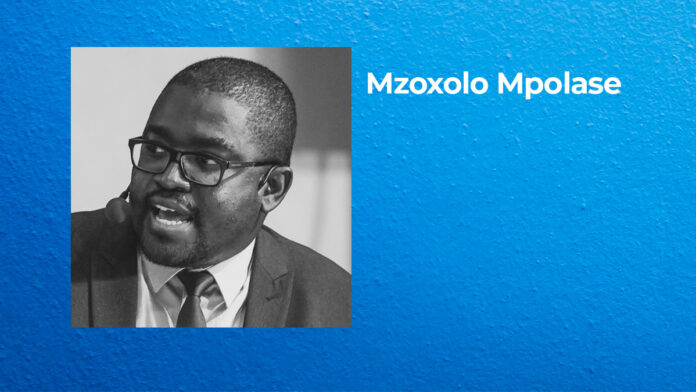
Mzoxolo Mpolase

By Mzoxolo Mpolase

In any constitutional democracy, there is a distinction between protest and intimidation. Protest is directed at power, policy, and public institutions. Intimidation is directed at people, at their spaces, and at their sense of safety and ease in ordinary life.

In South Africa, activism around the Israel-Palestine conflict is usually presented as belonging to the first category. It is described as solidarity with Palestinians, moral opposition to Israeli conduct, and part of a broader democratic culture of international advocacy. On the face of it, that appears straightforward enough. Citizens are entitled to hold strong views on foreign affairs and to campaign around them.

However, a more troubling pattern has emerged. Increasingly, the activism in question is not directed at the state, foreign policy, or institutions of actual political power. It is directed at spaces associated with Jewish South Africans, their symbols, their religious observance, their schools, and the ordinary environments in which Jewish communal life is visible. What is emerging, then, is not simply protest in the democratic sense. It is a politics of targeted discomfort directed at Jewish communal life.

That distinction matters. Once activism shifts from public argument about a foreign conflict to the disruption and politicisation of local Jewish life, the issue is no longer only Palestine. The issue becomes whether Jewish South Africans are to be allowed an ordinary place in the country’s civic and social life, or whether their presence is now to be treated as permanently contestable.

Its method is not difficult to identify. Rather than being trained principally on those institutions that make or implement policy, much of the energy in this politics now finds expression in places where Jews gather, shop, commemorate religious holidays, educate their children, and live communally. The point is not always exclusion in a formal sense. More often, it is discomfort. A Jewish symbol must no longer simply be a Jewish symbol. A Jewish religious holiday must no longer simply remain part of Jewish observance. A Jewish space must no longer simply remain a social, educational, or communal environment. Each must be dragged into the orbit of the conflict and made to bear its tensions.

Recent examples illustrate the pattern. When Pick n Pay’s Norwood branch in April 2025 temporarily removed elements of its Pesach décor after social media agitation and activist pressure, the issue was plainly not South African foreign policy. It was whether Jewish religious visibility in an ordinary South African retail environment could be made controversial. The practical message was that even the public expression of Jewish religious holidays could be transformed into something politically suspect if sufficient pressure was applied.

A 2015 incident at the Virgin Active gym at Old Edwardians in Houghton revealed the same logic in another form. The gym was turned into a site of confrontation through the wearing of BDS apparel bearing the words “In solidarity with the Palestinians, against Israeli apartheid” in circumstances that suggested not spontaneous expression, but staged provocation. Again, an ordinary space was converted into contested political ground.

The Houghton Golf Club matter last week, on 17 April 2026, belongs to the same terrain. There, a visitor displaying a Palestinian flag on his vehicle at a club with a substantial Jewish membership was told that political and religious symbols were not permitted on the premises. The ensuing controversy was framed as a free expression dispute. But that framing is too narrow. In the present climate, conflict symbols do not enter such spaces innocently. Whether intended or not, they form part of a wider pattern in which spaces with a known Jewish character are increasingly made to absorb the pressures and antagonisms of a foreign conflict.

The Roedean episode in February 2026 took this logic into an even more serious setting. There, the issue was not retail or club culture, but school sport and the ordinary participation of Jewish children in institutional life. Roedean refused to play a fixture against King David because it was a Jewish school, then later apologised and acknowledged the hurt caused to the Jewish community. That matters because it lays bare the principle at stake. When a Jewish school becomes objectionable not because of misconduct, but because of its Jewish character, the issue is no longer political dissent. It is discrimination directed at Jewish identity.

Taken together, these incidents reveal the same development. Jewish spaces are increasingly treated not as ordinary parts of South African life, but as available sites for agitation, symbolic incursion, and pressure. The common feature is not simply disagreement over Israel. It is the relocation of that disagreement into the daily environments in which Jews live as Jews.

This is why the campaign is antisemitic. Not because all criticism of Israel is antisemitic. It is not. But a campaign becomes antisemitic when Jewish life as such becomes the practical object of pressure. When Jewish symbols, Jewish religious observance, Jewish schools, and Jewish communal spaces are repeatedly made to carry the burden of a conflict elsewhere, the line has been crossed. What is being targeted is no longer merely a foreign government or ideology. What is being targeted is the ability of Jews to inhabit ordinary life without their identity being turned into a provocation.

It is also anti-democratic. Democracy requires more than the formal protection of speech and assembly. It depends on coexistence. Minority communities must be able to gather, celebrate, educate their children, shop, and associate without those ordinary activities being subjected to recurring political encroachment. Once a style of activism depends on unsettling the daily life of a minority, pressure starts to replace persuasion, and intimidation begins to masquerade as conscience.

And it is unconstitutional. The Constitution’s guarantees of dignity, equality, freedom of association, freedom of religion, and cultural life are not ornamental. They exist precisely to ensure that communities do not have to negotiate their right to ordinary existence each time public passions rise. Jewish South Africans are citizens of South Africa, and must be able to enjoy those rights in substance, not merely on paper, no less than any other South African.

That means Jewish spaces must be allowed to remain spaces, not become permanent stages for activist intervention. Jewish religious observance must be allowed to remain religious observance, not be recoded whenever convenient as a political offence. Jewish communal and educational life must be protected not only against formal prohibition, but against the steady erosion of the peace necessary to exercise constitutional rights meaningfully.

A just cause does not sanctify intimidation. Political passion does not authorise the social targeting of a minority. Solidarity with one people does not require the making-uneasy of another. If activism on Palestine is to remain democratic and legitimate, it must remain directed at argument, policy, and power. The moment it begins to derive meaning from making Jewish communal life uncomfortable, it ceases to be a democratic practice and becomes something uglier, and constitutionally indefensible.

What is emerging in South Africa is a campaign to make Jewish life less secure, less normal, and more contested in the public sphere. That campaign is antisemitic because it directs pressure at Jews as Jews. It is anti-democratic because it substitutes intimidation for coexistence. And it is unconstitutional because it erodes the substantive enjoyment of rights the Constitution exists to protect.

If South Africa cannot draw that line clearly, the failure will be South Africa’s, not the Jewish community’s.

About the Author: Mzoxolo Mpolase is the Managing Editor of Political Analysis South Africa and writes on power, governance, political strategy, and the forces shaping public life.


  • For the current edition of the Cape Jewish Chronicle, click here.
  • Subscribe to the Cape Jewish Chronicle: R450/year, or R38/month via debit order. Simply email us at subscriptions@ctjc.co.za and click here for payment info.
  • The Cape Jewish Chronicle reaches over 6 000 readers monthly across print and digital platforms.
  • To book advertising space or discuss a custom package contact Adéle Gradner Mobile: 083 321 5222 | Office: 021 464 6736 | Email advertising@ctjc.co.za

April 2026

Read the April 2026 Digital edition.

Chag Pesach Sameach!


  • For the current edition of the Cape Jewish Chronicle, click here.
  • Subscribe to the Cape Jewish Chronicle: R450/year, or R38/month via debit order. Simply email us at subscriptions@ctjc.co.za and click here for payment info.
  • The Cape Jewish Chronicle reaches over 6 000 readers monthly across print and digital platforms.
  • To book advertising space or discuss a custom package contact Adéle Gradner Mobile: 083 321 5222 | Office: 021 464 6736 | Email advertising@ctjc.co.za

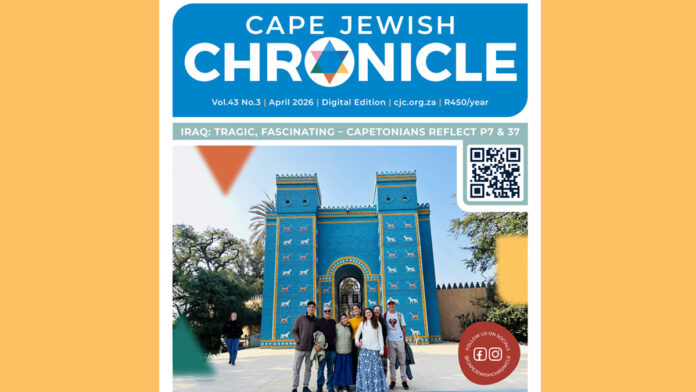
Travelling off the map: a Cape Town family’s journey through Iraq and Kurdistan

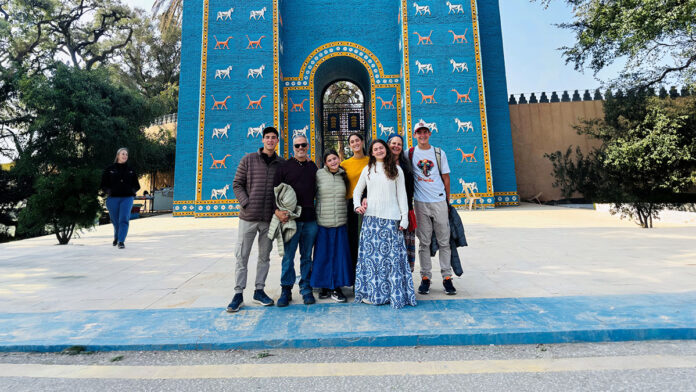
For most travellers, Iraq sits firmly in the category of places not to visit. Decades of conflict, political instability and alarming headlines have kept it off the conventional tourist map. But for Capetonians Karen Kallmann and Evan Robins, travelling to unusual destinations with their children has become something of a family tradition.

Over the December 2025 and January 2026 holidays, before the current Middle East conflict, the family spent three weeks travelling through Iraq and Iraqi Kurdistan with their five children:  Yael, Eitan, Aryeh, Ma’ayan and Ayelet, aged between 21 and 13.

Their journeys are rarely conventional. Previous destinations have included Iran, Russia, Azerbaijan, Georgia, Armenia, Cuba, Mexico, Guatemala, Belize, Ethiopia, Indonesia and Tunisia.

Planning is deliberately minimal. The family rarely books ahead and prefers to make decisions along the way. That approach often means improvising accommodation and transport, but it also allows them to experience places in a far more direct way.

In Iraq it quickly became clear that tourism infrastructure is almost non-existent. Accommodation was mostly in small budget hotels and occasionally in converted houses. What the family gained in return was something rare in modern travel: historic sites almost entirely empty of visitors.

Travelling as an observant family

Karen, who chairs the Union of Jewish Women in Cape Town, and Evan travel with a strong sense of identity and tradition. The family is observant, keeping Shabbat and eating kosher while on the road. Some family members are vegetarian; others vegan or pescatarian. Maintaining those practices while travelling in a country with virtually no Jewish community requires ingenuity.

One Friday evening during the journey the family hurried back to their accommodation to welcome Shabbat.  “We ran back to the accommodation, brought in Shabbat, had some dinner and went to bed. We wondered when last in Iraq Shabbat candles were kindled, kiddush made, tefillin put on and, perhaps even more rarely, benching with a mezuman (three people together).”

The moment carried a special historical resonance. For more than 2 500 years Iraq had been home to one of the world’s oldest and most important Jewish communities. In the early twentieth century there were between 130 000 and 150 000 Jews in Iraq, particularly in Baghdad, Basra and Mosul. At one time Jews made up about a third of Baghdad’s population. That community effectively disappeared in 1950–1951 when about 120 000 to 130 000 Iraqi Jews were airlifted to Israel in the dramatic rescue known as Operation Ezra and Nehemiah.

               Read about one woman’s escape from Iraq to Israel in Operation Ezra and Nehemia here.

The Land Between the Rivers

Much of modern Iraq lies in the ancient region known as Mesopotamia, the land between the Tigris and Euphrates rivers. The name itself comes from Greek and means exactly that: land between rivers. Often described as the cradle of civilisation, Mesopotamia was where some of the earliest cities and writing systems emerged thousands of years ago.

The modern state of Iraq is far younger. It was created in the early twentieth century after the collapse of the Ottoman Empire, becoming independent in 1932 and later establishing itself as a republic in 1958. From 1979 until 2003 Iraq was ruled by Saddam Hussein, who famously saw himself as a modern incarnation of the Babylonian king Nebuchadnezzar.

Today Iraq is a federal republic that includes the autonomous Kurdistan Region in the north. The Kurds, a large ethnic group spread across Turkey, Iran, Iraq and Syria, govern themselves in this region with their own parliament and security forces.

Driving across Iraq

The family explored much of the country by road. They hired two cars, with Karen and the eldest daughter doing most of the driving. The roads presented their own challenges.

“There are unmarked speed bumps on 80+ km/hr roads: the number of potholes beat those of Joburg; drivers drive between the two lanes all the time which gets so frustrating, and the roundabouts are chaotic.”

Roadblocks appeared frequently, part of ongoing efforts to prevent ISIS from reasserting itself in the country. Despite this heavy security presence, the family did not experience danger, and they travelled widely without incident, except for a couple of ditches from which they needed to extricate their cars.

Iraq

Baghdad was among the first stops on the itinerary. The vast capital city carries layers of history but also reminders of darker ideological influences. The family encountered Nazi symbols, including a swastika painted on a synagogue wall in Baghdad. Bookshops openly sold Mein Kampf and The Protocols of the Elders of Zion, and posters of Hitler could be seen.

The political influence of neighbouring Iran was also noticeable: “Iran has taken over, not only in political influence, but has ideological control and it’s not subtle.”

Yet the strongest impression came not from politics but from ordinary people who showed the family amazing kindness, generosity and hospitality. “We got invited to meals, were presented with clothes and gifts, bread, fruit and juice for free, and genuine interest in us.” The family generally did not reveal that they were Jewish, although people often asked questions about their religion.

Language barriers were common. Very little English was spoken, and most conversations happened through Google Translate.

Rediscovering Jewish Iraq

One of the most meaningful aspects of the trip was visiting Jewish heritage sites across Iraq. Many are now incorporated into Islamic structures, with mosques built above them, yet Hebrew inscriptions and Jewish symbols often remain visible.  Many had been places of pilgrimages for the large numbers of Jews who had lived in the country. The family visited the traditional Tomb of Ezekiel in the town of Al Kifl, south of Baghdad. They also travelled to Al Uzair, associated with the Tomb of Ezra. Visiting these places created a powerful connection with Jewish history.

Ancient cities

Travelling across Iraq meant moving through some of the most significant sites in ancient history.

The family visited Ur, traditionally regarded as the birthplace of Abraham and home to the famous ziggurat (pyramid) rising dramatically from the desert.

In Uruk, one of the earliest cities in the world, the first written words were recorded in cuneiform thousands of years ago.

They also travelled to Nineveh, once the capital of the Assyrian Empire and referenced in the biblical story of Jonah.

Nearby Mosul, Iraq’s second-largest city, is slowly rebuilding after years of devastation under ISIS control. At one point the family walked through the city while using the video on a mobile phone to show an elderly Jewish woman, originally from Mosul and now living in Israel, the streets of her former home. This was a deeply emotional experience for them all. 

In Samarra, they climbed the dramatic spiral minaret, Abu Dilaf, one of the most iconic pieces of early Islamic architecture. The journey also took them south to the Iraqi marshes near Nasiriyah, a landscape of waterways and reed villages.

Another stop was Al Qurna, where local tradition places the site of the Garden of Eden. A shrine marks the supposed location of the Tree of Knowledge, often called Adam’s Tree. This experience, however, was disappointing, with the tree (which has been replaced several times) looking very forlorn.

Food on the road

Food became an adventure of its own.

Falafel appeared constantly. By the end of the journey the family had eaten around forty falfel meals. “The amount of falafel we had was absurd.” One welcome change was a chickpea soup sold as street food, served from a huge pot and ladled into ceramic dishes that were washed and reused after each serving.

Fresh pomegranate juice was also widely available and quickly became a favourite.

Cultural Differences

Daily life also brought moments of cultural adjustment. Smoking was widespread. There was what the family described as a “huge smoking culture,” and concern about cigarette smoke affecting others seemed rare.

Public spaces were also overwhelmingly male. “The public space is very male-dominated. Men socialise a lot, playing games, smoking hookah, drinking predominantly strong, sweet tea. All the public squares are filled with men at tables and you’d be hard pressed to find a woman anywhere.”

Clothing expectations presented another challenge. Even though the women in the Robins Kallman family dressed modestly, covering their hair and wearing long sleeves and long skirts, they were often given large sheet-like garments to wear over their clothes. “The dress coding got to me at one point in time because I honestly tried my best to be respectful… and then I kept having to wear the ugly embarrassing ‘I wasn’t wearing the right clothes’ sheet.”

Sanitary conditions sometimes required adjustment as well. “I learned how to block my nose for LONG periods of time as the bathrooms were not so pleasant.” “A few of the peeps in our family went to the bathroom which cost 500 IQR… in a bathroom… with no toilet paper… and it wouldn’t flush… and dirty floor.”

In some areas rubbish was widespread. “There is trash everywhere; parts of it feel like a giant rubbish dump.”

Into Kurdistan

After ten days travelling across Iraq, the family crossed into Iraqi Kurdistan, a semi-autonomous region in the north. The contrast was noticeable.

Much of Kurdistan felt cleaner and more organised, and they describe the region as “pristine” compared with Iraq’s “grittiness.” The capital Erbil is considered one of the oldest, continuously-inhabited settlements in the world, with evidence of habitation stretching back about 6 000 years.

From Duhok the family explored several dramatic mountain towns including Amedi and Akre, as well as Lalish, the holiest shrine of the Yazidi religion. Further east they visited Sulaymaniyah, widely regarded as the cultural and intellectual centre of Iraqi Kurdistan. In Kurdistan, too, lies Alqosh, home to the traditional Tomb of Nahum, one of the Minor Prophets. The shrine has recently been restored by international groups and the local community.

One of the most surprising experiences came in the mountains at Mount Korek. Many people imagine Iraq only as desert, but northern Iraq is mountainous and receives enough snowfall for winter sports. The ski area is small and quiet compared with European resorts, but the moment created one of the trip’s happiest memories. “It was snowing and we went up the cable car and had a snowball fight.” For some of the children it was the first time they had ever seen snow.

A Journey defined by people

Looking back on the trip, the strongest impression was not the ancient ruins or historic sites, but the warmth of the people they met. “The kindness of the people, the generosity, the welcome that we received wherever we went was just heartwarming, beautiful and sincere.”

Despite rough roads, cultural differences and an endless supply of falafel, the journey offered something increasingly rare in modern travel: the chance to explore extraordinary places without crowds, and to encounter the everyday kindness of strangers. In a region often defined by conflict in the global imagination, the family experienced something very different: hospitality, curiosity and generosity from people they met along the way.  And in many of the world’s oldest cities, and richest historical and archaeological sites, they often had the experience almost entirely to themselves.

If you enjoyed reading this article about Iraq, you may be keen to take a look at some of the books on the topic available from the Jacob Gitlin Library.

  • Kattan, Naim Farewell Babylon: Coming of Age in Jewish Baghdad Samantha Ellis, Chopping Onions on My Heart: On losing and preserving culture Revital Shiri-Horowitz, Daughters of Iraq
  • David Kazzaz, Mother of the Pound: Memoirs on the life and history of the Iraqi Jews
  • Shlomo Hillel, Operation Babylon
  • Cynthia Kaplan Shamash, The Strangers We Became: Lessons in exile from one of Iraq’s last Jews
  • Jessica Jiji, Sweet Dates in Basra
  • Ariel Sabar, My Father’s Paradise: A Son’s Search for His Jewish Past in Kurdish Iraq

  • For the current edition of the Cape Jewish Chronicle, click here.
  • Subscribe to the Cape Jewish Chronicle: R450/year, or R38/month via debit order. Simply email us at subscriptions@ctjc.co.za and click here for payment info.
  • The Cape Jewish Chronicle reaches over 6 000 readers monthly across print and digital platforms.
  • To book advertising space or discuss a custom package contact Adéle Gradner Mobile: 083 321 5222 | Office: 021 464 6736 | Email advertising@ctjc.co.za

Steady leadership ensures continuity in a vibrant community

Lance Katz, Philip Krawitz

Known for its vibrancy, the Cape Town Jewish community continues to thrive – actively supporting a wide range of causes and responding to diverse needs. That sense of energy appears as strong as ever, despite the emigration of recent years. 

At the heart of this vitality lies work that is often unseen: strategic oversight, the careful management of funds raised for communal organisations, and strict adherence to regulatory frameworks. These responsibilities are largely carried by lay leaders who volunteer their time and expertise, working alongside professional staff across the community. 

The UJC Board of Trustees exemplifies this partnership. As the community’s central fundraising body, the UJC relies on the Board to ensure sound governance, uphold fiduciary responsibility, and provide strategic direction. 

For the past 17 years, Philip Krawitz has chaired the Board of Trustees, offering steady leadership through a series of challenges – including the Covid-19 pandemic, a renewed wave of antisemitism, and the aftermath of October 7. Now, he passes the reins to Lance Katz, who recently served as Chair of the UJC Board. 

Reflecting on his decades of service, Philip recalls his first introduction to communal work. “In the early 1970s, a knock on my door brought two doyens of our community – the late Gerald Kleinman and Ivan Harris. They explained the needs of our community and asked for my commitment of R18 per month. Little did I know that this would mark the start of a communal journey spanning more than half a century, culminating in my role as Chairman of the Board of Trustees of the UJC.” 

From these early beginnings, Philip developed into a skilled fundraiser, learning from figures such as the late Eliot Osrin z”l. “Canvassing top donors became more of a pleasure than a chore,” he says. “Along the way, I made many wonderful friends and acquaintances.” 

Welcoming his successor, Philip expresses strong confidence in Lance’s leadership. “Lance has added immense value in every sphere in which he has been involved. As a marathon runner, he brings endurance and discipline. As an actuary, he has the ability to analyse our community and quantify its future needs. He is a clear thinker with outstanding interpersonal skills.” 

As a new generation of leaders steps forward, the community can feel assured that its future remains in capable and committed hands – guided by the same sense of purpose and dedication that has sustained it for decades. 


  • For the current edition of the Cape Jewish Chronicle, click here.
  • Subscribe to the Cape Jewish Chronicle: R450/year, or R38/month via debit order. Simply email us at subscriptions@ctjc.co.za and click here for payment info.
  • The Cape Jewish Chronicle reaches over 6 000 readers monthly across print and digital platforms.
  • To book advertising space or discuss a custom package contact Adéle Gradner Mobile: 083 321 5222 | Office: 021 464 6736 | Email advertising@ctjc.co.za

A change of lifestyle – a change of heart 

President of WIZO SA Shelley Trope-Friedman (centre) with Co-Chairs of the WIZO Gilah branch with Dr Koen

Keeping your heart healthy is not a difficult task – yet, its benefits are significant. This advice came through very clearly during a talk by local cardiothoracic surgeon, Dr Johan Koen, who recently spoke to an audience during a fundraising event organised by WIZO’s Gilah branch. 

Dr Koen, a heart transplant surgeon and highly skilled specialist in the field of cardiac health, runs a practice at the Chris Barnard Memorial Hospital. Welcomed by Sharon Klugman, who found herself in his care last year, Sharon expressed her thanks for being cared for by such a skilled and knowledgeable specialist.  

Dr Koen explained that cardiovascular disease is the leading cause of death worldwide. There is a high prevalence of heart disease, and the medical world notes the increase in heart disease among young people. But, although this may appear to be a gloomy picture, there are many opportunities for people to take preventative action to reduce the risk of a heart attack or of death from one. 

In addition to preventative medical interventions – things like regular monitoring of one’s blood pressure, testing one’s cholesterol and blood glucose readings; and using a smart watch as an early warning notification system – healthy living is core to staving off the risk of heart disease. Lifestyle choices are crucial in this regard: regular exercise, a healthy diet, losing weight, and stopping smoking. Dr Koen recommends the Mediterranean diet as a style of eating that’s beneficial to maintaining good heart health. 

The Mediterranean diet is a heart-healthy, plant-based eating pattern inspired by traditional habits in Greece, Italy, and Spain. With an emphasis on consuming fruits, vegetables, whole grains, nuts, and olive oil daily, with moderate fish/poultry intake and low red meat consumption, this style of eating reduces chronic disease risk, and assists to lower blood pressure and cholesterol, while also reducing the risk of a stroke.

As regards exercise, walking for 30 minutes every day for at least five days a week will keep you much healthier. A further consideration is to work towards losing weight. The negative impact on one’s heart of being overweight is obvious: your body takes far more strain to keep you engaged in daily activities if there is a larger body mass involved.   

As regards smoking, it won’t come as a surprise to note Dr Koen’s comment, “Smoking is a real, real killer.” 

New drug therapies, such as Ozempic and Mounjaro are proving to be very effective in managing one’s heart health. However, Dr Koen stresses, these drugs should not be used in isolation of lifestyle changes. So, a person taking one of these drugs should also be exercising and eating correctly. 

The lifestyle choices are not onerous – but they can make a significant difference in one’s heart health.  

The future
New areas of research include the development of genetic therapies, geared to target a person’s genes that may carry an inherited cardiac condition.

Demographic issues

Jewish people have a higher rate of longevity than the general population in Western countries.

For women, the news is good:

  • Women develop heart disease later than men
  • Mortality from heart disease is lower among women than men
  • Women gain greater benefit from regular exercise than men
  • After a woman has experienced a heart health problem, she is likely to live longer than a man with the same condition

Symptoms to look out for

You may be affected by a cardiac disease incident if you have one or more of these symptoms:

  • Heart palpitations
  • Shortness of breath
  • Struggling to lie flat
  • Chest pain and/or jaw or left shoulder pain
  • Dizziness

Should you experience any of these, get to a hospital immediately. Since heart muscle can die off during a heart attack, the quicker the medical intervention, the less damage may be caused.

For more information visit: http://www.capecardiac.com 

This event was made possible through the generosity of Gavin Morris, Director of the SA Jewish Museum, and Shelley Trope-Friedman, President of WIZO South Africa.”  


  • For the current edition of the Cape Jewish Chronicle, click here.
  • Subscribe to the Cape Jewish Chronicle: R450/year, or R38/month via debit order. Simply email us at subscriptions@ctjc.co.za and click here for payment info.
  • The Cape Jewish Chronicle reaches over 6 000 readers monthly across print and digital platforms.
  • To book advertising space or discuss a custom package contact Adéle Gradner Mobile: 083 321 5222 | Office: 021 464 6736 | Email advertising@ctjc.co.za

From persecution to the pitch  

picture: Amit Melnik

FC Bayern brings Kurt Landauer’s legacy to young people in Cape Town 

FC Bayern is a name instantly recognisable to most people with some knowledge of the game of football. While they may know about the team’s years of prowess on the soccer field, not many will know much about Kurt Landauer, an iconic figure associated with the Club.  

Initially joining the Club as a player in 1901, he went on to become Club President, serving as the President with the longest term in office. Despite having been arrested by the Nazis and interned in Dachau; despite having been forced to flee to Switzerland to save his life; and despite having lost almost his entire family during the Holocaust, Landauer returned to Germany after the War, and again took up the role of President of FC Bayern. 

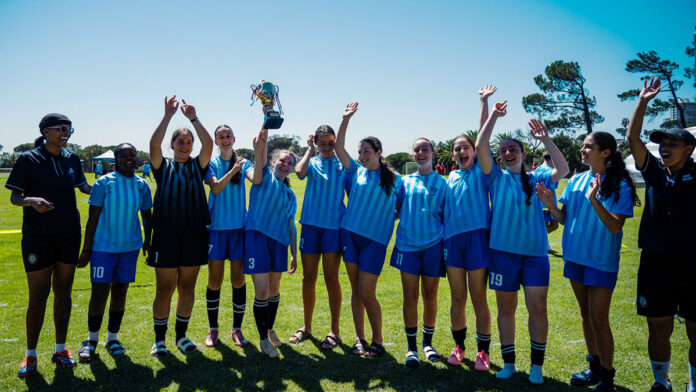
A collaboration between the Club, Herzlia Highlands School and the Cape Town Holocaust & Genocide Centre (CTHGC) has led to the establishment of a schools’ football tournament, the Kurt Landauer Cup. The competition was initiated in 2025, and it was recently held again.  Kuba Nowakowski, the Director of the CTHGC, comments: “For us, the tournament is a meaningful way to teach about this history and, more broadly, about the Holocaust in a different format, reaching new and younger audiences.” 

With almost 150 players from 13 teams (10 boys’ teams and 3 girls’ teams), it was a day full of sport, excitement, friendship, and fun. The prizes provided by FC Bayern Munich generated much excitement – Club jerseys, shorts, jackets, and more. The team from Bishops Diocesan College won the boys’ tournament, while Herzlia High triumphed in the girls’ competition. 

One of the participants from a soccer club called The Shooting Stars enthused about the day, saying, “Stepping onto the ground for the Kurt Landauer Cup was more than just playing football – it was stepping into a story. The atmosphere buzzed with energy as teams from all over came together, not only to compete but to honour the legacy of Kurt Landauer, a man whose love for the game endured through hardship and history. 

“What stood out most was the spirit of unity. Between goals and tackles, we shared laughs, swapped stories and learned about resilience through sport.  It was good to be part of something that connected the past to the present in such a powerful way.” 

Click here to listen to the current President of FC Bayern, Herbert Hainer, talk about the tournament.


  • For the current edition of the Cape Jewish Chronicle, click here.
  • Subscribe to the Cape Jewish Chronicle: R450/year, or R38/month via debit order. Simply email us at subscriptions@ctjc.co.za and click here for payment info.
  • The Cape Jewish Chronicle reaches over 6 000 readers monthly across print and digital platforms.
  • To book advertising space or discuss a custom package contact Adéle Gradner Mobile: 083 321 5222 | Office: 021 464 6736 | Email advertising@ctjc.co.za

Supporters of Israel stand together in public – Roar Lion, Roar! 

Brave South Africans gathered peacefully in large numbers on Saturday, 7 March 2026, at the V&A Waterfront. They all stood strong and united in their support for Israel. They chanted in unity and drowned the chants of a small group of anti-Israel protestors.  

The peaceful pro-Israel demonstrators included four groups, each with 15 members, holding positive messages on placards and banners. One was the regular Pro-Israel group, whose members have stood regularly with Israeli flags in defiance of BDS since November 2023. Another group was Simunye Israel, under the leadership of Pastor Thom Thamanga. The third group was led by Rev Barry Isaacs, Chairman of Concerned Christians for Africa and Christians United for Africa. And, lastly, a group of Iranians standing in solidarity with the people of Iran. The flags with the Star of David, together with the Iranian Lion and Sun flags, were held high with pride. 

“For me it wasn’t just standing on a pavement. It was standing on a principle,” said Dr Isaacs in a press statement. “We gathered to say clearly that antisemitism has no place in our society.” Isaacs added “Now more than ever, people of faith and goodwill must speak out and stand together for truth, justice, and peace.” Pastor Brad from the same group mentioned in a recording that, “Today was a turning point for South Africa when Christians, Jews and Iranians stood together in large numbers.” 

In a video, Pastor Thom thanked those who willingly stood with Israel in such a dignified manner, chanting in unity unrehearsed slogans for Israel. He said that he walked away with a sense of unity, encouragement and victory. These words were echoed by Pastor Mufishi, a regular die-hard pro-Israel supporter, who will not be swayed by the lies. He believes in the interpretation of the verse Genesis12:3: “God blesses those who bless Israel”. 

The final group consisted of Iranians who may not necessarily identify as pro-Israel or anti-Israel, but who recognise that both Israel and the United States have come to their defence. They expressed deep appreciation for the actions taken by these two countries against the terror regime of the Islamic Republic. Their message was one of fighting for freedom. Just as we supported their freedom on that day, they stood in support of ours. It was a powerful and moving moment. 

The joint group of demonstrators was warmly received by many shoppers, who showed their support, giving a thumbs up, and by taking photos and videos. Emotions ran high, and it became clear that, by and large, South Africans are willing to stand with Israel against hate and misinformation. 


  • For the current edition of the Cape Jewish Chronicle, click here.
  • Subscribe to the Cape Jewish Chronicle: R450/year, or R38/month via debit order. Simply email us at subscriptions@ctjc.co.za and click here for payment info.
  • The Cape Jewish Chronicle reaches over 6 000 readers monthly across print and digital platforms.
  • To book advertising space or discuss a custom package contact Adéle Gradner Mobile: 083 321 5222 | Office: 021 464 6736 | Email advertising@ctjc.co.za
Six Days in Bombay 

Listen to this book review:

By BERYL EICHENBERGER 

What would it mean to be of mixed race in the India of 1937, when fighting for independence could mean a blurring of identities?  Where do you belong? That is just one of the challenges that protagonist Sona faces in Six Days in Bombay by Alka Joshi. A beautifully written, empathetic novel, her first stand-alone novel since The Jaipur Trilogy, although each of the three books could be read individually.  

Joshi is an intelligent writer; she allows the reader to sink in to her stories, opening windows on the richness of the Indian culture, the turmoil of transition and beyond, relationships, the resourcefulness and creativity of women breaking the bonds of poverty. Her novels are sensory: the chatter, the silences, colour, tastes and aromas permeate the pages bringing that full sense of life. She uses her power as a storyteller to champion women who need to be acknowledged. Their roles in the arts, science, maths, music or education, as important as the men. With her deft pen, a vivid imagination, lots of research and political savvy, she crafts novels whose characters linger.  

In this gripping novel she has used as inspiration the mixed-race artist Amrita Sher-Gil. Born of a Hungarian Jewish mother and Indian aristocratic father, she died at age 28 in 1941, but her body of work has given rise to her being known as the ‘Frida Kahlo of India’. Colourful paintings influenced by not only the masters in Italy and France, where she studied, but reflecting the life and people she encountered when she returned to India. Amrita was, by all accounts ‘flamboyant, sexually fluid, political, outspoken, talented and charming’, a woman who could influence and entice. Joshi has loosely based her character of Mira Novak on Amrita, with a Czech father and Indian mother, propelling us into a different time and place. A story that has resonance and tangible reality, even today.  

It is 1937 and famous artist Mira is admitted to a hospital in Bombay, after a miscarriage. 23-year-old Anglo-Indian nurse Sona Falstaff is assigned to her. They form a bond. A friendship. To the unworldly and poor young nurse, Mira’s stories are romantic, daring, unimaginable. But when Mira dies suddenly, Sona is implicated. Four of Mira’s paintings are left to Sona with instructions to take them to friends she spoke about: in Prague, Florence, Paris and London. To exonerate herself, and with Europe on the brink of war, this is a journey Sona must take. In need of a companion, the kindly old Dr Stoddard steps in.   

Sona embarks on a voyage that reveals the complexity of the artist, that people are never quite as they seem –and what is identity?  It becomes not only a search for herself, and her lost British father, but a belief that she can achieve anything. It’s a visceral story that will immerse and enchant the reader.   

Available at good bookstores and the Gitlin Library.

Alka Joshi will be at the Franschhoek Literary Festival in May.

Author Alka Joshi was born in India and raised in the US from the age of nine. She has a BA From Stanford University, and an MFA From California College of Arts. Joshi’s debut novel The Henna Artist became a New York Times bestseller, a Reese Witherspoon Book Club pick and was longlisted for and award. In 2024 Joshi was selected for the Forbes 50 Over 50 List celebrating women shattering age and gender norms over all sectors of the US economy and culture.

SIGN UP TO RECEIVE THE CAPE JEWISH CHRONICLE