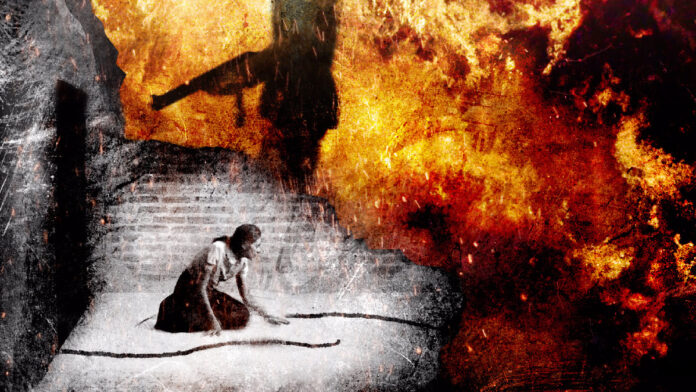
I recently watched Don’t Let’s Go to the Dogs Tonight, a film that shines a light on a seldom-discussed chapter of history – the Rhodesian civil war, which ended with the democratic elections of 1980 in what is now Zimbabwe. Told through the eyes of a seven-year-old girl, the daughter of a White farming family, it captures something often overlooked in stories of conflict: the silent suffering of children.
Through her bewilderment at her world being turned upside-down, we witness not only the brutality of war but the confusion and instability it breeds in young minds. Her world – once filled with routine and familiarity – fractures into something dangerous and unpredictable. And as I watched, I couldn’t help but think about today’s children caught in conflict zones, children whose lives are being shaped by fear and uncertainty before they even understand what those words mean.
That thought returned with force when I saw video clips of hostages being released from Gaza. Among the tears and celebration, one image stood out: a small child, expression blank, eyes darting between faces of joy she couldn’t quite share. She seemed unsure, almost alienated by the euphoria around her. How could she make sense of what was happening, or of the trauma that had preceded it?
We often believe that by shielding children from the harshness of the world, we are protecting them. But silence is not always protection. Even without words, children absorb the tension in a household, the fear behind their parents’ eyes, the unspoken grief that hangs in the air. Their innocence makes them intuitive, not oblivious.
Psychologists studying second-generation Holocaust survivors have long observed how trauma echoes across generations. Many of these individuals grew up carrying anxieties that were never directly explained to them – the inherited weight of fear and loss. Their lives were shaped by what was left unsaid, by the emotional scars of their parents’ experiences.
That legacy of unspoken pain should serve as a warning. When children grow up surrounded by unresolved fear and silence, the consequences may only reveal themselves decades later – in mistrust, anxiety, or a fractured sense of safety in the world.
As new generations of children live through war, displacement, and terror – in Israel, in Gaza, in Ukraine, and elsewhere – we must ask ourselves what emotional inheritance we are leaving them. The physical wounds of conflict may heal, but the psychological ones often last a lifetime.
Children should inherit hope, not fear. And if we are to build a more peaceful future, we must find ways to give them that – through honesty, compassion, and the courage to acknowledge the pain that shapes their world.
For the current edition of the Cape Jewish Chronicle, click here.
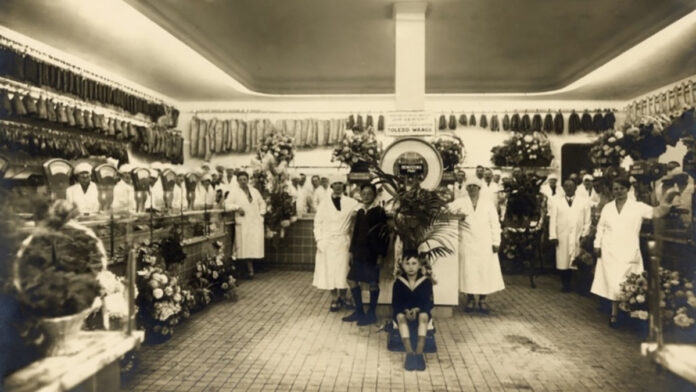
Ehrenstrasse 69, Spiegel Butchery staff (c1930). Klaus and Richard standing in outdoor clothing; Herbert at front, second from right.
The Cape Jewish Chronicle has carried a number of articles over the past months relating to the tour to Poland organised by the Cape Town Holocaust & Genocide Centre. Pursuing answers to the many questions about the fate of their own families during the Holocaust motivated two non-Cape Town residents to join the tour.
In this edition, we focus on the experiences of the immediate family of Mandy Spiegel, who grew up in Johannesburg and studied at the Michaelis School of Art at the University of Cape Town. She has since lived in London for many years and regularly visits Cape Town.
Our December/January edition will focus on the story of another tour participant, an American woman with significant ties to the city of Krakow in Poland.
Mandy O’Donnell’s (née Spiegel) family’s story is one typical of many Jewish families whose lives were upended by Nazi persecution, yet who rebuilt their lives in faraway lands.
Her grandparents, Herbert and Margarethe Spiegel, and their three sons – Leopold, Rolf Richard, and Klaus – lived a comfortable and assimilated life in Cologne, Germany, before the rise of Hitler changed everything.
Herbert Spiegel, who was born in Dortmund and one of 13 siblings, had been drafted into the German army during WW1, and subsequently was a respected master butcher who owned a thriving butchery named ‘Spiegel’ on Ehrenstrasse, one of Cologne’s busy streets.
Margarethe, (née Frank) was born in Hildesheim, one of four children, with a widowed mother in her early teens. Herbert and Margarethe lived above the butcher’s shop in Cologne with their three sons, a nanny, and domestic help. The family was close-knit and active in Jewish communal life. Margarethe was observant and ensured that her sons regularly attended synagogue.
By the early 1930s, the political climate in Germany had become increasingly dangerous for Jews. The Nazi boycott of Jewish businesses and the atmosphere of intimidation meant that Herbert’s business could no longer survive. In 1935, he was forced to sell the butchery and family property, at a terrible loss, which was a devastating blow.
Their middle son, Richard Spiegel – Mandy’s father – completed school with distinction and enrolled at the University of Cologne to study law and economics. But in 1933, the same year that Hitler came to power, Richard was expelled from the university solely because he was Jewish. His academic ambitions abruptly ended, he found work briefly in the family butchery before being harassed and even detained by Nazi youth members. Recognising the growing danger, he fled Germany in late 1935, aged just 21.
After a few months in Europe, first in Holland and then Belgium, working various poorly paid jobs, Richard sought permanent safety by leaving Europe. By sheer chance, he managed to secure one of the last tickets to sail from Southampton to Cape Town aboard the Dunbar Castle, arriving in January 1936. Richard travelled directly from Cape Town to Johannesburg, where he joined his older brother, Leopold.
Leopold had left Germany in mid-1935, sponsored by his mother’s cousin, Lilo Lindenberg, who lived in Johannesburg. Like many early refugees, Leopold’s departure helped pave the way for his brother to follow.
Richard began rebuilding his life in Johannesburg, mixing with fellow German Jews and working in small trades and as a store clerk. He later became a traveling salesman and eventually owned a successful hardware import business – a testament to his determination to start anew. He retired after selling his business when he was 87.
The youngest brother, Klaus, faced a particularly disrupted childhood. As the Nazis tightened their grip on Jewish life, his schooling was repeatedly interrupted. He was sent from Germany to Belgium, and later to a school in England. Eventually, he rejoined his parents in Brussels in late 1935, where he enrolled in a government school for gardening and architecture.
Herbert and Margarethe left Germany with heavy hearts, after relinquishing their home and hard-built business. They first moved to Antwerp and then to Brussels, where they lived for several years as refugees. In 1939, (aged 58 and 51), as the threat of war loomed, they managed to secure a passage from the U.K., aboard the SS Umtali, bound for Lourenço Marques (now Maputo), Mozambique. Their son Klaus accompanied them.
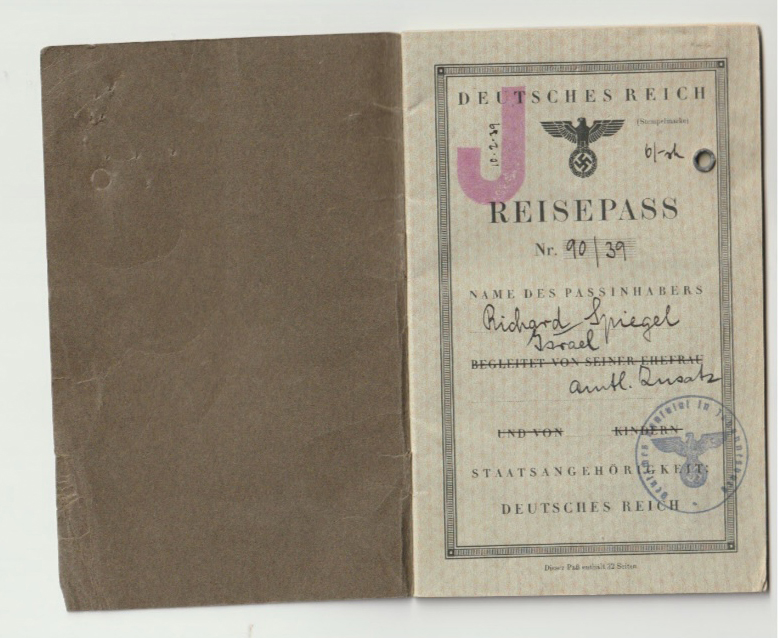
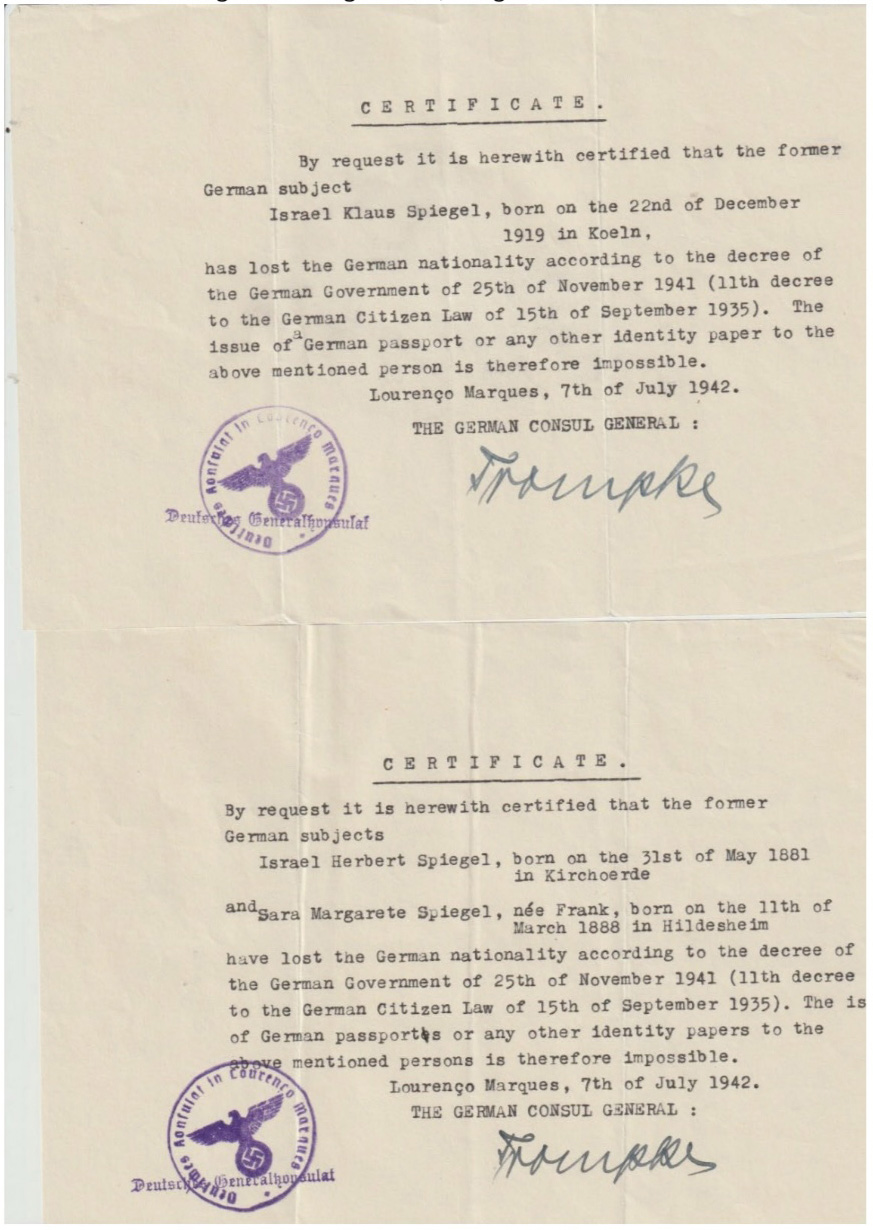
Their arrival in Portuguese East Africa on tourist visas, in February 1939, offered safety, but little comfort. For seven long years, Herbert and Margarethe remained there as stateless refugees, unable to work freely and uncertain about their future. Their passports, like those of all Jews under Nazi decrees, bore humiliating enforced middle names – ‘Israel’ for Herbert and Klaus, and ‘Sarah’ for Margarethe. Unusually, a couple of years later, Margarethe’s mother, Ella Frank, aged 78, managed to escape Germany and join them in Lourenço Marques before travelling by cargo boat to the USA, where she went to live with her son Edgar, (Margarethe’s brother), in Chicago.
Klaus, aged 19, suffered deeply after arriving in Mozambique. He was legally prevented from finding meaningful employment, also unable to join his brothers in South Africa due to the Aliens Act; he battled depression and despair. Eventually, in 1944, he managed to leave for the British Mandate of Palestine.
Herbert and Margarethe were finally able to join their son Richard in Johannesburg in 1946. Sponsored by him, they became residents of South Africa, where they spent their remaining years surrounded by family and gained stability, which they had lost in Europe.
The wider Spiegel and Frank families were not all as fortunate. Two of Margarethe’s siblings (on the Frank side) managed to travel to Chicago in the USA. Mandy is still searching for answers about the third Frank sibling and his family, who did not leave Germany.
One of Richard’s cousins on the Spiegel side went to the British Mandate of Palestine; one sister also reached the USA; and one of Herbert’s older brothers went to Argentina. Relatives who remained in Germany probably did not survive the Holocaust.Richard did not easily talk about his past, which was not uncommon for his generation and their traumatic experiences growing up in Nazi Germany.
Of Herbert’s many siblings, little is known about their fate and that of their children and possible grandchildren. Their names represent the Spiegel family probably extinguished by Nazi brutality. There is still some investigation to be undertaken to find the truth. ●
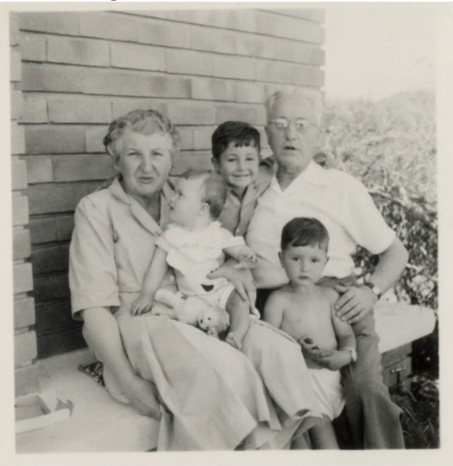
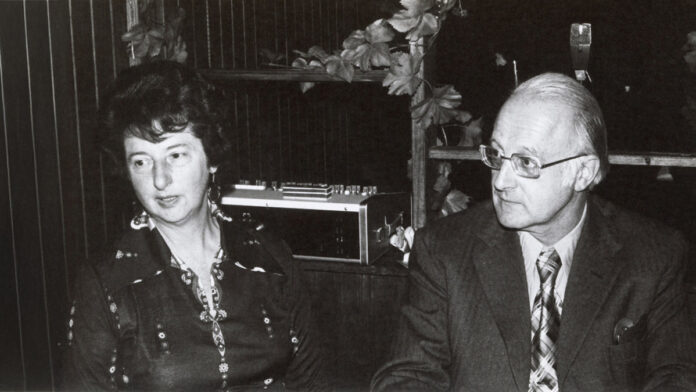
Herbert Spiegel, Margarete Spiegel and grandchildren Mandy, Andrew and Timothy, 1954 Johennesburg Richard’s passport issued in 1939 in Johannesburg, stamped J, and with the word ‘Israel’ inserted. Certificate revoking German citizenship
For the current edition of the Cape Jewish Chronicle, click here.
In addition to tracing her father’s family history during World War II, Mandy O’Donnell (née Spiegel) has been researching her mother’s side – the Schuitevoerder-Kopuit family. Her mother, known in South Africa, whilst at school, as Suze Shipman, and later as Suze Spiegel, was originally from Amsterdam.
From Amsterdam to Cape Town – and back again
Mandy’s maternal grandparents left Amsterdam for Cape Town in 1929 for her grandfather, Japie, to work in the diamond trade, as employment was scarce in Holland. They returned to the Netherlands two years later as they were missing their family and home. Fortunately, they decided to return to Cape Town in 1933, securing safety for their immediate family from the horrors that were to come. Almost all their extended relatives who remained in Europe perished during the Holocaust. The family eventually settled in Lester Road, Wynberg.
Letters that open a window to the past
While Suze did tell her children many stories of her past, most of what Mandy has recently learned about her mother’s family comes from a remarkable collection of letters discovered among Suze’s possessions after her death in 2017.
“Before my Ma’s passing, I had no idea that she had kept many letters, including her long correspondence with a surviving cousin, Sonja Kopuit. They were very close as young children before Suze left Amsterdam,” Mandy explains. “The letters provide an incredibly vivid picture of life in Amsterdam before the war.”
The letters, written between 1936 and 1949, are now being painstakingly transcribed, some needing sensitive translation into English. Mandy is reading each one and piecing together the story they tell of a family caught in the upheavals of pre-war and subsequent displacement.
A cousin’s courage
Sonja, at 19 years, was detained by the Germans in 1941 during their occupation of the Netherlands and placed on a deportation train probably to the Westerbork transit camp – a gateway to the killing centres of Auschwitz-Birkenau and Sobibor. In a moment of extraordinary bravery, she broke a window and jumped from the moving train soon after it left the station; she then found her way onto a return train into Amsterdam.
It was a perilous journey. The Germans knew that a young woman had escaped from the transport and were searching for female escapees on trains. Fate intervened when a man nearby silently handed Sonja his train ticket, knowing inspectors were checking for a woman without one. His simple act of courage saved her life.
Sonja went into hiding in Amsterdam, and Mandy hopes the letters will shed light on this dangerous and defining period.
The search for identity
Like many survivors and their descendants, questions of identity linger. “As evidenced by the letters, Sonja struggled before and after the war with her Jewishness,” says Mandy. “And my siblings and I have also grappled with our own sense of identity – shaped both by our family histories and by the challenges of growing up in apartheid South Africa.” ●
For the current edition of the Cape Jewish Chronicle, click here.
October saw the official opening of a new care centre in the Cape Town Jewish community, geared to provide a home away from home for children in vulnerable situations.
Olive Tree House is a daycare centre located on the Herzlia High School campus and is a collaboration between Herzlia and Oranjia.
As Belinda Slavin, the Director of Oranjia, points out: “It’s long been clear to us that we need to provide support measures for children and families who are struggling. Olive Tree House offers a space where stress on a family unit can be reduced, and children can come to the daycare centre and receive meals, academic support and extra-curricular enrichment such as sports activities, outings and holiday care.”
For many years, Oranjia, a communal organisation established in 1911, served as a residential care home for orphans or for children living in vulnerable circumstances. The need for daycare – for children to have a secure place to go to after the school day and before returning to their own homes – became evident a number of years ago, and Oranjia provided for this need but the facility available was not ideal. “Since 2018, creating a dedicated space for the daycare has been a project very close to our hearts, a long-held dream of Antony Leader and Esta Levitas that began many years earlier,” explains Eleanor Miller, the outgoing Chairperson of Oranjia, who was a driving force behind the establishment of the new facility. “We had many obstacles to overcome, including not being able to find suitable premises for this – until now.”
The fulfilment of the dream is Olive Tree House, which has been set up in a house on the Herzlia High School property. “The partnership between Herzlia and Oranjiahas been incredible, and we’re so grateful for the school’s ongoing support and collaboration,” commented Eleanor at the opening event, where she also acknowledged the generosity of the donors whose contributions helped turn the dream into a reality.
Donors include artist Galia Gluckman, who generously gave several pieces of her artwork.
The facility has been in operation for a few months – and positive outcomes are already clear. “Since we opened Olive Tree House, we have grown in the number of children being referred to our centre,” says Amanda Varkel, the new Chair of Oranjia.
In addition, there are clear indications that the impact on the lives of the children has been positive. As Amanda says, “Children have provided positive feedback about their time at the daycare and have commented on how they have had many exciting new experiences with the daycare managers, and children. Teachers at school have reported that many of the children have improved academically and are more engaged in school life.”
Children and families requiring extra support or who may want to find out more information may contact Herzlia’s SEED Department and/or JCS social workers.
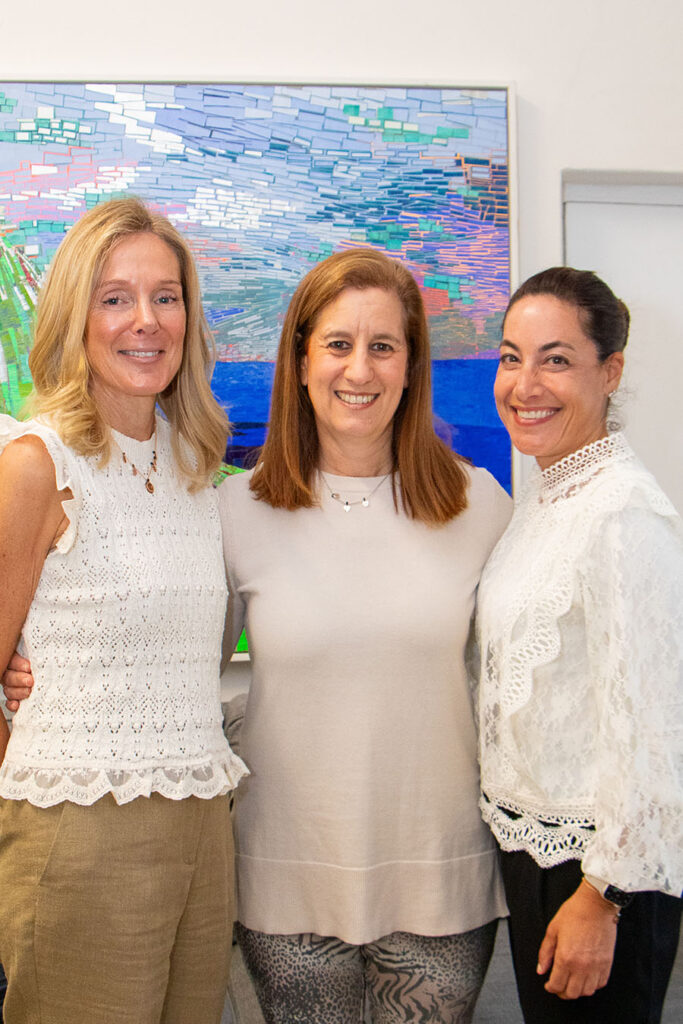
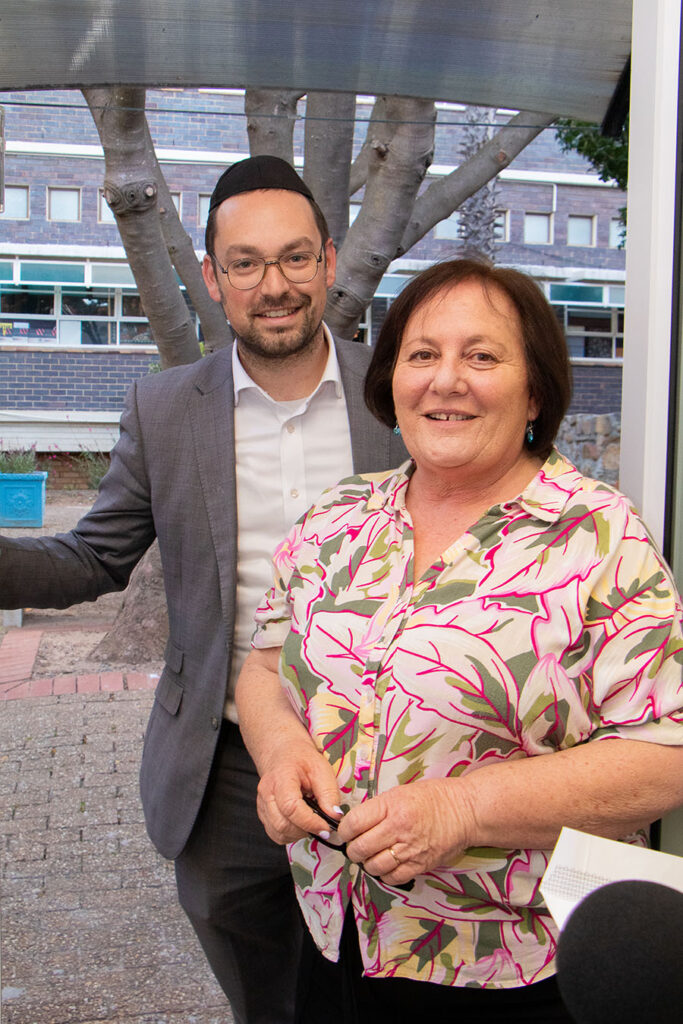
The Oranjia CommitteeL-R: Rabbi Silver, Belinda SlavinShane Brorson, Andries Van Renssen, Geoff Cohen, Amanda VarkelL-R: Belinda Slavin, Rodney Stein, Esta Levitas, Eleanor Miller, Dalia Katz, Ryan Epstein, Amanda Varkel, Carrie Gruzd, Nicky Pamensky, Tamara Davidson, Motti Lewis, Anthony Leader
For the current edition of the Cape Jewish Chronicle, click here.
On the 3rd of October 1995, after only four hours of jury deliberation OJ Simpson was acquitted. I was stunned. As a final year law student, it went against everything I believed to be true.
Guilty people are meant to pay for their crimes, and blindfolded Lady Justice, who symbolizes the impartiality of the law, was missing in action. I learnt an important lesson – the seemingly impossible can be achieved if you have a winning team. In this case, OJ had the best lawyers money could buy – his ‘Dream Team’.
Time-hopping to October 2025, the concept of a ‘Dream Team’ still resonates with me, albeit for a different reason. When I accepted the nomination of chair, I glanced up and my eyes locked on the list of former chairpersons displayed on the wall in our board’s ‘War Room’. This distinguished list filled me with a blend of pride, gratitude and self-reflection. The baton had been passed, and I needed to draw strength and collective wisdom from the past, and I needed to do this swiftly. I did this in the only way I know how – I looked forward. I looked around the board table and focused on the 23 board members and four professional staff, our ‘Dream Team’.
We are fortunate enough to have a Western Cape Jewish community where people step up into leadership positions, spending their precious time giving back so selflessly to our community. Added to this, they are leaders in their professional space, with specialised skills and qualifications, and a deep passion for our community. The last two years have been particularly challenging for our community, mirroring the struggles of Jewish communities worldwide. We, as your elected leaders, have fought and will continue to fight against antisemitism and hate in every way possible and by every means. We have had our wins and our losses, but still we fight, each and every day. We advocate for you and have painstakingly built up relationships with the public and private sector, always advancing our rights as Jews to live and thrive in the broader community. The preamble to our Constitution says that, “South Africa belongs to all that live in it”. Our ‘Dream Team’ is committed to making sure that these words are our lived experience.
We are also blessed to have a plethora of affiliate organisations that do so much to enhance our Jewish life here in the Western Cape. One simply needs to page through this Chronicle to see the breadth and width of our affiliate organisations and the fullness and richness of their offering to our community. I urge you to explore the options and find something that resonates with you, to take advantage of their services, and perhaps even volunteer if you can.
As I write this, it has been over two years since the atrocities of October 7th, and I am holding my breath and praying that the fragile peace deal between Israel and Hamas holds and that there is an end to the loss of life for all innocents. I am overcome with deep relief that our brothers and sisters have been released from a hell that I cannot begin to imagine. Our strength as a community, as Am Yisrael, has been tested and once again we have overcome. We do so with pride, courage and a commitment to ‘dance again’. Here on the tip of Africa, we have cried together, prayed together and galvanised in support of our Jewish homeland, our global Jewish community, and one another. We have been a ‘Dream Team’.
I love our community, and I want to see it flourish from within and in the broader context. I undertake to do all I can to contribute meaningfully and purposefully, always guided by our Jewish values with a healthy dose of Ubuntu. “I am because we are” interconnected by a golden thread that deeply values the concept of community. I, together with our ‘Dream Team’ of board members and our professional team, look forward to working with and for our community in the coming term. The OJ Simpson case may have quashed my desire to become a criminal lawyer, yet it did sow the seed of what can be achieved if you have a ‘Dream Team’. My intention is for us to be yours. ●
For more than two years, we have been praying and hoping for an end to the war between Israel and Hamas.
We have pleaded for the release of the hostages and fought continuously against hatred and antisemitism.
As a Jewish community, we have experienced a spectrum of emotions – anger, fear, despair, resilience – and now, finally, hope and a belief that things may very well change for the better.
The ceasefire agreement was a monumental moment that has, hopefully, brought an end to the war. Watching the twenty living hostages return to their families – seeing the hugging, the embracing, the sheer joy on those faces – must have brought a tear to us all. And, while the return of the bodies of those who were murdered can never bring the same comfort, the relief of knowing their loved ones are home and laid to rest allows their souls to move on and their memories to truly be for a blessing.
Back home in Cape Town, we watched, we wept, and we rejoiced. While Simchat Torah 2023 and even 2024 will be remembered as among the least celebrated Yom Tovim in recent memory, Simchat Torah 2025 will go down as one of the most joyous. I was fortunate to spend this Yom Tov with my family in shul. The evening and morning of Simchat Torah were absolutely incredible – the vibe, the energy, the party atmosphere as we celebrated both the joy of the festival and the joy of our brothers and sisters finally coming home.
You could feel the intensity of prayer, the sense of relief at being able to let loose, and the passion in every song of joy and gratitude. The last time I remember such spirited celebration was at my son’s barmitzvah last year. There was no holding back as we danced in the middle of shul, holding all the Sifrei Torah, waving Israeli flags, and singing Hebrew, Israeli and Jewish songs until our voices went hoarse. The following day, the celebrations spilled into the streets – men, women, and children dancing with the Sifrei Torah as cars drove past hooting in celebration, their drivers giving us thumbs-up signs. For the first time in a long time, our Jewish identity was on display for all to see – loud and proud.
On Yom Kippur, I was honoured to deliver the Yom Kippur Appeal annual address. My message focused on how our shuls are our home away from home – our safe spaces where we can be proud Jews without worrying about the stress of the outside world. Shuls have always been the one constant in our lives, the places where we celebrate, pray, mourn, and connect with our Yiddishkeit. They are also investing in our future – upgrading buildings, hiring professional staff, and offering exciting programmes and events. Shuls have always been sanctuaries where we can pray and express our Judaism freely.
For the past two years, I have often said that Cape Town remains one of the safest and most vibrant places for Jews to live. We have been able to showcase our identity proudly – every single day. With the ceasefire holding for now, we can only hope that real change is on the horizon, and that peace is no longer just a dream.
Let us continue living our lives as proud Jews – and encourage everyone in our community to do the same. ●
Blue concrete wall textures for background - Vintage Film Filter
By Anton Ressel, ORT Jet
Arriving at the ‘right’ price for your products or services can be easier than you think.
One of the most common challenges entrepreneurs face is figuring out how to price their products or services correctly. It’s not surprising — while costing is a relatively exact science, pricing is shaped by psychology, perception, and context.
Your price depends on many moving parts: your target market, brand strength, product/service quality, packaging, availability, and even inflation or supply chain trends. It can feel like you need to be an accountant, marketer, and mind reader all in one!
It doesn’t have to be that complicated. By following a few core principles, you can find a pricing strategy that’s fair, sustainable, and profitable. Here are some tips:
1. Know your costs This is the foundation of every pricing strategy. If you don’t know what it costs to make or deliver your product or service, you’re guessing – and that’s risky. Understanding your full cost structure (materials, labour, overheads, time) allows you to set prices confidently, protect your margins, and spot inefficiencies early. Without this, you can’t plan for growth or sustainability.
2. Focus on value, not just price Most customers don’t always buy the cheapest option – they buy what feels worth it. In tough economic times, people still pay for convenience, trust, or quality. The key is to communicate value clearly. That could mean offering a guarantee, loyalty rewards, quick delivery, or excellent after-sales service. When customers feel they’re getting more than just a product or service, price becomes less of a deciding factor.
3. Discount with intention Many small businesses make the mistake of discounting too easily, especially to attract or keep customers. But discounting eats into profit fast. For example, if your gross margin is 30% and you offer a 10% discount, you’ll need 50% more sales just to break even…
Instead, make discounting a two-way exchange: if you give a discount, ask for something in return – a larger order, faster payment, a longer contract, or a referral. This keeps the transaction balanced and sustainable.
4. Be ready to defend your price Confident pricing comes from believing in your product or service, and knowing your worth. Be clear on what makes your offering different, understand your competitors, and be able to articulate your unique value. When a buyer challenges your price, explain why it’s fair – and don’t be afraid to walk away if it’s not viable. A short-term loss is better than building a reputation for being cheap.
Pricing is part numbers, part mindset. Blend sound costing with strategic thinking and self-belief, and your pricing will not only cover your costs – it will leverage the strength of your brand, attract the right customers, and drive sustainable profit. ●
Anton Ressel is a business strategist, mentor and coach with over two decades of experience in helping entrepreneurs achieve new levels of success.
ORT Jet empowers entrepreneurs through mentorship, training, networking and business talks to build stronger South African enterprises. Using a proven approach, ORT Jet supports founders on their business journey. Visit ortjetcapetown.org.za
Listen to this book review read by Beryl Eichenberger below:
I had left The Listeners by Maggie Steifvater to stew, so to speak, thinking it would be a light, frothy read – to be read in between the tense thrillers. But, oh, how wrong I was. Definitely neither of those assumptions; in fact, it brought a little known (well to me anyway) piece of wartime history to luminous light in a wonderfully constructed story.
This is Steifvater’s first adult novel and, as an artist in several mediums, and a musician, her prose reflects how she sees her environment and what lies underneath. The cover of the book says it all – intricate, mystical, to be carefully looked into. Her research took her five years, she uncovered many stories, revealing heartbreak, choices, and the chilling reality of the Nazi regime’s doctrines and what return to Germany might mean.
You might then ask, “What does a remote luxury hotel in the Appalachian Mountains in West Virginia have to do with WWll?” It’s 1942 after Pearl Harbour. The USA has joined the war and so there is the question of what to do with the enemy diplomats? Removed from their posts, they had to be held before being deported back to their countries. Several luxury hotels found themselves reluctantly hosting AXIS diplomatic legations. Stiefvater has created one such glamorous and regal hotel, Avallon, where high-ranking Germans, Italians and Japanese were interned under the watchful eye of the State Department’s Agent Tucker Minnick and his team, hosted by the female GM June ’Hoss’ Hudson.
Inherited by playboy, Edgar Gilfoyle, the hotel is peopled by loyal staff, some with their own reasons to fear these guests, but showing its best hospitality face is a given. It’s luxury at its best – a century of tradition as elegant as the service. That was something that rather irked me, these enemies of the state enjoying their status while atrocities were being committed in their country’s names.
But Stiefvater has created an undercurrent of evil, not just through the characters, some whose nefarious plans and every waking move is followed surreptitiously, but through the ripple, drip, splash and torrent of the sweet waters that run under the hotel and down the mountain. Listening. Healing when it wants to be – turning when not…it’s a deliciously clever characterisati… onThe water is something June knows plenty about. A mountain girl brought up alongside the Gilfoyle family; the children her playmates; the father educating her to take over as GM; it’s an interwoven story. She listens to the water as she listens to her guests and her heart. Then there’s the snails, both as a glass gift and crunching underfoot in strange places. There are chilling moments which dig deep as the listening reveals plots, desperation, sadness and choices.
Steifvater creates listeners throughout – through the walls with Agent Minnick, in the halls with innuendo, in code, with the nameless guest in 411, the injured family member. Listening becomes tangible; she surprises her readers, keeps you guessing. Her characters are multilayered, and she adds some surprising twists. All underpinned with a sort of magic that reminded me of Alice Hoffman novels. But Stiefvater has her own distinctive, addictive style. That many of the bizarre instances were taken from records is extraordinary – but desperate times call for desperate measures and, as Steifvater notes: ‘As a novelist I usually have to dramatise reality. In The Listeners, I found myself having to do the opposite.’
A novelist’s dream and a reader’s delight. ●
Maggie Stiefvater is a Jewish American novelist, artist and musician, best known for her teen fantasy novels. She has won several awards for her novels and, before turning to writing, was a portrait painter. Apart from her creative passions she also loves cars! She writes in several genres: fantasy, young adult and historical fiction. The Listeners is her first adult historical fiction novel.
The book is available in all good bookstores and for borrowing from the Jacob Gitlin Library.
For the current edition of the Cape Jewish Chronicle, click here.
The Eliot Osrin Leadership Institute to Host World-Class InGathering Leadership Summit in Cape Town, South Africa
The Eliot Osrin Leadership Institute is a pioneering organisation in South Africa and on the continent, facilitating bold, visionary, and ethical leadership to ensure that the next generation of leaders is shaped by shared values and elevated skills. Their Mantra is INVESTING IN PEOPLE WHO INVEST IN COMMUNITY.
The Eliot Osrin Leadership Institute has curated the InGathering Leadership Summit which speaks to their commitment to elevate and empower talented and skilled leaders, and in so doing strengthen community. On Sunday, 2 November (sessions open to all) and Monday, 3 November 2025 (Exclusive to lay/volunteer and professionals serving in the Cape Town Jewish Community), The Eliot Osrin Leadership Institute will be hosting The InGathering Leadership Summit. It will be an unparalleled extravaganza where international and local thought leaders converge to refine what it means to lead. A kaleidoscope of 30+ workshops, masterclasses and panels across six themes each with a spotlight on leadership, focusing on personal, professional, entrepreneurial, financial, and community. Sessions will resonate long after, with practical take home tools and tips.
This Summit will appeal to:
Executives, entrepreneurs, professionals, managers, life-long learners, educators, those in not-for-profits, students, graduates, lay/volunteer and professional community leaders, those seeking to expand their networks, and job seekers.
We encourage you to visit their website on http://www.osrinleadership.org to orientate yourself to their organisational values, culture and leadership offerings.