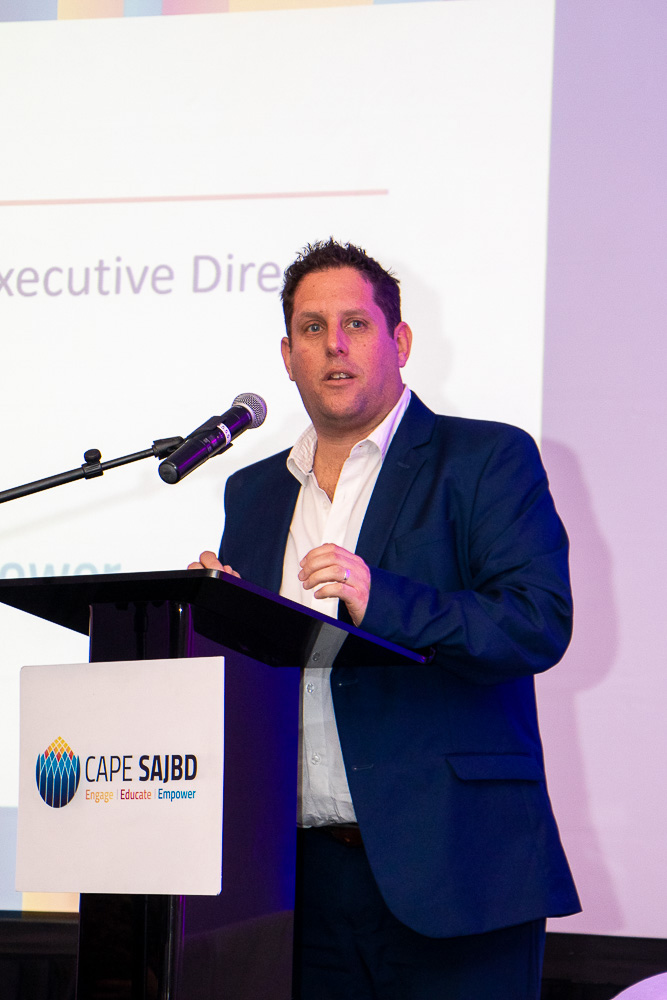
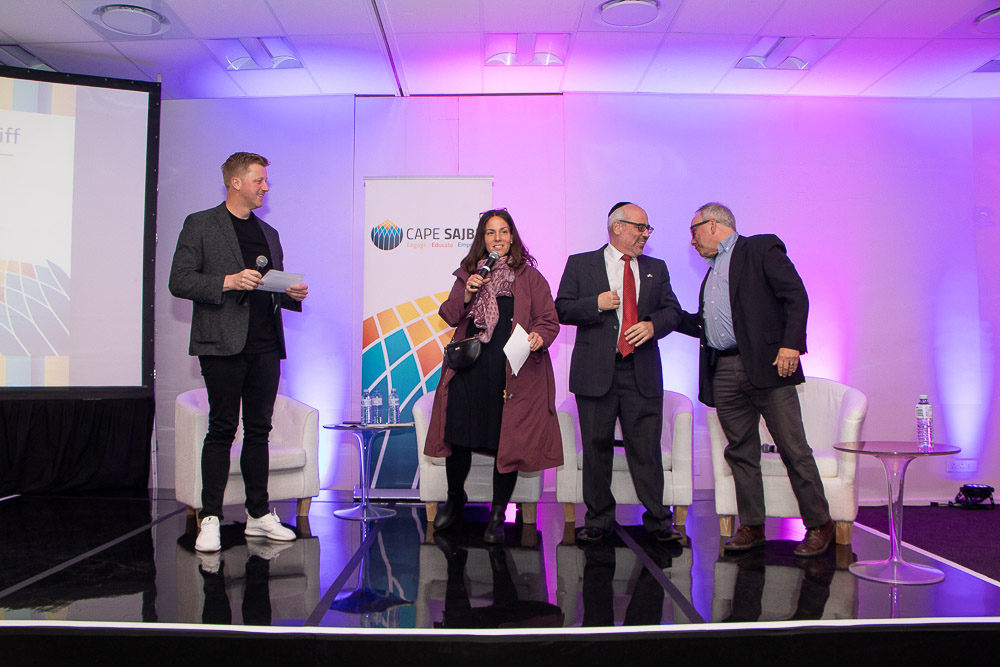
Gareth Cliff with (L – R) Tzvi Brivik, Simone Sulcas (Vice Chair), Adrienne Jacobson (Chair) and Daniel Bloch (Executive Director).
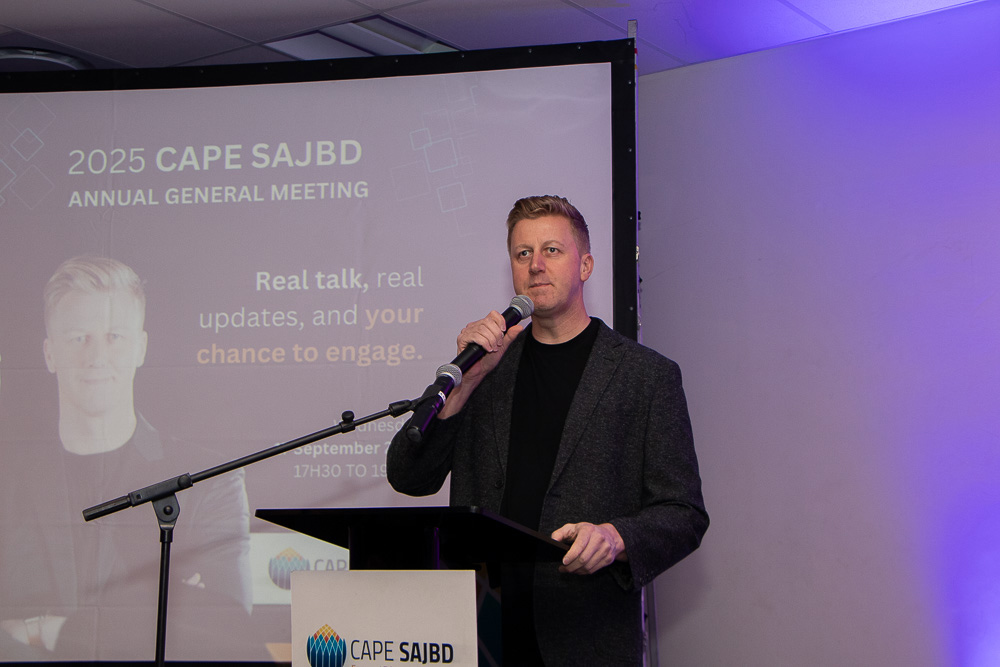
The Cape South African Jewish Board of Deputies (Cape SAJBD) held its Annual General Meeting on Wednesday, 17 September 2025, in a format that broke with tradition and brought fresh energy to the proceedings. Hosted by prominent South African media personality Gareth Cliff, the evening combined formal reports with candid discussions and uplifting stories of Jewish life, outreach, and growth.
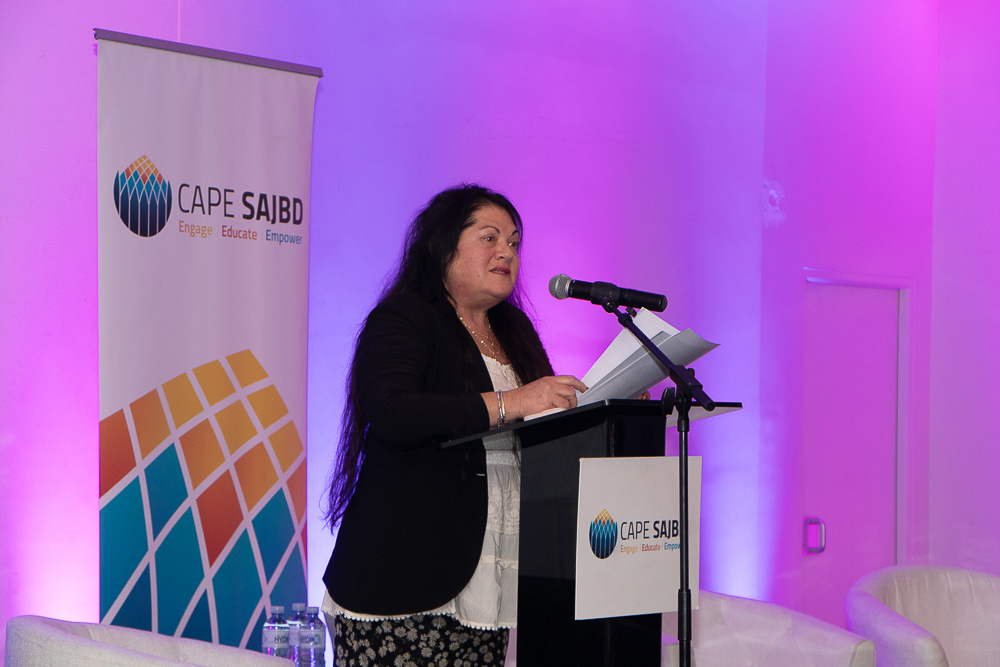
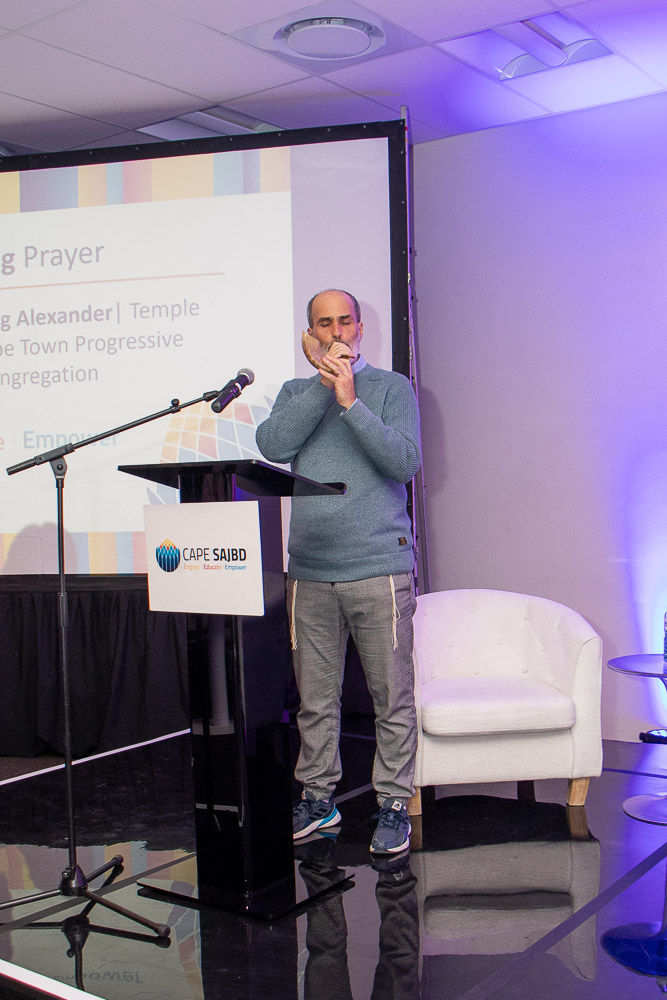
The meeting opened with words of welcome from Executive Director Daniel Bloch, followed by a message and blowing of the Shofar by Rabbi Greg Alexander of the Cape Town Progressive Jewish Congregation. Treasurer Lester Hoffman presented his financial report, affirming the Board’s strong governance and accountability. Chairperson Adrienne Jacobson then delivered her address, reflecting on challenges and achievements over the past year, and reaffirming the Board’s mission to protect Jewish life and values in the Western Cape.
The announcement of the new Cape SAJBD Council for the 2025-2027 term marked a key moment in the programme, formally recognising those stepping forward to lead the community in the coming years.
Straight talk: Facing the tough issues
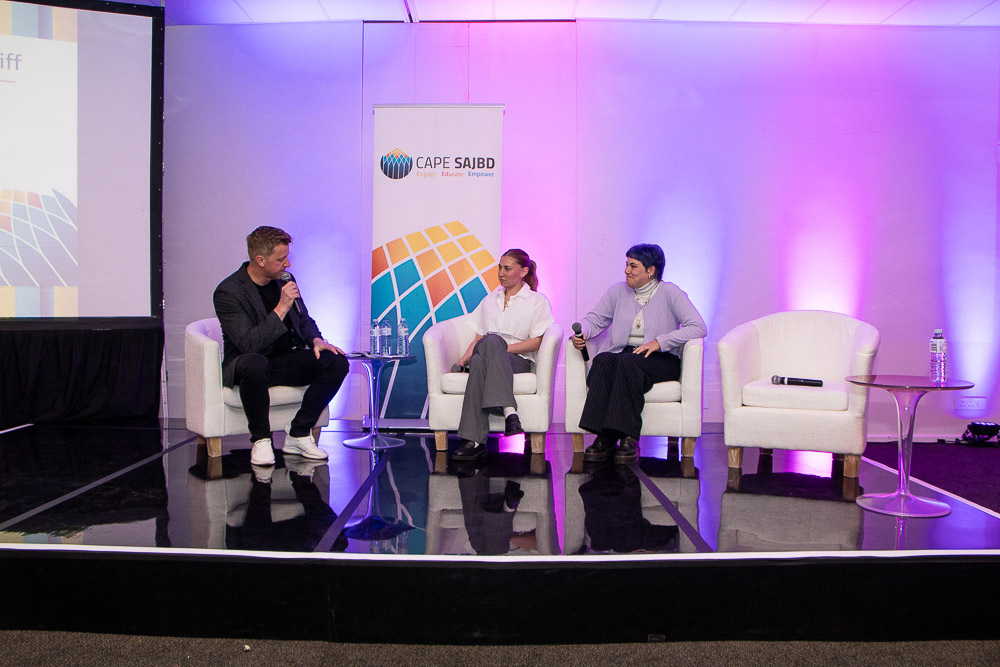
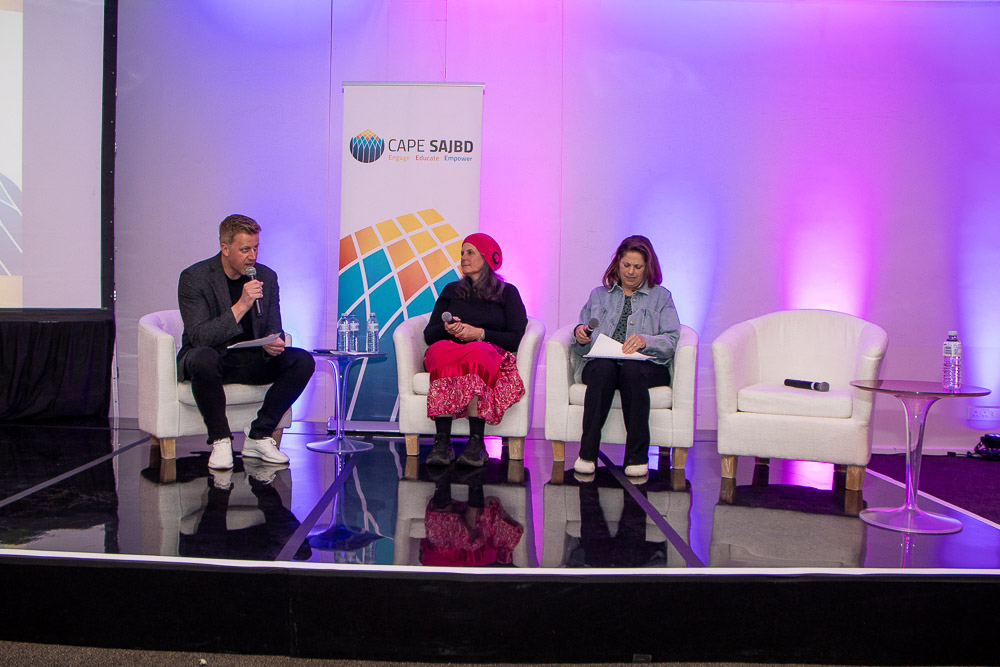
One of the evening’s highlights was the panel ‘Straight Talk with the Board’, moderated by Gareth Cliff. Joined by Executive Director, Daniel Bloch; Chairperson, Adrienne Jacobson; and Vice Chair, Simone Sulcas, the discussion tackled pressing issues facing the community:
Media bias and how the Board works to counter Anti-Israel and Antisemitic narratives.
Protest action in Sea Point and across Cape Town, with questions raised about community safety.
Equality Court cases addressing online hate speech and antisemitism.
Campus climate at university, where the Board continues to monitor boycotts, protests, and legal disputes while supporting Jewish students and academics.
Audience questions (received in advance) deepened the conversation, creating a rare and important space for open dialogue about concerns affecting the Jewish community.
Sharing stories: #StrongerTogether
The second half of the programme shifted to inspiring narratives of growth and resilience. In a series of short panels, community leaders shared the vibrant work happening across Jewish Cape Town:
Karen Kallmann, Chair of the Union of Jewish Women, shared highlights from their impactful projects in education, social justice, and crisis relief.
Gina Flash, Executive Director of Mensch, described how the Mensch organisation, born out of the Board, has grown into a stand-alone force for social change.
Zeesy Deren (Director of Sinai Academy and Rebbetzin of Chabad West Coast) spoke of the exciting growth on the West Coast, where new families are building a vibrant Jewish hub with a school, a shul, and a mikveh.
Bryan Opert & Robert Simon (Paarl Jewish Community) offered a glimpse into the growing Jewish life in Paarl and the Winelands, fuelled by semigration.
Rachel Segal (SAUJS WC Chair) and Ruby Kurgan (SAUJS Stellenbosch Chair) inspired with their stories of resilience on campus, from bridge-building with other student groups to launching an entirely new SAUJS branch.
Dawn Nathan-Jones (Chair of Entrepreneurs’ Network) described how EN has blossomed into a stand-alone platform empowering Jewish and non-Jewish entrepreneurs.
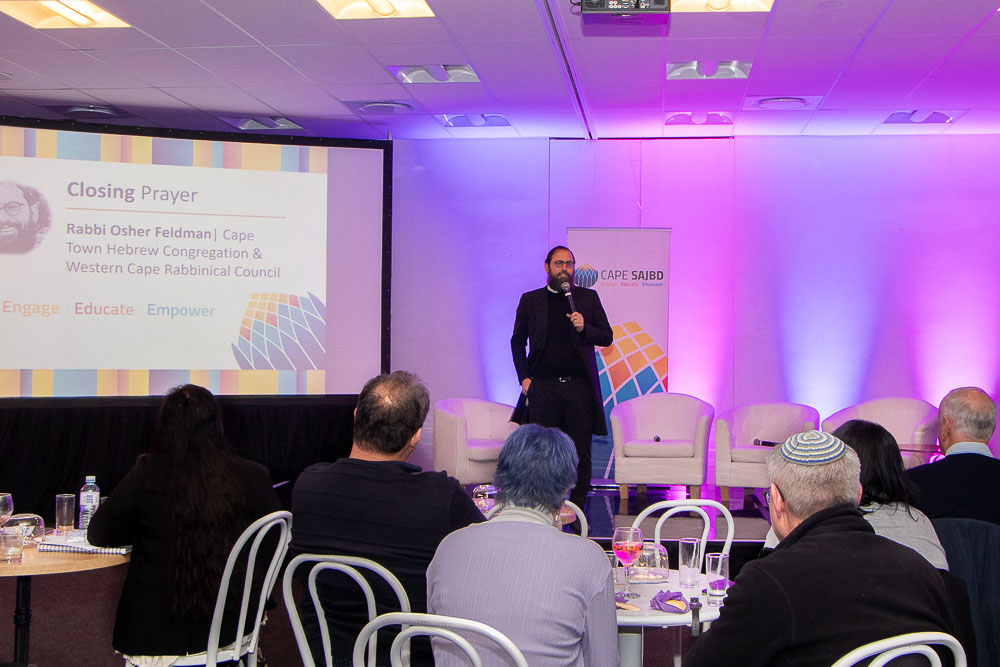
The evening closed with remarks from leadership, a short promotional trailer advertising a new podcast hosted by the Cape SAJBD Executive Director, entitled ED Talks, and a prayer led by Rabbi Osher Feldman of the Rabbinical Council of the Western Cape, and the singing of anthems.
By blending honest discussion of serious challenges with moving stories of resilience and renewal, the 2025 AGM reflected the Cape SAJBD’s dual role: defending Jewish rights while nurturing Jewish life. The innovative format, under Gareth Cliff’s moderation, left the community energised, informed, and connected as it looks ahead to the next two years. ●
Gareth speaks to Dawn-Nathan Jones about the Entrepreneurs Network.Gareth Cliff speaks to the Chairs of SAUJS; Rachel Segal (Western Cape), and Ruby Kurgan (Stellenbosch).Gareth in conversation with Zeesy Deren (Sinai Academy and Chabad of West Coast), Bryan Opert and Robert Simon (Paarl Jewish Community).Gareth chats to Karen Kallman (Chair – UJW Cape Town), and Gina Flash (Executive Director of Mensch)Daniel Bloch, Adrienne Jacobson and Simone Sulcas share insights into the Board’s work with the media, government and court cases.
On Thursday the 28th of August, Cape Town welcomed survivor Or Levy, who was one of the longest-held hostages, released after 491 harrowing days in Hamas captivity. In a raw and honest account, Or shared his story with our community in an evening of profound testimony.
Many were rightly horrified in February this year when Or Levy was released alongside fellow hostages Eli Sharabi and Ohad Ben Ami after 491 days in Hamas captivity. The images of these gaunt, frail men reflected the horrors they had endured since being abducted by Hamas on that dark day, October 7th. Despite his weakened physical state, Or’s reunion with his family at Sheba Medical Centre was deeply moving; a testament to resilience and the enduring strength of the human spirit. Of particular emotional weight was his reunion with his young son, Almog, following the devastating confirmation that his beloved wife, Einav, had been murdered. As Or recounted, the pain of that moment, conveyed through his son’s words, was among the most unbearable of his ordeal. Yet, intertwined with that anguish was the profound elation of holding his child again and beginning the long, delicate process of reconnecting and getting to know him. The two are now inseparable.
In his talk Or recounted the harrowing details of Hamas’ co-ordinated attacks, which began the moment, quite literally at 6.29am, that he and his wife, Einav, arrived in the parking area at the Nova Festival. He described the terror of seeking shelter and the depraved cruelty of attackers firing on people trying to protect themselves, of realising Einav had been seriously wounded, and of being dragged away from her and into a vehicle destined for Gaza. Or also spoke of the danger he sensed from ordinary Gazans, realising that he could be lynched were it not for his ‘value’ to Hamas as a hostage. The deprivation he endured during captivity was inhumane: locked for most of his time in Gaza in the bowels of the earth in a dark terror tunnel the size of ‘a tomb’ with several other hostages, surviving on minimal food, denied sunlight and human dignity. Beyond the physical suffering was the need to bury his anguish for Einav in order to survive for his young son, Almog.
A striking act of memory and tribute that Levy shared was a tattoo inked on his arm carrying a quote echoed in Viktor Frankl’s Man’s Search for Meaning. These words sustained him during captivity. ‘He who has a why can bear with any how’, was originally said to him by fellow captive Hersh Goldberg-Polin Z’L on their 52nd day in captivity. Many in the audience became emotional when Levy gently told us he always knew that, when (if) he returned home, he wanted that sentence on his skin so that he would never forget its power – and the memory of Hersh, who was later murdered by Hamas.
The evening concluded with a deeply meaningful gesture: biscuits made from Einav’s beloved recipe, accompanied by the recipe, for attendees to take home and remember her by. Or Levy’s testimony left us with sorrow, yes, but more than that. It carried a powerful message of resilience and reminded us of our responsibility as a community to remain steadfast in our determination to bring all remaining hostages safely home. ●
For the first time since 1932, Irma Stern has returned to Berlin. The city’s Brücke Museum is hosting a landmark exhibition Irma Stern: A Modern Artist between Berlin and Cape Town from July to November 2025. It is dedicated to the South African Jewish artist, who fled Germany after the rise of the Nazis brought her promising European career to an abrupt halt.
Now, nearly a century later, the Brücke Museum has mounted the first solo museum exhibition of Stern in her former home city. More than forty works, paintings, drawings, and watercolours, many drawn from South African museums and private collections, fill the museum’s galleries. Five are on loan from the Rupert Museum in Stellenbosch, which shipped works from its collection to Berlin. The result is more than a retrospective: it is a recognition that Stern belongs firmly within the global modernist canon, and that her work, long celebrated in South Africa, deserves full acknowledgement in Europe.
Irma Stern: A life between two worlds
The exhibition is a homecoming of sorts. Stern was born in the Transvaal in 1894 but spent much of her formative years in Germany. She studied painting in Weimar and Berlin, absorbing the spirit of Expressionism, and developed close ties with artists such as Max Pechstein. In the 1920s her bold canvases, portraits and landscapes of unusual intensity were displayed in the capital’s leading galleries.
Her career in Germany ended abruptly with the rise of the Nazis. As a Jewish woman, her art was branded ‘degenerate’,* and she was forced to abandon her European career. Returning to South Africa, she painted prolifically, both here and in the rest of the African continent, negotiating the contradictions of her identity: a woman artist in a male-dominated field, a Jew facing exclusion, and a white artist depicting African subjects within the structures of colonialism and apartheid. These tensions run through her work, giving it both its richness and its complexity. She would live until her death in 1966, mainly in her iconic house in Mowbray in Cape Town, now a captivating museum to her life and work.
The Eternal Child
At the heart of the Brücke exhibition is Stern’s haunting 1916 portrait The Eternal Child, painted when she was only 22 and still a student in Berlin during the First World War. The work was inspired by a fleeting glimpse of a malnourished girl on a tram. Deeply shaken, Stern captured the child’s gaunt face:
These were the war years in Germany. I knew what I had to express – the suffering and agony that a war means to all life. Soon afterwards I painted my Eternal Child – a little girl with large mistrusting eyes, with an embittered tight mouth, sitting on a chair, her plaits hanging straight off her naked forehead, her undefined hands clinging to a few field flowers … so as to assure that some beauty was always left.”
Her teacher disapproved of the work, failing to grasp its intensity. But for Stern, it marked her first truly ‘independent’ painting, the moment she found her artistic voice. She left art school, sought guidance from Pechstein, and embraced Expressionism on her own terms.
For decades, The Eternal Child remained one of her most personal works. Stern refused to sell it until 1964, just two years before her death, when she finally agreed to part with it to her friend and patron Huberte Rupert. Today the portrait belongs to the Rupert Art Foundation, where it has taken its place along with other works of Stern and a vast collection of iconic South African art. (https://rupertmuseum.org/). Its reappearance in Berlin marks the first time since 1919 that the painting has been exhibited in the city where Stern originally created it.
The portrait endures not only as a deeply moving response to wartime suffering but also as the foundation of Stern’s career: the moment she asserted herself as an artist of originality, empathy, and vision.
Sean O’Sullivan: Preserving Stern’s voice
The Berlin exhibition also coincides with the visit to the Brücke of Cape Town filmmaker Sean O’Sullivan who has not only worked all over the world, but has also created films for the South African Holocaust & Genocide Foundation, the South African Jewish Museum, the Kaplan Centre, and the Shoah Foundation in Los Angeles, where he documented Holocaust survivors’ testimonies.
Speaking of the exhibition, Sean observed: “After more than a century The Eternal Child has returned to a very different Berlin. And to say that much has passed in the interim would be more than an understatement. We had to be there to film it.”
Until recently, it seemed impossible to make a full documentary about Stern: no film or audio records were thought to exist. That changed with the discovery of historic archive material. Building on this, O’Sullivan is now developing a comprehensive documentary on Stern’s life and work.
Sean hopes to hear from anyone who personally knew Irma, or has film footage of her, to help complete this project of remembrance. If you can assist, please contact him via email at sean@sosfilm.com.
Looking ahead
This October, Stellenbosch’s Woordfees will host sessions dedicated to Stern, underscoring how her work continues to inspire new generations of artists, scholars, and admirers. (https://woordfees.co.za/en/program/)
Back in Berlin, however, it is The Eternal Child that commands attention. Painted in the anguish of war by a young Jewish student, withheld from sale for nearly half a century, and now showing in the city that once rejected her, the portrait embodies both fragility and resilience. For Jewish audiences especially, it stands as a symbol of endurance, a reminder that beauty and identity can survive even the darkest of times. ●
* ’Degenerate art’ was a term used by the Nazis to denounce modernist, abstract, or experimental art, which they associated with groups they persecuted, especially Jews and homosexuals, labelling it as un-German, subversive, and corrupt.
The Eternal ChildSean at the Berlin Holocaust MemorialIrma in her studio
For the current edition of the Cape Jewish Chronicle, click here.
Carol and Michael Wener's wedding in 1984. Carol's grandfather is on the right.
In the September edition of the Cape Jewish Chronicle, we carried the last article in a series that highlighted memories of Cape Town in the 1930s and 40s. The article focused on what the writer, Professor Philip Lanzkowsky, recalled of the years during and immediately after World War II.
We asked readers to share their recollections of this period, and Carol Wener sent this information to us:
My maternal grandfather (of blessed memory), Louis Metliss, was born in 1898 to a large family that had left Poland for London. His mother owned a pub; the family lived above it. During World War I, at the age of 16, Grandpa Louis faked his mother’s permission for him to join the army and ran away from home to join up. He became a mule tender in the trenches in France and was a victim of the gas used by the Germans.
A later medical assessment resulted in his decision to come to Cape Town – where the warmer climate would be good for his damaged lungs.
He served as a British officer training the South African troops during the Second World War, and was the recipient of a number of military medals.
Unfortunately, he was a man of few words, and one of my biggest regrets today was that we never had a chance to speak to him about his experiences in the trenches. ●
For the current edition of the Cape Jewish Chronicle, click here.
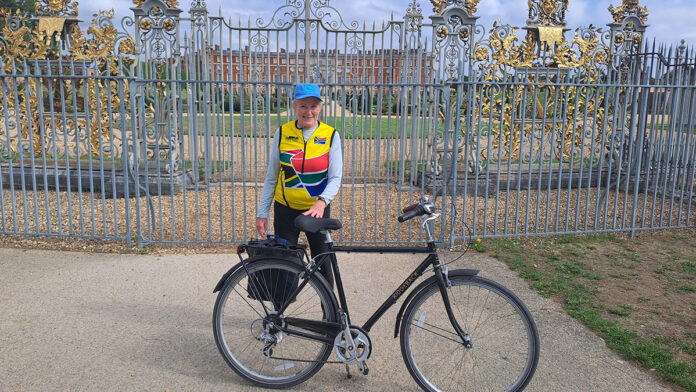
“I feel so privileged to have been able to live life to the full,” enthuses Helen Millson, possibly Rondebosch’s most well-travelled resident.
Splitting her time between Cape Town and the UK, she says: “I get to enjoy the beauty and natural surroundings of the Mother City while still working in professional sport abroad – and I always try to add a little European travel along the way.”
Helen’s career began when, at just 17, she left the then Rhodesia for England to study physiotherapy. “I wasn’t sure physio was really my choice,” she admits, “but it led me into some of the most exciting opportunities imaginable.” Those opportunities took her into the world of elite sport: five years with Stormers Rugby, work with the SA Rugby, South African national cricket side, and with the SA surf lifesaving team, SA Women’s Hockey, Commonwealth Games, All Africa Games and more. Today, even in her 70s, she continues to treat Premier League footballers in England as well as Bayer Leverkusen and PSG. “I was offered my current post for just two years,” she laughs, “and here I am, 15 years later, loving this work and the academic journey it involves.”
Eight years ago, Helen returned to Cape Town, motivated by a sense of social responsibility. “I felt I needed to give back after the damaging legacy of apartheid,” she explains. “That’s why I do a lot of pro bono work here, while still honouring my international commitments.”
She attributes much of her determination to her late mother, a German-Jewish refugee who fled Nazi Germany at the age of 11. “My mother valued education above all else,” Helen recalls. “Her example taught me that challenges are there to be taken on, not avoided.”
That lesson inspired Helen to pursue a PhD when many thought she was ‘too old’. Invited by the University of Kent, she turned decades of professional writing into a doctorate on hip and groin health in sport (completed in 2022). “I wanted my research to make a difference in the field I love,” she says.
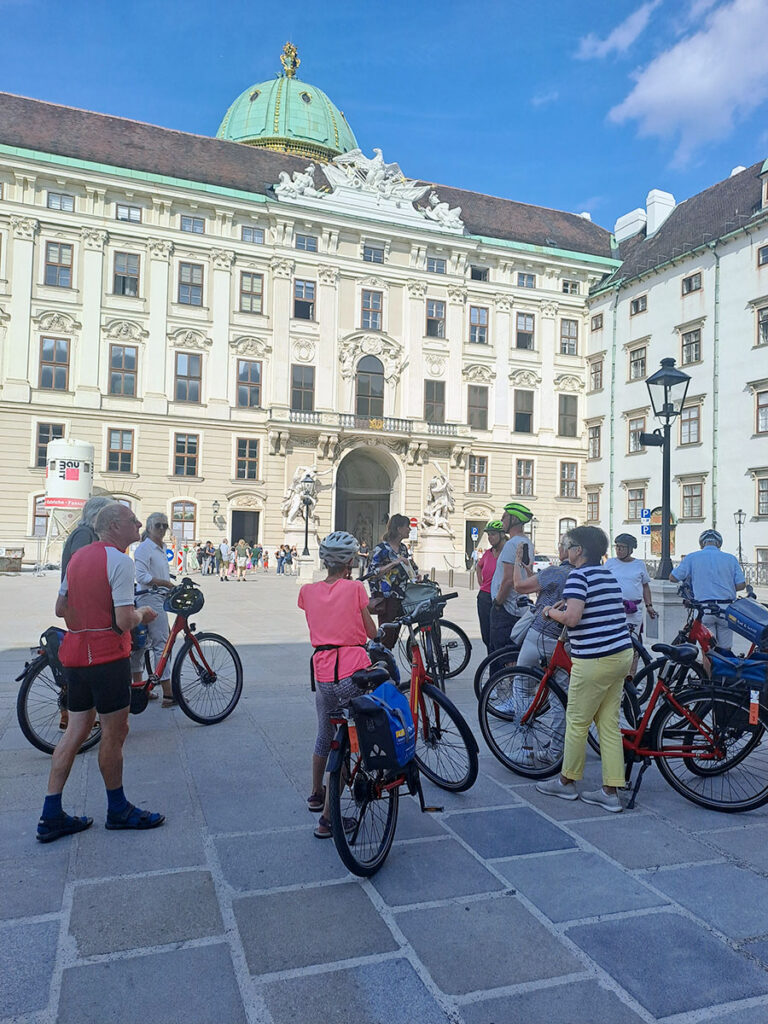
Her appetite for challenge remains strong. Just recently, she cycled 300km along the Danube River with a group of fellow seniors. Over eight days they travelled on board a luxurious Danube River cruise ship, stopping to pedal along the way. Their journey went from Passau in Germany, through Austria, Slovakia and Hungary before looping back, averaging 45km a day. This came only seven months after knee replacement surgery. “Cycling turned out to be the best therapy for my knee,” she says with a smile. ●
Helen’s advice on ageing
“I’m lucky to have chosen a career that kept me physically active. Older people should definitely keep moving. On our Danube trip, even those who weren’t cyclists rented e-bikes at some stops to explore towns instead of sitting on the ship. Staying active makes all the difference.”
Physio support – a woman among men in professional sport
Being a female physio in the world of men’s professional sport has come with its challenges, as Helen knows. In 1992, after Mandela’s release she was selected as the physio for the South African national rugby side. Danie Craven was appalled that a woman would be working in a role he considered suitable only for men. “Being denied the role didn’t stop me,” Helen comments. “In fact, I’ve worked almost exclusively with men in the professional sporting arena.”
This experience gave Helen good insight into the world of professional sports management and its many prejudices. Today, she shares those insights with corporates looking to educate their management teams.
Cycling tour in Budapest
For the current edition of the Cape Jewish Chronicle, click here.
Comfort Care Chronicles: Navigating life’s transitions Shelly korn Care Imagineer | Evercare
You don’t have to choose between fighting for life and seeking comfort. You can have both!
It’s not either/or – it’s side-by-side When facing serious illness, many families believe they must make a heart-breaking choice: fight for life or ‘give up’ and accept comfort care. This is a false choice! Adding comfort care from the time of diagnosis, alongside active treatment, helps people live longer and better. It’s not about choosing between hope and help – it’s about having both, each strengthening the other.
An extra layer of expertise – not a last resort Comfort care is specialised support for people living with serious illness. It focuses on relieving symptoms, clarifying treatment goals, and guiding families through complex –and often overwhelming– decisions. It can and should be provided at any age and at any stage of a serious illness. It’s an extra layer of expertise – not a last resort.
Earlier = longer and better When comfort care is introduced early, people typically experience less pain and anxiety and a better quality of life. In cornerstone studies with cancer patients, those who received early comfort care lived longer than those who received standard treatment alone. Why? Because well-managed symptoms mean more strength and resilience to complete treatment, better continuity of care, fewer emergencies, calmer conversations at home, and decisions that reflect what matters most – while avoiding harmful, non-beneficial interventions.
Side-by-side in real life Imagine someone on chemotherapy. With comfort care, nausea, pain, and fatigue are carefully managed so treatment can stay on track. Or consider a loved one with advanced heart failure at home. A clear breathlessness plan and the right medications reduce fear and suffering, prevent midnight hospital runs, and create more peaceful, meaningful time with family.
Families find strength too Comfort care supports families as much as it supports patients. Caregivers receive practical training, round-the-clock guidance, and a safe space to voice fears and process emotions. This support eases stress and strengthens family unity, allowing everyone to focus on what matters most.
Jewish comfort care In Judaism, Pikuach Nefesh – preserving life – is a sacred duty, inseparable from a commitment to dignity and to preventing unnecessary suffering. Comfort care honours these values by relieving pain and distress so that no one suffers needlessly. And as Hillel teaches, Im ein ani li, mi li? – if I am not for myself, who will be for me? Taking steps to access the right care is a profound act of self-advocacy, preservation, Chesed, and compassion for those we love.
You are not alone If you or someone you love is facing a serious illness, you don’t have to choose between fighting and comfort. You can choose both. Contact me if you need further guidance on how to start this important conversation. ●
For the current edition of the Cape Jewish Chronicle, click here.
Šeduva, once a thriving Lithuanian shtetl where Jews formed two-thirds of the population, now has no Jewish residents. Yet in September 2025 it became home to the Lost Shtetl Museum, dedicated to preserving the memory of its vanished community.
The idea began with the restoration of Šeduva’s Jewish cemetery. Sergey Kanovich, whose NGO Maceva documents Jewish cemeteries in Lithuania, was asked to restore the site and mark local Holocaust mass-killing grounds. Fearing the cemetery would again be forgotten, he envisioned a museum to serve as its ‘guardian’.
Funded by descendants of Šeduva Jews, the museum was designed by Finnish architect Rainer Mahlamäki, with exhibitions by Ralph Appelbaum Associates and curator Milda Jakulytė-Vasil. Its nine galleries highlight interwar Jewish life, teenage diaries, and a striking glass Torah Ark. A Holocaust gallery documents the 1941 destruction of Šeduva’s Jews, naming victims and perpetrators, while the soaring ‘Canyon of Hope’ memorial leads to a view of the restored cemetery.
Former Capetonian Eli Rabinowitz attended the opening ceremony, along with many other South Africans, some of whom trace their origins to the town. A few thousand Jews from Šeduva immigrated to South Africa before World War II.
Eli spoke about the impressive line-up at the opening event, which included an address by the Chairman of Yad Vashem, and entertainment by some of the biggest names in the music world, including Pinchas Zukerman and Andre Bocelli, and Jewish music stars Shulem Lemmer and Yitzchok Meir Helfgott.
The Museum is now open to members of the public. ●
Are your family origins in Šeduva? Share your knowledge about Jewish life in the town before the War. Please send an email to editor@ctjc.co.za with the information.
For the current edition of the Cape Jewish Chronicle, click here.