This month, The Cape Jewish Chronicle features the work of Israeli artist Taryn Treisman, with a striking piece by her on our cover.
The work includes various allusions to the aftermath of the October 7th attacks, which The Chronicle memorialises through our cover image.
Born in Johannesburg, but with strong family connections to Cape Town, Taryn has exhibited regularly at the You and I Art Gallery in Sea Point.
Having made Aliyah in 2021, after living in Chicago for several years, Taryn explains that, “Since moving to Israel, my art has changed a great deal. It’s grown in particular because of the experience of the pain of October 7th. Am Yisrael experienced a collective pain, but I pray that one day we will dance again and experience collective joy.”
In addition to the trauma of October 7th, Taryn has had to come to terms with the anguish of surviving the Tsunami of 2004. “I have experienced trauma on many levels. I have experienced difficult moments, each moment a matter of life or death. These moments collectively put everything into perspective, and this is a theme in some of my work,” she explains.
Our cover image – a detail from a Taryn Treisman artwork (pictured below), which is made of aluminium with acrylic, puff paint, and sized 90cm by 90cm – reflects Taryn’s love for Israel and the joy and blessings found in the country. Elements included in the piece are: the word Todah (highlighting Taryn’s gratitude for being able to enjoy life); Chai (a celebration of life); Emet (truth); and Ahava (love). So, the work is an image of love, hope and joy.
In addition, the painting is full of flowers, highlighting Taryn’s belief in the power of blooms to brighten a room – or even a heart. “My goal is to turn darkness into light, to find the beauty hiding in pain. I believe life is all about perspective, and I choose to see the good and to feel the joy.”
Featured in galleries across South Africa, America, and Israel, Taryn’s work has gained international recognition. Collectors and art enthusiasts worldwide cherish her pieces for their modern flair, emotional resonance, and celebration of Jewish heritage. ●
There is great wisdom in Jewish teaching, as Cape Town’s Philip Krawitz knows well. Two guiding principles have shaped his life:
“The one who is wise is the one who learns from others.”
“To be a light unto the nations.”
These ideas have not only informed his choices but also defined the impact he has made over more than 50 years of service – both within the Jewish community and the wider city of Cape Town.
Now, after decades of committed leadership, Philip is stepping back from some of his roles, including Chairman of the Board of Trustees of the Cape Town Jewish community. His successor will be another dedicated leader, Marco van Embden.
“It is an honour and a privilege to follow in Philip’s footsteps as Chairman of the Board of Governors,” comments Marco. “My first communal engagement with Philip was in 1987 when he invited me to establish the Old Herzlians Association. Over the decades I have witnessed first-hand Philip’s relentless commitment, drive and passion for his beloved Cape Town Jewish community.”
A journey into communal life
Philip’s first steps into community work were encouraged by his father, who suggested he join the Cape Town Chamber of Commerce to meet other businesspeople. That led to him becoming the youngest Chairman in the Chamber’s history.
“When my children entered the Herzlia school system, I thought it would be a good idea to get involved with the school,” he recalls. Both he and his wife, Michele, served on the PTA – the start of a long chapter of voluntary service that would reach across countless organisations.
From the United Jewish Campaign to the South African Holocaust & Genocide Foundation, from Herzlia and the Jacob Gitlin Library to the Community Security Organisation, the SA Jewish Board of Deputies, the Eliot Osrin Leadership Institute, and the David Susman Charitable Foundation – few institutions in our community have not felt his influence. And, importantly, his role as the Founding Chairman of the Board of Governors – Cape Town Jewish Community has been truly significant.
Philip’s work has extended far beyond the Jewish community of Cape Town. He has contributed to humanitarian causes in Israel through Keren Hayesod and the Jewish Agency for Israel, to national Jewish causes, and to broader society via organisations such as Ikamva Labantu, the Interfaith Initiative, the Cape Performing Arts Board, and the Cape Town Symphony Orchestra.
Leading in times of crisis
The COVID-19 pandemic called for urgent, decisive action. Philip remembers the moment clearly: “Some of our leaders realised we had to act to prevent a disaster – especially for Highlands House and Glendale. Residents and staff needed immediate support, and that urgency gave birth to a new leadership initiative: The Elders Group.”
This group brought together senior leaders and younger rising stars, and eventually evolved into the Board of Governors of the Cape Town Jewish community, a structure that continues to respond to emerging challenges.
“We understood that succession and leadership development are crucial to our community’s sustainability,” Philip says. “Those priorities remain at the heart of the Board’s work today.”
Board of Governors of the Cape Town Jewish community Marco van Embden Philip Krawitz Ronnie Stein Samuel Seeff Bernard Osrin Rael Kaimowitz Natalie Barnett Lance Katz Matthew Gruzd Paul Berman
Where business and community intersect
Philip’s professional life – as CEO and later Chairman of Cape Union Mart – often intertwined with his communal activities. “When I took over from my father, the business was still small. My grandfather, also Philip Krawitz, started it in 1933, selling surplus army coats. My father expanded it in the 1950s, and I joined in the 1970s. The major growth happened from the 1990s onwards.” Today, Cape Union Mart operates 260 stores across South Africa, Namibia, and Botswana. Many opportunities along the way were born from connections Philip made through his volunteer work.
He recalls one memorable example: “In the early days of my communal involvement, I found myself at a meeting sitting opposite David Susman, the Chairman of Woolworths. I would never have imagined that I would interact with a business luminary of his calibre! Later, that relationship enabled me to participate in a development opportunity with Woolworths. It was a perfect example of how giving to the community can lead to unexpected personal benefits.”
Gaining through giving
Philip’s first steps into communal life were motivated partly by networking opportunities. But over the decades, he discovered that the rewards of service far outweighed the effort.
Looking back, he sees a lifetime rich in purpose, relationships, and shared achievement. “I have given time, energy, and resources,” he says, “but I have received far more in return – in friendship, knowledge, and a deeper connection to my faith and my community.” These gains carry over to the next generation – his children, all of whom share his motivation around communal service and responsibility.
As he transitions into a new chapter, Philip leaves behind a legacy of leadership marked by integrity, vision, and an unwavering commitment to the idea that one can truly gain by giving.
For the current edition of the Cape Jewish Chronicle, click here.
Well-known communal leader, Li Boiskin, passed away in early August, having battled illness for some time. The many tributes below reflect the significant impact she had on a variety of Cape Town Jewish communal organisations.
David Jacobson, former Executive Director of the South African Jewish Board of Deputies (Cape Council)
Li Boiskin epitomised all that is best about being Jewish; living and demonstrating many of the foundational values of Jewish life: Faith; Family; Community; Tradition; Learning; and Tzedek – justice.
Li was a community leader with a deep moral conscience and a remarkably sensitive historical and contemporary consciousness. Li’s immense contribution to the Cape Town Jewish community is well documented through her involvement with and leadership of so many seminal Jewish organisations, helping shape much of the communal architecture. Yet, it was her thought-leadership, her relentless pursuit of justice and fairness, and her gentle and kind humility that leaves a unique legacy. We have all been enriched through our connection to and relationship with Li Boiskin. My heartfelt condolences to her family. BDE.
Gina Flash, Executive Director, Mensch
Li Boiskin was a professional mentor, an inspirational leader, and a champion of Jewish commitment to social justice. ‘Tzedek Tzedek tirdoof’ – ‘Justice, justice shall you seek’ – was the mantra she often charged us all with, to remind us of our responsibilities to others as Jews and to motivate us to act. Li’s passion for Tikkun Olam was instrumental in the establishment of Mensch; initially as The Mensch Network, a project of the Cape SAJBD that we launched while she served as the Chair.
Li understood and lived her life with her Jewish and South African identities proudly interwoven. Li was a bridge-builder in the community, and her involvement allowed me to leave the Cape SAJBD and start Mensch without losing the vital connection to the organised Jewish community, which remains central to Mensch’s mission and work today.
More than leading, Li loved to be involved. She joined in, gave of herself, her perspective, her wisdom and experience.
Li championed Mensch. She served on our board from its inception in 2015 until she passed. She chaired the board for four years, was my key partner in fundraising and building the donor pool of Mensch, and spoke at every opportunity about the work of Mensch and how proud she was to be a part of an organisation that fore-fronted her love and passion of proudly Jewish social justice and the Jewish people in our network putting this into action.
I was fortunate to work with a woman who could command an audience of global Jewish leaders at a conference, sit on the floor for a workshop, and then do yoga with change leaders. She stood up for women’s rights in communal leadership, sought to understand the underrepresented youth, and created inclusive spaces for the side-lined members of our community. She was open, humble, caring, thoughtful, and deeply principled.
May her memory be a blessing and her light shine on in all of us. Tzedek, Tzedek, tirdoof.
The Cape Town Holocaust & Genocide Centre (CTHGC) By Richard Freedman
The Cape Town Holocaust & Genocide Centre is profoundly saddened by the passing of Li Boiskin, who served as a dedicated voluntary educational guide from the Centre’s establishment in 1999 until ill health prevented her from leading groups through the exhibition.
Li was a strong advocate for Holocaust education, believing it to be a vital tool for addressing contemporary issues in SA and combating antisemitism. Alongside her husband, Stan, she was a generous benefactor of the Centre and took a deep interest in all public programmes and workshops offered.
Li held numerous voluntary community positions with distinction, yet she consistently made time to educate high school students, university students, teachers, magistrates, and police officers at the Centre. She brought diligence, compassion, and expertise to her role. Many remember her for her kindness and empathy.
Mauerberger Foundation Fund By Dianna M. Yach, Chairperson
I know that Li will live on in all those she inspired, her legacy as a courageous woman leader, unafraid to challenge the powers that be as a passionate advocate for social justice.
The Mauerberger Foundation Fund established the Li Boiskin Social Justice Fellowship in April 2023, to honour Li’s commitment to Tikkun Olam, the Jewish obligation to act to better our world.
Li Boiskin cared deeply about the Jewish community. However, she also acknowledged that caring for the wider community within which we live and work is vital for everyone’s collective wellbeing.
The work of a social justice changemaker is not easy. And the challenges from within the community to change may be even more pressing than those from outside. Change can seem threatening and overwhelming. But this work involves more than providing charity or being a compassionate and caring bystander. It requires becoming an active social change agent who is willing to stand up and be counted, who demonstrates leadership, who takes time to work with others to mobilise collective efforts and who takes risks, ‘going where angels fear to tread’. Li exemplified this special kind of ethical leadership in action. We will miss her but cherish her memory in our continuing work to better our world.
Viv Anstey, past Cape Council SAJBOD committee member, Director Eliot Osrin Leadership Institute & Director Midrasha Adult Education Institute
Li lived her life courageously until the end. She remains an example of a life lived to the full, a justice seeker, a champion of rights and responsibilities, a mediator and broker and many times a bridge – in the front line and behind the scenes. She found her voice and empowered others to find theirs, across ages, stages and genders. She led from the front, and often from the side, always thoughtful, intentional, and with conviction. She had humility and compassion, and I valued her wisdom and guidance; whether we agreed or not, I had the utmost respect and trust.
Li also had a strong quest for Jewish knowledge and learning, and for many years was an enthusiastic Melton student, who enriched our discussions. Thank you to Stan and the entire Boiskin family for sharing much of Li’s life with us, the community, the organisations and those she mentored – I am deeply grateful to claim Li as mine. Li’s legacy, courage and selflessness will be remembered.
WIZO – A Tribute to Li Boiskin – An Eshet Chayil and Stalwart
Li’s love for Israel and her deep commitment to Zionism shaped every aspect of her life. She was a dedicated Zionist, mentor, and leader whose wisdom, warmth and strength inspired all who had the privilege to know her. As Chairman of Bnoth Zion WIZO Cape Town from 2000–2002, Li led with vision. Under her guidance, WIZO became a force to be reckoned with, and its members stood proudly as the foot soldiers of Zionist activity. Li’s ability to mentor, guide and advise knew no limits. Those who worked alongside her will remember her smile, her determination, and her unwavering belief in the WIZO mission. As we remember Li, let us be inspired by her example. May her passion ignite our own, may her commitment guide us forward, and may her memory forever be a blessing. Baruch Dayan Ha’emet.
For the current edition of the Cape Jewish Chronicle, click here.
Don’t miss the buzz – shopping, food, gifts, and rides! Fun for the whole family. Register now for the Rosh Hashanah Market: https://forms.gle/WCSRyR1ojBDTPYcGA
Many older adults prefer to remain in their own homes rather than move into a residential aged care facility. In such cases, they often rely on informal care provided by adult children, partners, or other family members. However, as their health deteriorates – due to conditions such as incontinence, dementia, or fractures – care demands can quickly escalate, and unintentional neglect may occur.
A common turning point is when an older person becomes immobile, requiring specialised nursing care to prevent complications like pressure ulcers (bedsores). Caregivers must understand how to reposition immobile individuals regularly and safely, as improper handling can lead to further injury. Incontinence adds another layer of complexity, as adult diapers and bedding must be changed frequently. If a pressure wound or its dressing becomes wet with urine, the risk of infection and worsening of the wound significantly increases.
At this stage, professional nursing care is often necessary, but many families are unprepared for the emotional, physical, and financial toll involved. Wound management, personal hygiene, and the need for skilled caregivers can place overwhelming pressure on informal carers.
This strain can lead to emotional, verbal, or even financial abuse of the older person – not always out of malice, but from stress, burnout, and a lack of support. The risk of elder neglect increases with the older adult’s age, cognitive decline, and complexity of care needs, especially when caregivers are under-resourced, inexperienced, or dealing with their own mental or physical health challenges.
While family members can provide valuable care, it’s essential that they understand the demands involved. Recognising how quickly an older person’s condition can decline and planning ahead for additional support can help prevent unintentional neglect and ensure the older person receives the dignified care they deserve.
If you would like any further information from our social workers, please contact the JCS office on 021 462 5520 or email info@jcs.org.za
Jim and Irene Goodacre in London in the late 1970s
Written by DOMINIQUE HERMAN
“I don’t think I am exaggerating when I say that he was more than 30 years ahead of his time in his understanding of primary school children and how they learn,” said Shirley Kaminer at the memorial service for Jim Goodacre, the beloved former principal of Herzlia Constantia Primary. Kaminer was Jim’s deputy.
Tony Steward, a teacher at Wynberg Boys’ Junior School who was a pupil when Goodacre was its deputy headmaster, described Jim bringing a video camera into the classroom before television arrived in South Africa. “It was just one of the ways he was so innovative in his teaching methods,” he said. Jim wrote the lyrics for the school song for Wynberg Boys’ Junior and High – described by Steward as “a massively unifying force”. It’s been sung weekly for 41 years.
After his sudden resignation from Wynberg Boys, Jim looked for a position in a private school. “I knew of Herzlia, but I didn’t even consider it because, I thought, ‘It’s a Jewish school; they’re not going to want people that are not Jewish’,” he said in an interview in 2020 ahead of the closure of Herzlia Constantia. Years later, he discovered that parents at the school had petitioned the UHS to appoint him to the role when Mike Pincus left as principal.
He attributed his Herzlia school career to “a chance meeting that just completely changes your life”. That chance meeting occurred at an inter-school English conference in KZN. Shortly after he resigned from Wynberg, Herzlia Weizmann’s then principal, Stan Lifschitz, contacted him to set up an exploratory chat. “It was like talking to somebody exactly on the same wavelength,” Jim said.
In 1979, Pincus started as principal of Herzlia Constantia on the same day Jim began as deputy. Jim became principal in 1984, “thereby achieving his ambition of heading his own school”, said his son, Peter Goodacre, at the memorial. “Those were 19 extremely happy years,” Peter added.
“He was the most progressive educator that we have come across,” Kaminer said. “He not only encouraged creativity in the children but also in the teachers, and we all became better educators because of him.” Irene Berman, the mother of three Herzlia alumni (one of whom, Benjamin, is the deputy principal of Weizmann), said that Jim “not only educated our children, but also us parents”.
“I really believe,” Jim said in 2020, “and this is really the heart of my, I’ll call it, philosophy of primary school education, that children who are happy and laughing at school do very much better than those children who don’t like coming to school because it’s a miserable place.”
James George Goodacre was born on June 7, 1933, in England. He died in Cape Town on June 11, 2025.
For the current edition of the Cape Jewish Chronicle, click here.
Dear Brothers, Sisters, Allies, Friends – even those who do not fit into any of these categories. By the time you read this, many days will have passed since I woke early, left my kibbutz Tzora, and joined thousands of Israelis on the streets with a simple message: “Enough!”
How do I share our situation with those far away? I know you care – whether or not you agree with me on what must be done – and that care means so much.
When I sit down to write, I sometimes wonder what more there is to say. My words can never be filled with the same evil we endured on October 7th.
So, today, 17 August, as we try to find a way forward through these impossible times, and remembering that you will be reading these words, hopefully, as you prepare to welcome in another year, on the eve of Rosh Hashana, I will tell you the story of the group I just guided in Israel, the first synagogue group I have guided here since October 7th. Rabbi Jodi Sieff, a great rabbinical model, brought a small group of congregants to be with us, to learn, to think deeply and to experience in a profound, emotional way, what has happened to us since October 7th. Who we have become; what it means to be an Israeli in 2025. And I am going to say this here in the most categorical way possible: the only way to understand who we are and what it means to be an Israeli in 2025, is to come here.
Remember when a trip to Israel included some time in Jerusalem: the Old City, Machaneh Yehudah, Yad Vashem, Mount Herzl, Mea She’arim (a wonderful, uplifting Shabbat Experience), Masada, the Dead Sea and Ein Gedi, hiking in the Upper Galilee, Tzfat and its beautiful synagogues, the view from Mt Bental into Syria, a wine tasting up north, and finally Tel Aviv – the Carmel Market, the art fair on Nahalat Binyamin, the beach, the Tel Aviv Museum of Art? August in Israel was filled with fun, sun, food, wine, history, a feeling of wonder at the miracle we created after the terrible disaster which befell our People in Europe.
The visit this past week and a half began on Motzei Tisha B’Av with Kinnot, overlooking the Old City and reading that extraordinary line from Breshit, “Lay not thy Hand on the Lad” (an Angel speaking to Abraham as he prepares to sacrifice Isaac); continued to only one day in Jerusalem with a visit to the Old City – but a visit in which we asked the question, “Do we see everything differently today in Jerusalem after October 7th? Is the Kotel the same Kotel? Are the Southern Steps the same Southern Steps? Is the City of David the same City of David?” And then a quick visit to Mt Herzl, the military cemetery, with all the fresh graves. Packing food for the vulnerable as we felt a need to give, and ending the day listening to young Israeli soldiers from my kibbutz, who talked about how guilty they feel with hostages still in Gaza. (They feel guilty? After 300 days of reserve duty! What should we feel?)
One day up north near the northern border. working in the fields of Moshav Abirim and listening to Shula from Moshav Shtula. who has not lived in her home since October 2023. Two days down south in the Gaza Envelope. visiting Sderot, Kibbutz Nir Oz, the Nova Festival site. (Ten days have passed, and I am still reeling from these visits.) Shabbat in Tel Aviv and finally a visit to ANU, the wonderful new museum of the Jewish People. Again, the same question continues to raise its head, to scream at us, “Who are we now after October 7th? Is this the same Jewish People, the same State of Israel?”
I want to end this with a request to all of you to Google Ilay Nachman, and read the story of his life and brave death on October 7th. I promised his mother, Ifat Nachman, after she shared his story and her pain with my group, that I would do everything in my power to make sure that her beloved son would not be forgotten.
Shana Tova and B’Sorot Tovot.
For the current edition of the Cape Jewish Chronicle, click here.
I recently returned to Cape Town from a trip to Switzerland. On my return journey home, I disembarked from my flight from Zurich to Frankfurt at 19:20. My onward flight to Cape Town was scheduled to board at 19:30 – and I still had to clear passport control. I began to wonder if I might be stranded in Frankfurt, but then made a conscious decision to let go.
None of this is in your hands, I reminded myself. To my relief, the queue at passport control was minimal, and I was through in seven minutes flat. I hurried toward Gate Z50 – only to discover, to my dismay, that it was at the opposite end of the airport. Again, I repeated the mantra: none of this is in your hands.
As I was about to step onto the travellator for the long trek across the terminal, a sign caught my eye: The Quiet Room. I now had a few minutes to spare, and I felt compelled to daven Mincha. I stepped inside – and I’m glad I did. The Quiet Room was peaceful and thoughtfully designed: a simple wooden bench in the centre, polished white stone floors and walls, and a burnished copper ceiling with perforated window covers that filtered in a soft, diffused light – so different from the harsh lighting of the terminal outside.
In the corner sat a young, well-dressed Muslim man in prayer. I quietly took out my siddur, careful not to disturb him. As I flowed into Mincha, he concluded his prayer.
Before leaving, he paused, looked around the room, and then – just before stepping out – he turned toward me, bowed slightly, and said softly, “Shalom.” I was mid-prayer and could not respond aloud, but I nodded in return. He left, and I finished my davening.
Since returning home, I’ve thought about that moment often. It would be easy – and perhaps tempting – to reduce the experience to a neat takeaway: “Peace is just a kind interaction away.” But I’ve come to a deeper, and perhaps more demanding, reflection.
In a parsha we studied recently, Pinchas is rewarded with Brit Shalom – the covenant of peace – not because he sought harmony, but because he upheld a principle. Shalom is not merely coexistence: it is the divine gift that follows when we live in alignment with our identity and mission. We are promised: “Hashem will give strength to His people; Hashem will bless His people with peace.”(Tehillim 29:11)
When we take our Judaism seriously, when we prioritise it despite the pressures around us, the nations of the world will be compelled to respond not with opposition, but with blessing. And there is no greater blessing than the blessing of Shalom.
First published in CBS News (Camps Bay Shul)
For the current edition of the Cape Jewish Chronicle, click here.
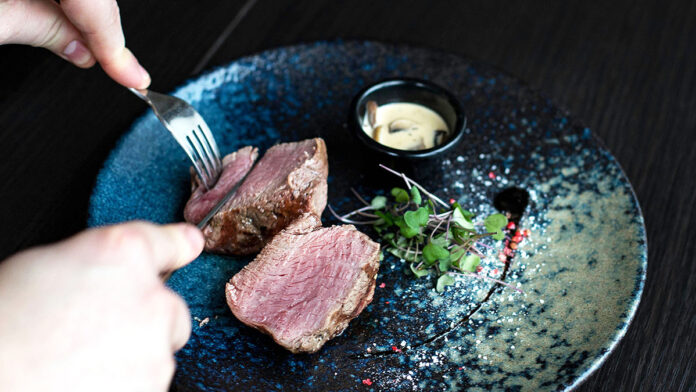
A new popular diet, the Carnivore Diet, involves the cutting out of all starches, fruits and vegetables.
It permits only the consumption of animal products such as meats, eggs, butter and other dairy products including cheese, yoghurt and kefir. Its proponents are claiming spectacular results.
But what does the research tell us?
We asked Cape Town dietician, Rael Koping, for his opinion. According to Rael, the research is mostly descriptive at this stage, meaning that studies are performed on people who are already following the diet, and describe their experience. “This introduces a bias of self-selection because people who experiences ill-effects or poor results would abandon the eating plan, and so their experiences are not included; the research reflects only those who have successfully adopted the diet,” Rael cautions.
A large survey conducted on over 2000 people who had been on the Carnivore Diet for over 14 months indicated, on average, very good weight loss, reduced cholesterol, improved diabetic control, and, among diabetics, a reduction in diabetic medication. However, it is concerning that most reported a rise in LDL cholesterol, which is the ‘bad’ cholesterol. Very few reported stomach issues, somewhat surprising since it is widely accepted that fibre from whole grains, fruit and veg is important for a healthy gut. One study was done on an individual who had been on Carnivore for four years. His gut biome was found to be very similar to a person eating a healthy diet rich in unprocessed foods and fibre-rich vegetables. His gut was far healthier than that of a person eating a Western diet featuring meats, as well as highly processed foods and refined carbohydrates.
But is it possible to have a balanced diet without the vitamins and minerals from plants?
“That is an interesting question,” responds Rael, “because most nutrients are more bioavailable from animal sources than from plant sources. So if an animal’s diet has adequate vitamins and minerals, then a person eating that animal should absorb them well, and not be deficient. That said, the most likely deficiencies when following a Carnivore Diet are Vitamin C and Calcium.”
To conclude, we asked Rael whether he recommends this diet. “No, I do not,” Is his frank answer. “Aside from increased bad cholesterol, other red flags include if you have had a history of yo-yo dieting or of addiction, especially where the addiction may lead to an eating disorder. Such an extreme diet, with its social implications, is likely to trigger addictive patterns in susceptible people.
People at risk of heart disease, kidney disease, or osteoporosis should also beware. Although many lifestyle risk markers seem to improve in the short term, it is not clear if they will translate to longevity in the long term. If you intend to follow Carnivore, I suggest that the plan is modified for you personally, and that your risk markers are regularly checked,” Rael advises.
For the current edition of the Cape Jewish Chronicle, click here.