Home Blog Page 28

An unusual Jewish family home

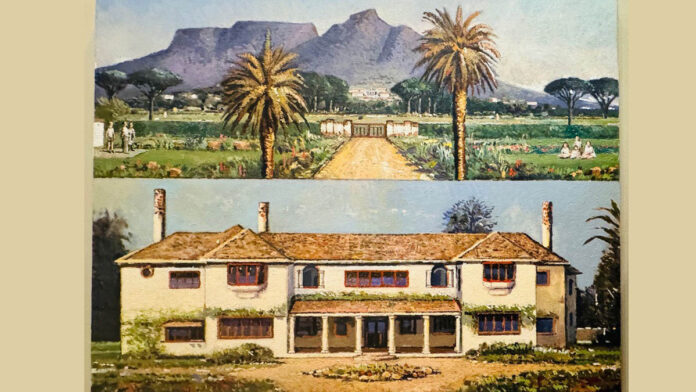
Painting of the house commissioned by Connie Valkin

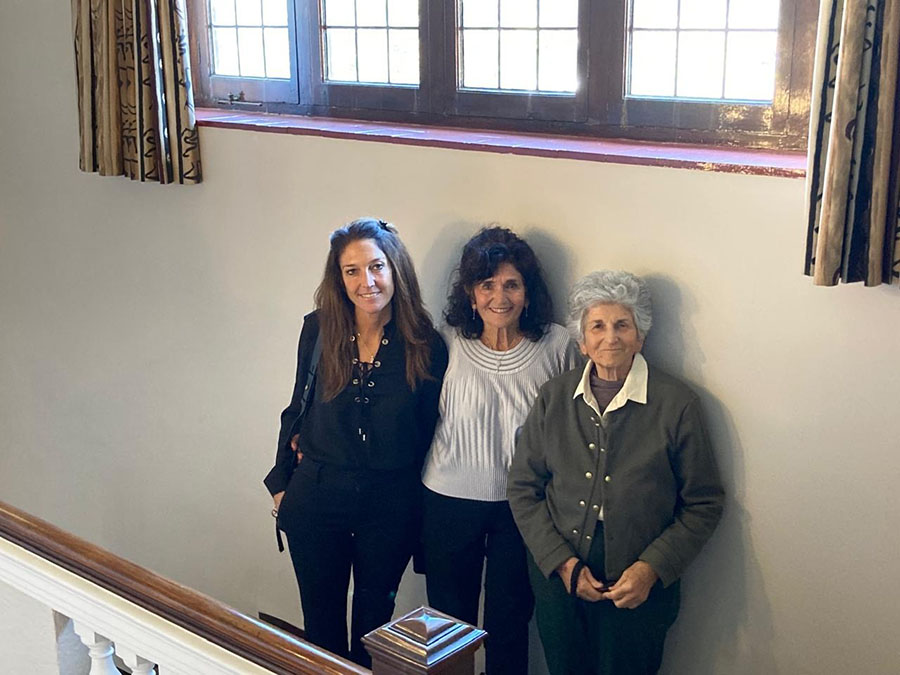
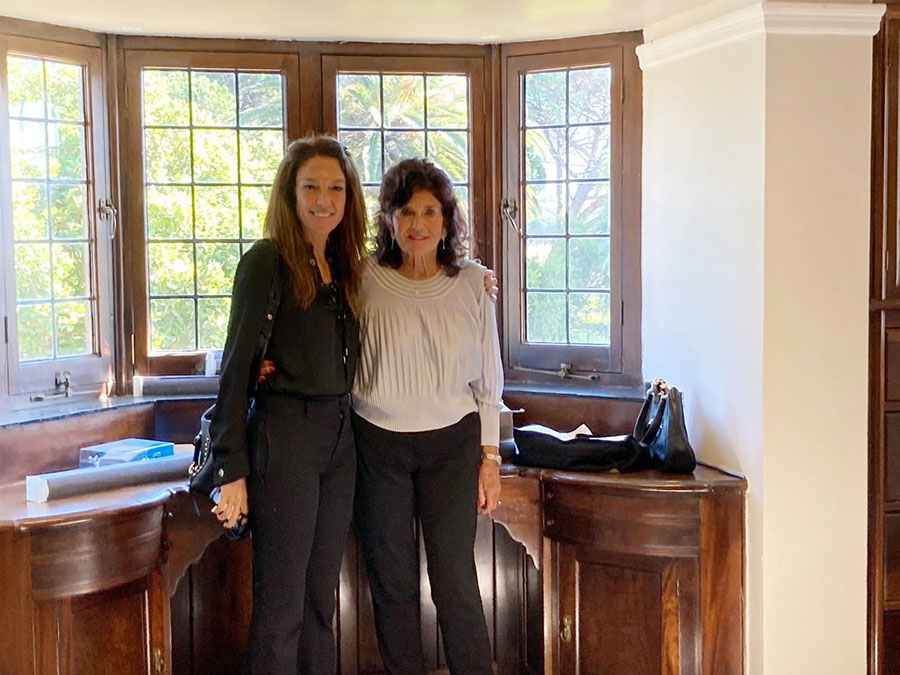
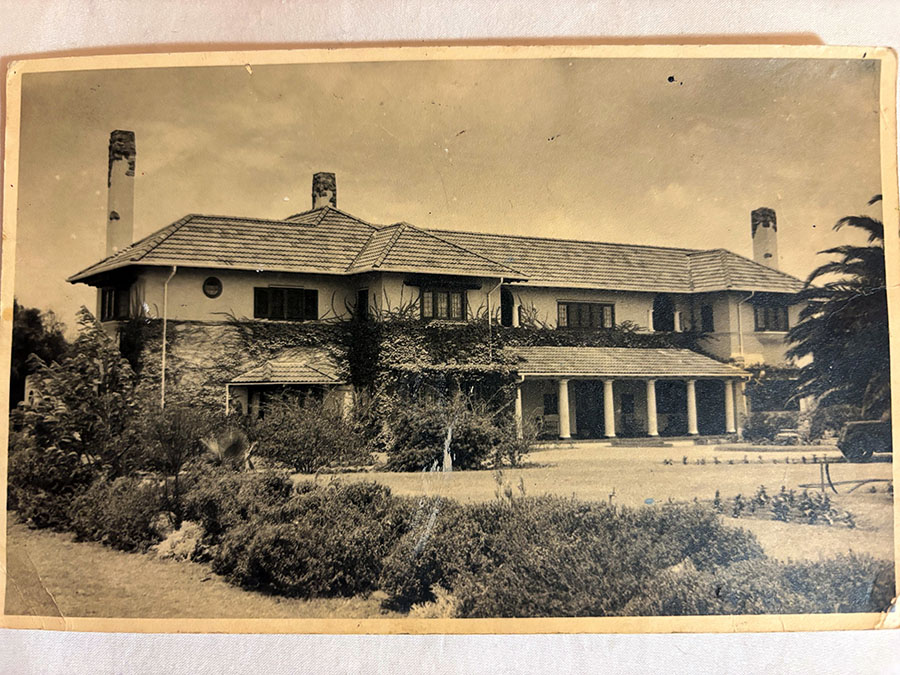
This year marked the 70th anniversary of the College of Medicine of South Africa (CMSA). The gigantic homestead at 17 Milner Road, Rondebosch that has housed the CMSA since 1969 was my mother’s family home for 25 years. 

My mother, Connie Valkin (nee Green), was asked to speak at a Western Province Conference marking the 70th anniversary in May and she gave the group of medical specialists gathered a much more personal history of the great mansion, which has been so beautifully preserved. 

The Conference brought together experts to discuss the accessibility of specialist medicine for the poor in rural South Africa. My mom, on the other hand, spoke of the privileged childhood she had in the beautiful house – an irony not lost on anyone! 

My grandfather, Solomon Green, came to South Africa at the age of 13 in 1913, without ever finishing school. He later joined his wife Esther Manne’s brothers’ growing shoe business – which later became a chain of about 45 stores, called Manne Brothers in the Cape and ABC shoes in the rest of the country. 

When they bought the house on Milner Road in 1944, they were expecting their fourth child. My grandfather loved the flat ground, the unobstructed views of the University of Cape Town and Table Mountain behind it, and the good schools nearby. My mother was the fifth and last child, and she was born there. 

The property had originally been owned in 1854 by Bishop Robert Gray, the first Anglican Bishop of Cape Town, who came to the Cape Colony from England to establish the Church of England, increase clergy, and build churches and schools. He founded Bishops Diocesan College in 1849 and played a significant role in the development of the Anglican Church in Southern Africa. Subsequent owners included Mr Frederick Fitzwilliam who rebuilt the house in 1918 to its current form, and Mr Philip Hill, a native of Maine, USA, who bought it in 1935 and named it Kennebunk after the town in his home state. 

Of the many rich and varied memories of childhood from my mother and her two sisters, Margaret and Judith, and brothers, Vic and Ivor, in these opulent surroundings, a few are worth recalling. Soon after the Green family moved in, some boys who lived in the neighbourhood and attended Bishops Diocesan were caught throwing stones at the windows. It was the mid-1940s and World War II was still fresh for many. When pressured into answering why they damaged the windows, they confessed it was because the Greens were Jewish. The police were happy to prosecute but the boys and their parents were desperate to make amends. My grandfather refused payment from the parents but determined the boys needed to learn a thing or two: they were to work weekends to pay for the damages and donate the repair money to the local war fund. He felt they needed to understand the horrors of the War and the Holocaust. In later years, the boys, one a judge and the other a senior bank executive, would always greet my grandfather when they ran into him on Adderley Street where Manne Brothers was headquartered, thanking him for the lessons learnt.  

The house has a square wooden staircase that ascends around the perimeter of the foyer. As children, my mother and her siblings would spy on visitors through gaps between the columns at the top of the stairway. When the Green daughters, Judith, Margaret and Connie, grew up, it was their dates they would secretly check on through the latticework, assessing how dressed up they should get, as the unsuspecting, nervous gentlemen were received by Solomon in the lobby.

The house had an orchard, a hot house, a pitch for deck quoits, a well, and a tennis court, which was the site of my parents’ wedding reception in 1969, just after Kennebunk was sold. My grandparents had thought flats would be built on the land but there was local opposition to the idea, and they were pleased to be able to sell it to an entity that would hopefully preserve it. Other Jewish families, such as the Blumbergs, Berolds, Blochs and Kushliks, who lived in the area, saw their Milner Road homes demolished or converted over the years by developers. Thanks to the CMSA, it is really only Kennebunk that is so beautifully nurtured with the original cabinetry and joinery.

The Green children all left South Africa at different times, and my mother left for Johannesburg. But whenever anyone visited Cape Town, they would pay a visit to Kennebunk with their own children and find The College of Physicians, Surgeons and Gynaecologists – later renamed the College of Medicine of South Africa – bustling with examinations or lessons or general office administration. On one or two visits my mother’s attempt to visit her old bedroom was disallowed because of an exam being conducted or a cadaver being dissected! ●
  • For the current edition of the Cape Jewish Chronicle, click here.
  • Subscribe to the Cape Jewish Chronicle: R450/year, or R38/month via debit order. Simply email us at subscriptions@ctjc.co.za and click here for payment info.
  • The Cape Jewish Chronicle reaches over 6 000 readers monthly across print and digital platforms.
  • To book advertising space or discuss a custom package contact Adéle Gradner Mobile: 083 321 5222 | Office: 021 464 6736 | Email advertising@ctjc.co.za

The symbolism of the Yellow Ribbon  

YAEL DUCHEN, Habonim Dror 

A rallying symbol for the return of the chatufim – hostages – still trapped in Gaza has been the yellow ribbon. Globally, it is linked to the safe return of hostages, prisoners of war, and troops abroad. In the US, it featured in famous songs, symbolised the release of Americans during the Iran hostage crisis, and the return of troops from the Gulf War. In Israel, it became a symbol of hope during Gilad Shalit’s time in Hamas captivity. May this be the last October we need to bear the yellow ribbon. ●

SA Zionist Federation – Cape Council – Facebook | Twitter | Instagram


  • For the current edition of the Cape Jewish Chronicle, click here.
  • Subscribe to the Cape Jewish Chronicle: R450/year, or R38/month via debit order. Simply email us at subscriptions@ctjc.co.za and click here for payment info.
  • The Cape Jewish Chronicle reaches over 6 000 readers monthly across print and digital platforms.
  • To book advertising space or discuss a custom package contact Adéle Gradner Mobile: 083 321 5222 | Office: 021 464 6736 | Email advertising@ctjc.co.za
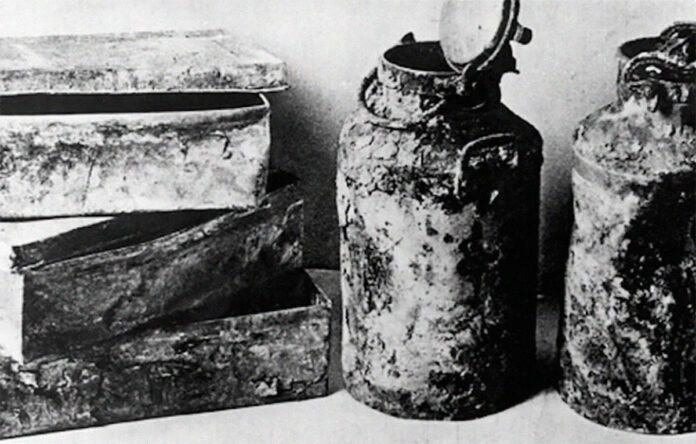
The Ringelblum Archive

A valuable record of the Nazi occupation of Jewish Warsaw

The tour to Poland in late July organised by the Cape Town Holocaust & Genocide Centre included a visit to the Jewish Historical Institute in Warsaw. This organisation serves as a centre for academic research relating to Poland’s Jewish history, and it holds numerous documents and other materials of relevance to this history. 

According to Wikipedia, “The most valuable part of the collection is the Warsaw Ghetto Archive, known as the Ringelblum Archive (collected by the Oyneg Shabbos). It contains some 6 000 documents (some 30 000 pages).

The World Jewish Congress has produced a short video about the Ringelblum Archive which you can view here. ●


  • For the current edition of the Cape Jewish Chronicle, click here.
  • Subscribe to the Cape Jewish Chronicle: R450/year, or R38/month via debit order. Simply email us at subscriptions@ctjc.co.za and click here for payment info.
  • The Cape Jewish Chronicle reaches over 6 000 readers monthly across print and digital platforms.
  • To book advertising space or discuss a custom package contact Adéle Gradner Mobile: 083 321 5222 | Office: 021 464 6736 | Email advertising@ctjc.co.za
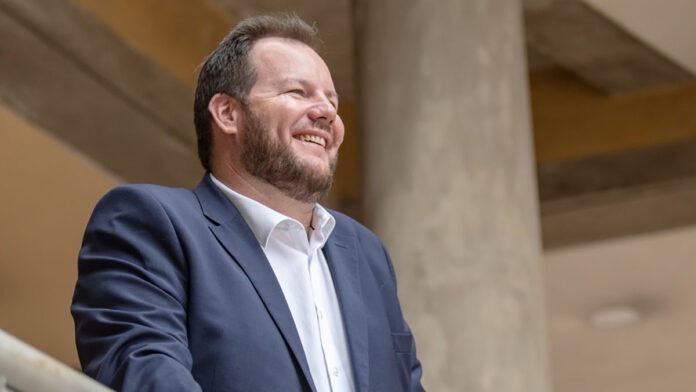
Auction continues to gain ground

According to Wesley Cowan, Director at Galetti Auction, “Sellers are increasingly turning to auctions as an efficient sales method, particularly in South Africa’s top-performing industrial property sector.” 

Cowan refers to surging demand for industrial-zoned land, which continues to drive low vacancy levels and higher rentals – most notably in the Western Cape. 

“Demand for commercial property in the Western Cape is exceptionally strong, especially across key asset classes like industrial, retail and hospitality,” he says. “In some cases, properties are selling before they even reach the market.” 

Looking at the broader commercial property sector, Cowan notes industrial remains the top performer, delivering returns of around 15% (MSCI SA Property Index), with retail close behind, supported by improved consumer spending and salary growth. Office demand is also rising as interest rates ease and more employees return to workplaces. South Africa’s REITs are boosting momentum, recording a 2.4% monthly gain in August and lifting year-to-date returns to 14.2% (SA REITs Association Chart Book). 

“With such high demand and limited supply, it’s easy to see why auctions have become an increasingly popular sales channel,” Cowan adds. 

Opting for auction 

Cowan notes that, while auction was once viewed as a last resort for dilapidated properties, it has fast gained ground in recent years for positive reasons. “In countries like Australia, auction is a standard method of sale and helps generate competitive prices,” he shares. 

He highlights the following seller benefits: 

  • Competitive bidding creates urgency, leading to quicker transactions. 
  • Extensive marketing attracts a larger buyer pool, driving up prices. 
  • Transparent price discovery ensures fairness and often exceeds seller expectations. 
  • Non-suspensive contracts reduce the risk of deals collapsing. 
  • Flexible terms let sellers align conditions with objectives. 

Cowan advises buyers to consider: 

  • Location – proximity to transport routes, ports and hubs. 
  • Correct zoning – compliance with local, environmental and safety regulations. 
  • Accessibility – space for heavy vehicles and machinery. 
  • Scalability – room for future expansion to boost resale value. 
  • Security and solar – reliable power, controlled access and protection for operations.

  • For the current edition of the Cape Jewish Chronicle, click here.
  • Subscribe to the Cape Jewish Chronicle: R450/year, or R38/month via debit order. Simply email us at subscriptions@ctjc.co.za and click here for payment info.
  • The Cape Jewish Chronicle reaches over 6 000 readers monthly across print and digital platforms.
  • To book advertising space or discuss a custom package contact Adéle Gradner Mobile: 083 321 5222 | Office: 021 464 6736 | Email advertising@ctjc.co.za

Being Jewish is not for the fainthearted


By RAEL KOPING

Raging global antisemitism seems to be the only common unifier among the fragmented groupings of an increasingly fracturing world. 

Many Jews I have spoken to, myself included, feel a frustration and perhaps a fear in confronting this onslaught. We feel alone, isolated and torn between wanting to declare our Jewish identity, and feeling fearful of the repercussions of being seen as Jewish.

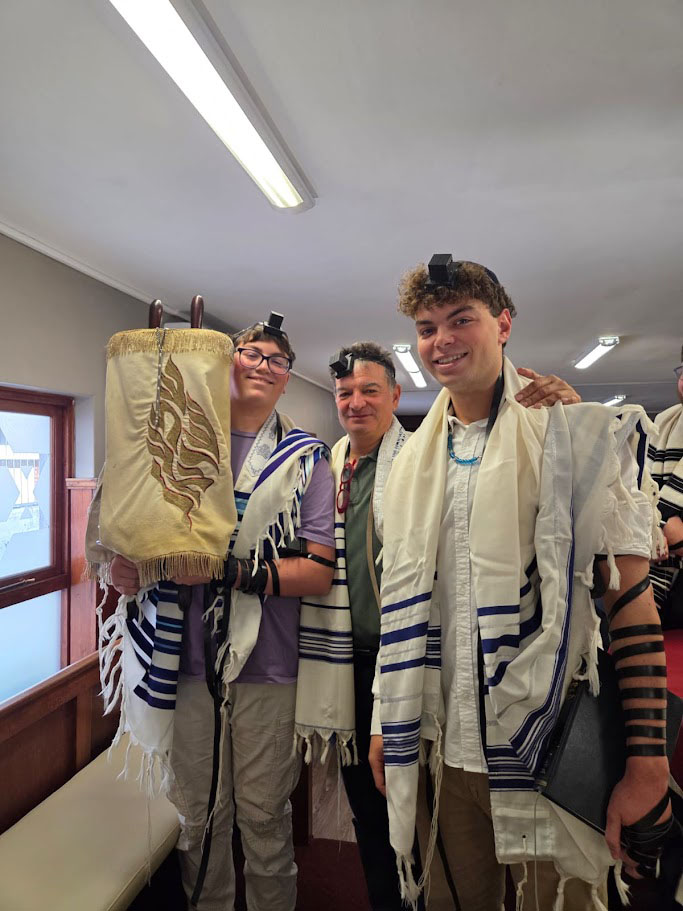
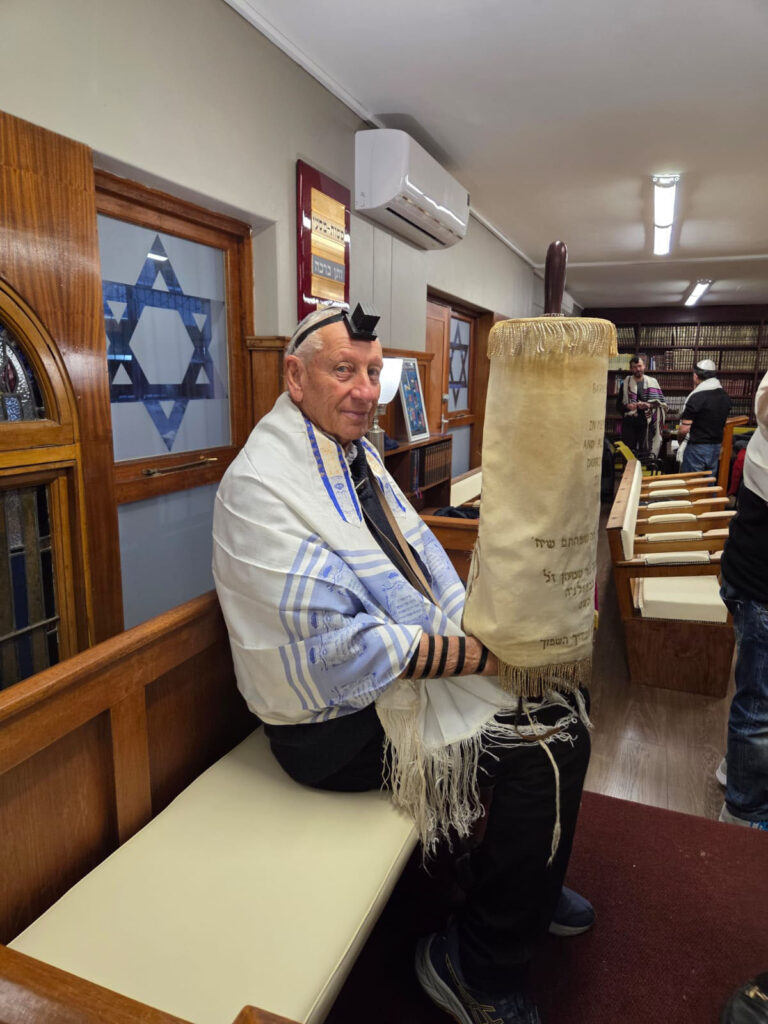
I am not a particularly religious person, but as a traditionalist, I go to shul each morning to say kaddish for my recently deceased father. One morning, I was awarded a hagbah – the honour of lifting the Torah scroll after it has been read. Later that morning, a fellow congregant sent me a picture of the ceremony. 

The image was so rich in the iconography of our identity: wearing a tallis, tefillin, holding up the Torah, and surrounded by our community members. I felt a profound, deep connection with my Jewish heritage.

It turns out that taking these photos is a grassroots initiative started by two of our shul members, Hylton Arelisky and Morris Munitz. It is very popular among the morning minyan. Hagbah is amazing because it is at the same time an ancient ritual, and one that does not require a knowledge of religious Hebrew to be able to participate. I love it because it is not a political statement, or a specifically religious activity. It is so easily broadly accessible to most Jewish men, and yet so profoundly connected to our thousands of years of heritage. It certainly met my need to publicly and profoundly affirm and connect to my Jewish identity.

Considering ourselves a microcosm of our broader community, we, the members, recognise that our need is probably widespread, and we seek to roll out this initiative so that others can join in. We call the initiative Globalise Hagbah. While others seek to globalise destructive and antisemitic ideologies, we seek to offer Jewish people, at this historical inflection point, a way to proudly connect to our heritage. 

No doubt, future generations will look back on these times in wonder at how our community met our challenges, which is why this record is so important. We seek to create both a broad platform and a repository of photos of people declaring their Jewish identity. The photos will be published anonymously on a social media group (run by another member of the group, Ariel Katzen), where friends and family can see their loved one captured in the moment! The group will be closed to comments and all measures will be taken to maintain the anonymity of the participants.

With humble beginnings at the Marais Road Shul, we aim to roll this initiative out across Cape Town, and indeed the Jewish world. Be a part of this amazing vibe. Chat to Rabbi Hecht to get onto the Hagbah roster and be part of this great vibe! Be proud! Globalise Hagbah! ●


  • For the current edition of the Cape Jewish Chronicle, click here.
  • Subscribe to the Cape Jewish Chronicle: R450/year, or R38/month via debit order. Simply email us at subscriptions@ctjc.co.za and click here for payment info.
  • The Cape Jewish Chronicle reaches over 6 000 readers monthly across print and digital platforms.
  • To book advertising space or discuss a custom package contact Adéle Gradner Mobile: 083 321 5222 | Office: 021 464 6736 | Email advertising@ctjc.co.za
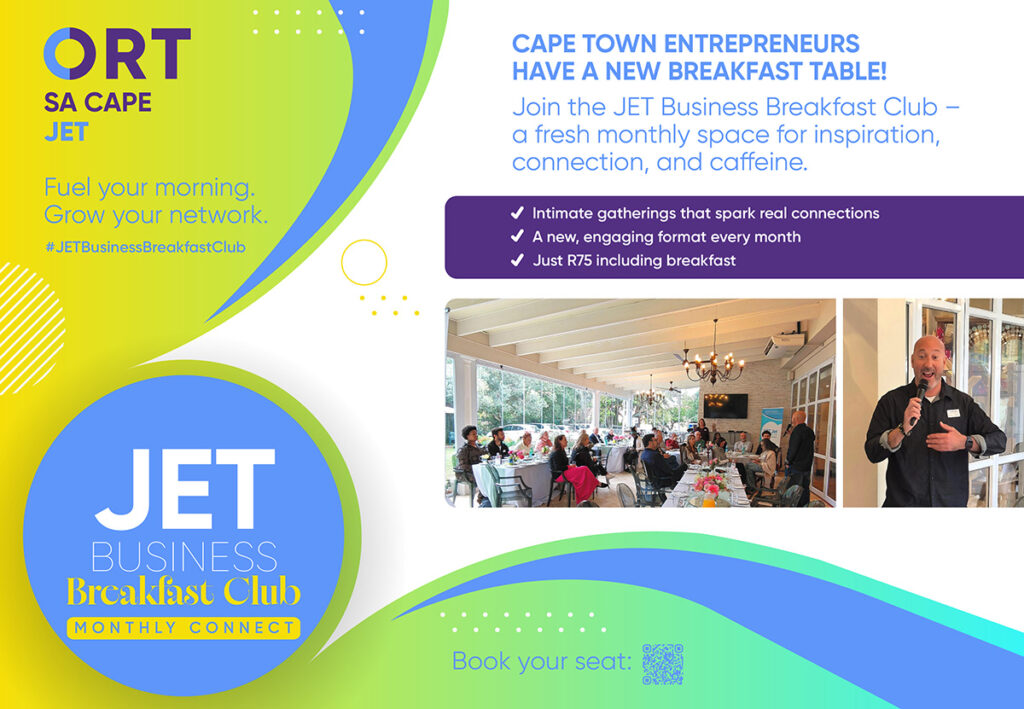
Jet Business Breakfast Club

Fuel your morning, grow your network.

ORT SA Cape Jet http://www.ortjetcapetown.org.za


  • For the current edition of the Cape Jewish Chronicle, click here.
  • Subscribe to the Cape Jewish Chronicle: R450/year, or R38/month via debit order. Simply email us at subscriptions@ctjc.co.za and click here for payment info.
  • The Cape Jewish Chronicle reaches over 6 000 readers monthly across print and digital platforms.
  • To book advertising space or discuss a custom package contact Adéle Gradner Mobile: 083 321 5222 | Office: 021 464 6736 | Email advertising@ctjc.co.za
“Our greatest responsibility is to be good ancestors”

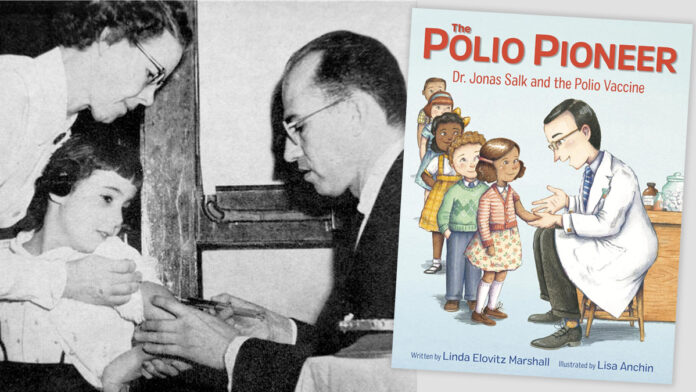
Jonas Salk, an American-born Jewish scientist, is credited for developing a vaccine against the dreaded disease of polio. 

His work, along with the pioneering research of others, significantly reduced polio cases, though polio hasn’t been fully eradicated yet. 

When the  vaccine was licensed in 1955, annual cases of polio dropped dramatically, from about 58 000 in 1956 to 5 600 by 1957, and then to just 161 cases by 1961.

Salk was committed to making the vaccine widely available and did not patent it, believing that it belongs to society, rather than to himself.  He made the comment, “Our greatest responsibility is to be good ancestors. If we want to be good ancestors, we should show future generations how we coped with an age of great change and great crises.”

Friday, 24 October 2025, is World Polio Day. In a time when vaccine scepticism is on the rise, it is perhaps particularly significant that we focus on Salk’s achievements, and take note of his wise words.

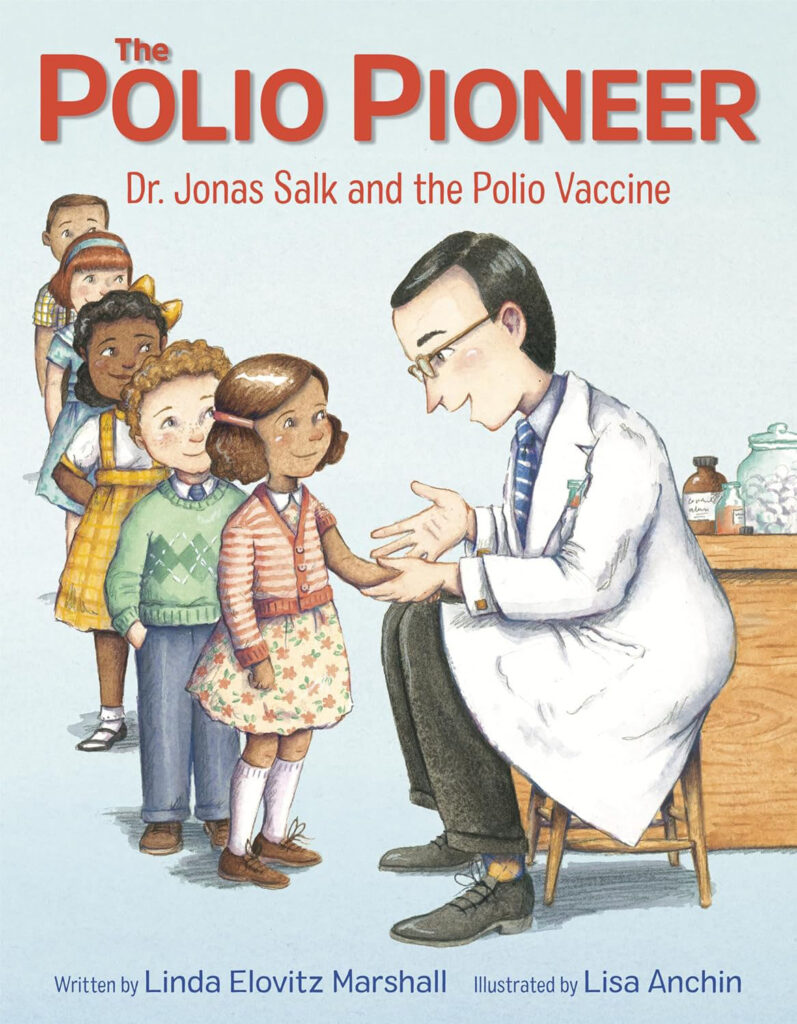
A children’s book about Jonas Salk, The Polio Pioneer: Dr. Jonas Salk and the Polio Vaccine, is available for borrowing from the Jacob Gitlin Library. ●

To help communicate the importance of the polio vaccine, we’re giving away a children’s book on the topic, The Polio Pioneer: Dr. Jonas Salk and the Polio Vaccine. Kindly sponsored by the PJ Library, the book is suitable for readers aged four and older.  If you’d like to stand a chance of winning the book, scroll down to the bottom of the page where you can Leave a Reply, and type in your contact details. Alternatively, send us an email to let us know you’d like to be considered to receive the book – send your email to editor@ctjc.co.za.  

And you can subscribe to the PJ Library and receive wonderful books on Jewish themes – use this link to register: https://pjlibrary.org.za/enrol.


  • For the current edition of the Cape Jewish Chronicle, click here.
  • Subscribe to the Cape Jewish Chronicle: R450/year, or R38/month via debit order. Simply email us at subscriptions@ctjc.co.za and click here for payment info.
  • The Cape Jewish Chronicle reaches over 6 000 readers monthly across print and digital platforms.
  • To book advertising space or discuss a custom package contact Adéle Gradner Mobile: 083 321 5222 | Office: 021 464 6736 | Email advertising@ctjc.co.za

Film Club: Hill Start

Hill Start

Sunday 12 October 2025.

SA Zionist Federation – Cape Council – Facebook | Twitter | Instagram


  • For the current edition of the Cape Jewish Chronicle, click here.
  • Subscribe to the Cape Jewish Chronicle: R450/year, or R38/month via debit order. Simply email us at subscriptions@ctjc.co.za and click here for payment info.
  • The Cape Jewish Chronicle reaches over 6 000 readers monthly across print and digital platforms.
  • To book advertising space or discuss a custom package contact Adéle Gradner Mobile: 083 321 5222 | Office: 021 464 6736 | Email advertising@ctjc.co.za

Artists demonstrate their care

L-R: Eleanor Miller, Sharon Levy, Sheila Huth, Tamara Davidson

August saw a wonderful new event on Cape Town’s Jewish calendar: an art exhibition involving local artists donating works for sale to raise much-needed funds for Care Services.

Eleanor Miller, who organised the event with Tamara Davidson, explains that the idea for this came about through local Jewish artist, Sheila Huth. “Sheila approached me last year with the idea of hosting an art exhibition featuring Jewish artists to raise funds for Oranjia,” Eleanor explains. “Tamara and I loved the concept: it was something fresh, and it would allow people to purchase beautiful art while simultaneously supporting a meaningful cause.” 

Once Eleanor and Tamara got started on the project, they realised that it had the potential to be something far bigger than they had originally anticipated. And so they decided to expand the project to involve all the welfare organisations that make up Care Services: Oranjia, Glendale, Astra, Cape Jewish Seniors, Nechama, Highlands House, and Jewish Community Services. 

COO of Care Services, Hazel Levin, together with Paul Berman, the Chairman of Care Services, introduced the guests at the event to Care Services. Hazel explains that, “Care Services serves as an umbrella organisation, providing a centralised administration service, so allowing each body to focus on its core mission of care and support. This is a relatively new initiative, and we realised that the art exhibition could serve as the launchpad needed to introduce Care Services to Cape Town’s Jewish community.” 

With the support of the UJC, Care Services put on a quality evening, attracting a significant audience from both the Jewish community and the art world. 

Hosted by the South African Jewish Museum (SAJM), the event served as a good example of collaboration across the community. In addition to Care Services and the UJC, the Director of the SAJM, Gavin Morris, provided significant support, and he brought in Sarin Goott from the SAFIM Art Collaborative. “The assistance provided by Gavin and Sarin was crucial,” Eleanor comments. “They identified and engaged with the artists, discussing with each artist how they would like to contribute.”

The artists’ response was unexpectedly generous, with 29 artists participating. Some of the artists donated more than one piece of their work, so increasing the opportunity to raise funds from the sales. The artists could choose how they wanted to contribute: either a donation of an artwork in full, or retaining a portion of the sale price. “Many of the artists chose to give in full – evidence of the wonderful spirit of generosity that we saw among the artists!” Eleanor says.

The event itself was a great success, and the organisers are committed to continuing with impactful community initiatives that offer similar benefits to the care organisations. ●


COMMENTS FROM ARTISTS

Alex Abrahams
The practice of making art has a healing effect on one. 

I donated to the exhibition because I could not miss the chance to exhibit alongside some wonderful artists from the Jewish community. 

Care Services is important for everyone, and provides important support for those in our community battling with mental health. 

Galia Gluckman 
Supporting our community is always vital, but especially now. All Jews are responsible for one another.

I love our Cape Town Jewish community. It feels so empowering to come together as a community, many pieces of the puzzle fitting together.  

Russel Smith 
I believe as artists and as Jews we need to support and help our community in any way we can. I know that my involvement in this will bring good,  especially to those who need it most. In the times we are living in, in an environment where we are ostracised here and around the world, we need to show our support more than ever. 


The positive impact of a care organisation: a case study

An important life lesson, according to Paul Berman, the Chairman of Care Services, is that, “We should be judged not by our achievements but by how we treat our most vulnerable.” This underpins the very existence of Care Services, which faces the huge task of raising large sums of money to provide for the growing welfare needs in Cape Town’s Jewish community. 

Eleanor explains that, “Beyond fundraising, the exhibition offered the opportunity to educate the community about the vital work of the organisations, and to give insight into the lives of those who benefit from their generosity.”

Guests at the event heard Anthony Witttels’s story. Anthony recounted how he lost everything, becoming a beneficiary of Jewish Community Services. The support he received from the community was core to his ability to rebuild his life and to thrive. ●

Care Services info@careservices.org.za


  • For the current edition of the Cape Jewish Chronicle, click here.
  • Subscribe to the Cape Jewish Chronicle: R450/year, or R38/month via debit order. Simply email us at subscriptions@ctjc.co.za and click here for payment info.
  • The Cape Jewish Chronicle reaches over 6 000 readers monthly across print and digital platforms.
  • To book advertising space or discuss a custom package contact Adéle Gradner Mobile: 083 321 5222 | Office: 021 464 6736 | Email advertising@ctjc.co.za

I am Ella – 48632 – Survivor

BY ADELE SANDERS 


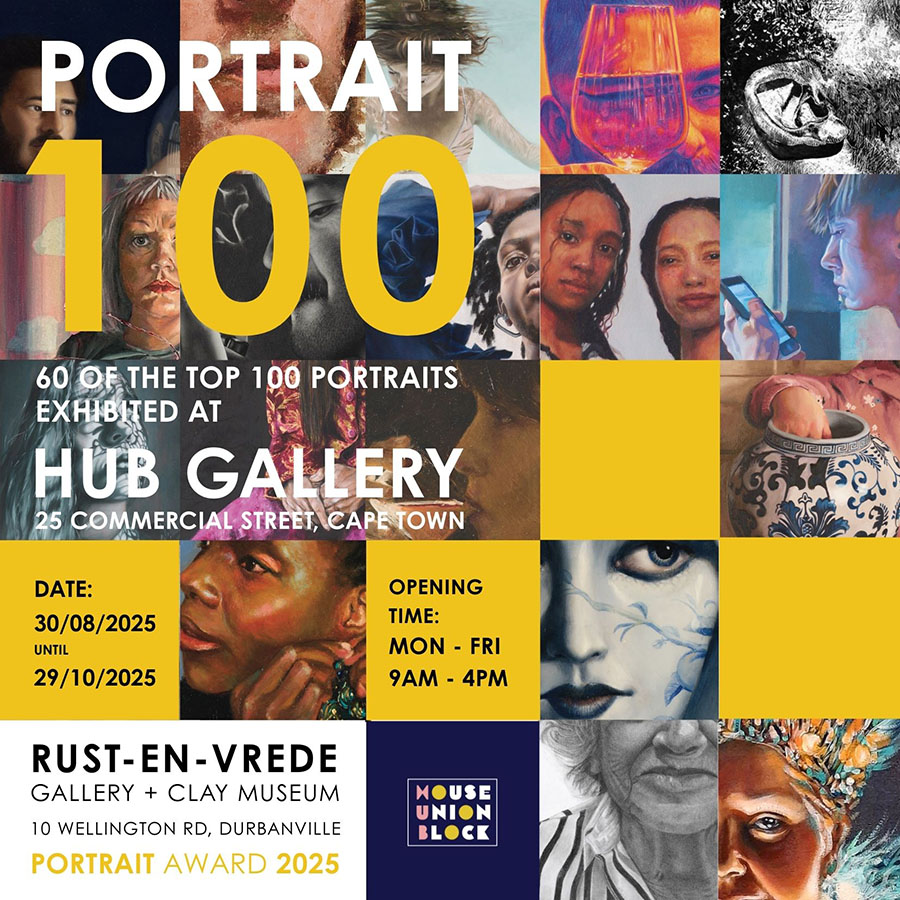
The work of seasoned Cape Town artist Adele Sanders has been recognised for its excellence through the inclusion of her portrait of Ella Blumenthal in the Top 100 portrait works in the Rust-en-Vrede Gallery’s Portrait Award for 2025. This award is a highly respected national award in South Africa, akin in status to the Herbert Smith Freehills Kramer Portrait Award in the UK (originally known as the BP Award). Adele’s work has previously been acknowledged in this Award but this year’s placing is the best achievement thus far.

The stringent selection process for the Rust-en-Vrede Portrait Award 2025 involves the expertise of a panel of three independent, invited judges. The submitted portraits are not signed and therefore anonymously judged; and the judges’ decisions are not shared. 

Adele shares the inspiration for her portrait, I am Ella – 48632 – Survivor.

On hearing Ella Blumenthal’s talk at the Holocaust Centre in Cape Town, I knew that I was in the presence of an extraordinary lady, whose likeness I had to capture in an artwork. Ella stood and spoke for two hours, without notes. A major achievement for anyone, let alone a lady of 98 years young, at that time! 

To learn more about Ella’s life, one can read Ella’s book; or choose to watch the hugely successful animated movie made by Jordy Sank and Gabriella Blumberg called I am Here. My aim was to capture Ella’s story in a portrait that would do her proud. This tribute to Ella took six months to create and to complete. The photos that I took of Ella that evening, as she stepped off the podium, served as the resources for her portrait. 

After obtaining Ella’s permission via her daughter, Evelyn Kaplan, the next consideration was whether Ella’s portrait should be done in oils or in a graphite drawing. I chose the latter.   

Portraiture as an art form is hugely humbling. Spending many hours accessing the subject’s essence is an intensely personal and privileged experience. Ella’s portrait was even more so because every facial line and nuance was a reflection of her traumatic experience. Her portrait highlights the pain, the torment and the anguish that she suffered during her time in the concentration camps. But also clearly visible is this woman’s courage, resilience, iron will and the immense power of her faith.

Ella, now 104 years old, currently lives happily in the home of her daughter Evelyn and son-in-law Paul, surrounded by much loving care. 

Because we share our Jewish heritage, Ella’s story reaches deep into my consciousness and my Jewish soul. This sense of connection to my Jewishness is very powerful.

The stories of my late mother’s history during the pogroms in Poland have provided additional insight, which assisted in my creation of Ella’s portrait. 

The portrait ‘I am Ella – 46832 – Survivor’ has been created as a tribute honouring Ella. 

That it has been selected among the top 100 portraits, is both gratifying and humbling. The electrifying vibe at the opening of this exhibition, proves that portraiture is alive and well in South Africa!  

I’ve turned heART-ache into ART. ●

Commenting on how she treats light and shade in her work, Adele Sanders explains that, “Chiaroscuro, the light and the shade, the shadows and the reflected light, underpin every form. In art I strive to filter out the worldly clutter and noise, focusing on the pivotal essence of the sitter, engaging the viewer by capturing the authenticity of the image.”

Exhbition on until 29 October 2025.
Venue: Spier Arts Trust, Union House, 25 Commercial Street, Cape Town.  

Free admission, Monday to Friday 09H00–16H00


  • For the current edition of the Cape Jewish Chronicle, click here.
  • Subscribe to the Cape Jewish Chronicle: R450/year, or R38/month via debit order. Simply email us at subscriptions@ctjc.co.za and click here for payment info.
  • The Cape Jewish Chronicle reaches over 6 000 readers monthly across print and digital platforms.
  • To book advertising space or discuss a custom package contact Adéle Gradner Mobile: 083 321 5222 | Office: 021 464 6736 | Email advertising@ctjc.co.za

SIGN UP TO RECEIVE THE CAPE JEWISH CHRONICLE