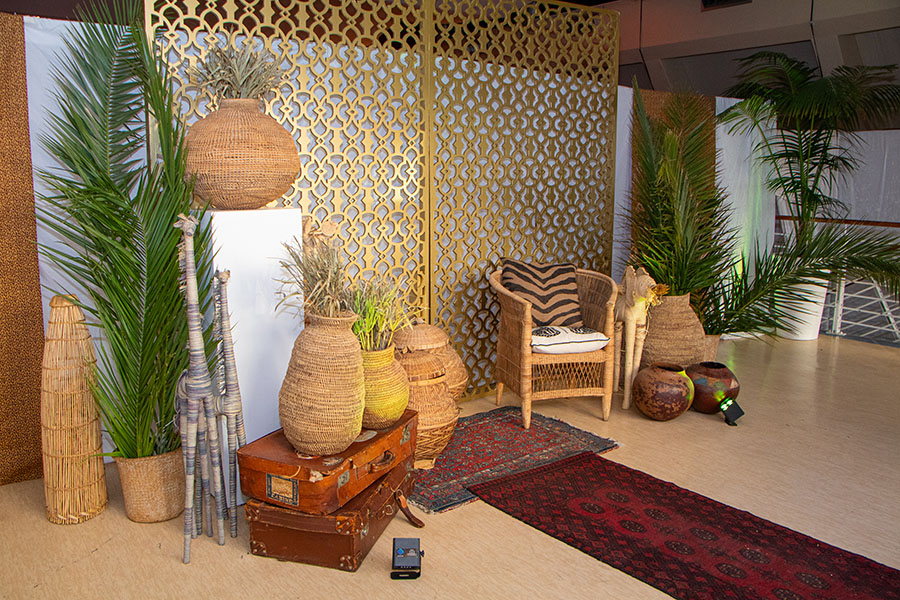
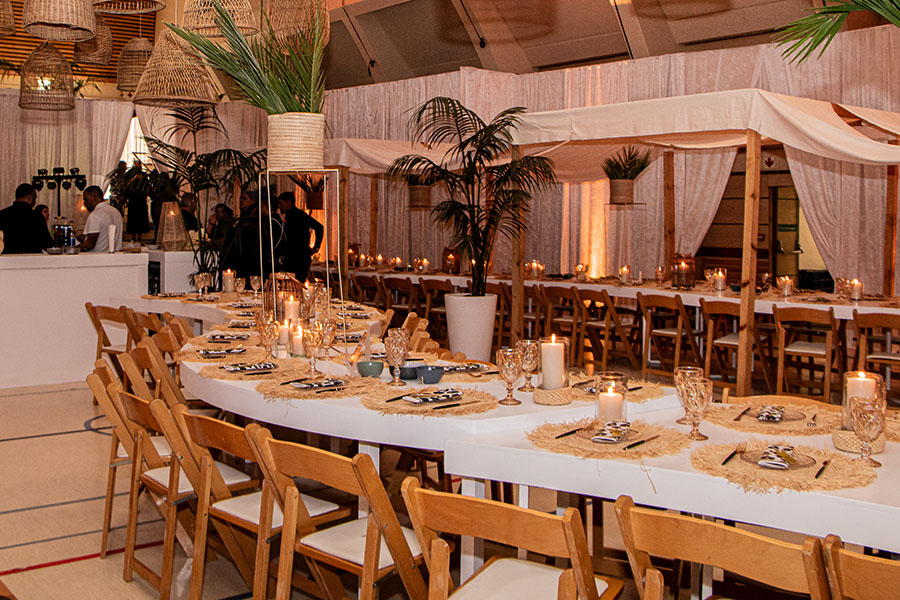
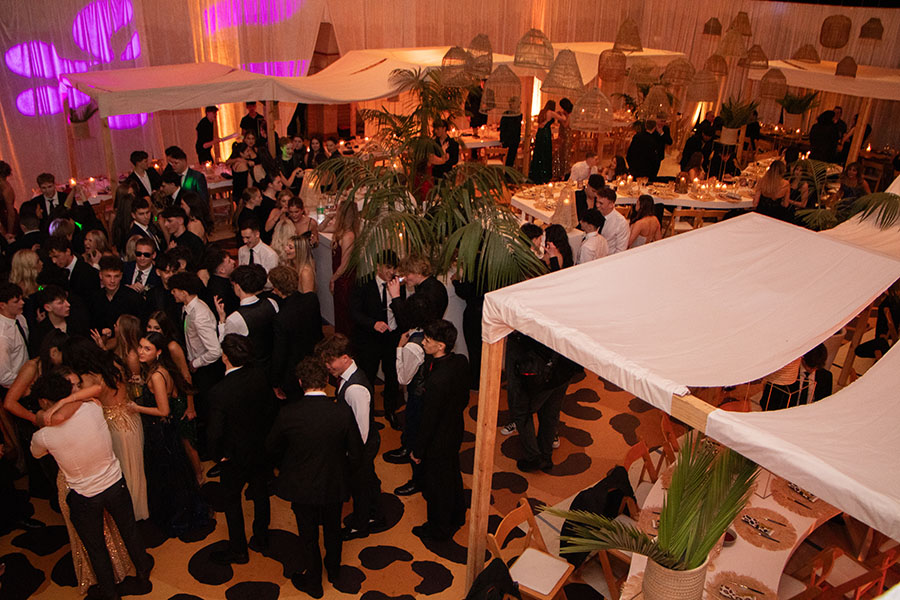
The 2025 Herzlia Matric dance was showcased in true African Splendour, the theme for the event.
The décor provided and hall set-up by Linda Says brought out all the African feel, while the special moments were captured by photographer Yolande Kretzmer Keys, ensuring that this was an unforgettable evening. The evening started with pre-drinks, followed by a red carpet walk upon arrival, and then the event roared into a night of giggles, laughter, lights, camera, food and dancing enhanced by the beautiful and smart outfits worn by the young guests.
Certainly a night to remember – full of fun and memorable moments created together! ●
For the current edition of the Cape Jewish Chronicle, click here.
On 17 September 2025, the Cape SAJBD held its Annual General Meeting, marking a moment of transition and renewal.
A new Council for the 2025-2027 term was elected, with five fresh faces stepping forward to serve, alongside ten experienced members who remain. This blend of continuity and change ensures that, even in a time of crisis, our community has both steady guidance and fresh energy to rely on.
Adjusting to Board life takes time. But just as our new council members can lean on the wisdom of those who came before them, so too must we, as a community, trust that they will quickly find their footing and dive into the work ahead.
At the Cape SAJBD, we recognise the delicate balance between consistency and change. Last year, understanding the severity of the crisis we faced, we extended the term of the previous Council – a decision unanimously supported by our affiliates. This year, while the challenges remain and the road ahead is far from simple, we believed it was the right time for elections and for a changing of the guard.
The past two years have tested our leadership like few others. We have been pulled in every direction, working tirelessly to protect Jewish life in the Western Cape and to defend our constitutional freedoms. We believe we have steered the community in the right direction, but we also know there is always room to grow. The new voices joining the Council not only affirm what has been achieved but also bring with them fresh perspectives, opportunities, and solutions.
By the time you read this, Rosh Hashanah and Yom Kippur will have passed. How fitting that the beginning of a new Cape Board coincides with the Jewish new year – a season of reflection, forgiveness, and hope. We are not perfect, and we do not always have the answers. But our mission remains clear: to safeguard our way of life, to navigate the bumps in the road, and to seize every opportunity to grow stronger together.
It has been an honour and privilege to serve alongside the Cape SAJBD Council of 2022-2025. I thank each member for their support, guidance, and friendship. To those stepping down, I wish you well in the opportunities that lie ahead. To our outgoing chairperson, Adrienne Jacobson, I extend special gratitude for her strong yet calm leadership during one of the most challenging periods in recent times.
To the incoming Council and new chair: together with myself as Executive Director and the professional team, I look forward to working alongside you, continuing the vital work of the Board, and ensuring that Jewish life in the Cape remains resilient, secure, and vibrant. ●
Blue concrete wall textures for background - Vintage Film Filter
ORT JET provides a series of articles aimed at entrepreneurs MICHAEL BAGRAIM – brought to you by ORT JET
Just after completing my articles of clerkship with attorneys Sonnenberg Hoffmann and Golombik, I realised the general practice of law was not for me. I had discovered a passion for the then new and niche Labour Relations Act – legislation in its infancy and not even taught at university.
I made the reckless decision to resign from a secure position and venture into the unknown. After much soul-searching, discussions with my new spouse, and backing from my parents, I took the leap. I had no clients or infrastructure, but I recall the thrill of opening my own practice and attempting to become a mini-entrepreneur.
Cautiously, I signed a one-year lease and bought electronic equipment on hire purchase, so I could return it after a year if necessary. The real challenge was finding clients in an industry where advertising was prohibited. Taking a risk, I spent a few hundred rand to join the Cape Chamber of Commerce and Industry, which enabled me to meet fellow entrepreneurs. In hindsight, that was probably the wisest R200 I ever spent.
I began giving talks, organised by the Chamber, about labour law itself rather than advertising my firm. This brought in a trickle of small businesses unable to afford big-firm fees but open to negotiating structured arrangements. Innovatively, I offered contingency work and globular fees rather than hourly rates. Sometimes I undercharged, but other times the fee far exceeded what hourly billing would have produced.
Soon, I was invited onto radio stations to do question-and-answer programmes. By using only my name and not my firm’s, I circumvented the Law Society’s embargo on advertising. These broadcasts evolved into newsletters, lectures for industrial organisations, and presentations at industrial Councils (now known as Bargaining Councils).
The Law Society permitted pro bono and pro amico work, which gave me enormous experience. Representing a small trade union at no cost spread my name into industries, and soon employers sought me out for opinion work. After receiving advice from their regular attorneys, some asked me for second opinions or quotes. With my lower overheads, I could charge about a quarter of the usual litigation fees, which steadily expanded my client base.
Today, with the internet, social media, and no restrictions on advertising, building a practice is far easier. Within two years of starting out, I had more clients than I could handle and began employing other attorneys. Now, after over 40 years in labour law, I can say that, although it has never been the most lucrative field, it has been deeply satisfying and has given me lasting comfort. ●
At the recent AGM of the Cape SA Jewish Board of Deputies (SAJBD), something struck me that, in an ideal world, shouldn’t have felt unusual: the number of women in senior leadership roles.
Outgoing Chair Adrienne Jacobson, Simone Sulcas in the fight against antisemitism, and a host of incoming leaders – all women stepping up to the front lines.
This is especially significant in a body like the SAJBD. Women have long led within Jewish women’s communal structures such as WIZO or the Union of Jewish Women, but the Board operates on a different stage – political battles, government relations, and diplomacy. Seeing women in these spaces is a welcome shift.
In a just world, leadership would never be surprising based on gender, race, or orientation. But history reminds us otherwise. That’s why glimpses of genuine progress are worth celebrating.
The contrast became starker when, in the very same week, two headlines jolted me. In India, a 20-day-old baby girl was found buried alive – yet another act of femicide in a society where boys are valued above girls. And in Afghanistan, the Taliban banned all university texts written by women, dragging half a nation further into darkness.
Against such brutal reminders of inequality, the sight of women leading our community is more than symbolic – it’s a sign that change is possible, and that we should never take it for granted.
In this edition, we carry a particularly well-written article about the artist, Irma Stern, researched and written by a Cape Jewish Chronicle volunteer, Karen Miller. Karen has done some outstanding work for the publication, and we acknowledge this with gratitude.
Our gratitude also goes to another volunteer, Beryl Eichenberger, for her regular book reviews. ●
If you’d like to volunteer with the publication, please contact us via email on editor@ctjc.co.za.
For the current edition of the Cape Jewish Chronicle, click here.
“I feel so privileged to have been able to live life to the full,” enthuses Helen Millson, possibly Rondebosch’s most well-travelled resident.
Splitting her time between Cape Town and the UK, she says: “I get to enjoy the beauty and natural surroundings of the Mother City while still working in professional sport abroad – and I always try to add a little European travel along the way.”
Helen’s career began when, at just 17, she left the then Rhodesia for England to study physiotherapy. “I wasn’t sure physio was really my choice,” she admits, “but it led me into some of the most exciting opportunities imaginable.” Those opportunities took her into the world of elite sport: five years with Stormers Rugby, work with the SA Rugby, South African national cricket side, and with the SA surf lifesaving team, SA Women’s Hockey, Commonwealth Games, All Africa Games and more. Today, even in her 70s, she continues to treat Premier League footballers in England as well as Bayer Leverkusen and PSG. “I was offered my current post for just two years,” she laughs, “and here I am, 15 years later, loving this work and the academic journey it involves.”
Eight years ago, Helen returned to Cape Town, motivated by a sense of social responsibility. “I felt I needed to give back after the damaging legacy of apartheid,” she explains. “That’s why I do a lot of pro bono work here, while still honouring my international commitments.”
She attributes much of her determination to her late mother, a German-Jewish refugee who fled Nazi Germany at the age of 11. “My mother valued education above all else,” Helen recalls. “Her example taught me that challenges are there to be taken on, not avoided.”
That lesson inspired Helen to pursue a PhD when many thought she was ‘too old’. Invited by the University of Kent, she turned decades of professional writing into a doctorate on hip and groin health in sport (completed in 2022). “I wanted my research to make a difference in the field I love,” she says.
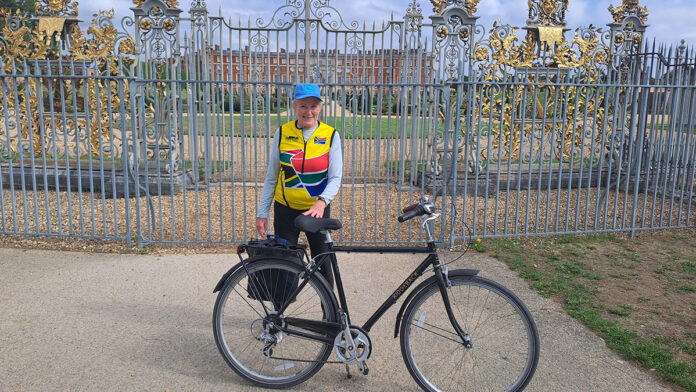
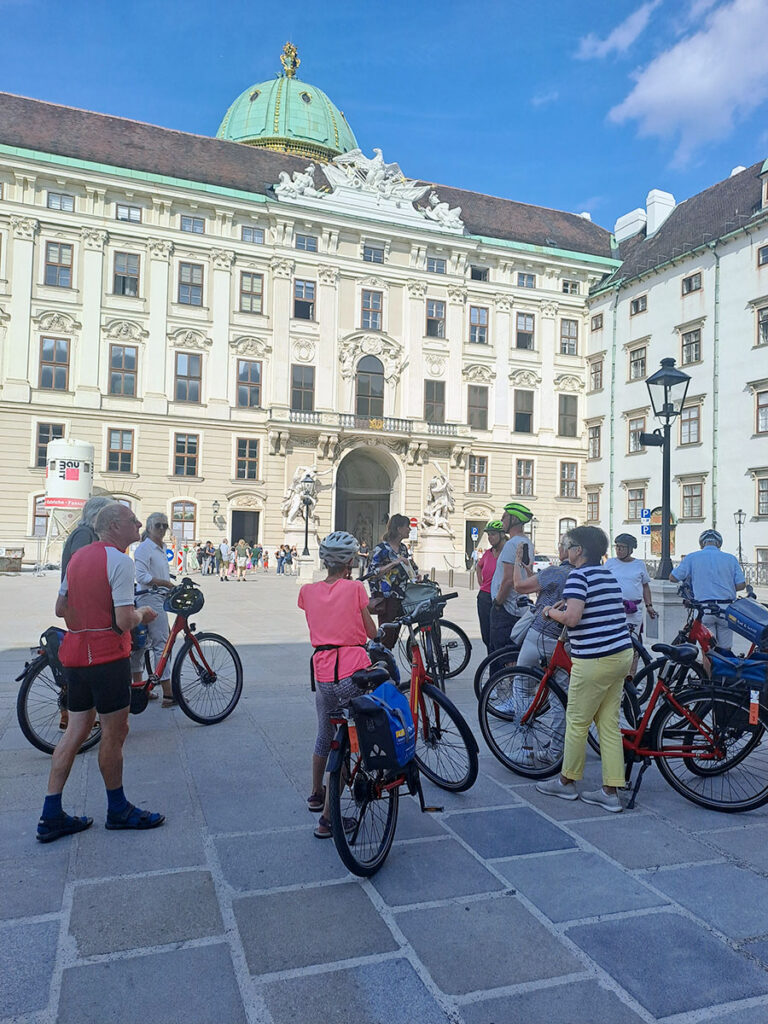
Her appetite for challenge remains strong. Just recently, she cycled 300km along the Danube River with a group of fellow seniors. Over eight days they travelled on board a luxurious Danube River cruise ship, stopping to pedal along the way. Their journey went from Passau in Germany, through Austria, Slovakia and Hungary before looping back, averaging 45km a day. This came only seven months after knee replacement surgery. “Cycling turned out to be the best therapy for my knee,” she says with a smile. ●
Helen’s advice on ageing
“I’m lucky to have chosen a career that kept me physically active. Older people should definitely keep moving. On our Danube trip, even those who weren’t cyclists rented e-bikes at some stops to explore towns instead of sitting on the ship. Staying active makes all the difference.”
Physio support – a woman among men in professional sport
Being a female physio in the world of men’s professional sport has come with its challenges, as Helen knows. In 1992, after Mandela’s release she was selected as the physio for the South African national rugby side. Danie Craven was appalled that a woman would be working in a role he considered suitable only for men. “Being denied the role didn’t stop me,” Helen comments. “In fact, I’ve worked almost exclusively with men in the professional sporting arena.”
This experience gave Helen good insight into the world of professional sports management and its many prejudices. Today, she shares those insights with corporates looking to educate their management teams.
Cycling tour in Budapest
For the current edition of the Cape Jewish Chronicle, click here.
Cape Town therapist Debby Silver and fellow therapist Glenda Mark ran sessions called ‘Feeling Fragile’ for members of our community in the immediate period after the October 7th attacks.
Debby shared with the Cape Jewish Chronicle an article that first appeared in the Jewish Telegraphic Agency about a disturbing trend identified in the American therapy industry.
We have summarised the article below:
In the months since the October 7 Hamas attacks, many Jews around the world have faced not only grief and fear, but also a painful lack of support from people they expected to lean on. This has sometimes included therapists.
Two American psychologists, Miri Bar-Halpern and Jaclyn Wolfman, who wrote an academic article articulating their views. call this ‘traumatic invalidation’ – when someone’s suffering is ignored, downplayed, or even denied by the very people meant to help.
Instead of compassion, some Jewish clients have been met with silence, blame, or the suggestion that their distress is just ‘political’. Some therapists have even avoided talking about antisemitism altogether. One client in the USA, afraid of rising hostility, didn’t dare mention her fears about attending synagogue because she felt her therapist wouldn’t understand.
Outside the therapy room, the rejection has been just as painful. Jews have sometimes been excluded from groups, confronted with hostile slogans, or criticised simply for mourning Israeli victims. In the USA, one young woman was bombarded with hateful messages from college friends after expressing solidarity with her community.
The consequences of this dismissal are serious. Feeling that you are unseen or that you have been dehumanised can deepen trauma, trigger depression and anxiety, and push people into isolation. As Wolfman explains, “It’s not disagreement. Traumatic invalidation sends the message that the other person is unacceptable as a human being.”
Bar-Halpern and Wolfman are urging the mental health field to do better. Their message is simple: Jewish clients are not asking for special treatment – just the same care anyone deserves when they say, “I’m hurt, I’m scared, I need support.”
Healing, the psychologists stress, is still possible. It begins with validation – not necessarily agreement but listening and acknowledging pain as real. They also encourage building supportive communities that offer understanding when old ones fall away.
As Bar-Halpern puts it, “If we look at everything as a hierarchy of pain, we stop seeing people as people. Then we’re losing our humanity – especially as therapists.” ●
Johannesburg-based psychologist, Dr Martin Strous, the Chairperson of the South African Jewish Mental Health and Allied Practitioners Association of South Africa (SAJMAP), says that both internationally and in South Africa, there is a need for therapists to be culturally sensitive when dealing with people from diverse backgrounds. SAJMAP was established to address cultural insensitivity in professional organisations, particularly instances of anti-Jewish or biased, anti-Israel sentiment.
For the current edition of the Cape Jewish Chronicle, click here.
This month, The Cape Jewish Chronicle features the work of Israeli artist Taryn Treisman, with a striking piece by her on our cover.
The work includes various allusions to the aftermath of the October 7th attacks, which The Chronicle memorialises through our cover image.
Born in Johannesburg, but with strong family connections to Cape Town, Taryn has exhibited regularly at the You and I Art Gallery in Sea Point.
Having made Aliyah in 2021, after living in Chicago for several years, Taryn explains that, “Since moving to Israel, my art has changed a great deal. It’s grown in particular because of the experience of the pain of October 7th. Am Yisrael experienced a collective pain, but I pray that one day we will dance again and experience collective joy.”
In addition to the trauma of October 7th, Taryn has had to come to terms with the anguish of surviving the Tsunami of 2004. “I have experienced trauma on many levels. I have experienced difficult moments, each moment a matter of life or death. These moments collectively put everything into perspective, and this is a theme in some of my work,” she explains.
Our cover image – a detail from a Taryn Treisman artwork (pictured below), which is made of aluminium with acrylic, puff paint, and sized 90cm by 90cm – reflects Taryn’s love for Israel and the joy and blessings found in the country. Elements included in the piece are: the word Todah (highlighting Taryn’s gratitude for being able to enjoy life); Chai (a celebration of life); Emet (truth); and Ahava (love). So, the work is an image of love, hope and joy.
In addition, the painting is full of flowers, highlighting Taryn’s belief in the power of blooms to brighten a room – or even a heart. “My goal is to turn darkness into light, to find the beauty hiding in pain. I believe life is all about perspective, and I choose to see the good and to feel the joy.”
Featured in galleries across South Africa, America, and Israel, Taryn’s work has gained international recognition. Collectors and art enthusiasts worldwide cherish her pieces for their modern flair, emotional resonance, and celebration of Jewish heritage. ●
Šeduva, once a thriving Lithuanian shtetl where Jews formed two-thirds of the population, now has no Jewish residents. Yet in September 2025 it became home to the Lost Shtetl Museum, dedicated to preserving the memory of its vanished community.
The idea began with the restoration of Šeduva’s Jewish cemetery. Sergey Kanovich, whose NGO Maceva documents Jewish cemeteries in Lithuania, was asked to restore the site and mark local Holocaust mass-killing grounds. Fearing the cemetery would again be forgotten, he envisioned a museum to serve as its ‘guardian’.
Funded by descendants of Šeduva Jews, the museum was designed by Finnish architect Rainer Mahlamäki, with exhibitions by Ralph Appelbaum Associates and curator Milda Jakulytė-Vasil. Its nine galleries highlight interwar Jewish life, teenage diaries, and a striking glass Torah Ark. A Holocaust gallery documents the 1941 destruction of Šeduva’s Jews, naming victims and perpetrators, while the soaring ‘Canyon of Hope’ memorial leads to a view of the restored cemetery.
Former Capetonian Eli Rabinowitz attended the opening ceremony, along with many other South Africans, some of whom trace their origins to the town. A few thousand Jews from Šeduva immigrated to South Africa before World War II.
Eli spoke about the impressive line-up at the opening event, which included an address by the Chairman of Yad Vashem, and entertainment by some of the biggest names in the music world, including Pinchas Zukerman and Andre Bocelli, and Jewish music stars Shulem Lemmer and Yitzchok Meir Helfgott.
The Museum is now open to members of the public. ●
Are your family origins in Šeduva? Share your knowledge about Jewish life in the town before the War. Please send an email to editor@ctjc.co.za with the information.
For the current edition of the Cape Jewish Chronicle, click here.
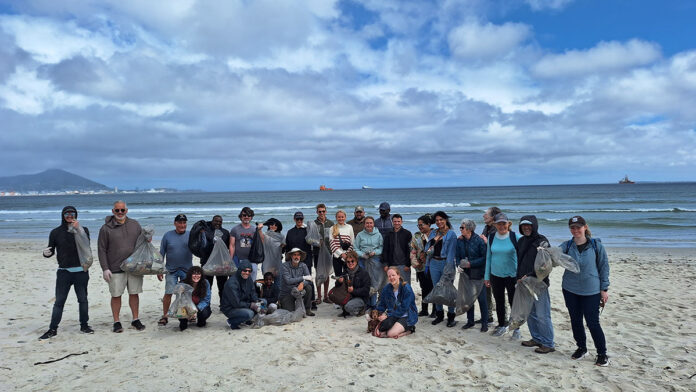
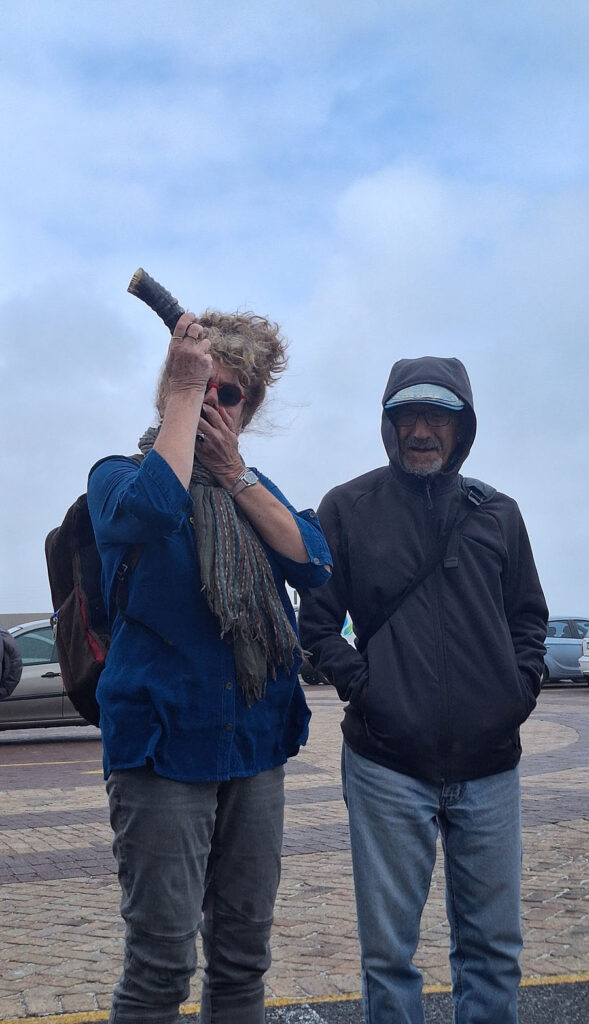
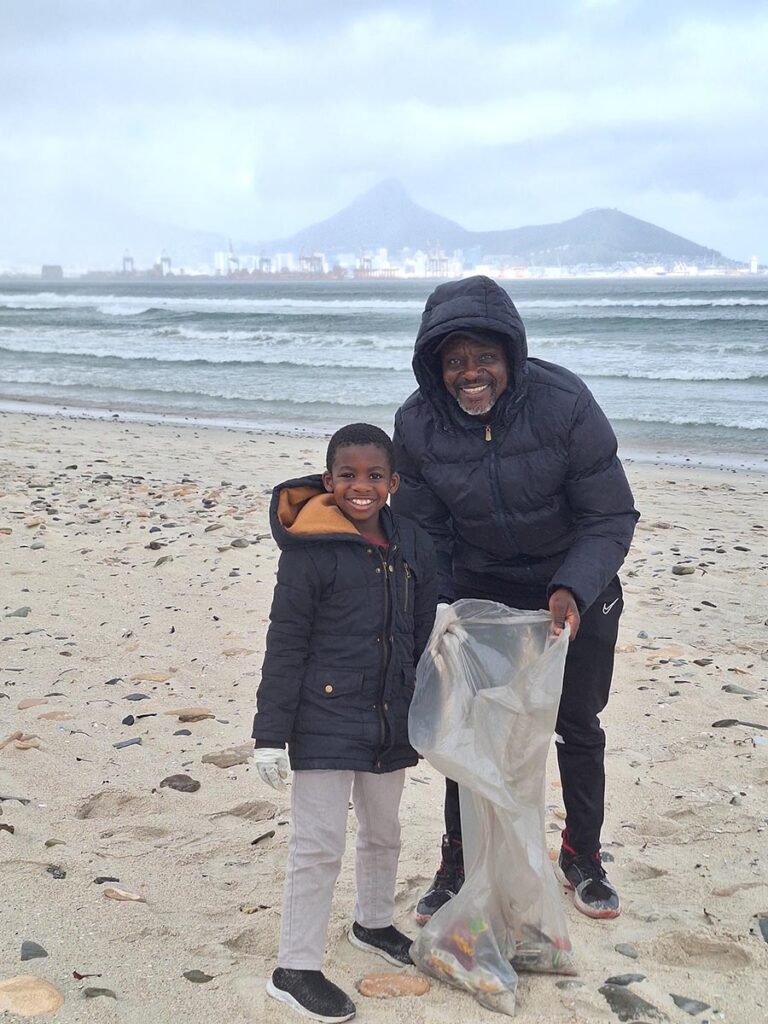
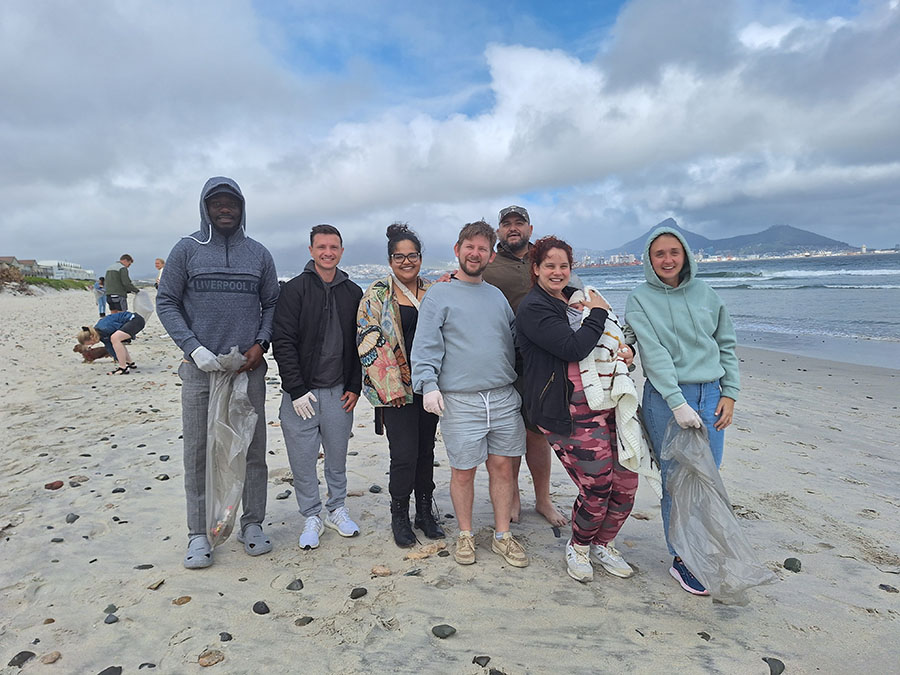
This year, Temple Israel once again participated in Reverse Tashlich, an international initiative in which Jewish communities come together after Rosh Hashanah to care for the environment by cleaning up local waterways and public spaces.
It was inspiring to see our community join hands in this global effort, reminding us that renewal at the New Year also means caring for the world around us.
Rabbi Kninneret opening the morning with a shofar blastCleo helping his dad, Fred Kaiyatsa, clean the beachSome of Temple Israel’s members at Reverse Tashlich