Home Blog Page 30

Take Two

Rabbi Osher Feldman

RABBI OSHER FELDMAN, The Gardens Shul; Chair of the Rabbinical Association of the Western Cape

Because life does not have to be perfect on the first try.

Have you ever had that sinking feeling: you prepare a presentation or a project and, when it’s done, you realise you have to go back to the drawing board?

Words like frustration and despondency come to mind. But should it really get us so down? Perhaps it’s not as bad as we think.

The Midrash contains a remarkable teaching: our world is not the first one G-d created. G-d created multiple worlds before He was ‘satisfied’ with His final product.

Rav Soloveichik explains that G-d created the world in this way to teach us a lesson: we often don’t get it right the first time. Mistakes happen. We learn as we go. 

As the Book of Proverbs puts it: “For a righteous man may fall seven times and rise again.” (Proverbs 24:16).

It takes trial and error to create something meaningful in this life.

None of us is perfect – and that’s okay. What matters most is self-awareness and the willingness to keep trying.

Rosh Hashanah is the time to look back and to learn – from both successes and failures, personally and communally. And just as with the creation of the world, we celebrate each step that brings us closer to becoming the best versions of ourselves.

In many ways, life is like a movie set. Very few scenes are perfect on the first try. Most require a Take Two – or even a Take Three. And it’s in those retakes that the actors, and the story, can shine as G-d intended.

And let us not forget the outtakes. The bloopers often bring the laughter, warmth, and joy, that only imperfection can generate.

On behalf of the Rabbonim and Rebbetzins  of Cape Town, I wish you a Shana Tovah filled with health, happiness, and sweetness. As we step into the new year together, may our ‘Take Two’ be filled with growth, renewal, blessing and of course, lots of laughter and joy.  


  • For the current edition of the Cape Jewish Chronicle, click here.
  • Subscribe to the Cape Jewish Chronicle: R450/year, or R38/month via debit order. Simply email us at subscriptions@ctjc.co.za and click here for payment info.
  • The Cape Jewish Chronicle reaches over 6 000 readers monthly across print and digital platforms.
  • To book advertising space or discuss a custom package contact Adéle Gradner Mobile: 083 321 5222 | Office: 021 464 6736 | Email advertising@ctjc.co.za

Community events September 2025

OrganisationEventDetailsRSVP/More info
MidrashaMelton
Understanding Zionism: Return to the Jewish Homeland, Online with Ronnie GotkinWeds Aug 20, 27, Sep 3, 10 & 17 + 1 TBC 19h15-21h00lauren@snitcher.org
MidrashaMelton
The Bard and the Bible, Online with David Levin-Kruss Thurs Aug 28, Sep 4 & 11 19h30-21h00lauren@snitcher.org
WIZO Cape TownRosh Hashanah Market7 Sept, 10h30-14h30bnothz@ctjc.co.za
SAZF Cape CouncilFilm Club: Cupcakes7 Sept, 18h30sazfevents@ctjc.co.za
Emunah/SAZF Cape Council
Rosh Hashanah Cooking Demo 9 Sept, 19h15https://tinyurl.com/Emunah-RHCook
ORT SA CAPE JET
Skills Development Webinar, The Art of Negotiation10 Sept, 12h00-13h00nicole@ortsacape.org.za
Union of Jewish WomenChai Kitchen11 Septprojects@ujwcape.co.za
Cape SAJBDAGM17 Sept, 17h30-19h30sajbd2@ctjc.co.za
Union of Jewish WomenRosh Hashanah Lunch17 Sept, 12h00projects@ujwcape.co.za
ORT SA CAPE JETBreakfast Club, Paul Simon17 Sept, 09h00-11h00nicole@ortsacape.org.za

  • For the current edition of the Cape Jewish Chronicle, click here.
  • Subscribe to the Cape Jewish Chronicle: R450/year, or R38/month via debit order. Simply email us at subscriptions@ctjc.co.za and click here for payment info.
  • The Cape Jewish Chronicle reaches over 6 000 readers monthly across print and digital platforms.
  • To book advertising space or discuss a custom package contact Adéle Gradner Mobile: 083 321 5222 | Office: 021 464 6736 | Email advertising@ctjc.co.za

Comfort Care Chronicles: Navigating life’s transitions

Let this be the Year of Care

An expert’s guide to care planning for the New Year. Over the years, I’ve seen time and again how even the most devoted families can falter in the absence of a plan. When care is reactive, decisions are rushed, caregivers burn out, and patients suffer.

Families who plan ahead, however, transform crisis into confidence. Studies show that proactive care planning can reduce hospitalisations by up to 30%, ease trauma, reduce family stress, and ensure every decision honours the individual’s values.

As the saying goes: This Rosh Hashanah, it’s time to flip that script. Make care planning your New Year’s resolution – not because you expect the worst, but because you want to protect and honour the best in those you love.

This guide will show you how to build a living, flexible care plan – one that brings clarity in uncertainty and dignity at every step.

1. Embrace care planning as a strategic resolution
A care plan is more than a list of medications or appointments – it’s a dynamic, evolving strategy that integrates daily routines, medical needs, emotional well-being, personal values, and spiritual guidance. Action Steps:

Assemble your care team: 
Identify key players – family, clinicians, spiritual advisors – and open channels of communication.

Document core values: 
In one page, list what matters most – comfort priorities, religious practices, and daily joys.

Define triggers and responses: 
Specify what calms or upsets your loved one, and when to escalate care, call the doctor, or initiate comfort measures.

2. Create weekly check-in rituals
Intentional care requires consistent attention. A 15-minute weekly check-in – whether over dinner or a video call – can flag concerns early, track changes, and prevent small issues from becoming emergencies.

3. Build a resilient ‘Circle of Care’
Care is never a solo act. At Evercare, we help formalise your ‘Circle of Care’ – your core group of family, professionals, and supporters – and equip it with shared tools:

Shared calendar:
Use Google/Outlook Calendar or a wall chart to co-ordinate appointments, script refills, and respite care.

Digital safe:
Store key documents (care plan, advance directive, living will, Power of Attorney) in a shared cloud folder

WhatsApp Group:

Set up a real-time messaging group for updates, alerts, and team check-ins.

4. Support the caregivers, too
Behind every successful care journey is someone holding it all together. Without support, even the strongest caregivers can burn out. As a resolution, commit to:

Scheduled respite:
Reserve two hours weekly for personal recharge – non-negotiable.

Professional support:
Even a single hour a month with a nurse, carer, or counsellor makes a difference.

Emotional debriefing:
Ensure caregivers have safe spaces to check-in, process and release.

5. Build a system, not a patchwork plan
Ad hoc care creates gaps – and gaps can be dangerous. Sustainable care demands structure.

Assign a care co-ordinator:
This person ensures follow-ups happen, records are up to date, and clinicians are informed. If no one can lead, divide the role among the family – one for finance, one for medical, one for logistics.

Quarterly care plan audits:
Every three months, revisit the care plan. Update it for changing needs, new preferences, or emerging treatments.

To care is to plan
This Rosh Hashanah, let your care be an act of intention – not reaction. Build systems that hold, rituals that anchor, and plans that speak when you cannot.

Because when we plan with love, we care with confidence. There is no greater mitzvah than showing up for the people we love – with presence, with purpose, and with a plan.  

Wishing you all a Happy, Healthy and Intentional New Year.


  • For the current edition of the Cape Jewish Chronicle, click here.
  • Subscribe to the Cape Jewish Chronicle: R450/year, or R38/month via debit order. Simply email us at subscriptions@ctjc.co.za and click here for payment info.
  • The Cape Jewish Chronicle reaches over 6 000 readers monthly across print and digital platforms.
  • To book advertising space or discuss a custom package contact Adéle Gradner Mobile: 083 321 5222 | Office: 021 464 6736 | Email advertising@ctjc.co.za
Prepare your bursary application for 2026

Apply between 1 September and 31 October 2025.

Cape SA Jewish Board of Deputies | http://www.capesajbd.org | Instagram | Facebook


  • For the current edition of the Cape Jewish Chronicle, click here.
  • Subscribe to the Cape Jewish Chronicle: R450/year, or R38/month via debit order. Simply email us at subscriptions@ctjc.co.za and click here for payment info.
  • The Cape Jewish Chronicle reaches over 6 000 readers monthly across print and digital platforms.
  • To book advertising space or discuss a custom package contact Adéle Gradner Mobile: 083 321 5222 | Office: 021 464 6736 | Email advertising@ctjc.co.za

Bearing witness in Cape Town

Tal Shoham’s story of survival and resolve

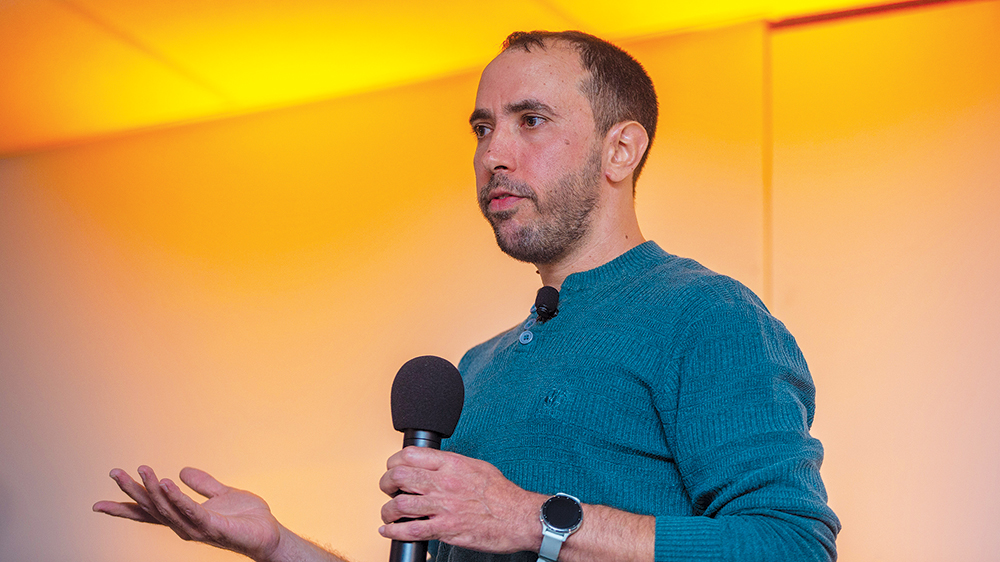
Cape Town’s Jewish community and invited guests gathered recently for a rare and moving encounter with Tal Shoham, one of the longest-held hostages of the war, who shared his story of survival after 505 days in Hamas captivity.

A family torn apart on October 7, 2023
Shoham was abducted by terrorists from Kibbutz Be’eri on October 7, 2023, as was his wife, Adi, their two young children, and extended family members who had come together to celebrate Sukkot. While Adi and the children were freed after 50 days during the first ceasefire deal, Tal remained behind.

From civilian homes to ‘The Tomb’
Tal’s journey through captivity began in civilian homes, where he endured physical and psychological abuse at the hands of his guards. Months later, along with fellow captives, Evyatar David and Guy Gilboa-Dalal, he was blindfolded and taken by Red Crescent ambulance to one of the entrances of Hamas’s tunnel network. For nearly two hours they were marched underground until they reached a claustrophobic cell Tal calls ‘The Tomb’ – a space around 90 centimetres wide and 9 to 10 metres long, with only a hole in the floor as a toilet, very little oxygen and, for most of the time, total darkness. There they found Omer Wenkert, who had been held in isolation since his abduction.

Cruelty exposed 
Deprivation was part of Hamas’ torture strategy, including denying the men a sense of time. Tal and his fellow captives, however, realised they could gauge the hours of the day by the sound of heavy machinery operating nearby, 40 metres below ground, for about twelve hours a day. Incredibly, even a year into the war, Hamas was still busy expanding their terror tunnel network while crying to the world about a lack of diesel for hospital equipment, generators and ambulances. 

The cruelty Tal described has since been laid bare in newly released Hamas videos showing hostages Evyatar David and Rom Braslavski – both gaunt, hollow-eyed, and pleading for their lives. 

In one, Evyatar is seen digging his own grave, a chilling image that underlines what Tal called the captors’ ‘calculated humiliation and starvation’ of those still inside Gaza.

Starvation was part of the cruelty. In the final days before his release, Hamas tried to ‘fatten’ the hostages being released to create the illusion of humane treatment: an image they wanted the world to see after earlier exchanges showed emaciated survivors.  

Freedom, hope and those left behind

In one of the most poignant moments of his address, Tal described how, after 50 days, he received information confirming for him that Adi and the children had survived the initial attack and would be returned home alive. That scrap of paper became his anchor to survive. Tal was freed on February 22 as part of the last hostage-ceasefire deal. 

The joy of his release was tempered by the knowledge that Evyatar David and Guy Gilboa-Dalal were made to watch him leave, and remain in captivity today along with 49 others, alive and deceased. 

Since returning home from terrorist captivity in Gaza, Tal has committed himself to advocating for the return of every remaining hostage. In Cape Town, he spoke with clarity, quiet strength, and – true to Jewish spirit – even moments of humour. His testimony left the audience deeply moved, and reminded all of us present of the moral urgency of this cause: that they must all come home.

JCS@WORK: Elder Neglect

By Charmaine Nicks, Social Worker

Many older adults prefer to remain in their own homes rather than move into a residential aged care facility. In such cases, they often rely on informal care provided by adult children, partners, or other family members. However, as their health deteriorates – due to conditions such as incontinence, dementia, or fractures – care demands can quickly escalate, and unintentional neglect may occur.

A common turning point is when an older person becomes immobile, requiring specialised nursing care to prevent complications like pressure ulcers (bedsores). Caregivers must understand how to reposition immobile individuals regularly and safely, as improper handling can lead to further injury. Incontinence adds another layer of complexity, as adult diapers and bedding must be changed frequently. If a pressure wound or its dressing becomes wet with urine, the risk of infection and worsening of the wound significantly increases.

At this stage, professional nursing care is often necessary, but many families are unprepared for the emotional, physical, and financial toll involved. Wound management, personal hygiene, and the need for skilled caregivers can place overwhelming pressure on informal carers.

This strain can lead to emotional, verbal, or even financial abuse of the older person – not always out of malice, but from stress, burnout, and a lack of support. The risk of elder neglect increases with the older adult’s age, cognitive decline, and complexity of care needs, especially when caregivers are under-resourced, inexperienced, or dealing with their own mental or physical health challenges.

While family members can provide valuable care, it’s essential that they understand the demands involved. Recognising how quickly an older person’s condition can decline and planning ahead for additional support can help prevent unintentional neglect and ensure the older person receives the dignified care they deserve.

If you would like any further information from our social workers, please contact the JCS office on 021 462 5520 or email info@jcs.org.za

Jewish Community Services website: http://www.jcs.co.za | JCS Facebook | JCS Instagram


  • For the current edition of the Cape Jewish Chronicle, click here.
  • Subscribe to the Cape Jewish Chronicle: R450/year, or R38/month via debit order. Simply email us at subscriptions@ctjc.co.za and click here for payment info.
  • The Cape Jewish Chronicle reaches over 6 000 readers monthly across print and digital platforms.
  • To book advertising space or discuss a custom package contact Adéle Gradner Mobile: 083 321 5222 | Office: 021 464 6736 | Email advertising@ctjc.co.za

Living well, ageing well: Secrets to a fuller life

Nan Schalij and Joan Sarembock enjoying a craft morning in Muizenberg

Last month, I discussed the importance of remaining curious and engaged in order to age well. Now, I’d like to continue by exploring some of the secrets of living fully into later life.

No one wants to depend on others unnecessarily. We want to remain active and in control of our own lives for as long as possible. At our centres, I often notice that some members in their early 60s already seem slowed down by age, while other older people remain lively, joyful and youthful. Clearly, ageing is not only about years – it’s about mindset, health, and lifestyle.

Often, we only consider ageing when something significant happens: the death of a loved one, the birth of a grandchild, or even the first glimpse of grey hair. These moments remind us that time is passing. Yet ageing should not be feared. Each stage of life offers an opportunity to grow, adjust and approach the future with optimism.

Of course, longevity is a hallmark of modern life. Many of us would prefer that our bodies show little sign of age, but reality persists –  a rounder middle, slower productivity, or less stamina. The fantasy of eternal youth is just that: a fantasy. What matters more is ageing ‘in good nick’ – with health and vitality. Resisting or denying the changes of ageing can harm both mental and emotional wellbeing. Instead, we can reframe these changes as opportunities to redefine what really matters.

When we are young, we often assume we’ll live to 100, filled with energy and curiosity. It’s important to age optimally – by working at it, holding on to dreams, never limiting ourselves, and actively shaping how we live.

Retirement, too, has changed. For many, it’s no longer simply a time of rest but a period of reinvention. People work longer, often choosing when and how to retire. Flexibility is key – choosing how to balance work, learning, leisure and community involvement.

So, focus on what brings joy and meaning. Letting go of unnecessary fears and pouring energy into what we truly care about helps us live well. Exercise, eat wisely, and look after your appearance – don’t let yourself go. Learn new things and challenge your brain. Remember: it isn’t age itself that causes decline, but often the diseases linked to poor lifestyle choices.

Human connection is also crucial. Staying engaged with others is emotionally nourishing and helps prevent loneliness. You may find it useful to work with a Life Coach to plan for the next phase of life – finding purpose, staying motivated, and giving back to the community. Contributing to others both benefits society and brings a deep sense of fulfilment.

Consider technology. The internet is one of the fastest-changing aspects of modern life, and staying current can protect us from isolation. Learning to use computers and smartphones keeps us connected, stimulates our brains, and helps us remain part of the wider world. Staying visible, active and engaged prevents the shrinking of horizons typical of age.

Through our weekly programme, members of the Cape Jewish Seniors Association (CJSA) remain part of a caring community, with opportunities to learn, socialise, and support one another. This is more than just a service – it’s a lifeline. It prevents loneliness, keeps people connected, and truly does add life to years.

Ageing is inevitable. But how we age is, to a large extent, up to us. With optimism, connection, curiosity, and care, later life can be not just a chapter of slowing down, but one of renewal, growth and joy.  

Have a great month!
Warm regards
Diana Sochen, Executive Director

Social and Personal

We congratulate our members who have had joyous occasions during the last month.
Birthday: Myra Swersky – 90th
Barmitzvah: Joel and Ethne Abromowitz – Grandson
Engagment: Sonia Norrie – Granddaughter
Marriage: Sarah Daitsch – Grandson
New Members welcomed: Sharon Aires, Roy Benson, Dawn Bierman, Rene Woolf, Irene and Percy Choritz, Susan Freeman, Myra Havenga, Victoria Kretschmer.
Our thoughts and wishes of strength are with those members who are ill or grieving.
Get well wishes: Leina Sank, Sarah Daitsch, Martha Mitchell, Jean Tocker.
Wishes of Long Life and strength on the passing of members of CJSA or their family members:
Shulamit Rosowsky on the passing of her beloved husband, Joe.
Les and Selwyn Kantor on the passing of their son, James.
Gerald Potash on the passing of his wife, Esther.
Jacqui Rodgers on the passing of her brother, Bernie.
Les Vides on the passing of his daughter, Amanda.
The family of Diana Friedland.

Cape Jewish Seniors Association
Director: Diana Sochen, 021 434 9691, director@cjsa.org.za
Admin: Amanda, 021 434 9691, admin@cjsa.org.za
CJSA on Facebook


  • For the current edition of the Cape Jewish Chronicle, click here.
  • Subscribe to the Cape Jewish Chronicle: R450/year, or R38/month via debit order. Simply email us at subscriptions@ctjc.co.za and click here for payment info.
  • The Cape Jewish Chronicle reaches over 6 000 readers monthly across print and digital platforms.
  • To book advertising space or discuss a custom package contact Adéle Gradner Mobile: 083 321 5222 | Office: 021 464 6736 | Email advertising@ctjc.co.za
Guardians of memory: Preserving the Jewish past across continents

Jewish communities outside Israel are now almost entirely urban – in cities such as New York, London, Paris, and Cape Town. Yet history tells a richer story: we once lived not only in bustling cities (when permitted) but also in small towns and remote villages across the globe. 

Travellers in Europe often stumble across reminders of this heritage – an Ulica Żydowska, La Giudea, or Calle Hebraica – and feel a thrill of recognition. I have felt it myself on visits to towns in Spain, Portugal, and Eastern Europe.

What’s striking is that it’s not only Jews who respond warmly to these traces. On a recent tour to Poland with the Cape Town Holocaust & Genocide Centre (CTHGC), I saw how local non-Jewish residents take responsibility for abandoned sites reflecting their town’s Jewish past – a past almost erased by the Nazi occupation.

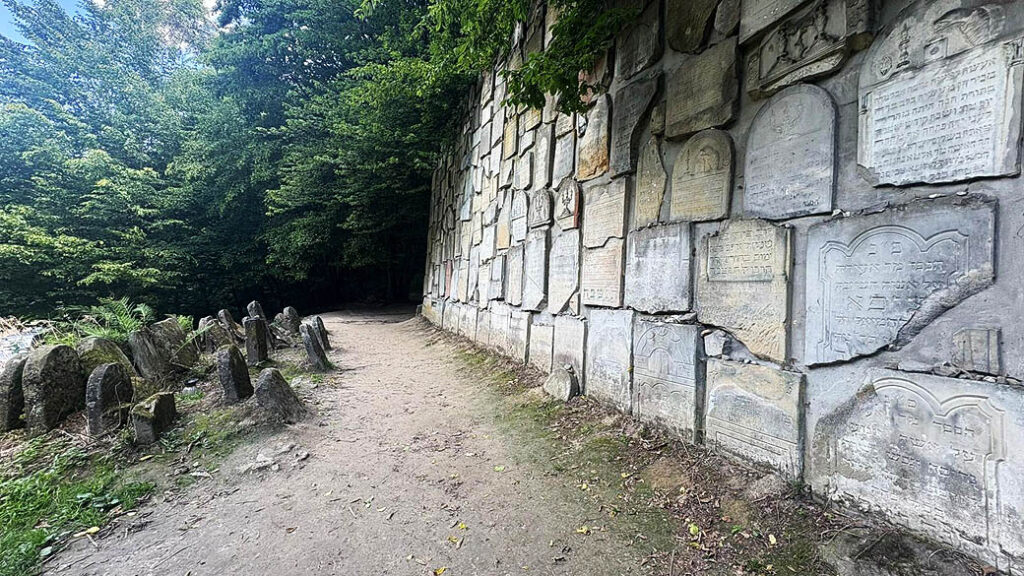
In some places, these sites are coming back to life. We visited the old synagogue in Łańcut, near Tarnów, lovingly cared for by an elderly Polish man who has learned Hebrew; a cemetery in Kazimierz Dolny, restored by a local man who built a memorial wall from old tombstones; and the Jewish Museum in Oświęcim, created by non-Jews in tribute to the community that once lived there.

I had seen this spirit before in a documentary brought to Cape Town by the CTHGC. It told the story of Polish Olympic kayaker Dariusz Popiela, who identifies and restores forgotten Jewish cemeteries around the country.

We should acknowledge – and treasure – the contribution of people such as these.

These experiences came to mind when reading this month’s SAJBD submission in the Chronicle (P40), about rural Western Cape communities working to protect their unused synagogues and cemeteries from decay.

In both Poland and South Africa, these are the remnants of once-thriving Jewish communities whose members contributed richly to local and national life. The physical traces – a building, a gravestone, a street name – are not just historical curiosities. They are enduring links to lives, stories, and values that shaped the places we live in today.

Preserving them is more than an act of remembrance. It’s a statement that these histories matter – not only to Jews, but to the broader human story.  

This Rosh Hashanah and Yom Kippur, we pray for peace the world over, and especially for our brethren in the State of Israel. We look forward with hope to a year in which the current horrific wave of antisemitism is stopped in its tracks and a year filled with more love than hatred. The CJC team wishes you a Chag Sameach!


  • For the current edition of the Cape Jewish Chronicle, click here.
  • Subscribe to the Cape Jewish Chronicle: R450/year, or R38/month via debit order. Simply email us at subscriptions@ctjc.co.za and click here for payment info.
  • The Cape Jewish Chronicle reaches over 6 000 readers monthly across print and digital platforms.
  • To book advertising space or discuss a custom package contact Adéle Gradner Mobile: 083 321 5222 | Office: 021 464 6736 | Email advertising@ctjc.co.za

The Power of Community

Chief Rabbi’s Rosh Hashanah message

A recent survey by the American Psychiatric Association found that one in three people experience loneliness at least once a week, with 30% of younger people reporting feeling lonely at least several times a week.

Ironically, when asked how they dealt with their feelings of loneliness, half the respondents said they sought solace in some kind of distraction, like TV or social media, which obviously exacerbates the problem.

In modern Western culture, loneliness is increasingly described by social scientists as an epidemic – affecting not only mental health, but physical wellbeing. A world that promises more connectivity offers, instead, connections that are virtual rather than
real, digital rather than human, on screens rather than in person.

We have a deep craving for human connection. But loneliness is not alleviated simply by being around other people. The antidote to loneliness touches on something more existential – being part of something greater, a sense of belonging.

Judaism has offered us this solution for thousands of years: community. And it is expressed most powerfully through our shuls, which have long been the heart of Jewish community life, hubs of connection for generations. Being part of a shul and coming regularly is about more than seeing familiar faces. It offers something far deeper: a sense of community, the ultimate antidote to loneliness. 

Community means belonging to a group with a shared identity – a circle of people who can support and hold you, a place where you belong.

This is the beauty of shul. The founders of our community instinctively understood this. Arriving on these shores from Eastern Europe to escape persecution and poverty, one of their first priorities was to establish shuls – beginning with the first in Cape Town more than 180 years ago, and then spreading across the country and dotting the countryside. Even as demographics shifted from rural areas to the big cities – and within Johannesburg and Cape Town, from one suburb to another – shuls have remained the lifeblood of the South African Jewish community. Shuls are islands of connectivity, love, and real human connection – places where we feel part of something greater than ourselves.  

This Rosh Hashanah and Yom Kippur, let us all resolve to deepen our connection to community, taking an active role in making our shuls thrive.

In doing so, we will emerge a stronger, more unified community, enriched as families, inspired by shared purpose, with the resilience, strength and confidence to meet the future.

I wish our special Cape Town Jewish community a gmar chatima tova, and  a sweet new year!  


  • For the current edition of the Cape Jewish Chronicle, click here.
  • Subscribe to the Cape Jewish Chronicle: R450/year, or R38/month via debit order. Simply email us at subscriptions@ctjc.co.za and click here for payment info.
  • The Cape Jewish Chronicle reaches over 6 000 readers monthly across print and digital platforms.
  • To book advertising space or discuss a custom package contact Adéle Gradner Mobile: 083 321 5222 | Office: 021 464 6736 | Email advertising@ctjc.co.za

Your path to personalised care starts here

Compassionate. Professional. Tailored Support.

Care Services info@careservices.org.za


  • For the current edition of the Cape Jewish Chronicle, click here.
  • Subscribe to the Cape Jewish Chronicle: R450/year, or R38/month via debit order. Simply email us at subscriptions@ctjc.co.za and click here for payment info.
  • The Cape Jewish Chronicle reaches over 6 000 readers monthly across print and digital platforms.
  • To book advertising space or discuss a custom package contact Adéle Gradner Mobile: 083 321 5222 | Office: 021 464 6736 | Email advertising@ctjc.co.za

SIGN UP TO RECEIVE THE CAPE JEWISH CHRONICLE