
Home Blog Page 6

The Truth shall set you free – that’s if you believe in the truth… 

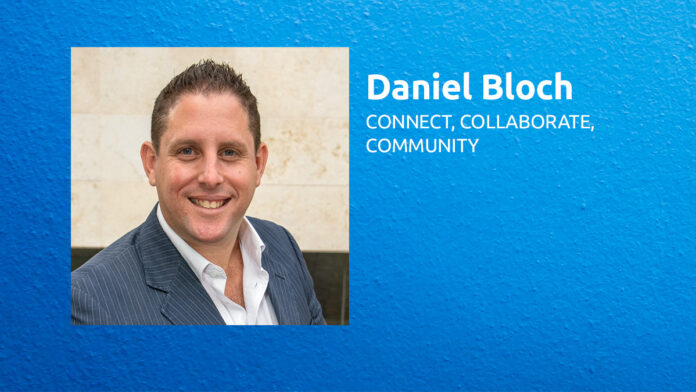
Daniel Bloch

By DANIEL BLOCH 

The week of 15-19 June will certainly be remembered, at least by me, as one filled with an extraordinary range of emotions and events. At times, it felt like I was watching a movie and this week seemed to have it all: drama, comedy, aggression, demonstrations, singing, legal arguments, false accusations, and what could only be described as Hollywood-style theatrics. 

So where does truth fit into all of this? For some, truth is the foundation of everything. For others, it appears to be little more than an optional version of events. 

I attended the three-day court hearing involving Cape Union Mart and the Palestine Solidarity Campaign (PSC). The legal merits of the case have been widely reported and can be read through various sources, so I won’t repeat them here. What I will say is that Cape Union Mart’s legal team conducted themselves professionally and presented their arguments clearly and effectively. 

Based on what I observed, and noting that I am not a lawyer, it appeared that the case centred on allegations that defamatory claims have been made against both Cape Union Mart and Philip Krawitz. In my view, the PSC’s legal team presented little evidence to substantiate those claims. It is now for the court to decide whether the protest slogans, posters, and conduct complained of exceed the bounds of lawful protest and amount to unlawful defamation. 

One of the most striking moments of the proceedings was the apparent argument made by the PSC legal team that the rights to protest and to freedom of expression are not necessarily dependent on the factual accuracy of the statements being made. In other words, that individuals may protest and make allegations regardless of whether those allegations are true, partly true, or false. Several questions from the bench suggested the court was carefully interrogating that proposition. 

Outside the courtroom, events seemed to mirror the arguments taking place inside. 

On the second day, PSC representative Yusuf Chikte publicly announced what he described as “a serious incident”, accusing the South African Jewish Board of Deputies of attacking a journalist. Minutes later, in an aggressive manner, he called me out by name and accused me of allowing such conduct to occur. I rejected those allegations immediately and challenged him on what I regarded as defamatory statements. This serious accusation was made without any evidence of SAJBD involvement – typifying the false narrative and lies used by the PSC to pedal their propaganda and hate campaign. The video of this exchange is available on our social media channels. 

Unfortunately, this was not the only incident that raised questions about the accuracy of claims being made. Videos circulating online show heated confrontations between opposing groups, including one in which an anti-Israel supporter approached pro-Cape Union Mart demonstrators while shouting accusations, death chants and other hostile slogans. Such conduct sits uneasily alongside claims of peaceful protest and respectful engagement. Nothing screams (excuse the pun) peaceful like a good death chant. 

Perhaps the most surreal moment came when, during one particularly tense exchange, Mr Chikte suddenly collapsed to the ground, creating panic and confusion among those present. The incident quickly became the subject of widespread speculation and online commentary, illustrating how rapidly narratives can develop before facts are properly established. 

Ultimately, the central issue throughout the week seemed to be the value placed on truth itself. Courts exist precisely because facts matter. Allegations require evidence. Serious accusations carry serious consequences. 

In the months ahead, various matters involving anti-Israel activists and organisations will continue before the High Court, Equality Court, the South African Human Rights Commission, and other legal forums. Those proceedings will provide opportunities for evidence to be tested and competing claims to be scrutinised. The Cape SAJBD is involved in several of these cases. 

Whether one supports or opposes any particular cause, the principle should remain the same: truth matters. Without it, public debate descends into misinformation, reputations are unfairly damaged, and justice becomes increasingly difficult to achieve. 

Perhaps, after all, the old saying still rings true: The truth shall set you free – but only if you are prepared to accept it.

Cape SA Jewish Board of Deputies | http://www.capesajbd.org | Instagram | Facebook


  • For the current edition of the Cape Jewish Chronicle, click here.
  • Subscribe to the Cape Jewish Chronicle: R450/year, or R38/month via debit order. Simply email us at subscriptions@ctjc.co.za and click here for payment info.
  • The Cape Jewish Chronicle reaches over 6 000 readers monthly across print and digital platforms.
  • To book advertising space or discuss a custom package contact Adéle Gradner Mobile: 083 321 5222 | Office: 021 464 6736 | Email advertising@ctjc.co.za
When we play as one team

What the World Cup reminds us about leadership, unity, and community  

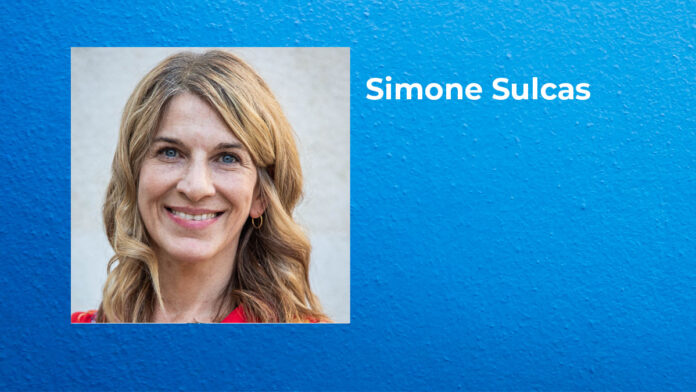
By Simone Sulcas

South Africa had just drawn level against the Czech Republic, and for a moment, the country seems to move as one – attention fixed, reactions immediate, a shared surge of energy felt across homes and WhatsApp groups. It is a reminder of how quickly a single moment on the field can unite a nation. Their hopes now rest on the final group game against South Korea. (By the time this article appears, Bafana’s fate will already be sealed.) 

As the world turns its attention to the 2026 FIFA World Cup, there is something in this spectacle that resonates beyond the pitch, particularly for those of us engaged in communal leadership. Watching those moments of shared attention, I found myself thinking about what it takes for any community to move with that same sense of purpose. 

A World Cup team is not simply a collection of talent. It is built on trust, discipline, and shared purpose. Each player brings something different, yet success depends on cohesion. Individuals matter, but it is the collective that carries the result. The same is true of our community at the Cape South African Jewish Board of Deputies. We are diverse in outlook and experience, but united in our commitment to protecting and strengthening Jewish life in the Western Cape.  

There is a lesson in that opening moment. Community works best when we are aligned –pulling together and moving in the same direction. Alignment does not mean agreement on every issue; it means knowing what we stand for and showing up for one another when it matters. ‘Stronger together’ is not simply a phrase; it is a discipline, and at times, a choice. 

On the field, preparation and adaptability are essential. Coaches study their opponents, adjust tactics, and respond in real time. Leadership demands the same. It also requires clarity about what must be confronted directly. In our context, that means addressing antisemitism firmly and responsibly, while continuing to build relationships, advocate with confidence, and ensure that Jewish life remains visibly and constructively part of South Africa’s broader story. There is no single playbook – only principles, experience, and the will to act. 

Elasticity matters, too: the ability to absorb pressure, adjust, and return to purpose without losing shape. Even strong teams face setbacks. What defines them is how they respond. In communal life, challenges are inevitable – moments of pressure, disagreement, and uncertainty. These test our unity and our sense of purpose. 

And then there is the crowd. Football without its supporters is unimaginable. The energy, belief, and shared investment elevate the game. Our community is no different. The Board draws its strength from the people it represents – affiliate organisations, volunteers, and engaged members of our community who contribute to a shared whole. 

The World Cup also shows how pride in who we are can sit comfortably alongside respect for others. As South African Jews, we know this balance well: deeply rooted in our Jewish heritage, and fully part of the national story. 

The best teams are not those without difference, pressure, or uncertainty. They are those who remember what they are playing for. As the tournament unfolds, that may be the reminder we need most.  

And to Bafana Bafana: win or lose, I am  proud you are there – carrying us with you.

Cape SA Jewish Board of Deputies | http://www.capesajbd.org | Instagram | Facebook


  • For the current edition of the Cape Jewish Chronicle, click here.
  • Subscribe to the Cape Jewish Chronicle: R450/year, or R38/month via debit order. Simply email us at subscriptions@ctjc.co.za and click here for payment info.
  • The Cape Jewish Chronicle reaches over 6 000 readers monthly across print and digital platforms.
  • To book advertising space or discuss a custom package contact Adéle Gradner Mobile: 083 321 5222 | Office: 021 464 6736 | Email advertising@ctjc.co.za

Remembering a community connector 

The Cape Town Jewish community has lost one of its great connectors and cultural entrepreneurs with the passing of Avron Kaplan z”l in early June. 

For decades, Avron was a familiar figure through The Living Newspaper, the platform he founded in 1987 to bring prominent local and international speakers to Cape Town audiences. Through these events, he raised funds for the Camps Bay Congregation, while enriching community life with thought-provoking discussions and remarkable personalities. 

As the Cape Jewish Chronicle noted in 2009, Avron “single-mindedly, passionately and doggedly” brought an impressive array of speakers to Cape Town. Among them were Indian diplomat and author Vikas Swarup, whose novel Q&A became the Oscar-winning film Slumdog Millionaire; Booker Prize-winning author Bernice Rubens; Jewish astronaut Jeffrey Hoffman; Rabbi and author Shmuley Boteach; former Australian judge Marcus Einfeld; Alan Committee; Nik Rabinowitz; Mira Nair, the Indian filmmaker, who is the mother of the controversial New York Mayor Zohran Mamdani; Alan Dershowitz; Helen Suzman; Chris Barnard; Marius Barnard; and Michael Friedman, head of Frankfurt’s Jewish community. 

Beyond his speaker events, Avron ran a popular film club that introduced Cape Town audiences to movies otherwise unavailable in South Africa. In some cases, he successfully challenged apartheid-era censorship restrictions to secure screenings for private audiences. 

A past Chairman of Camps Bay Shul (1970-72), Avron also served for many years on the committee of the Jacob Gitlin Library. 

Many older Capetonians will remember his enthusiasm, determination and ability to bring people together around ideas, culture and conversation. Through the speakers he hosted, the films he screened, and the institutions he supported, Avron left a lasting mark on community life. 


  • For the current edition of the Cape Jewish Chronicle, click here.
  • Subscribe to the Cape Jewish Chronicle: R450/year, or R38/month via debit order. Simply email us at subscriptions@ctjc.co.za and click here for payment info.
  • The Cape Jewish Chronicle reaches over 6 000 readers monthly across print and digital platforms.
  • To book advertising space or discuss a custom package contact Adéle Gradner Mobile: 083 321 5222 | Office: 021 464 6736 | Email advertising@ctjc.co.za
More than food: How our Foodbank supports the Community

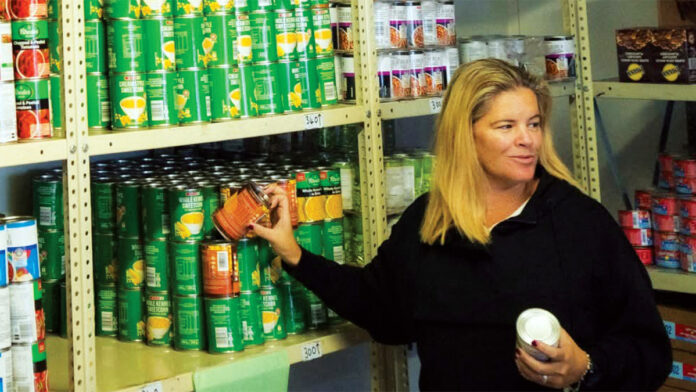
Our JCS Tikvah Foodbank exists to help ensure that no one faces hunger alone. Through the generosity of donors, volunteers and community partners, we collect, sort and distribute food and essential household items to individuals and families who are experiencing hardship. What may seem like a simple food parcel can make an enormous difference to someone struggling to make ends meet.

Jewish Community Services website: http://www.jcs.co.za | JCS Facebook | JCS Instagram


  • For the current edition of the Cape Jewish Chronicle, click here.
  • Subscribe to the Cape Jewish Chronicle: R450/year, or R38/month via debit order. Simply email us at subscriptions@ctjc.co.za and click here for payment info.
  • The Cape Jewish Chronicle reaches over 6 000 readers monthly across print and digital platforms.
  • To book advertising space or discuss a custom package contact Adéle Gradner Mobile: 083 321 5222 | Office: 021 464 6736 | Email advertising@ctjc.co.za
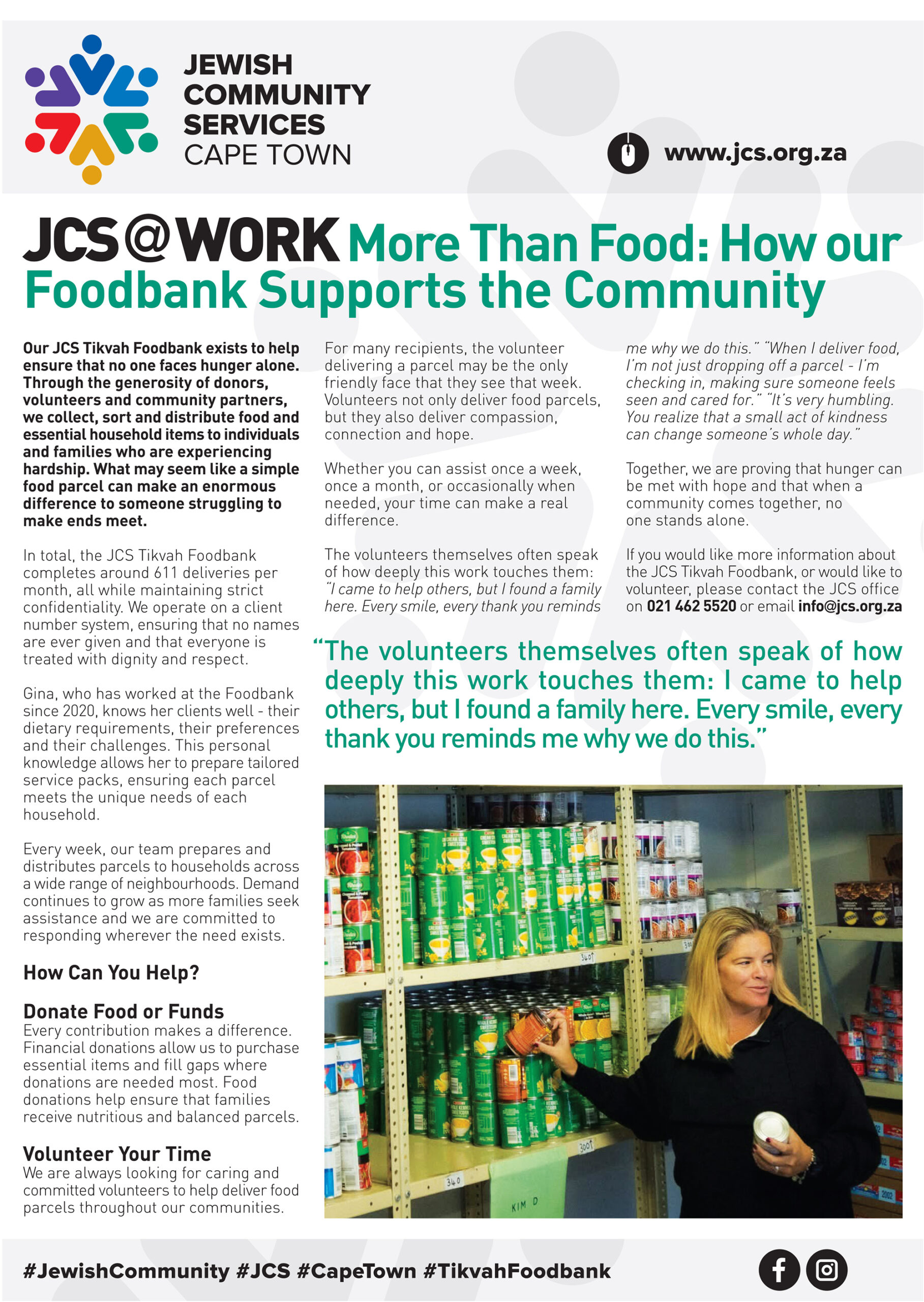
Cape SAJBD and UJC bring Power Shabbos to Paarl  

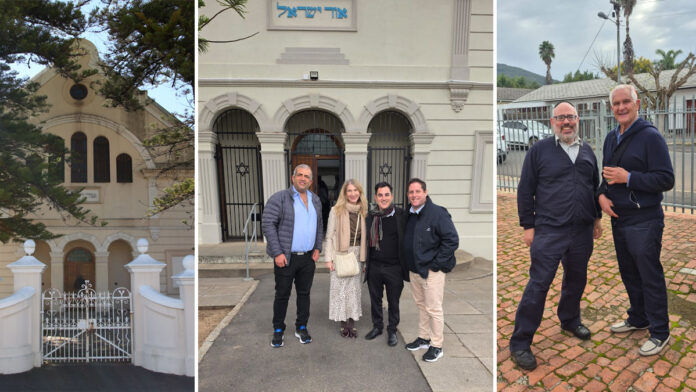
Middle: SAJBD representatives David King, Simone Sulcas, Josh Friedman and Daniel Bloch. Right: Rabbi Bryan Opert and Chairman Selwyn Chatz

By JOSH FRIEDMAN, Programme & Development Manager, Cape SAJBD  

The Cape South African Jewish Board of Deputies (Cape SAJBD) engages regularly with our country communities. Following various visits around the Western Cape over the last few years – including Shabbat dinners, centenary celebrations and more – we visited Paarl on the weekend of the 26-27 June for a special Power Shabbos

The visit was warmly embraced by the Paarl Hebrew Congregation, under the leadership of Rabbi Bryan Opert and a dedicated committee headed by President Selwyn Chatz, and brought together community members for a memorable and uplifting Shabbat programme. 

Friday night began with a well-attended service, led by the Cape SAJBD’s Josh Friedman, followed by a festive Power Brocha, at which approximately 70 people gathered for an evening of community, connection and engagement. Cape SAJBD Executive Director Daniel Bloch and Chairperson Simone Sulcas then tag-teamed an address titled Jewish Life in the Western Cape: A Global and Local Update, sharing insights into the local communal landscape as well as reflections from the recent AJC Global Forum in Washington DC. The gold standard shared is that, relative to many Jewish communities around the world who are experiencing shrinking spaces, increased violent antisemitism and who, at times, cannot visibly express their Judaism, here our civil rights as Jews are protected and, where infringed upon, challenged rigorously by the Cape SAJBD.  

The evening also featured an address by UJC Vice Chair Tamara Davidson, who highlighted the work of the United Jewish Campaign and the vital role it plays in sustaining and strengthening the network of Jewish organisations that serve the Western Cape Jewish community, making it one of the most desirable places for Jewish people not only to live, but to thrive. 
 
In a particularly meaningful development, the special Shabbat also made possible a Shabbat morning minyan — no small achievement for a congregation that does not ordinarily open every week for Saturday morning services. The opportunity to daven together again on Shabbat morning added an extra layer of significance to the weekend and reflected the growing energy within the Paarl Jewish community. 

The visit also offered an opportunity to celebrate the rich heritage of the Paarl Hebrew Congregation, one of the Western Cape’s historic Jewish communities. Established in 1893, the congregation traces its roots to the Jewish traders and settlers who helped shape life in the Boland in the late 19th and early 20th centuries. Its synagogue in Breda Street remains a proud symbol of more than 130 years of Jewish life in Paarl and the surrounding district. Like many smaller South African Jewish communities, Paarl’s numbers declined over time as families moved to larger urban centres. Yet today, the congregation is experiencing a welcome revival. 

Paarl, like much of the Cape Winelands, is enjoying something of a renaissance, with semigrants from around South Africa increasingly making the Winelands area their home. Drawn by lifestyle, schools, natural beauty and the proximity to Cape Town, both young families and retirees are settling in the region  – and with them comes renewed interest in Jewish communal life. That shift is beginning to be felt in Paarl’s Jewish community too, where growing participation and a renewed sense of possibility are helping to breathe fresh life into this historic congregation. 

For the Cape SAJBD and UJC, the Paarl visit formed part of a broader effort to deepen ties with Jewish communities across the Western Cape, strengthen communal connection, and ensure that smaller centres feel part of the wider communal conversation. It was a Shabbat marked by warmth, hospitality and genuine enthusiasm, and the Board and UJC are deeply appreciative to Rabbi Opert, Selwyn Chatz and the Paarl congregation for hosting them so generously.

Cape SA Jewish Board of Deputies | http://www.capesajbd.org | Instagram | Facebook


  • For the current edition of the Cape Jewish Chronicle, click here.
  • Subscribe to the Cape Jewish Chronicle: R450/year, or R38/month via debit order. Simply email us at subscriptions@ctjc.co.za and click here for payment info.
  • The Cape Jewish Chronicle reaches over 6 000 readers monthly across print and digital platforms.
  • To book advertising space or discuss a custom package contact Adéle Gradner Mobile: 083 321 5222 | Office: 021 464 6736 | Email advertising@ctjc.co.za
A man who touched countless lives 

While the name Cyril Karabus is for many of us associated with the horrific story of a man unexpectedly arrested and imprisoned in the United Arab Emirates more than a decade ago, Professor Cyril Karabus should not be defined by the bizarre events of 2012. He was, in fact, an “extraordinary and somewhat unique” individual, a man who touched many lives.  

His daughter, Sarah, described him in this way while giving a eulogy at his funeral recently, after he passed away at the age of 91.  As she said, “To many, he was a respected paediatrician, a brilliant physician, a pioneering oncologist, teacher, mentor, advocate for children. and a man whose intellect touched countless lives, To me, he was simply Dad, or sometimes CDK.” 

His impact on others is perhaps best summed up by the comment made by a former colleague, “Another great tree has fallen and the earth is reverberating.” 

As a paediatric oncologist passionate about medicine, Karabus was well-recognised in South Africa for his work for all children suffering from cancers and other blood disorders such as haemophilia. The founder of the paediatric oncology unit at Red Cross Children’s Hospital, he was also a key figure in the training of doctors at the University of Cape Town.  

Born in Beaufort West to Lithuanian refugee parents, Professor Karabus’s family moved to Cape Town when he was 15, and he attended Wynberg Boys’ High School. Already at that stage, his intellectual brilliance was clear, and he skipped two school grades and started medical school at just 16. 

Known both for his great intellect and his humility, Cyril Karabus never tried to talk over anyone or to draw attention to himself. In fact, Sarah recalls, “On his arrival back to Cape Town after his 10-month ordeal in the UAE, he was met at the airport by thousands of well-wishers. He turned to me and asked, ‘What’s all this fuss about?’ He just couldn’t comprehend that people had actually thought he was important enough to celebrate.” 

During her eulogy, Sarah recalled with fondness the many life lessons her father instilled in her, attributes we can all benefit from: critical thinking; intellectual curiosity; perseverance.  

Sarah commented, “While we will miss him deeply, we take comfort in the extraordinary legacy he leaves behind – not only in his professional achievements, but in the countless lives he touched through his kindness, humanity, unique sense of humour and unwavering dedication.”  


  • For the current edition of the Cape Jewish Chronicle, click here.
  • Subscribe to the Cape Jewish Chronicle: R450/year, or R38/month via debit order. Simply email us at subscriptions@ctjc.co.za and click here for payment info.
  • The Cape Jewish Chronicle reaches over 6 000 readers monthly across print and digital platforms.
  • To book advertising space or discuss a custom package contact Adéle Gradner Mobile: 083 321 5222 | Office: 021 464 6736 | Email advertising@ctjc.co.za

Tikkun Olam: Get involved to help support those affected by xenophobia 

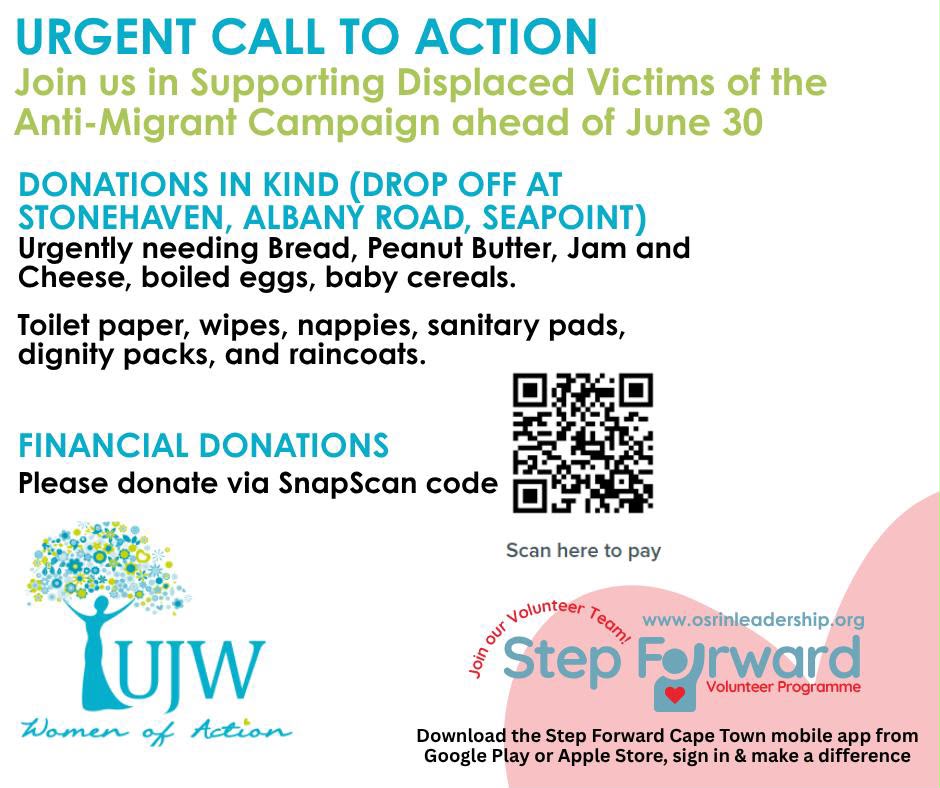
Our country has been ravaged yet again by horrific xenophobic hatred, leaving thousands of people displaced. Cape Town’s Jewish community has responded with a number of initiatives to assist these people, who are at serious risk. 

You can make a positive difference to their lives by getting involved in the various initiatives! Here are some ways you can help:  

  • Donate goods in kind. Food items, supplies for babies, blankets, and healthcare products are what is needed. Drop your donated items off at the Union of Jewish Women’s offices between 08h00 and 14h00.  
  • Donate funds that can be used to assist in a number of different ways. Use the Union of Jewish Women Snapscan facility to make a financial donation, or donate to the National SA Jewish Board of Deputies. 
  • Donate your time and energy. You can help make sandwiches and soup, and get involved in packing goods and delivering them. Join the Mensch WhatsApp group to find out more.

  • For the current edition of the Cape Jewish Chronicle, click here.
  • Subscribe to the Cape Jewish Chronicle: R450/year, or R38/month via debit order. Simply email us at subscriptions@ctjc.co.za and click here for payment info.
  • The Cape Jewish Chronicle reaches over 6 000 readers monthly across print and digital platforms.
  • To book advertising space or discuss a custom package contact Adéle Gradner Mobile: 083 321 5222 | Office: 021 464 6736 | Email advertising@ctjc.co.za

Beyond the bakery: a Nazi past and a complicated legacy  

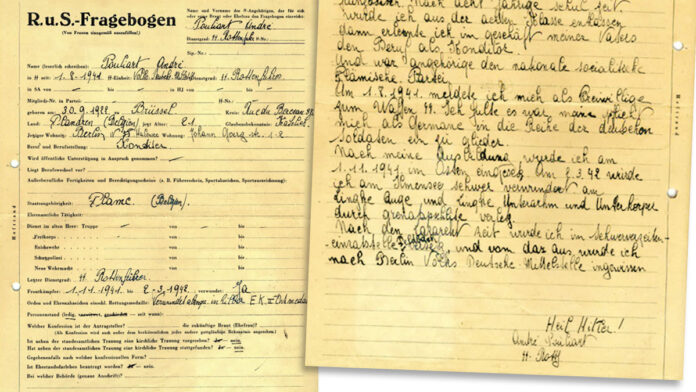
Scans of the original handwritten statement that Andre Poulart gave to the German authorities in 1942.

A story recently resurfaced in the South African Jewish press – the story of C’est Si Bon, a celebrated bakery that once operated in Bellville. 

The story was researched by Gail Lustig (née Loon), a retired doctor living in Israel who grew up in Bellville and studied at the University of Cape Town. 

“Growing up in Bellville, we heard rumours of an incident at C’est Si Bon, our favourite bakery in the area,” Gail recalls. “The pastries were simply outstanding – aesthetically and taste-wise. We loved going there to stock up on treats that were exceptional in every way. None of our mothers could come near the standard of C’est Si Bon.” 

The “incident” she refers to involved a Holocaust survivor named Issy (a pseudonym) and the bakery’s owner, André Pouliart. 

“It was probably sometime in the 1960s,” Gail says. “A customer in his late 40s walked into the shop with his wife. It was their first visit. Within minutes of entering the store, Issy felt the ground shaking under his feet. His head throbbed with the sudden realisation of what he saw behind the counter.” 

According to the account, Issy pointed at the owner and cried out, “You, you killed my family, you Nazi! It’s you! I remember you from the camps!” 

The bakery fell silent. Pouliart reportedly continued working at the till without responding. The survivor left immediately, supported by his wife. 

The story spread through the local Jewish community, and many people subsequently boycotted the bakery. Despite the allegation, there appears to have been no official investigation by the police or other South African authorities. 

Although Gail never heard any further developments, the incident remained in her memory. Decades later, as a member of the Bellville Memorabilia Facebook group, she noticed frequent posts reminiscing about C’est Si Bon. Through discussions with former residents of Bellville, she learned the names of the owners: André and Wanda Pouliart. 

As she began researching further, Gail discovered documentation confirming – through his own admission –  that André Pouliart had served in the Waffen SS during World War II. A Belgian national, he volunteered for the Waffen SS in 1942 and was deployed to the Eastern Front. After being wounded in 1943, he was transferred to Berlin. 

“I wrote to the German Bundesarchiv, and they sent me various documents,” Gail says, including a statement Pouliart made to German authorities during the War. In the translated document, he wrote: ‘And I was a member of the national socialist Flemish party.’ He went on to say, “On the 01/08/1941 I volunteered to join the Waffen SS. I felt it was my duty as a Germane to join the rows of German soldiers.” (Note that the meaning of ‘Germane’ in the statement is ‘one belonging to the German nations’.) 

“I found it shocking to read Pouliart’s text about himself, with the words ‘Heil Hitler’ in his own handwriting at the bottom,” Gail says. “Apparently, the Belgian soldiers who joined the SS did so voluntarily.” 

The archival evidence leaves little doubt about his wartime allegiance. In addition, Gail has found evidence relating to the area in which Pouliart served between 1941 and 1942, as the German army pushed towards Leningrad. “The area had many Jewish shtetlach,” Gail explains, “and there is evidence of mass pogroms and brutal killing of Jews there, so it’s quite possible that Pouliart was involved in this.” 

Pouliart had learned the pastry trade from his father, a pastry chef in Brussels. He and his family arrived in South Africa in 1960 – Gail has not yet been able to determine where they lived between the end of the War and their arrival here. 

After leaving Bellville in the wake of Issy’s allegation, the family moved to the Strand, where Pouliart opened another successful business, the Ultra Bakery. Following his death, his wife and son relocated to Palma de Mallorca in Spain – a destination that became home to many former Nazis and Nazi collaborators after the war.  

Gail’s research raises broader questions about the concern that many former Nazi soldiers and collaborators may have settled in South Africa after World War II, in particular since many National Party members – the National Party being the ruling party in South Africa at the time – had been Nazi sympathisers. Many Waffen SS volunteers were prosecuted after the War, while others escaped and rebuilt their lives elsewhere in Europe, South America and beyond.


The Cape Jewish Chronicle tried to ascertain whether any research has been done regarding whether the South African authorities vetted applicants for citizenship after the War. It appears that little research has been done on the topic but, says Professor Milton Shain, “I have no doubt that many Nazi sympathisers settled here. The story of the Bellville man comes as no surprise.”


  • For the current edition of the Cape Jewish Chronicle, click here.
  • Subscribe to the Cape Jewish Chronicle: R450/year, or R38/month via debit order. Simply email us at subscriptions@ctjc.co.za and click here for payment info.
  • The Cape Jewish Chronicle reaches over 6 000 readers monthly across print and digital platforms.
  • To book advertising space or discuss a custom package contact Adéle Gradner Mobile: 083 321 5222 | Office: 021 464 6736 | Email advertising@ctjc.co.za
What do dead Jews think about a Jewish homeland? 

Julian Resnick

In the Wonderful (Probably, Possibly, Perhaps not) World of AI – BTW (By The Way), this is being written by me, Julian Anthony Resnick, and not by a Bot imitating me – the questions on the table today could be answered by asking a computer the question and allowing me to continue fading away into insignificance as a has been. As someone who believes that human intelligence is a crucial part of continuing to grapple with the important questions we face as human beings. 

So, let’s play a game. I ‘asked’ five significant Jews, all long gone, a question: Do the Jewish People need a physical homeland? Here are short excerpts from their answers. Try and work out for yourselves who these Dead Jews are. See it as your Cape Jewish Chronicle Pub Quiz for today. We will publish the answers at a later stage. 

Thinker 1: “To answer your question directly: no, I do not believe that the establishment of a physical homeland would, in any spiritual or essential sense, ‘improve’ the Jewish people. 

Let us examine this matter with the calm light of reason. I had occasion to reflect upon the history of the ancient Hebrew nation. The Hebrew state was indeed a prosperous society for a time, governed by just laws revealed through Moses. Yet, we must understand that the ancient Hebrew nation was not chosen by God before others because of its superior intellect, peace of mind, or some unique spiritual essence. Rather, their ‘election’ was a matter of temporary fortune – specifically, the social order and the fortunate political circumstances by which they came to establish and maintain a physical state for so many years. 

They are not bound to any soil, nation, or tribe. To believe that a specific group of people possesses a monopoly on God’s favour, or that their human flourishing depends upon a particular piece of earth, is to fall prey to the imaginings of the prophets rather than the clarity of reason. 

In an ideal commonwealth, there should be no distinction between Jew and Gentile, for such divisions are artificial and deluded. Human flourishing does not come from a physical homeland or a particularist state, but from a stable, reasonable political order that guarantees the freedom to think and to speak. True salvation and freedom are found when we elevate ourselves above tribal and sectarian divisions to embrace the universal laws of human nature.”  

Thinker 2: “For many years, I have wrestled deeply with what it means to be a nation and what the Jewish people truly require for their preservation and flourishing. 

If by a ‘physical homeland’ you mean a politically sovereign nation-state with borders, an army, and a measure of temporal power, then my answer is no; I do not believe we need such an entity.  

However, if you mean a physical cultural and intellectual sanctuary – a safe haven – then yes, I believe such a place is of vital importance. My Zionism is ethical and cultural, not political-nationalist. 

I came to support the Zionist project for very specific, human reasons: 

First, there is a clear humanitarian necessity. When antisemitic violence erupts, persecuted Jews, particularly our brethren from Eastern Europe, must have a safe place to flee. 

Second, we require a spiritual and intellectual centre to serve as an antidote to the ‘spiritual sickness’ of assimilation in Europe. In places like Germany, I saw Jews internalising the very prejudices of their oppressors, losing their self-respect and their identity. A central outpost in Palestine allows Jews to do what they do best: to think, discover, and innovate alongside one another in an atmosphere that holds intellectual aspiration in the highest esteem. 

But this sanctuary must not be established at the expense of those who already inhabit the land. The first and most important necessity is the creation of a modus vivendi – a way of living peaceably side-by-side – with the Arab people through organised co-operation and shared governance. 

Ultimately, Palestine can never absorb the majority of the Jewish people, but it can succeed as a moral, cultural, and intellectual centre. Our survival as a people does not depend on a state, but on our shared commitment to humanity, intellect, and justice.” 

Thinker 3: “If you had asked me this in my youth, when my peers and I were first beginning to speak the modern languages of politics – of socialism, of Zionism, of citizenship – I might have given you a different answer. But from where I sit now, having spent these years listening to the hidden, dissenting currents of human desire, I find myself looking at this question of a ‘home’ with a certain analytical skepticism. 

To understand the longing for a Jewish state, we must first look at what we are trying to cure. The Jews of Europe – particularly of my parents’ generation – have lived a life of enforced, precarious cosmopolitanism, always potentially nomadic, living on sufferance in foreign states. We have been the ‘resident aliens’ of Europe, perpetually traumatised by a sociability in which we are expected to assimilate, yet are forever marked as the unassimilable outsider.  

A physical state is a narrative of perfect safety, a fantasy of a secure ‘home’ where conflict will cease and identity will finally become stable. I must ask: is such a consensus ever real, or is it a spurious form of defence? We humans are defensive creatures. We build thick walls – both in our minds and in our politics – to protect ourselves from the terrifying fluidity of memory, history, and the other. 

If the Jewish people were to establish a physical state, I worry we would merely be translating our internal conflicts into geographical borders. A state requires a new kind of acculturation, a new authority, and therefore, inevitably, new forms of repression and exclusion. Would this new state not create its own dissenting minorities? Would it not demand a conformity that effaces the very thing that has made the Jewish mind so distinct – our status as the permanent, critical outsiders, the ‘outlaws’ who do not blindly submit to the local regime? 

My own ‘inner identity’ as a Jew is not bound to a piece of earth; it is bound to a shared psychological structure, a familiarity with precariousness, and a refusal to be easily pacified. 

A physical state may offer a temporary, political satisfaction, but it cannot cure the modern grief of displacement. I suspect that even in a land of our own, we would find that the true ‘home’ we are searching for is not a territory, but a capacity to tolerate our own inner conflicts without turning them into new dogmas. 

Perhaps the question reveals our deepest fear: can we survive our losses and our historical precarity without becoming the very type of authoritative, boundary-enforcing masters who once excluded us?” 

Thinker 4: “To speak of a physical homeland is to speak of a vessel, and like any vessel, its true value lies in what it is made to hold. 

First, I knew that the ultimate “homeland” of the Jew is the Torah itself. The Torah is our water. Without it, even if we sit upon the most secure soil in the world, we are like fish gasping on dry land. The Jewish people cannot be sustained merely by borders; our true existence is bound to the divine words which are our life and the length of our days. 

Yet, do not mistake this for a rejection of the soil of Eretz Yisrael. The land is not merely a political sanctuary; it is the stage upon which the Torah is meant to be lived, and its dust is holy.  

So, do we need a physical homeland? Yes. We need it because the commandments of the Torah are designed to sanctify a real, physical society – how we treat our neighbours, how we harvest our fields, and how we govern ourselves with justice. But the land is the body, and the Torah is the soul. A body without a soul is a corpse; a soul without a body has no dwelling in this world. We must pursue the land, but only if we fill it with the waters of Torah.” 

Thinker 5: “With the gravity that the years and the weight of my office have bestowed upon me, I must answer you with an unequivocal: Yes. The Jewish people do not merely require a physical homeland as a matter of political convenience; they require it as an absolute, existential necessity. 

We are a historical group of people who clearly belong together, held together by a common foe. Wherever we go, our very success, our very presence, stirs the sleeping beast of antisemitism.  

We cannot remain in this invisible ghetto, frozen in a state of perpetual psychological dislocation, begging for tolerance from hosts who look upon our noses, our beards, and our very gait with disdain.  

My journey to this realisation was not born solely of the external horrors of the pogroms, but of a deep, internal quest for Jewish dignity and authenticity. We must have a space where we can ‘bow without servility and stand upright without defiance’.  

We need a homeland that is not merely a refuge from physical destruction, but a theatre for the realisation of our highest human ideals.  

We must build this physical home, not as a theological domain run by the clergy – for we shall keep our rabbis in their temples just as we keep our soldiers in their barracks – but as a modern, legally assured haven. Without a land of our own, we are but a ghost among the nations, an anomaly of history. With it, we shall finally step into the light of the modern world as a proud, self-determining, and authentic people.” 


  • For the current edition of the Cape Jewish Chronicle, click here.
  • Subscribe to the Cape Jewish Chronicle: R450/year, or R38/month via debit order. Simply email us at subscriptions@ctjc.co.za and click here for payment info.
  • The Cape Jewish Chronicle reaches over 6 000 readers monthly across print and digital platforms.
  • To book advertising space or discuss a custom package contact Adéle Gradner Mobile: 083 321 5222 | Office: 021 464 6736 | Email advertising@ctjc.co.za
July community events

July community events in Cape Town.

Date and TimeCommunity OrganisationDetailsRSVP / More Info
7 July, 08h30 for 09h00 NechamaBreakfast Talk with Martine Ben Harushadmin@nechama.org.za
8 July, 09h00 – 11h30ORT SA CAPE JETBusiness Breakfast Club (Topic TBC)jet@ortsacape.org.za
12 July, 14h30 for 15h00Jacob Gitlin LibraryBook launch: The Travelling Rabbi – Journeys Continued by Rabbi Moshe Silberhaftadmin@gitlinlibrary.co.za
14 July, 10h00 – 12h00Cape Jewish Seniors AssociationKnittathon for Mandela Day, CJSA Southern SuburbsRSVP: 0753437355 Social Worker, Monique Nieuwenhuys
18-19 July 2026Jewish Democratic InitiativeThe Jewish Festival of Dangerous IdeasTo. book: https://www.quicket.co.za/organisers/73597-jewish-democratic-initiative
More info: https://jdisa.org/pages/festival2026-speakers
22 July, 09h00 – 12h00ORT SA CAPE JETBusiness Training In-person event (Topic TBC)jet@ortsacape.org.za
23 Aug, 19h00 – 21h00JewellOnline (Zoom) Webinar: End-Of-Life Careinfo@jewellness.org

  • For the current edition of the Cape Jewish Chronicle, click here.
  • Subscribe to the Cape Jewish Chronicle: R450/year, or R38/month via debit order. Simply email us at subscriptions@ctjc.co.za and click here for payment info.
  • The Cape Jewish Chronicle reaches over 6 000 readers monthly across print and digital platforms.
  • To book advertising space or discuss a custom package contact Adéle Gradner Mobile: 083 321 5222 | Office: 021 464 6736 | Email advertising@ctjc.co.za

SIGN UP TO RECEIVE THE CAPE JEWISH CHRONICLE