Home Blog Page 7

Young Jewish Capetonians – where to from here?

Clockwise from top left: Ruby Kapeluschnik, Jeff Gutman, Max Moss, Jamie Aronson

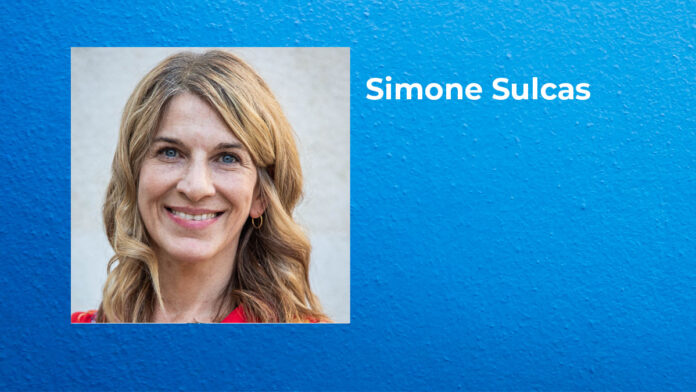
Many young people from South Africa have chosen to move to other countries in recent years – we all know someone who travels regularly to England, Australia, Israel, etc. to visit their children. And the declining numbers of young people in our community has been identified as an issue of concern, as reflected in a recent column written by the Chair of the Cape South African Jewish Board of Deputies, Simone Sulcas. 

In her column, she made the point that, “…demographic decline almost always begins with young adults. They leave to study, to work, or to feel safer and more secure.” She went on to comment that, “The future of South African Jewry…will be shaped by everyday decisions: where young people choose to study, where they choose to work, and where they choose to build their lives.”

With June being Youth Month in South Africa, The Cape Jewish Chronicle spoke to some young people – all in their 20s – to get some idea about what is driving decisions about where they see themselves in the future. 

Aaron, aged 25

South Africa is my home, and that of generations before me who strongly shape my identity and value system. I believe that South Africans and all who reside here are some of the most generous, friendly and deeply and richly cultured on the entire planet – flaws and all. The spirit of Ubuntu is omnipotent for all those who choose to look around, and I believe there is a prosperous future for every single individual in this country – despite the failings of a select few, and our horrific history that has affected so many.

Opportunities for young people like me (those that are lucky enough to be Jewish, broadly middle class and educated) are abundant if you have the chutzpah and drive to take them with both hands. It should be our collective responsibility to work to ensure that those not so lucky have equal access to opportunity.

I believe our community- though at times fractured- has a unique heritage, and lots of fascinating influences and intersections with different corners of South African society and history at large. I feel motivated to stay active and involved in my community, support initiatives and political philosophies I find relevant and practise my faith however I choose- something that is inalienable to me through our constitution- which unfortunately is not a blessing that every person has worldwide, in Jewish communities or otherwise.

Jeff Gutman, aged 26

On the 18th of May 2024, whilst travelling New York with a couple of friends, I felt a wave of patriotism crash into me. It was the National Elections, and we made it a priority to stop at the Consulate General of South Africa, to exercise our democratic right. Immediately upon entering the building, a chain of events transpired that made me internalise my love for this country. 

First, I accidentally bumped into someone whilst trying to exit the lift and we both apologised to one another! It may seem dull, but that South African nicety was so foreign to me at this point that I couldn’t help but feel a kinship to this fellow South Africa. Then, standing in the little room assigned to the voters, all my senses started to burst. The warm smiles of my people, the sound of the SABC reporter and, most strong, the opened box of Freshpak Rooibos tea on the desk. Strongest of all though, it smelled like South Africa. To this day, I can’t describe that smell but, to borrow a cliche, it just smelled like home. That day will stick with me my whole life as above all, it showed me how lucky I am to call myself a South African.

Now, will I stay in South Africa? It’s an impossible question to answer. No doubt, it’s easy to be cynical about the country. I have a university degree and years of work experience, yet finding a job in South Africa may be comparable to the Twelve Labours of Hercules. So, despite my wants, I may need to leave South Africa.

However, despite where I land up, I am certain that my desire will always be to live and contribute to this country. We’re easy people, with no problem big enough to forgo laughter and kindness – that’s the country I want to live in.

Therefore, in short: Will I leave South Africa? Maybe. Do I want to leave South Africa? A resounding no.

Jamie Aronson, aged 27

I live in London now, having been here for two years. I came to London from Israel, where I lived for three years after I finished my studies at UCT. I studied Mechatronics, Robotics and Automation Engineering.

I hadn’t planned to leave South Africa but, when I finished my studies, I was offered an attractive position with a robotics company in Israel which operated in the agricultural sector. Life in Israel was good and, although I didn’t have any close family there, my move there was made easier because I had a close friend from school who was also living there. We shared an apartment in Tel Aviv.

My move to the UK was prompted by a desire to live in an English-speaking environment and in a quieter environment. Also, my sister lives here, too, and I have an Irish passport so all of that helped me make the decision. 

In London, I work in the AI field. 

I travel a great deal, and that makes living where I am now appealing because things are generally much closer than if I were living in South Africa. I visit Cape Town regularly to see my family and friends, and really enjoy being there during the English winter months. 

I really like Cape Town but I’m not sure I’d want to live there again. The geographic isolation is definitely a factor. 

As for work opportunities, I don’t know enough about this in terms of South Africa since I started my work life outside the country. But I think that things are getting better as regards work opportunities.

Max Moss, aged 28

Max left Cape Town in search of better job opportunities. He had aimed to move to London but first went to Israel, where he studied at IDC (now known as Reichman University). 

A further factor driving him to move beyond our borders was the opportunity to experience life in a different country.

While in Israel, Max met his wife-to-be, an Australian. Together, they then moved to Australia, once Max had secured a work visa. He is happy living there – he finds it quite similar to South Africa, in particular since it has a similar feel to life in Cape Town and because there are so many former South Africans there. “I feel very at home in Australia,” he says, commenting that the Jewish community there is similar to the community in Cape Town.

“I truly love Cape Town, but things have worked out for me since I left a number of years ago,” he concludes.


  • For the current edition of the Cape Jewish Chronicle, click here.
  • Subscribe to the Cape Jewish Chronicle: R450/year, or R38/month via debit order. Simply email us at subscriptions@ctjc.co.za and click here for payment info.
  • The Cape Jewish Chronicle reaches over 6 000 readers monthly across print and digital platforms.
  • To book advertising space or discuss a custom package contact Adéle Gradner Mobile: 083 321 5222 | Office: 021 464 6736 | Email advertising@ctjc.co.za

Youth power

Chad Nathan and Sydney, Mia Braun and Alon Sarembock

The Chronicle brings you stories of some the young heroes of today: young Capetonians taking on the mantle of Tikkun Olam in truly concrete ways.

In recent weeks, many Capetonians became engrossed in a story unfolding on social media and found themselves shedding a tear because of the incredible generosity of their community when called on to make a difference. We are referring to the @Gingerwithagopro scenario, when over R500 000 was raised in a few days to help a wheelchair-bound homeless man, Sydney.

The main protagonist, Chad Nathan, is a young Johannesburger, now living in Cape Town, and he used his status as an influencer to reach out to a wide audience of people who have all helped to change a life in a very meaningful way.

It seems fitting that this happened on the eve of Youth Day, a public holiday which stems from such a truly significant event – one unfortunately forgotten by most people – that reflected the power that young people have to make a difference, and to change their world in positive ways.

Now, the Chronicle brings you stories of some the young heroes of today: young Capetonians taking on the mantle of Tikkun Olam in truly concrete ways.


A chance encounter on a rainy day

Cape Town content creator Chad Nathan set out for a solitary run along the Sea Point Promenade on a recent cold, stormy morning – unexpectedly setting off an extraordinary act of kindness that has touched thousands. 

Chad, known online as Gingerwithagopro, shared the story in posts on his Instagram account after meeting a homeless man named Sydney Miller during his run in the rain. 

Read about Chad’s work as a content creator here.

 “I was running on the Sea Point Prom, there wasn’t a soul in sight, a little bit of rain, and really rough seas,” Chad explained. 

After deciding to cut short his usual 10-kilometre route near the lighthouse because of the cold, Chad spotted a man alone in a wheelchair.

“We were basically the only two people out there,” he recalled. “I said, ‘Hey man, would you like me to push you anywhere? It’s cold out here.’” 

Sydney asked to be taken to the bus stop near the Sea Point pools, where he sleeps. Chad pushed him the entire way – about four kilometres – through the wind and rain. Along the way, Sydney shared his story – one marked by hardship, injury, and loneliness.

Chad learned that Sydney had recently come from Somerset Hospital after receiving devastating news: doctors may need to amputate his leg. Years earlier, he had lost a foot after being knocked over by a car and, according to Chad, had received no compensation from the Road Accident Fund. 

Despite his circumstances, Sydney asked for very little.

“He didn’t even ask for money,” Chad said. “He asked for a wheelchair, clothes, and a bag.” 

Moved by the encounter, Chad posted a video online appealing for help. Within minutes, donations began pouring in.

“I put my phone down and went to meet my mate for lunch,” he said. “Five to six minutes later it had around 50 000 views.” 

By the end of the day, donations had exceeded R300 000.

When Chad eventually found Sydney again after searching the promenade, he offered him a choice between R1 000 in cash or a ‘mystery gift’. Sydney chose the mystery gift.

“He broke down in tears when I told him we had raised R115 000 for him,” Chad said. 

Chad plans to identify a suitable financial planner or investment expert to manage the capital raised from which a monthly stipend will be paid over to Sydney for his daily living needs.

For Chad, the experience became a reminder of the power of compassion: “Just knowing what a little random act of kindness can do to someone – and how it can change someone’s life.”

At the time of finalising this Chronicle, donations made to support Sydney via Chad’s campaign had reached over R500 000!

Follow the story as it unfolded on Instagram: Story 1Story 2Story 3


Putting water safety first

15-year-old Mia Braun was moved to take action when she “…found out that 39 children under the age of 14 died from drowning in the Western Cape in 2022”, a statistic that, she says, “really broke my heart”. 

Mia developed a love for swimming after starting to play water polo at school. She realises the importance of water safety, especially for young people living in the Western Cape with its very long coastline and numerous opportunities for people to swim. 

Armed with a passion for swimming and the awful reality of the drownings happening all over in Cape Town and its surrounding areas, Mia decided to select a water safety project as a focus in her role as a Junior City Councillor in Cape Town. (See the article published earlier this year about Mia’s success in being selected for the Junior City Council.)

Partnering with the Guide Along Aquatics Swim Club, Mia established the Stroke for Hope project, an initiative through which she hopes to have 100 children go through the water safety and swimming training offered by the Swim Club, which is based in Atlantis. 

“The first leg of the project,” she explains, “is to raise the funds needed to pay for the training. I’ve set the fundraising target at R120 000, and people have been wonderful about responding to my call for funds.” Mia set up a Backabuddy fundraiser for this purpose, and her donors and supporters helped her exceed that target by the date of her swim, 22 May.

“I tied the fundraising initiative to my own challenge: to successfully complete a Robben Island swim – a distance of 7 to 8km depending on the current. Now that I’ve successfully completed the swim we will start with the training initiative for young people from underprivileged communities.”

Mia’s dedication to her swimming is clear from the hours she puts in: up at 5.30am every day for training, she also swims at Clifton 4th Beach every Wednesday, and takes part in many other swimming events, all while getting through the academic rigour required for Grade 10 studies and her work as a Cape Town Junior City Councillor.

This dedication is clear, too, from her other plans for her swimming project: to educate the children she will be interacting with about the wider world of swimming through bringing speakers to them who can share their swimming journeys.


Doing it for the penguins

25-year-old Alon Sarembock, who works as a Junior Accounts Manager in Cape Town, has been passionate about swimming throughout his life. He plans to undertake a Robben Island swim, so allowing him to connect a personal sporting goal with a cause that carries real environmental urgency and long-term significance: the survival of our penguin population. 

As he explains, “For me, this swim is about aligning a personal challenge with meaningful impact. While it is a test of physical endurance and mental strength, it is also an opportunity to help raise awareness and support for conservation work that is often unseen but deeply essential.”

The conservation work he refers to is done by SANCCOB, a local NGO that plays a vital role in the rescue, rehabilitation, and release of seabirds along the South African coastline, with a specific focus on the endangered African penguin. Their work is hands-on, urgent, and often life-saving. Every day, their team responds to injured, oiled, or abandoned birds, providing critical care that directly contributes to the survival of species that are rapidly declining in the wild.

The African penguin, in particular, is facing a severe population decline due to a combination of habitat loss, overfishing of their natural food sources, and the ongoing pressures of climate and environmental change. “Without organisations like SANCCOB, many of these birds would not survive long enough to be rehabilitated and returned to their natural environment,” Alon explains.

Having established a BackaBuddy fundraising page to accept donations for the SANCCOB cause, Alon has already exceeded his target of raising R12 000.

The swim is approximately 7.5km in length in the icy waters of the Atlantic Ocean. Going by boat from Bloubergstrand to Robben Island before sunrise, Alon will swim back to Bloubergstrand. “The route from Robben Island to Bloubergstrand is known for its strong currents, low water temperatures, and demanding conditions, making it a true test of endurance and mental resilience,” he says.


  • For the current edition of the Cape Jewish Chronicle, click here.
  • Subscribe to the Cape Jewish Chronicle: R450/year, or R38/month via debit order. Simply email us at subscriptions@ctjc.co.za and click here for payment info.
  • The Cape Jewish Chronicle reaches over 6 000 readers monthly across print and digital platforms.
  • To book advertising space or discuss a custom package contact Adéle Gradner Mobile: 083 321 5222 | Office: 021 464 6736 | Email advertising@ctjc.co.za
Why Australia’s Royal Commission matters to us 

In December last year, what should have been a joyful Chanukah celebration on Bondi Beach became something else entirely: the site of a devastating terrorist attack in which Jewish families were targeted simply for being Jewish.

In a response to pressure, Australia established a Royal Commission into Antisemitism and Social Cohesion – the highest form of public inquiry available to it. 

A window into a shift 

The early testimony emerging from the Commission is, in many ways, the most instructive part of this process. Witnesses have described not only the horror of the Bondi attack, but the period leading up to it – one marked by a steady uptick in antisemitic incidents, hostility in public spaces, and a growing sense of vulnerability in everyday life.

In the months preceding the attack, there had been a series of increasingly concerning incidents: antisemitic graffiti and vandalism in Jewish neighborhoods; attacks on homes and vehicles, including cars being set alight outside Jewish residences; and protests in highly visible public spaces, including outside the Sydney Opera House, where rhetoric moved beyond political expression into language that was clearly hostile to Jewish people. 

Other testimony has been quieter, but no less telling. A Jewish university student described feeling so unwelcome that she ultimately left her student accommodation after being told she did not belong there. One of the more striking themes has been the way antisemitism was experienced not only in isolated acts of violence, but in the cumulative effect of rhetoric, behaviour and social pressure. A Holocaust survivor testified that, for the first time since fleeing Europe, he now feels unsafe being visibly Jewish.

It is this progression – from words to atmosphere, and from atmosphere to action – that the Commission is seeking to understand. 

Our Western Cape Context 

Jewish life in the Western Cape remains strong, visible and deeply connected to the broader society of which we are part. We live openly, contribute meaningfully, and participate across civic, economic and cultural life. 

But we must also be honest about what we are seeing here. 

Over the past two years, there has been: 

  • Targeted boycotts of Jewish-owned businesses in the Western Cape 
  • Hostility towards Jewish students and staff on UCT campus
  • Online harassment, including instances of doxxing directed at members of our community 
  • A serious security incident involving an IED device in a Jewish communal space 
  • Anti-Israel protests at which we have seen extremist symbolism, including ISIS and Hamas flags, alongside rhetoric that crosses the line into antisemitism. 

These are serious developments. They do not define our community – but they cannot be dismissed either. 

When rhetoric travels 

One of the more challenging features of the current environment is how easily rhetoric moves across borders. Language that originates in one context is repeated in another, often without nuance and without consideration of its local impact. We are seeing how narratives tied to conflict elsewhere can find their way into campus spaces, protests and online discourse here in the Western Cape – sometimes blurring the line between political expression and hostility towards Jews as Jews. It is not the same as violence. But it would be unrealistic to view it as entirely separate from it. The evidence before the Australian Commission points to this dynamic: that sustained hostility, even when expressed primarily in language, shapes behaviour and can gradually shift what is considered acceptable. 

That is a caution. 

What the Royal Commission represents 

What is notable about the Australian response is not only the scale of the tragedy, but the seriousness with which it is being examined. A Royal Commission does not simply catalogue incidents. It looks at the broader environment – legal, social and institutional – in which they occur. It gives weight to lived experience that might otherwise be minimised or dismissed. And it seeks to strengthen the systems that underpin both security and social cohesion. That approach has relevance beyond Australia. 

Holding the balance 

For us in the Western Cape, the task is to hold a careful balance. We should not minimise the incidents we are seeing. They affect real people and require a measured, consistent response. But nor should we overstate our position or create a sense of fear that does not reflect the broader reality of Jewish life here. The truth is more grounded: We are a community that is secure, engaged and resilient – while also navigating pressures that require serious attention. 

Looking forward 

The story of Bondi is not ours, despite the closeness and similarities between the South African and Australian Jewish communities. However, the questions Bondi raises must be deeply considered by our community and its leadership. They ask how societies respond to antisemitism before it escalates. How communities are protected – not only physically, but socially. And how leadership balances vigilance with perspective. 

At the Cape South African Jewish Board of Deputies, these questions are asked and responded to, and this happens every day – often quietly, sometimes loudly, but always consistently. It includes ongoing engagement with government and law enforcement, advocacy on campuses and in the public sphere, and working closely with partners to ensure the safety and dignity of our community. It also means addressing antisemitism where it arises – whether in public discourse, in commercial settings, or online – while continuing to invest in the openness and resilience that define Jewish life here. 

Not out of fear. But out of a clear understanding that responsibility lies not only in how we respond to events – but in how we anticipate them. And in doing so, we help ensure that Jewish life in the Western Cape continues to be what it has long been: proud, confident, and deeply rooted in South Africa.

Cape SA Jewish Board of Deputies | http://www.capesajbd.org | Instagram | Facebook


  • For the current edition of the Cape Jewish Chronicle, click here.
  • Subscribe to the Cape Jewish Chronicle: R450/year, or R38/month via debit order. Simply email us at subscriptions@ctjc.co.za and click here for payment info.
  • The Cape Jewish Chronicle reaches over 6 000 readers monthly across print and digital platforms.
  • To book advertising space or discuss a custom package contact Adéle Gradner Mobile: 083 321 5222 | Office: 021 464 6736 | Email advertising@ctjc.co.za
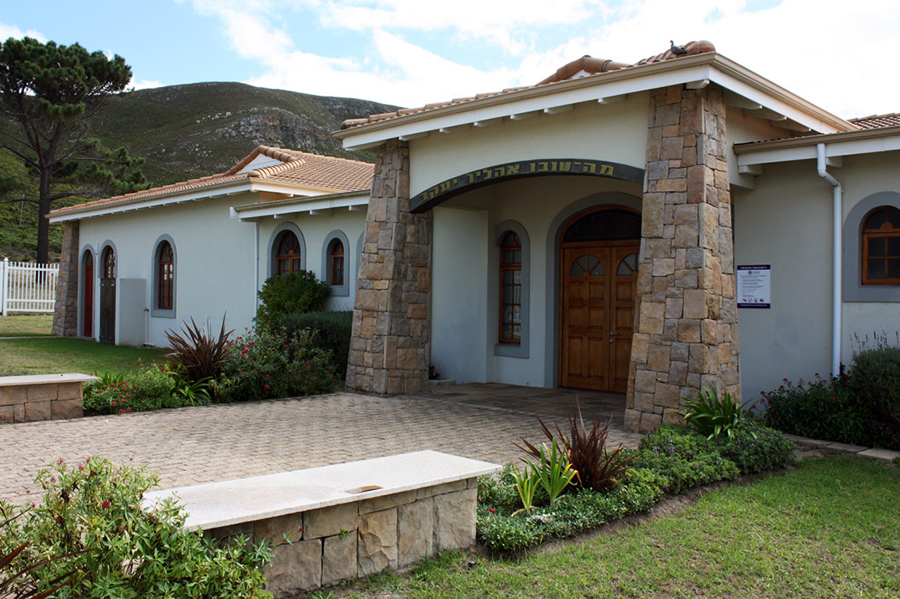
Country Communities: visit to Hermanus Jewish community

credit: Matthias- Wesselmann Unsplash

The Cape SAJBD embarked on a visit to the Hermanus Jewish community for an event-filled Shabbat over the weekend of the 15th of May.

Coinciding with Yom Yerushalayim, the weekend featured a Friday night shul service followed by a delectable communal dinner, as well as a Shabbat morning service followed by a communal Kiddush Bracha sponsored by the Cape SAJBD.

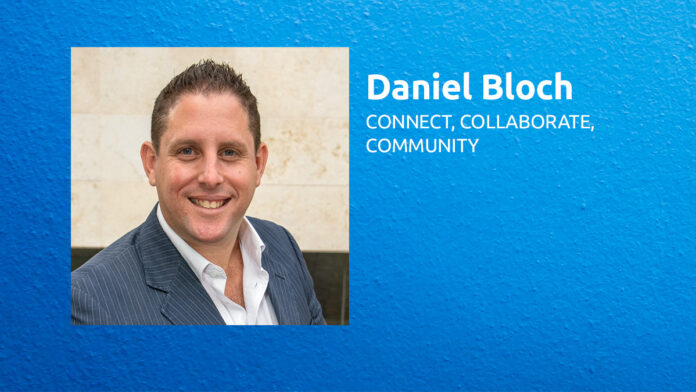
Cape SAJBD Executive Director Daniel Bloch and Chairperson Simone Sulcas addressed the approximately 50 community members in attendance, alongside Hermanus Shul Chairman Seymour Abrahams and Vice-Chair Victor Fish. Rabbi Ruben Suiza officiated over the Shabbat and delivered engaging drashot throughout the Shabbat.

The visit provided an important opportunity to engage directly with the community. Daniel and Simone’s joint address included updates on recent Cape SAJBD activities, and sketched a vibrant and in-depth picture of what Jewish life is like in the Western Cape. Poignantly, when compared to other Jewish communities around the world, Jewish life in South Africa as a whole continues unabated and with fervour. 

While relatively small in size, the Hermanus Jewish Community is an active pocket of Jewish vibrancy in the Overberg. The quaint coastal town, situated just an hour and a half from Cape Town, has rapidly become a popular destination for both visitors and permanent residents – many of whom are retirees enjoying the quaint lifestyle in Hermanus. Many Cape Town Jewish families who own holiday homes in the area are active members and supporters of the shul and broader community.

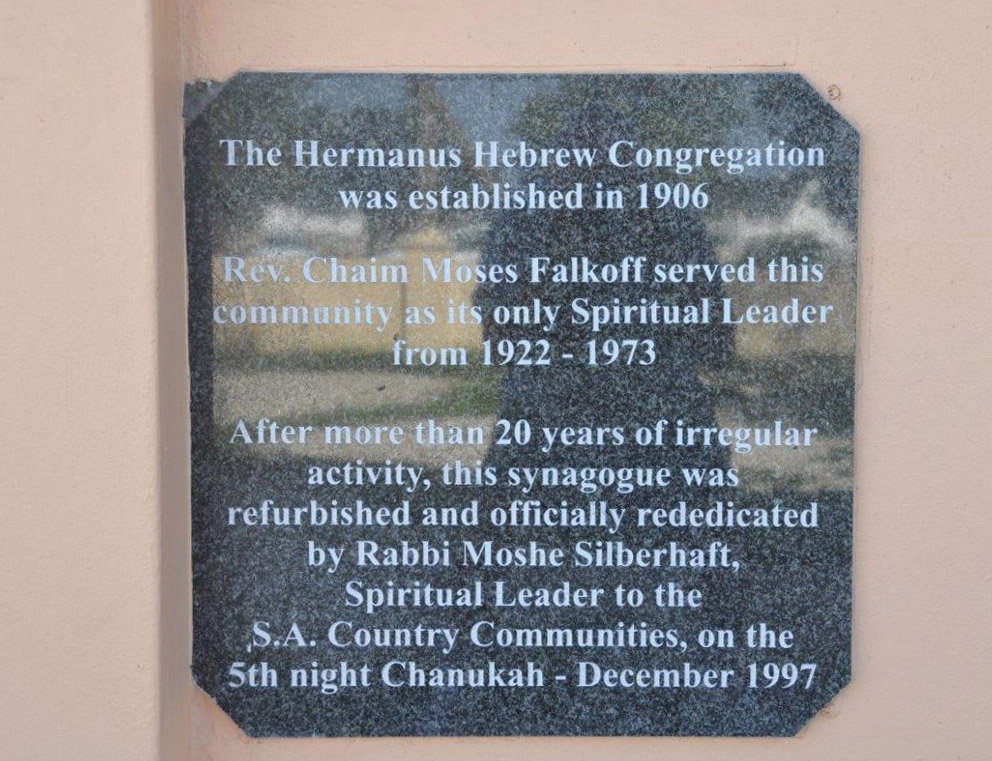
The Hermanus Hebrew Congregation dates back to 1906, when the congregation was founded by Rev. Warshawsky. In its early years, services were held in private homes before a synagogue was built in Main Road in the late 1920s. Although the community experienced periods of decline and the synagogue closed for nearly two decades, the shul was revived in the late 1990s by a dedicated group of Capetonians with holiday homes in Hermanus. A new synagogue and Jewish Centre was ultimately consecrated in 2008, ensuring a welcoming space for Jewish life in the town. For information about services, find the contact details here.  

The visit formed part of the Cape SAJBD’s ongoing commitment to supporting and maintaining close ties with Jewish communities throughout the Western Cape. 

Cape SA Jewish Board of Deputies | http://www.capesajbd.org | Instagram | Facebook


  • For the current edition of the Cape Jewish Chronicle, click here.
  • Subscribe to the Cape Jewish Chronicle: R450/year, or R38/month via debit order. Simply email us at subscriptions@ctjc.co.za and click here for payment info.
  • The Cape Jewish Chronicle reaches over 6 000 readers monthly across print and digital platforms.
  • To book advertising space or discuss a custom package contact Adéle Gradner Mobile: 083 321 5222 | Office: 021 464 6736 | Email advertising@ctjc.co.za

A Flotilla and a Minister

Julian Resnick
Julian Resnick

Many years ago, a friend and I were approached by a senior team member of Makom, an innovative education initiative within the Jewish Agency for Israel to put together a unique day for a group of people from the Jewish Federations of North America, people with a strong commitment to Israel. These were people who really cared about Israel, worked on behalf of Israel, raised money for Israel, lobbied for Israel.

They had all been to Israel many times before, had visited all the major sites, and beyond, but this was to be a special day, one I had never imagined putting together before this request came my way, and one never repeated since. The idea was to show them the dark underbelly of Tel Aviv: the things we are not proud of, that have not worked in Israeli society; the folks who got left behind; the underclass. We put together a day, which, I have to admit, I found incredibly challenging to experience, as did the group we took around for the day. This was not the Israel of the Start Up Nation; of those who give their everything in the service of the State; of beautiful works of art; of nobility of spirit; of self-sacrifice for a cause larger than oneself.

This was poverty, illegal immigrants (refugees) who had been smuggled in via the Sinai Peninsula, homeless people, drug addicts and prostitutes; a soup kitchen; a kindergarten adjoining a brothel. 

Two moments from that day have stayed with me over the years. One, when an illegal immigrant passed out and I began to call Magen David Adom for help, only to be stopped by another refugee, who told me not to, as the moment an intervention like this happened, the person who had passed out would be in the system and easier to deport. (Deportation meant in effect being sent back to a war zone, to a harsh refugee camp in Southern Sudan or Eritrea, possibly to be sentenced as an opponent of the regime and, therefore, likely not to reach old age.)

The second moment which has stayed with me was when we sat down to have lunch in the soup kitchen with the local folks. To my great embarrassment, I could not bring myself to eat the food. Something very deeply embedded in me made this an impossibility for me.

The discussion we had afterwards came back to me recently. We talked about what one does when the country one loves, that one is committed to, that one would fight for, possibly even die for, has these terrible blemishes, awful imperfections. It came back to me as I watched our Minister of Internal Security, Itamar Ben Gvir, behaving in a way that recalled, in my very South African memory bank, the way I was treated in Caledon Square after having been arrested by the South African Police way back in 1974. And, there were worse associations floating through my mind as well, from before the year I was born – and Jews were on the receiving end in those associations. As we say in Hebrew: המבין יבין

What are we to do when a member of the Government of Israel behaves in the way Itamar Ben Gvir behaved towards the members of the Gaza-bound flotilla on 20 May? For me, the answer is clear: We have to condemn him in the strongest possible terms, as Jews who believe that we have a heritage to be proud of which includes an ethos, a value system, which we never toss aside to wreak revenge. As Jews who care for the safety and security of our People, throughout the world. As Jews who care about the defence of our homeland, of Israel.

We have to say, in unequivocal terms, “Itamar Ben Gvir, you are a disgrace to the Jewish People, a disgrace to the State of Israel. Your behaviour puts our People at risk, both in Israel and in Cape Town. Your behaviour diminishes the careful and totally appropriate way our soldiers of the IDF conducted this interception of the flotilla.”

If you really care about Israel and the Jewish People, when something like this happens, speak up, as proud Zionists and Jews. Do not fall into the trap of ‘closing ranks’. Speaking up is what the Jewish People and Israel need right now. 

Itamar Ben Gvir, you disgrace both the memory of our martyrs, and you put our children at risk. Shame on you.


  • For the current edition of the Cape Jewish Chronicle, click here.
  • Subscribe to the Cape Jewish Chronicle: R450/year, or R38/month via debit order. Simply email us at subscriptions@ctjc.co.za and click here for payment info.
  • The Cape Jewish Chronicle reaches over 6 000 readers monthly across print and digital platforms.
  • To book advertising space or discuss a custom package contact Adéle Gradner Mobile: 083 321 5222 | Office: 021 464 6736 | Email advertising@ctjc.co.za

June 2026

With June being Youth Month, we bring you stories about young Jewish people who are doing incredible things to impact our society and our world in positive ways. See more here.

Continuing with the theme of young people, the Cape Jewish Chronicle took a look at the attitudes of those in their 20s regarding whether to stay in South Africa or to move elsewhere. Go to pages 6 and 7, or here, to read more.

A well-known figure in Cape Town, Rabbi Greg Alexander will soon relocate to London with his family. We spoke to him prior to his departure to discuss the many years he has spent in Cape Town. Read more here.

If you’re a descendant of an Ochberg Orphan, see page 18 (and here), and help the SA Jewish Museum collect information about this period of history.


  • For the current edition of the Cape Jewish Chronicle, click here.
  • Subscribe to the Cape Jewish Chronicle: R450/year, or R38/month via debit order. Simply email us at subscriptions@ctjc.co.za and click here for payment info.
  • The Cape Jewish Chronicle reaches over 6 000 readers monthly across print and digital platforms.
  • To book advertising space or discuss a custom package contact Adéle Gradner Mobile: 083 321 5222 | Office: 021 464 6736 | Email advertising@ctjc.co.za
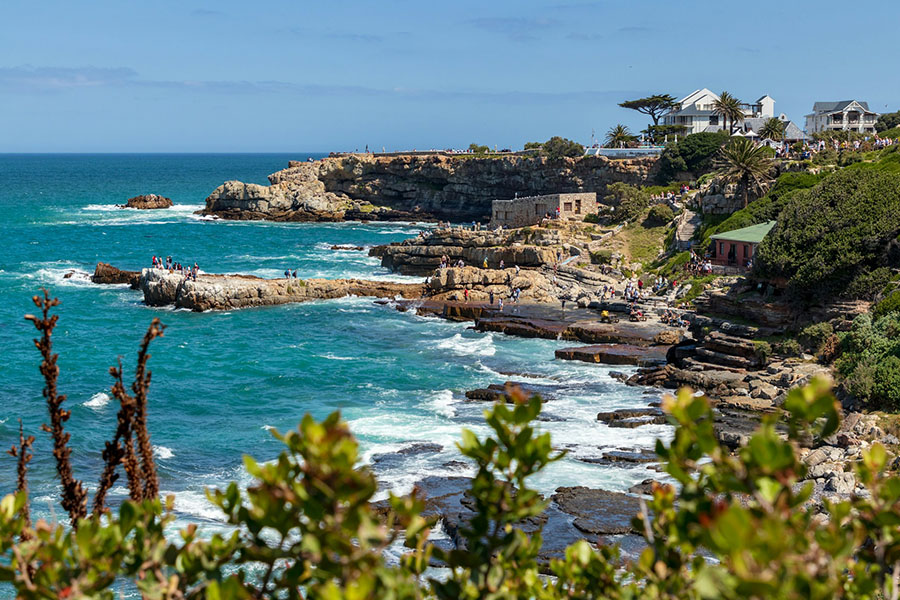
Things happen for a reason – be grateful for what we have

Daniel Bloch

The past month has been an extremely emotional rollercoaster for me personally. It has certainly made me reflect on what is truly important in life and just how fortunate I am to have the life I do.

By sharing some of these personal experiences, perhaps it may also encourage others to reassess their own lives and recognise what they should be grateful for.

My son and I were recently involved in a serious car accident. While we both walked away with little more than a scratch and a bruise, my car was not as fortunate – nor were the other two vehicles involved (the drivers and passengers were also fine). Without going into the details, the front of my car was destroyed, giving some indication of just how fast the other driver was travelling when he hit us side-on. Fortunately – and some may say miraculously – the hand of Hashem intervened. At the very last moment, the other driver swerved slightly, avoiding a direct impact into my door and instead taking out the front of the vehicle. Every time I rewatch the footage and relive that moment, I thank Hashem that my son and I were able to walk away unscathed. 

In the aftermath, one of my biggest challenges was simply trying to find a replacement vehicle – and even that reminded me how fortunate I am to be able to do so.

Following the devastating storms in Cape Town, many homes suffered severe damage and thousands of people were affected in different ways. In my case, I have a small roof leak that will cost a few pennies to repair, and a protea tree was uprooted. We all face different problems, but mine are manageable and fixable – nothing compared to what many fellow Capetonians are currently experiencing. Many people simply do not have the means to repair their homes or replace what was lost. Again, I am reminded how grateful I should be that my challenges are relatively minor.

The same perspective applies when comparing what Jewish communities around the world are experiencing to our reality here in the Western Cape.

During Yom Yerushalayim, together with our Chairperson, Simone Sulcas, and my colleague Josh Friedman, we spent Shabbos with the Jewish community in Hermanus. On Friday evening, we addressed more than 50 community members, discussing the work of the Board, addressing concerns, sharing insights from conversations with Jewish communities abroad, and ultimately reinforcing an important message: that Jewish life in the Western Cape remains, for the most part, safe, secure, and thriving. (Read the Hermanus article elsewhere in this edition of the Chronicle.)

While many Jewish communities around the world are increasingly forced to hide their identities or fear openly expressing their Judaism, here in the Western Cape we continue to live proudly and unapologetically as Jews. That is not to say there are no challenges or uncomfortable spaces, and we must always remain vigilant. However, the reality is that we are not removing mezuzot from our homes, hiding our kippot, or retreating from public life.

We should be thankful for the work our communal organisations do – to those who protect our way of life, those who look after our aged, those who educate our young, and those who celebrate our Judaism with pride. We should never take for granted the fact that, as Jews and as South Africans, our rights are protected.

Things happen for a reason. I do not know why my son and I were involved in that accident, nor why Hashem chose to spare us from what could have been a devastating tragedy. What I do know is this: I am grateful to be alive. Grateful for my family and friends. Grateful for the life I have. And grateful that I have the privilege of living openly as a proud Jew and representing our incredible community as proudly South African Jews.

Cape SA Jewish Board of Deputies | http://www.capesajbd.org | Instagram | Facebook


  • For the current edition of the Cape Jewish Chronicle, click here.
  • Subscribe to the Cape Jewish Chronicle: R450/year, or R38/month via debit order. Simply email us at subscriptions@ctjc.co.za and click here for payment info.
  • The Cape Jewish Chronicle reaches over 6 000 readers monthly across print and digital platforms.
  • To book advertising space or discuss a custom package contact Adéle Gradner Mobile: 083 321 5222 | Office: 021 464 6736 | Email advertising@ctjc.co.za
Academic excellence recognised: Adam Mendelsohn becomes a full Professor

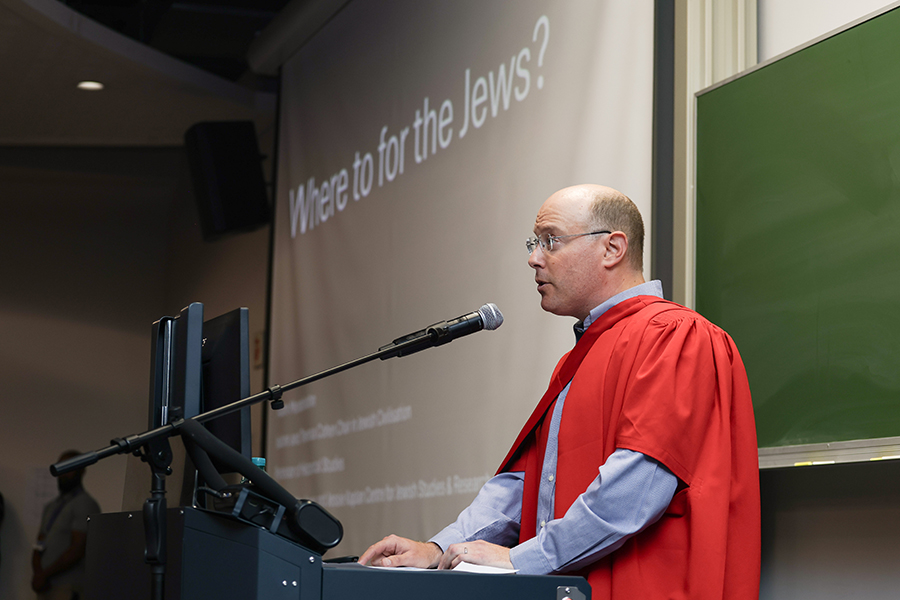
UCT Inaugural Lecture - Prof Adam Mendelsohn held at New Neville Alexander Building on Middle Campus on 29 April 2026. Photos by Je'nine May.

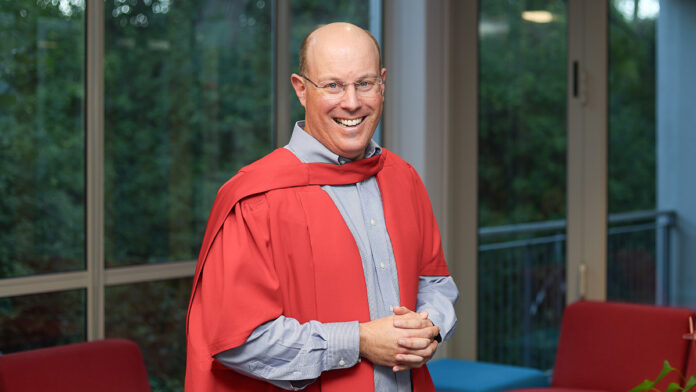
At the end of April, large numbers of people from Cape Town’s Jewish community joined the crowds who filled two venues at the University of Cape Town (UCT) to listen to the Inaugural Lecture presented by Professor Adam Mendelsohn, the Director of the Kaplan Centre for Jewish Studies at UCT.

Providing an insightful look at the current scenario for Jews in South Africa in his talk, Where to for the Jews?, Professor Mendelsohn provided a thoroughly-researched history of antisemitism in the world at large and in South Africa, before looking at the current situation facing Jewish communities, including our own community in Cape Town. A significant focus of the speech was the past relationship between the University of Cape Town and its Jewish students, a relationship that has changed in recent times.

 While the talk was both fascinating and entertaining, Professor Mendelsohn’s conclusion left many in his audience feeling both depressed and concerned about the future. As he said, “The future for Jews in South Africa…is a future where Jews are marginalised, maligned, and made unwelcome. I hope that I am wrong.” 

The event marked a significant stage in Professor Mendelsohn’s academic career. The Inaugural Lecture is a formal acknowledgement of his promotion to a full Professorship in the UCT Humanities Department, a promotion made in recognition of his scholarship and academic output. 

The Cape Jewish Chronicle shares particular elements of the speech made by Professor Mendelsohn at his Inaugural Lecture.

To view the recording of the speech on YouTube, click here

Why UCT was popular among Jewish people

“In the Russian empire, Jews encountered severe restrictions that limited their ability to move out of the Russian borderlands and into more prosperous cities like St Petersburg, as well as limits on access to universities. The first state-mandated quota – the ‘numerus clausus’ – was introduced by the Russian state in 1887 and set limits on the admission of Jewish students to 10 percent in the Pale of Settlement, 5 percent outside the Pale of Settlement, and 3 percent in Moscow and St. Petersburg. 

“Strikingly, UCT did not introduce quotas, despite pressure to do so. Vice Chancellor John Carruthers Beattie insisted in 1928 that, in his words, ‘as long as I and others are here there will be no discrimination against Jews.’ Such sentiment was not a given at the time.

“For Jewish immigrants and their children, public school and then university education promised a degree of social and economic mobility unimaginable in the Russian Empire. These immigrants typically sent their children to public schools so that the second generation was thoroughly South Africanized. 

“[T]he South African College, the forerunner of UCT, took its cue from Scotland. In addition to being staffed by Scottish professors…it adopted the openness to Jews and other religious dissenters typical of Scottish universities. As a result, the South African College, and then UCT, became a magnet for Jewish immigrants and their children.

“Here was the transformative power of the university. Within a single generation, the children of immigrants achieved prosperity and status unimaginable to their immigrant parents, and entirely inaccessible in the Pale of Settlement.

“This was a place that transformed their families’ trajectories. This was a place where the application of liberal values – as exemplified by the broad-minded John Carruthers Beattie – offered inclusion and acceptance when this was not a given. Hence the Jewish faith in liberalism as a protector of minority rights. This was a place where ability and talent counted more than social origins. This was a place where an antisemitic slur – Ikey – was ultimately transvalued into a badge of pride. 

“Thanks to this history, Jews have long felt entirely at home at UCT. “[Y]ou can begin to understand the deep sense of attachment and loyalty felt by many Jews toward UCT, as well as the particular role of the university as a social and economic escalator.

“Given this sense of attachment, Jews constituted a significant minority amongst students for more than a century, and particularly so in the medical faculty. Between 1922 and 1929, for example, 29 percent of all medical graduates at UCT were Jewish. 

“A final example of what Howard Phillips describes as a ‘congenial environment’ for Jews is telling. In 1967, during the Six Day War, UCT gave a leave of absence to 77 Jewish students who wished to volunteer in Israel.”

Where does the term ‘Ikeys’ come from?

“It is no accident that UCT’s nickname – the Ikeys – comes from this same period. It originated in 1919, at the intervarsity rugby match against Stellenbosch University, when students from the latter institution sang songs taunting UCT. One of their grounds for doing so was the large number of Jewish students at the University of Cape Town. At the time, the registrar estimated that nearly a quarter of all students at UCT were Jewish. Ikey was a shortening of the name Isaac, and was used as a slur to refer to Jews. 

“Today it is shorn of its original meaning, and now worn as a badge of pride, but is a vestige of this era when it meant something that UCT attracted and accepted Jewish students.” 


Snippets from Professor Adam Mendelsohn’s speech:

Here follows further extracts from Professor Adam Mendelsohn’s Inaugural Lecture:

“Phenomena which carry unfortunate echoes of the past – widely shared advice not to wear identifiable Jewish symbols when walking in parts of Paris and London, threats and violence against Jewish institutions, ideological purity tests applied only to Jews – have become part of a new normal.”

“[A] paradox: The number of Jews in the world today is smaller than the total population of Gauteng, still well short of the historic peak of 16.6 million Jews in 1939, before the Holocaust. Today Jews make up 0.2 percent of the world’s population, and an even smaller share – 0.08 percent – of South Africa’s. The entire South African Jewish population would not even fill the Cape Town stadium. And yet in South Africa and globally, ‘the Jew’ occupies a prominence in the public and popular imagination that belies their numerical inconsequence.” 

“[O]ver the last two years, Jewish institutions in the diaspora have been attacked – often rhetorically, sometimes physically – because Jews are associated in the public mind with Israel. The ugly spat between Roedean and King David High School in Johannesburg was a local example.”

“For those on the left, the Jew was easily imagined as the arch capitalist exploiter. For those on the right, the Jew was easily imagined as the socialist revolutionary undermining the foundations of society.” 

“The Kaplan Centre has tracked…numbers for the last four decades. At its zenith in 1970, the Jewish community numbered 118,200. In 2001, we estimate that there were at least 69,000 Jews in South Africa. Today it is close to 50,000. This is largely the product of emigration. The effects of emigration are now accentuated by aging. The median age of Cape Town’s Jewish population is 45 as compared with the national average for the broader South African population of approximately 28.”

“[T]he…[Jewish]…population is concentrated in Johannesburg and Cape Town. As a result, fewer South Africans will interact with Jews on the street, in schools, in the workplace, and in social settings, rendering them less visible and less familiar. The result is that most people in South Africa have never knowingly met a Jew.
That absence matters.”

“Not for decades has the place of Jews in society been so uncertain. Even though they are full citizens and their rights protected by the Constitution, the figure of the Jew has surfaced in South African public life. This manifests as crass prejudice, in an obsession with Jews in the media, in the differentiation between good Jews and bad Jews among public intellectuals and academics, in the targeting of Jewish-owned businesses and performers for boycotts as if they are an extension of the Israeli state, and in the dismissal of the concerns expressed
by Jews.”


  • For the current edition of the Cape Jewish Chronicle, click here.
  • Subscribe to the Cape Jewish Chronicle: R450/year, or R38/month via debit order. Simply email us at subscriptions@ctjc.co.za and click here for payment info.
  • The Cape Jewish Chronicle reaches over 6 000 readers monthly across print and digital platforms.
  • To book advertising space or discuss a custom package contact Adéle Gradner Mobile: 083 321 5222 | Office: 021 464 6736 | Email advertising@ctjc.co.za
Look out for these books

From top left clockwise: Bonny Feldman, Alix Epstein, Maxine Boyd and Sheryl Schkolne

The Cape Jewish Chronicle has invited some of our readers who are book lovers to share their recommendations about books they have read – and loved! Please share your recommendations by contacting editor@ctjc.co.za.

Fiction

This Story Might Save Your Life by Tiffany Crum

Recommended by ALIX EPSTEIN. Alix is a teacher by day (at Herzlia Highlands Primary School); bookstagrammer by night; a lover of cats, sneakers, ice cream in any weather; and an avid reader in her spare time. See her Instagram page about books called @alix_in_wonderlnd

Best friends, Benny and Joy, who run a very popular and lucrative survival podcast, are thrown into their own tale of survival. One morning, Benny goes to Joy’s house, only to find their window smashed in, and Joy and her husband, Xander, are nowhere to be found. All signs point to Benny being the police’s main suspect; Benny must solve the mystery of his friend’s disappearance using the only clue that he has at his disposal: Joy’s unseen, incomplete memoir.

A genre-bending debut novel like no other. I devoured this cleverly written, exciting novel in one sitting. It is such a fascinating look at love and survival, and stopping at nothing to protect the people we love most. This book is written for the screen; it’s quick-witted, easy to read, and thrilling from beginning to end. If this is her debut, I am eagerly awaiting what comes next for this shiny new author.

The book is available on Kindle, as an audiobook, and is currently available online on Amazon.


Queen Esther by John Irving

Recommended by SHERYL SCHKOLNE, a voracious reader of fiction, a painter and ceramicist, and someone who has had the opportunity to travel widely. The travel provides inspiration for subjects to paint. See more about Sheryl’s art on her Instagram page: artbysheryl

The writer John Irving has written many books of which The World According to Garp and Cider House Rules are the most well-known. In 1999 he won an Academy Award for Best Adapted Screenplay for Cider House Rules

Queen Esther, published in 2025, deals with the recurring theme of avoiding enlistment during the Vietnam War, a theme that has appeared in previous novels and that Irving himself grappled with. The book highlights the importance of family and the influence of history and reading in determining your life path. The role of anti-Semitism in small-town America is discussed, as is the idea of surrogacy in the 1960s. 

After making Aliyah, Esther is often absent, yet her role in the development of the novel is crucial to understanding the complexity of human relationships.  From Germany to America and finally Israel, it is a novel on a grand scale.  Who is a Jew? How to navigate cultures different from your own, while remaining true to yourself. 

I found Queen Esther an absorbing and worthwhile choice of book.

The book is available for lending from the Jacob Gitlin Library or can be purchased on Loot. 


Non-Fiction

Kutchinsky’s Egg by Serena Kutchinsky

Recommended by MAXINE BOYD, a prolific reader, especially of Jewish non-fiction and history, as well as of Jewish historical novels, memoirs, and Holocaust literature. Maxine is a seasoned volunteer in Cape Town’s Jewish community.

Kutchinsky’s Egg is the story of an emigrant family from Russia who become one of the biggest jewellers in London. It tells of the family’s rise to high society, and how the author’s father became obsessed with making the world’s largest jewelled egg, a treasure to rival the Fabergé masterpieces. The obsession with the jewelled egg results in the loss of all his family’s money and the collapse of the House of Kutchinsky.  During this time, his marriage fails, and he becomes estranged from his daughters. After his death, his daughter decides to search for the jewelled egg that ruined his life and changed all their lives completely.  

This memoir – a true-life rags-to-riches story which takes one to numerous locations across the globe – is fascinating. I could not put it down as it was so riveting and took me into a world of jewellery, bad business decisions,  deceit, and family faribles that eventually split a family up.

The book is available for downloading on Kindle and for purchase on Takealot.


PODCAST

Dame Vera Stephanie (‘Steve’) Shirley on BBC Witness History: The Kindertransport children who fled the Nazis

EDITOR’S recommendation.

This tells the story of the flight of children from Germany to the UK in the late 1930s and provides insight into one person’s story. While the history of the Kindertransport is well-known, the story of an individual’s unique experience makes it far more meaningful. One would think that the fact that the child’s parents survived the War and were reunited with her would mean a happy ending, but it was difficult for the child to pick up the relationship with her parents after having been separated from them for
so long.

Listen to the podcast here.


  • For the current edition of the Cape Jewish Chronicle, click here.
  • Subscribe to the Cape Jewish Chronicle: R450/year, or R38/month via debit order. Simply email us at subscriptions@ctjc.co.za and click here for payment info.
  • The Cape Jewish Chronicle reaches over 6 000 readers monthly across print and digital platforms.
  • To book advertising space or discuss a custom package contact Adéle Gradner Mobile: 083 321 5222 | Office: 021 464 6736 | Email advertising@ctjc.co.za

Daddy Ochberg – as remembered by Molly Cohen z”l

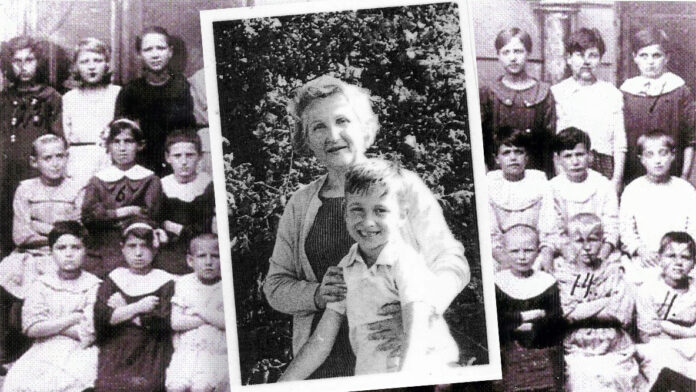
Molly as a grandmother (and Ochberg Orphans – background)

Chronicle reader Charlotte Cohen read the article about the ‘Ochberg Orphans’ in our May edition (read it here!), and shared the recollections of her late mother-in-law, Molly Cohen, who was the last surviving Ochberg Orphan in Cape Town. She passed away in 2013 – 9 days before her 100th birthday. 

When Molly Cohen recalled her childhood, one figure stood above all others – Isaac Ochberg, the Cape Town businessman and humanitarian who rescued nearly 200 Jewish orphans from the devastation of post-World War I Eastern Europe.

To the children he saved, he was simply “Daddy Ochberg”.

Born in Ukraine in 1913, Molly – then Molly Schapera – was only seven years old when she arrived in Cape Town in 1921 aboard a ship carrying the children who would later become known as the “Ochberg Orphans”. Her memories of Europe were fragmentary and painful. She remembered being “shunted around”, living with different families and knowing nothing but instability and loss. She barely remembered her parents and only later learned she had three brothers and two sisters. 

Then came the journey to South Africa.

Molly remembered being placed on a ship with many other children, the voyage delayed after one child contracted mumps. But what stayed with her most vividly was the man who had made their rescue possible.

“’Daddy Ochberg’ – that’s what we called him,” she said. “That’s what he was to us.” She recalled him translating Yiddish letters into English for the children and reading them aloud. To Molly, he was always present, always caring. She described him as “a man of exceptional kindness and great courage”. 

Ochberg himself had emigrated from Ukraine to South Africa as a teenager in the 1890s and later established himself as one of Cape Town’s leading entrepreneurs through timber, shipping and property ventures. Yet business success was only part of his legacy. According to his daughter, Bertha Epstein, he believed that success created a moral obligation to help those less fortunate. 

That conviction would define one of the great humanitarian missions in South African Jewish history.

As pogroms, famine and disease ravaged Eastern Europe after World War I, Ochberg became president of the Cape Jewish Orphanage. In 1921, he personally travelled through devastated parts of Poland, Galicia and Ukraine to rescue Jewish children left orphaned and destitute. He moved from village to village collecting children who were starving, traumatised and often homeless. Ultimately, 167 children reached South Africa under his care after an arduous journey through Europe and England. 

For Molly, arriving in Cape Town marked the beginning of a completely different life.

She grew up at the Jewish Orphanage in Cape Town, predecessor to Oranjia. Far from remembering deprivation, she spoke warmly of a loving and deeply involved Jewish community. The children attended school in Buitenkant Street, went to cheder after classes and spent weekends playing in the grounds of the Home. On Sundays, members of the community would visit constantly, bringing warmth, companionship and support.

“We were adopted by the whole Cape Town community,” Molly said years later. “We were taken into their homes – and more importantly, into their hearts.” 

Although she later experienced loneliness as a teenager, aware that she had no close family to rely on, Molly never forgot the kindness that surrounded her formative years in South Africa. She described those early years as happy ones, shaped by generosity, stability and care.

Molly learned later on that two of her brothers managed to get to Palestine, but she did not have a strong relationship with them, living apart from them in her formative years.

Looking back on her life, Molly believed the rescued children had been given something extraordinary – not only safety, but the chance to build families and futures of their own. Through Isaac Ochberg’s courage and compassion, generations were born who otherwise may never have existed.


  • For the current edition of the Cape Jewish Chronicle, click here.
  • Subscribe to the Cape Jewish Chronicle: R450/year, or R38/month via debit order. Simply email us at subscriptions@ctjc.co.za and click here for payment info.
  • The Cape Jewish Chronicle reaches over 6 000 readers monthly across print and digital platforms.
  • To book advertising space or discuss a custom package contact Adéle Gradner Mobile: 083 321 5222 | Office: 021 464 6736 | Email advertising@ctjc.co.za

SIGN UP TO RECEIVE THE CAPE JEWISH CHRONICLE